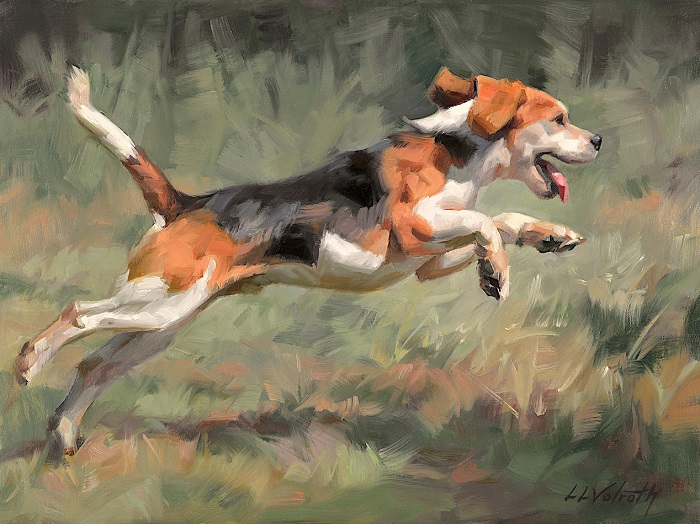
“Airborne,” oil on linen by Linda Volrath, 12 x 16 inch
Pure exuberance is captured by Linda Volrath in this joyous oil painting of the beagle. Voodoo is a two-time stallion winner at the Bryn Mawr Hound Show (MD). Volrath is a highly respected animalist working from her studio in White Post, Virginia.
“This new painting portrays a veteran pack member of the Nantucket-Treweryn Beagles,” said Volrath. “He was fixated upon huntsman Russ Wagner, preparing to kennel up after an action-packed day in the field. Little did he know he was being my perfect model. Good boy!”
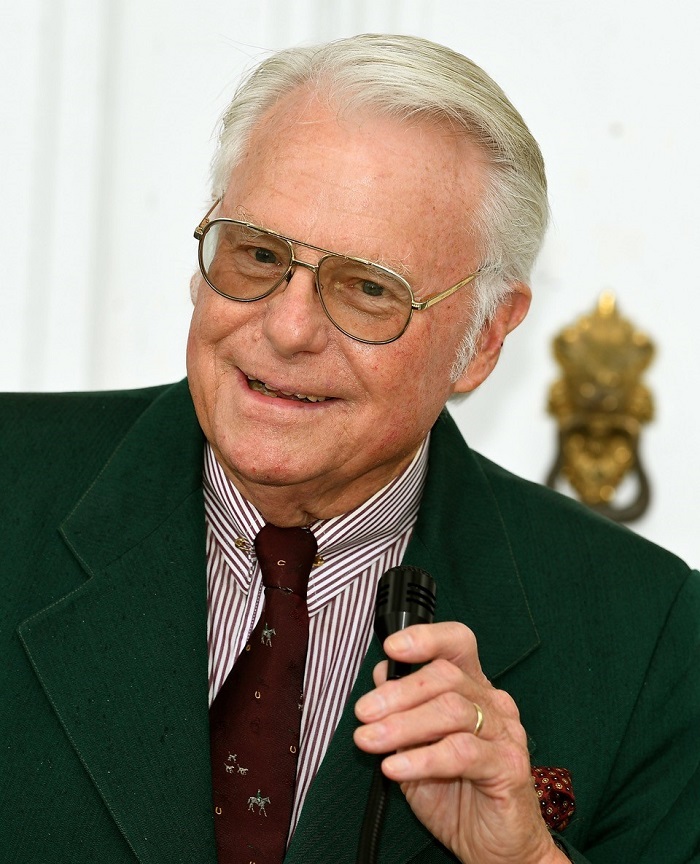
Douglas Lees photo
The loss of John “Jake” Carle on Sunday, February 28, 2021, was a blow to the North American foxhunting community. A former Master and huntsman, Jake continued to be active and immensely valuable as a foxhound judge, reporter, photographer, and statesman. He was eighty-two.
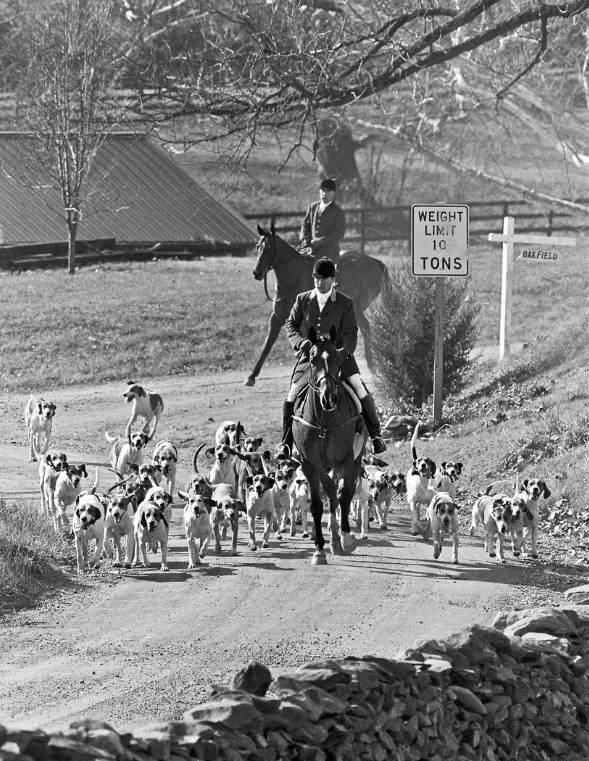
Randy Waterman, MFH, (foreground) hunts the Piedmont pack in the 1991 Piedmont-Midlang Hound Match. Farnham Collins, MFH, Millbrook Hunt (NY), (behind) is a judge. Watchman would surely have been with the pack this day but is unidentified. / Douglas Lees photo
Watchman is a popular name for dog hounds around the foxhunting world. 'Watchman' appears in at least fifty different hunts in the North American Studbook, not to mention the studbooks of England and Ireland. Nevertheless, whenever you hear the name Watchman in a foxhunting conversation, you can bet they're talking about Piedmont Watchman 1989.
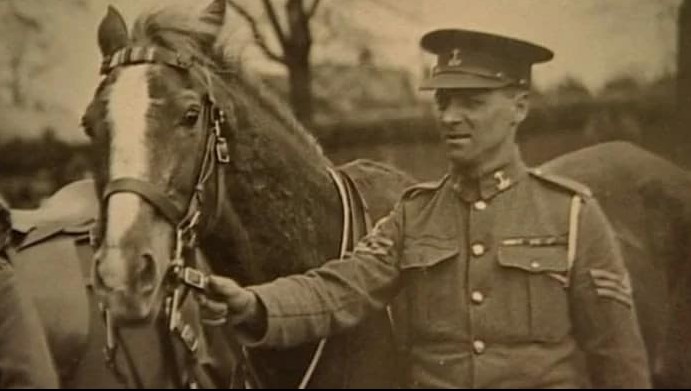
Songster and Bert Main, his rider throughout World War I
Songster, a small, aged, chestnut horse was called up for duty on the very day after England declared war on Germany—August 4, 1914. The fourteen-year-old gelding, standing just over fifteen hands high, was considered too old and too small for the demands of wartime service, but there he was on Wednesday, parading through Loughborough Market Square in Leicestershire, on his way to France.
Age and size notwithstanding, he brought to the service his character, intelligence, and bravery. Those attributes plus a measure of luck helped him and his Trooper, Bert Main, to survive the three frightful years of war.
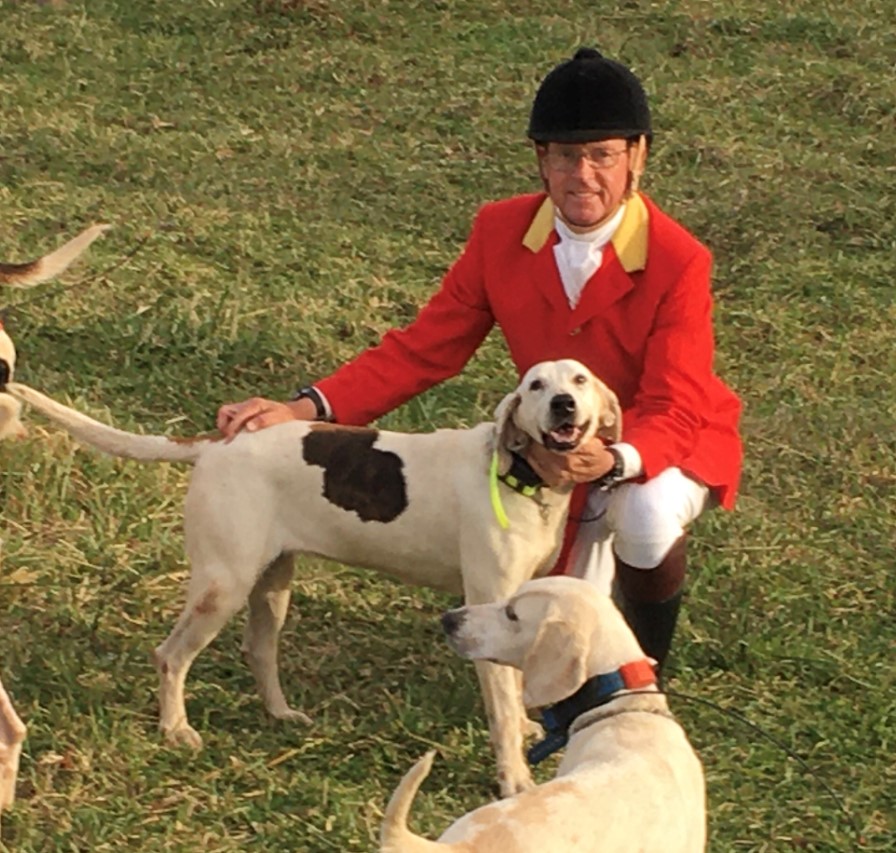
On December 14, 2020, members of the Belle Meade Hunt (GA) enjoyed their best hunting day of the season—up to that point! Master and huntsman Epp Wilson has allowed Foxhunting Life to publish an account of the day’s sport from his informal, after-hunt notes. For the benefit of our readers who love to better understand how the top huntsmen of our times produce sport with hounds, Epp has expanded on a few of the Belle Meade methods and protocols that may surprise some traditionalists. Your editor has only to say, however, that the proof is in the pudding, and that he knows of no other hunt that draws more enthusiastic hunting visitors, year after year, from hunts all across North America, than does Belle Meade.
Master and huntsman Epp Wilson and Belle Meade's Midland Maiden 2013.
We met at 3 PM from the kennels. Fifty-six degrees: good. Dew point 46 degrees: not so good. Wind from the west at 7 mph: good. Game table* was low at 14 percent average for the day: not good.
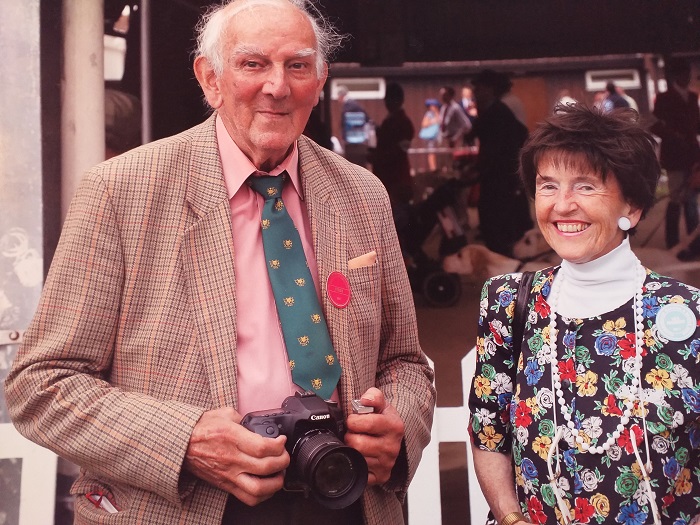
The author with renowned sporting photographer Jim Meads at the Peterborough Hound Show / Ginnie Beard photo
Life is full of amazing flukes—or coincidences—but for me by far the largest percentage have had something to do with foxhunting. So, starting at the beginning, I can hear the phone ringing and on the other end of the line is my Aunt April.
“You’ll never believe it,” she said, “but I’ve just been to the dentist and while sitting in the Waiting Room I picked up a copy of Hounds magazine. Remembering that you write for them, I was very interested to have a look at it. Imagine my amazement when I opened it and there was a photograph of my mother! She was riding side-saddle on her horse, San Toy, ready to hack to the meet.”
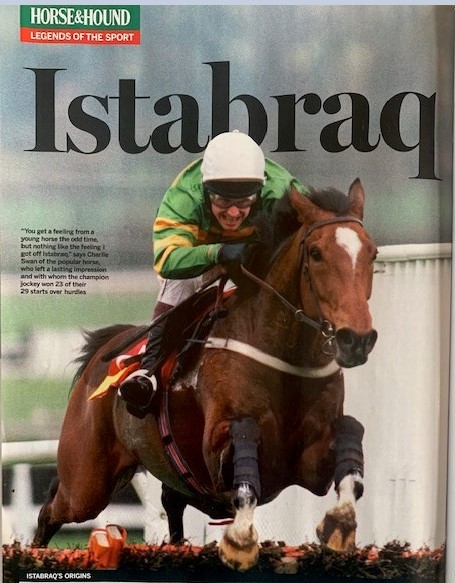
A Horse&Hound Legend of the Sport, Charlie Swan was Champion Jockey for 9 consecutive years until his retirement.
The bond between son Charlie and father Donald shone like a beacon when I had the opportunity to speak to them both during the lock-down. Charlie begins their story.
“Dad adored his riding, whether it was hunting or riding as an amateur. And I guess he passed that on to me. He loved the training and always had a few horses for me to ride. My great-grandfather on my mother’s side was champion flat Jockey in England and rode a Derby winner. I would have often looked to Dad for advice, and I gained a lot of experience with him.”
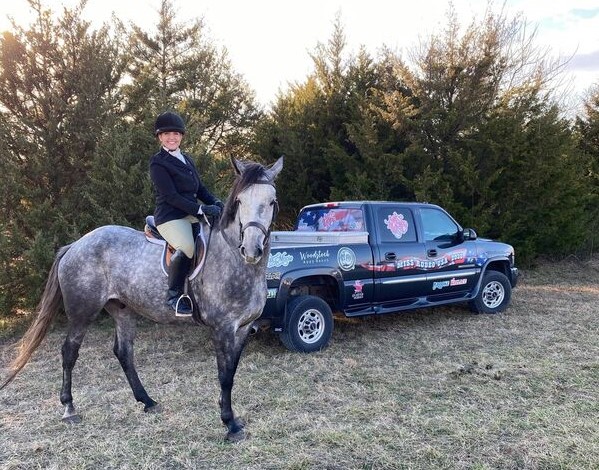
A celebrity in the hunting field, Miss Rodeo USA 2020
In any sport, there are many terms that might be unfamiliar to anyone outside the circle. In rodeo, for example, not everyone might know the term bufford, dog fall, or union animal.* It was the same for me stepping out of my comfort zone to learn new terms in the foxhunting community. I rightfully earned the title of cropper within the first five minutes of the hunt. This is how it went.
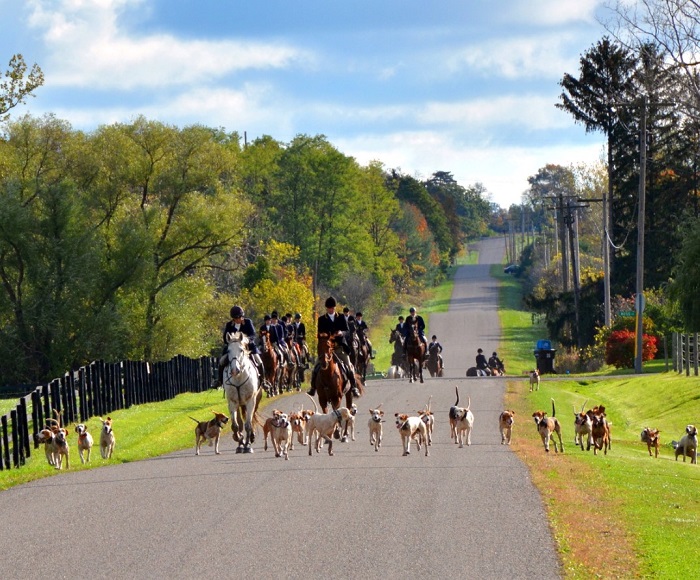
Sean Cully (center) hunts his hounds at a joint meet in Geneseo, New York, hosted by Marion Thorne, MFH and huntsman of the Genesee Valley Hounds (at left). / Noel Mullins photo
The first time I met Sean Cully he was Master and huntsman of the Blue Mountain Hounds (PA), and he was hunting an up-to-weight Irish Draught hunter. Blue Mountain, established by Cully in 1999 as a private foot pack, had been recently Registered by the MFHA.
On the occasion of our meeting, Cully was visiting Mr. Stewart’s Cheshire Foxhounds in Pennsylvania, celebrating their centennial year in 2013. Between then and now, this former Master and huntsman of a small foot pack has stabilized the foxhunting countries of two additional hunts in Pennsylvania under his Mastership and added winter fixtures near Aiken, South Carolina.
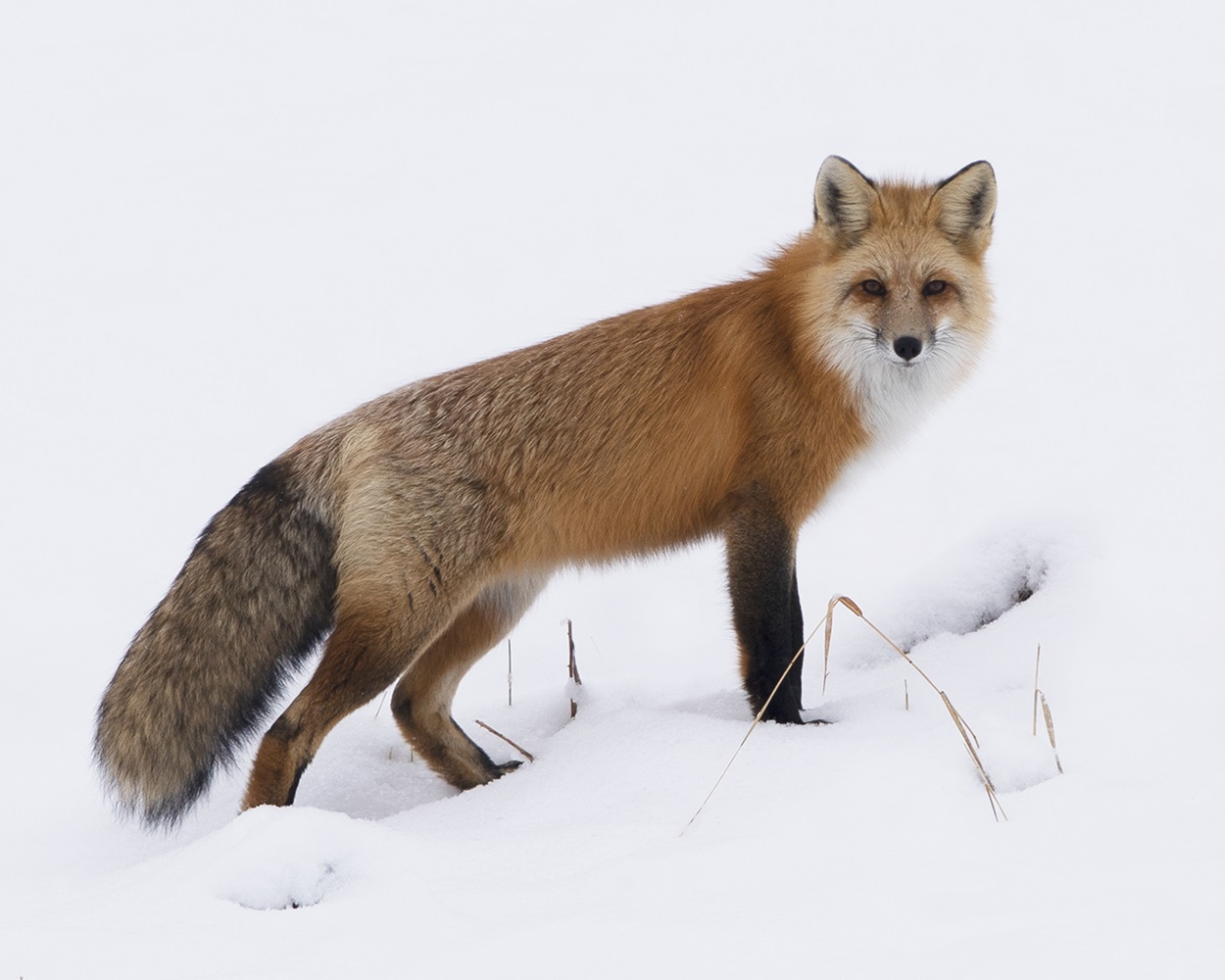
Red Fox / Mike Roberts photo
A recent study reveals that wild mammals—even big predators—are getting portions of up to half of their diet from human leavings, crops, or smaller mammals that live near people. The study included wolves, mountain lions, bobcats, coyote, foxes, fishers, and martens across the country.
These wild animals are relying less and less on foods found naturally, as human population spreads and presents wildlife with domestic dietary alternatives. The outcome naturally puts wild creatures in conflict with one another, and leads to more human-carnivore encounters in territorial boundary areas and suburban backyards.