
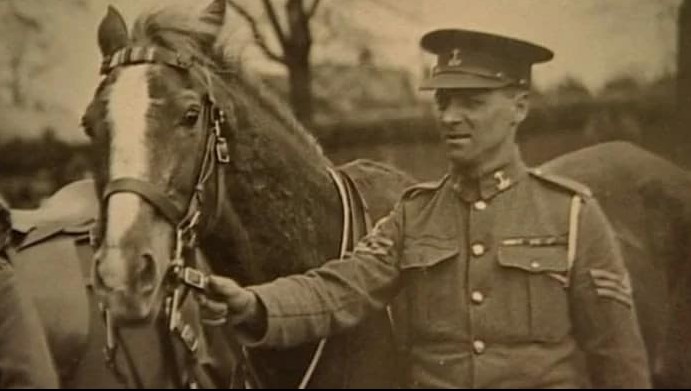
 Songster and Bert Main, his rider throughout World War I
Songster, a small, aged, chestnut horse was called up for duty on the very day after England declared war on Germany—August 4, 1914. The fourteen-year-old gelding, standing just over fifteen hands high, was considered too old and too small for the demands of wartime service, but there he was on Wednesday, parading through Loughborough Market Square in Leicestershire, on his way to France.
Age and size notwithstanding, he brought to the service his character, intelligence, and bravery. Those attributes plus a measure of luck helped him and his Trooper, Bert Main, to survive the three frightful years of war.
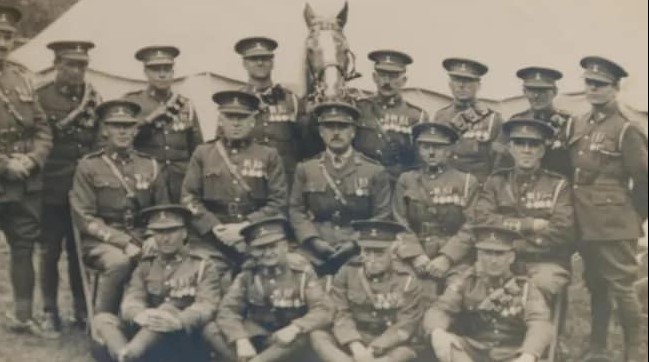 Songster and the Leistershire Yeomanry
Songster was known to untie himself from his peg during periods of heavy shelling, then come back to Bert when the coast was clear. He knew the sound of the trumpet for water, would take himself off if unneeded only to come back on his own and stand waiting for his nose bag.
When mustered out of service five years later, Songster was one of the oldest and most decorated of all surviving First World War horses. With his original owner unknown, Songster was auctioned off by the Army and bought by his wartime rider Bert Main. Bert’s yeomanry commander, Sergeant Major Harry Poole, brought the horse to his own farm at Woodhouse Eaves back in Leicestershire.
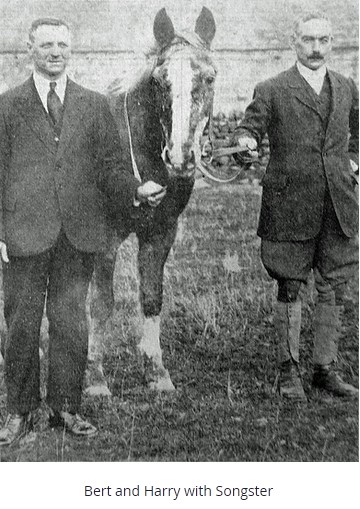
Songster enjoyed his Golden Years. He hunted regularly with the Quorn Hunt and liked to join the yeomanry for their annual camps. He drew a milk float into Loughborough once a week with Harry, then he would join him for a pint in the upstairs room of the Old Boot Hotel. No one could believe a horse could climb up and down that flight of stairs, never mind drink a pint!
At the venerable age of forty, Songster died peacefully at Harry’s farm at Woodhouse Eaves. By a strange coincidence, his last moments were spent in the company of two old Leicestershire Yeomanry companions, Regimental Quartermaster Sergeant Fred Hunter and Sergeant Major Fred Pepper, who, on leave from their unit, had called at the farm on a surprise visit. Songster was buried on the farm with his medals—Mons Star, 1914-1915 Star, General Service Medal, Victory Medal, and two Territorial Long Service Medals. It was then 1940, and Britain was once again at war with Germany.
Seventy-nine years later, on June 29, 2019, the people of Loughborough came together on Armed Forces Day to see twelve-year-old Lewis Main—great-great-grandson of Bert Main, unveil an open-framed, wire sculpture of Songster, the town’s most famous warhorse and a local celebrity. The new sculpture was added to the town’s World War I Memorial, erected nearly one hundred years earlier, to commemorate all those who lost their lives in that bloody conflict.
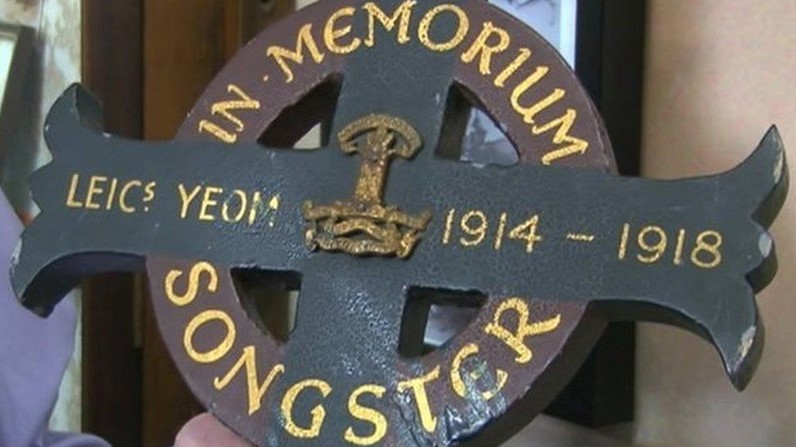
Songster’s original grave marker is on display at Loughborough Carillon Museum. Subsequently, the Leicestershire Yeomanry Association and the Museum arranged for a replica grave marker to be made, properly painted, and placed on Songster’s grave in a ceremony with military participation.
About eight million mules and horses died in World War I, and thousands more were slaughtered for meat and byproducts for the impoverished nation at the end of the war.
Posted March 6, 2021