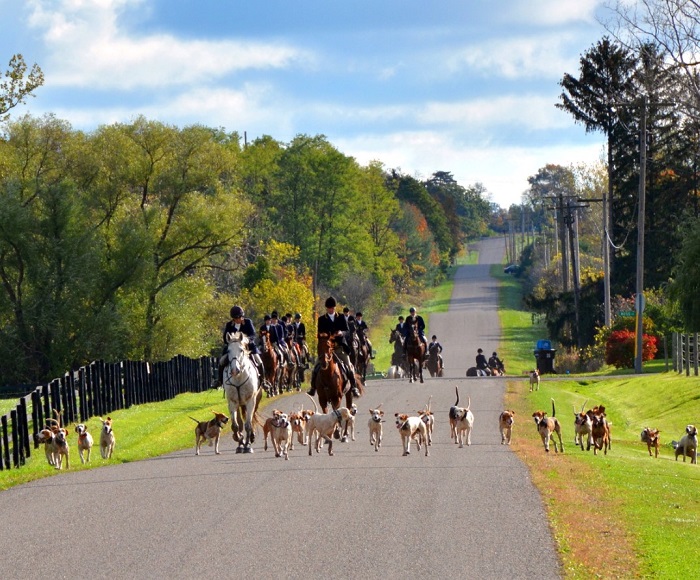
 Sean Cully (center) hunts his hounds at a joint meet in Geneseo, New York, hosted by Marion Thorne, MFH and huntsman of the Genesee Valley Hounds (at left). / Noel Mullins photo
The first time I met Sean Cully he was Master and huntsman of the Blue Mountain Hounds (PA), and he was hunting an up-to-weight Irish Draught hunter. Blue Mountain, established by Cully in 1999 as a private foot pack, had been recently Registered by the MFHA.
On the occasion of our meeting, Cully was visiting Mr. Stewart’s Cheshire Foxhounds in Pennsylvania, celebrating their centennial year in 2013. Between then and now, this former Master and huntsman of a small foot pack has stabilized the foxhunting countries of two additional hunts in Pennsylvania under his Mastership and added winter fixtures near Aiken, South Carolina.
Subsequently, we met again in Upstate New York where he was invited to take his hounds for a joint meet with Marion Thorne, MFH and huntsman of the Genesee Valley Hunt in their country near Rochester on the Great Lakes. I had travelled to the States with that well known Wexford horseman and stallion master Jack Lambert on our annual hunting visit to the USA. That day Sean’s hounds hunted a coyote and I was amazed at their drive. A mix of breeds with some Kerry Beagle, Walker, July, and American hounds, they displayed an incredible work ethic, supporting each other as the wily coyote tried to give them the slip. It dodged in the woodlands and gullies and then took to the maize, which is difficult for hounds to negotiate while still holding the line. But the pack won that day.
Blue Mountain and Rose Tree Merge
I should have known that Sean would have a crack pack. He hunted them on foot in hilly country and pastureland for ten seasons before being recognised as a mounted hunt by the Masters of Foxhounds of North America in 2011. MFHA president in North America is Tony Leahy, Master and huntsman of the Massbach Hounds and the Fox River Valley Hunt, both in Illinois. Leahy is originally from Oldcastle, County Meath in Ireland.
Sean Cully is a regional director for Pennsylvania, serving on the board of directors of the MFHA, and like all huntsmen that started hunting on foot is used to being close to his hounds. He is quick to anticipate the line of the quarry and is a knowledgeable hound breeder with definite ideas about what type of hound works best in his country.
Also interesting about Sean, and a real compliment, is that while his pack is one of the most recently registered packs in the US, he was invited by one of the oldest registered packs in the country, The Rose Tree Foxhunting Club established in 1859, to merge. Rose Tree Master Mike Shupp and huntsman Justin Shupp wanted to take a break from foxhunting. Sean took over the merged packs, now known as The Rose Tree-Blue Mountain Hunt, as Master and huntsman. But Sean was ready for the challenge and especially relished the opportunity to hunt an expanded hunt country.
According to Sean, “I’m am proud to provide the members with hard working hounds, a consistent schedule of meets, open country, and the best hunting possible as well as a sense of family and community, and to maintain positive landowner relationships also in Berks, Cumberland, Perry, and York Counties in Pennsylvania and Maryland.”
In the meantime he has developed a pack with a strong infusion of Kerry Beagle blood, some drafted from packs in Virginia. By November this year he had hunted fifty days and run more than two hundred red foxes. And, unusually, no coyote by that time.
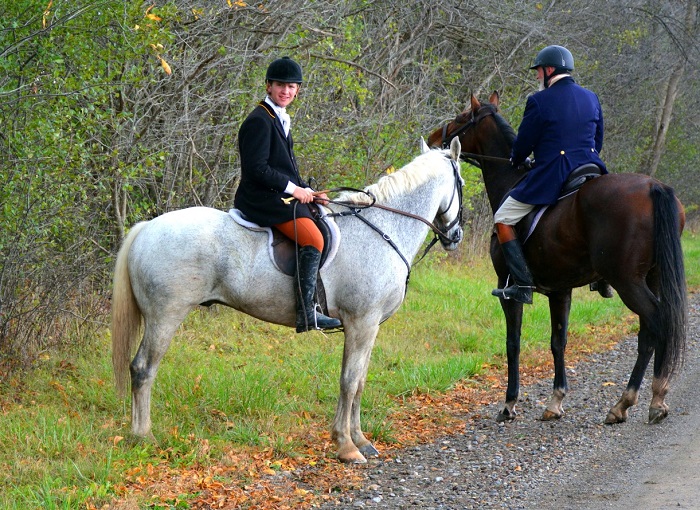 Sean’s son, Brady Cully, whips-in. / Noel Mullins photo
In addition to Rose Tree, Sean has more recently bought out a small Pennsylvania hunt, the Saxonburg, from which Floyd Wine, the sole Master, wished to retire. With it, the Rose Tree-Blue Mountain adds still more to its Pennsylvania country and acquires new fixtures in South Carolina along with a kennel property and residences near Aiken. Sean hopes to hold meets at seven fixtures there this season and hunt coyote. He is joined in the Mastership by his wife, Maryann, Dr. Edward Franco, and Michael Wright. Sean’s son Brady is closely involved as well; he is an amateur whipper-in and a fine horseman, and he reads the country well.
Cully’s Irish Connection
Sean is aware that he probably has Irish connections, but never found the time to research it. My research finds the Cullys came from Counties Armagh, Down, Kildare, and Westmeath. Some emigrated to England during the Norman Conquest in 1066, and Cornelius Cully emigrated—or maybe he was deported—to Virginia in 1664 after the English Crown confiscated Irish lands and replaced the Irish tenants with English and Scottish settlers. John Cully arrived in Maryland in 1666, so that’s a starting point! What is interesting is that many of his ancestors were tradesmen and builders, and, coincidently, Sean and his family run a large custom home building construction business, C&C Construction. Sean divides his time between his successful business interests and his passion for foxhunting.
Hunt Horses
Although Cully has hunted Irish bred horses, he has a preference for off-the-track Thoroughbreds and has eight in his barn. He buys them as three-to-five year olds, and they make up in no time as they are easy to retrain, have great stamina in open galloping country, the speed necessary to keep with a fast moving pack, a great engine, and most important a quick recovery rate at a check or a cast. Most hunt staff in the US ride off-the-track Thoroughbreds for these reasons, and Sean likes the fact that it is also a way of giving second and enjoyable careers to former racehorses.
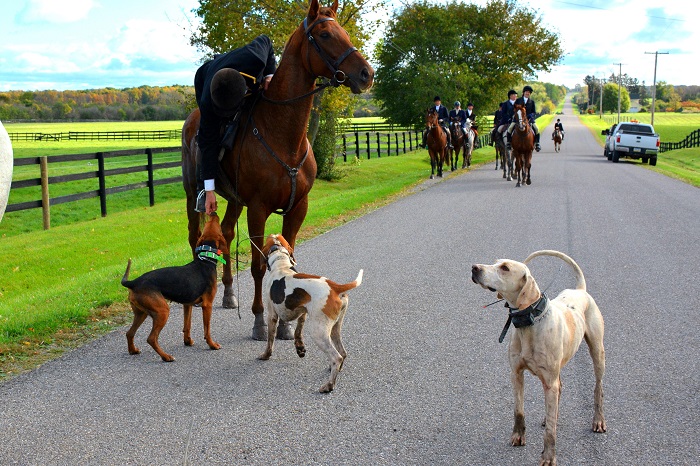 Cully appreciates the contributions of Irish-bred Kerry Beagle bloodlines in his pack. / Noel Mullins photo
Hounds
Sean has no nostalgia for maintaining any particular breed of hound in his pack. He has, as I mentioned, worked with American, Penn-Marydel, Walker, July hounds, and Kerry Beagles from many well-known Irish and English bloodlines. But what worked well for the hill country of the original Blue Mountain Hunt may not necessarily be the most suitable for his expanded country, as he is hunting a long season from August to early April. Hounds have to be fit, strong, and durable. At the moment he is using an infusion of Kerry Beagle blood that came from Richard Roberts, huntsman at the Middleburg Hunt (VA) and Tony Leahy in Illinois. Sean says they have the same tenacity and drive, have a great work ethic, and, assessing them for their ability in the hunting field, finds they are low scenting and can provide sport even on a bad scenting day.
Amish Hunting Country
With the addition of The Rose Tree hunt country to the Blue Mountain country, Sean is now hunting across Amish farmland of dairy farms, maize, alfalfa grass, wheat, vegetables, and hemp. Hunt fences are natural and man-made with a lot of electric wire for strip grazing. It is beautiful countryside with woodland that is perfect cover for foxes and open grass. Farm-work is done using horses or mules, the Amish holding on to their old ways of living and farming. No tractors or electricity. They pay taxes but never collect social security.
The Amish are a religious and hardworking people, quiet and non-judgmental. I have been privileged to be invited to drive a team of six mules harrowing a field, getting it ready for sowing. The men wear straw hats and beards, and the ladies wear plain colour dresses and bonnets. The Old Order don’t wear zippers in their clothes, choosing buttons or hook and eye, as they shun personal vanity and ostentation and are not influenced by modern ways of life. They have large families around which their social life revolves. Their contact with non-Amish people, whom they refer to as ‘English,’ is mainly through business. They sell their farm produce, hand-crafted harnesses and leatherwork in their tack shops, and, being skilled craftsmen, contract to perform construction. Many of the horse and farm barns in the area are built by members of the Amish community.
Amish Horses
The typical type of working farm horse is Percheron or Belgian Draught horse—powerful, hardworking, and docile. Some also use Haflinger—stocky horses that seldom measure over fifteen hands in height as distinct from the others that can be seventeen to eighteen hands high. Nor do the Amish drive cars; they use driving horses and buggies. The most popular horses for buggies are Standardbreds off the track—trotting horses and readily available. It is not unusual to see young Amish women schooling them in a breaking cart, which is a stripped down buggy. Roads in Amish areas have trotting lanes where they can safely drive their buggies.
Amish Mules
Amish mules are hybrids produced from a cross between a donkey male and a female horse, usually seventeen hands plus. Mules are mainly sourced from the US Mid-West, but the Amish also keep horse mares and a jennet for breeding themselves. They consider mules to be exceptionally strong and easy to feed. Though mules can be stubborn, as they have a keen sense of preservation, they are not excitable like a flight animal and are easy to train. Mules can be unforgiving if you do them a bad turn but are also loyal to those who treat them well. The use of mules by the Amish dates back to 1865, but one sect of Amish will never use mules. That sect considers them a mix of creatures, not originally created by God.
Sean Cully’s Rose Tree Blue Mountain Hunt has been a welcome addition to foxhunting in the USA, as Sean brings a spirited passion to his sport that combines his business skills in the managing of an expanded hunt country with his talents as a huntsman. He also has a keen eye for a foxhound, and is a talented horseman. He continuously strives for perfection. Above all, he expects his hounds to perform not just occasionally but every day they go out.
Posted January 31, 2021
Noel Mullins is a photojournalist, lifelong foxhunter, and author of The Dublin Horse Show, The Irish Hunter, In Search of the Kerry Beagle, and other books on Irish horse sport. Visit him on the web.