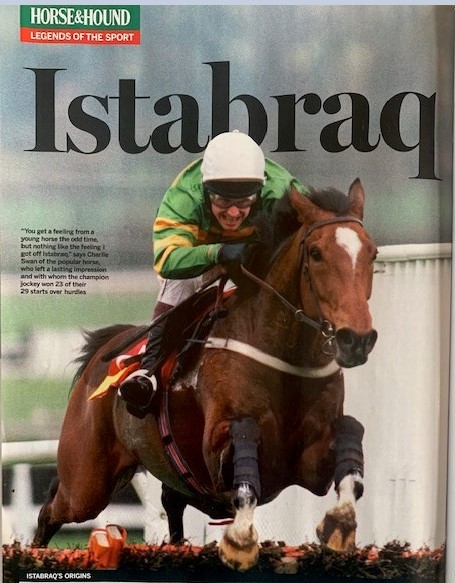
 A Horse&Hound Legend of the Sport, Charlie Swan was Champion Jockey for 9 consecutive years until his retirement.
The bond between son Charlie and father Donald shone like a beacon when I had the opportunity to speak to them both during the lock-down. Charlie begins their story.
“Dad adored his riding, whether it was hunting or riding as an amateur. And I guess he passed that on to me. He loved the training and always had a few horses for me to ride. My great-grandfather on my mother’s side was champion flat Jockey in England and rode a Derby winner. I would have often looked to Dad for advice, and I gained a lot of experience with him.”
The racing world abounds with father and son combinations: Ted and Ruby Walsh and Tommy and Paul Carberry spring to mind, but up with the best and better has to be Donald and Charlie Swan. While Charlie has a remarkable story to tell, Donald’s story is the far more colourful. He must be counted among the last of the great Corinthians—these young men, often from an army background, who would take up riding point-to-points and national hunt races before going on to becoming Masters of Foxhounds. Donald ticks all those boxes and more.
Born in Lincolnshire, UK, on leaving Gordonstoun as a second choice, Donald joined the army. His first choice was a career on the stage but his father, with some difficulty (and wisdom), persuaded him to take up a commission in the army. He luckily missed all major wars so was able to become a sporting officer: hunting, point-to-pointing, and racing under the rules.
With army retirement imminent, his father advised him to buy a place in Ireland. Donald found Modreeny in Cloughjordan, a substantial property which ran to two hundred acres. Having bought it, he couldn’t close the transaction as there was an embargo on non-nationals buying land in the Republic of Ireland. Fortuitous fertility rescued the situation, however. Donald and Theresa were expecting their second child, who chose to be born in Dublin, and all nationality problems were solved.
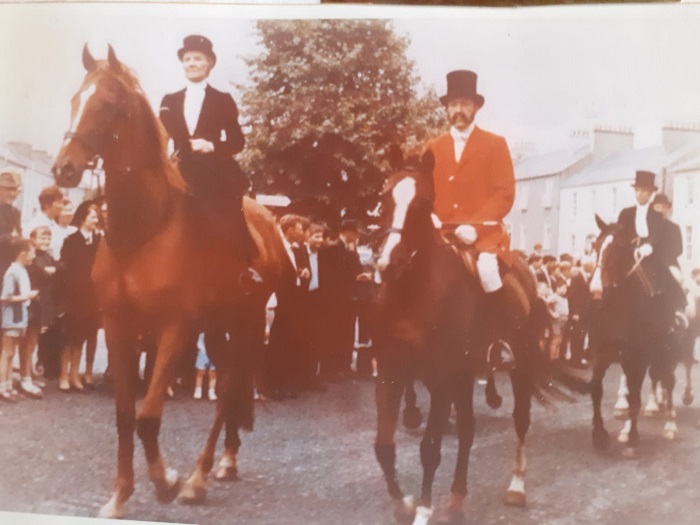 Donald and his mother, Nina Swan, out with the Ormond at Cloughjordan on a St. Stephen’s Day meet
On arrival in Cloughjordan, Donald naturally threw himself into the hunting world with the local Ormond foxhounds. Huntsman Arthur Dalgety was approaching the end of his tether, passing on all too suddenly in 1972 without having nominated a suitable replacement. After an emergency committee meeting, Donald sportingly offered to take over. At least until someone else could be found. Donald’s appointment heralded a golden era in the annals of the Ormond, and almost twenty years later he was still in office with hounds kenneled at home at Modreeny (where hounds are kenneled to this day). Donald hunted hounds with distinction for more than ten seasons until George Younghusband joined the Mastership, and professional huntsman Pat Lynch took the horn.
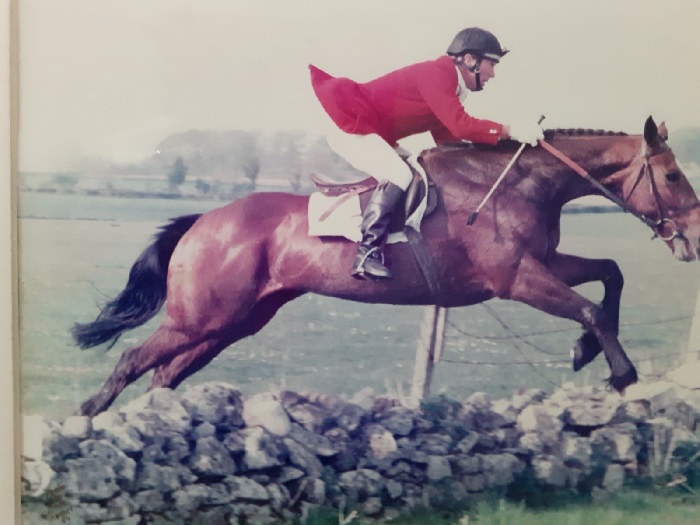 Donald competing in the Members Race at the Ormond Foxhounds Point-to-Point
It wasn’t all hunting by any means. As well as producing a top-class pack of hounds, Donald and Theresa were increasing their family to include Natasha, Melissa, and Charlie. Racing was also high on the agenda. Donald had the useful chaser, Zimulator (by Narrator), who took him far beyond the confines of the North Riding. Zimulator qualified for the 1975 renewal of the Aintree Grand National by winning the Ingolsby Chase in Punchestown (owner up). In those proper days before health and safety along with its stablemate, public liability, took control, sporting owner-jockeys could compete in the world’s greatest race. The 1975 Aintree renewal had a particularly Irish feel to it. It was won by Tommy Carberry on the second favourite, L’Escargot, beating Red Rum into second. The gallant Captain Donald Swan finished fourth on the home produced Zimulator. He carried ten stone at the very generous odds of a hundred-to-one. This bet wasn’t widely taken up outside the bookies office in Nenagh. The contest was watched avidly at home in Modreeny by young Charlie, then age seven, and we can only guess how the experience influenced his future career. Fifth was Ron Barry on The Dickler, and other Irish jockeys out of the money included Ted Walsh and Tommy Stack.
It must be more than coincidence that three of those Grand National jockeys went on to produce sons who became Champion Jockeys in their own right: Ruby, Paul, and, of course, Charlie, who was the first Irish jockey to beat Martin Molony’s historic tally. Zimulator’s National career was far from over. Donald took him on to Oslo to run in the Norwegian Grand National. While they had a sporting run they didn’t return with any silverware.
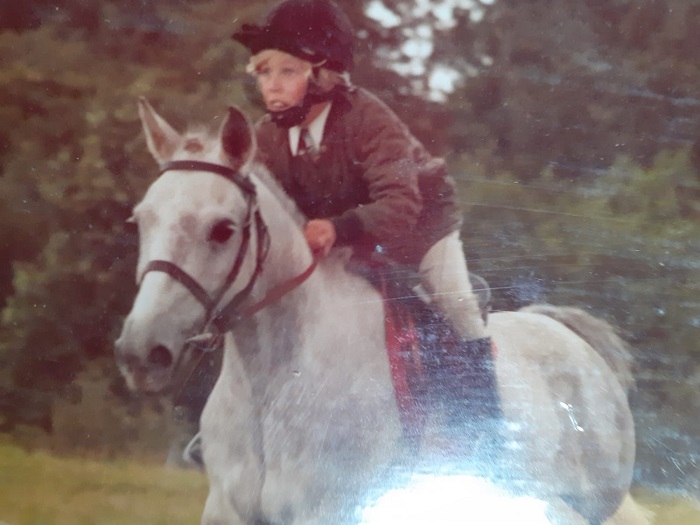 Young Charlie Swan on his pony, Lightening, hunting with the Ormond Foxhounds
But there was always hunting. Donald records a particular red-letter day from a meet at Ardcroney. Hounds found and ran six or seven miles without a check as far as Lough Derg at Terryglass. Young Charlie, then around ten years of age, was out on the 13.2-hand Lightening. Sadly, in the excitement of the run, the young jockey had been forgotten. As hounds marked to ground, Donald turned to whipper-in Martin Totley asking him to go back and find young Charlie, only to have it pointed out that Charlie and Lightening were standing right behind him
But it is said that Donald’s first love has always been the stage, and he became a key member of the Nenagh Dramatic Society along with his fellow thespian John Riggs-Miller. John brought with him an aura of professionalism as he had toured with the famous Anew McMaster players who brought Shakespearian productions to rural Ireland. Donald’s performance as Professor Higgins to John’s Colonel Pickering in My Fair Lady are still spoken of with awe in the salons of North Tipperary.
All the while, young Charlie was growing up and pony racing with some success. But even budding jockeys have to go school, so Charlie was packed off to Wilson’s Hospital boarding school in Multyfarnam, Co Westmeath. It would be fair to say that his scholastic career was not an outstanding success, but the tedium of irregular Latin verbs was lightened by riding out at Jimmy Tormey’s racing yard nearby.
What Charlie really wanted was to go racing. As this life-changing career choice was being discussed, Donald decided to give the aspiring jockey a couple of rides. At Naas on March 19, 1983, Donald put young Charlie up on the unraced two-year-old, Final Assault. The bookmakers who couldn’t have known they were looking at a future champion, freely offered 20-1, which was liberally taken up by Donald and his friends. Charlie didn’t let them down and won in a canter by six lengths. Beaten next time out, he went on to win on Sessetta, that combination winning again in Limerick ten days later. This gave the debutante jockey a fifty percent hit rate with three wins out of six rides. It was probably these early successes that convinced the Mondreely stewards to allow Charlie to say goodbye to Wilson’s Hospital and become an apprentice at Kevin Prendergast’s.
The other apprentice turned out to be Kieran Fallon who hadn’t yet ridden a winner. Charlie takes up the story.
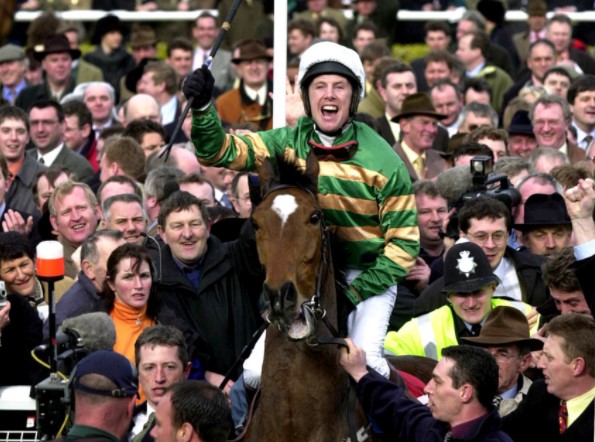 Istabraq, three-time Champion Hurdler, Charlie Swan up.
“Kieran and I always got on well, and I shared a house with him for a time. From a young age my role models were Lester Piggott and Michael Kinane on the flat and John Francome and Richard Dunwoody over jumps. The horse that probably put me on the map was a horse called Ash Creek, trained by Paddy Mullins. I rode a lot of winners for Paddy and Maureen Mullins whom I admired greatly.
“Without doubt, Istabraq winning his third champion hurdle gave me the most pleasure in my career. He was a true athlete. Winning a two-mile champion chase at Cheltenham on Viking Flagship for the late David Nicholson was also a huge thrill.”
No doubt Istabraq was the high point of Charlie’s career. It was also about then that romance came into his life. Carol Hyde of Camas Park was a highly useful jockey herself with thirteen winners under the rules as well as eventing at Four-Star level.
“I rode against so many great jockeys— Richard Dunwoody, Tony McCoy, Tommy Carmody, Ruby Walsh, Norman Williamson (my brother in law ), Barry Geraghty, Paul Carberry, but the best without doubt was Ruby.”
Ted Walsh was forthcoming as always. “There was no one like Charlie to read a race. Down at the start he would size up the opposition and watch the body language of the other jockeys. He rarely got it wrong.”
Back to Charlie. “An embarrassing moment at age seventeen or eighteen. I was riding at the Curragh. Jumping out of the stalls, the poppers went on my britches. After a furlong I could feel them getting lower and lower and as I frantically tried to pull them up, all I could hear was Joanna Morgan whistling from behind me and Christy Roche shouting to just leave them alone and ride on. I finished third, but it was very embarrassing.
“It wasn’t hard to keep motivated when you are riding lots of winners. But I got to the stage when if I got into the car without having ridden a winner, I would have been in very bad form ”
Charlie was twice leading jockey in Cheltenham, ’92 and ’93. After his first success as leading jockey, Cloughjordan decided to recognize the victory. A special “Cheltenham Pub Crawl” was organised with Charlie being transported from tavern to tavern by pony and trap. The celebration is said to have started at the Clough Inn and ending at the Railway Bar, finishing with a suitable(non-alcoholic) presentation in St Kieran’s Church of Ireland Hall.
He was champion jockey no less than nine times. He won his first championship in 1989/90 and retained the title until his retirement in the 1997/98 season. He holds the Irish record for the most winners in a season and the most in a calendar year.
“I had a great career and was incredibly lucky to ride for JP McManus and Aidan O’Brien for whom I have great admiration. They were a huge help to me. I also rode for a lot of other very good trainers such as Dessie Hughes, Noel Meade, Edward O’Grady, Mouse Morris, Arthur Moore, John Kiely, Willie Mullins, Tony Mullins, John Hayden, Enda Bolger and so many more.”
Charlie was the first to break Martin Molony’s record for Irish winners, a record that had stood since Martin was forced into retirement in 1951 at age 26, and for whom he has the utmost regard.
“Martin Moloney was a phenomenal rider of his time, and breaking his record of the number of winners ridden in a season was obviously a great boost. I think it was 112. My best season was 150 winners in Ireland and twelve in England. For Martin it was obviously a lot tougher to ride so many winners with less racing and travel not so easy.
“Training I loved, but the recession hit our business hard and with builders going out of the game it just was not feasible any longer. So after very tough decisions we stopped in 2015. Modreeny keeps us terribly busy and is a super farm for rearing young stock. We had been trading all along and will continue doing so. When Covid does not get in the way I travel to France for racing and sales sourcing horses for JP McManus.”
Modreeny now has swapped residents, with Charlie, Carol and family in the main house and Donald and Theresa having taken up residence in Charlie’s former bungalow.
“The house is getting quieter with Harry away and Olivia in boarding school. David works in Dublin and Max, twelve, keeps us busy with his sports. Harry, who won a team bronze medal at Eventing Europeans in 2018, is enjoying his amateur riding and is now reading Biological and Biomedical Science in Trinity. Olivia loves her Eventing and had great success riding for Ireland at European Championships 2019, finishing thirteenth individually. She’s now studying for exams.”
Tipperary trainer Edward O’Grady has the last word. “Charlie is an absolute gentleman, either on or off a horse. He rode a lot of winners for me, but his best day must have been Cheltenham ’94 when he had a treble. He started off by winning the Sun Alliance on ‘The Peoples Champion’ Danoli before having a double for me on Time for A Run and finishing a perfect day by winning the bumper on Mucklemeg.”
I asked Edward how Charlie got so many winners. “It’s simple. He was just the best.”
Posted February 8, 2021
This article was first published in The Irish Field.