
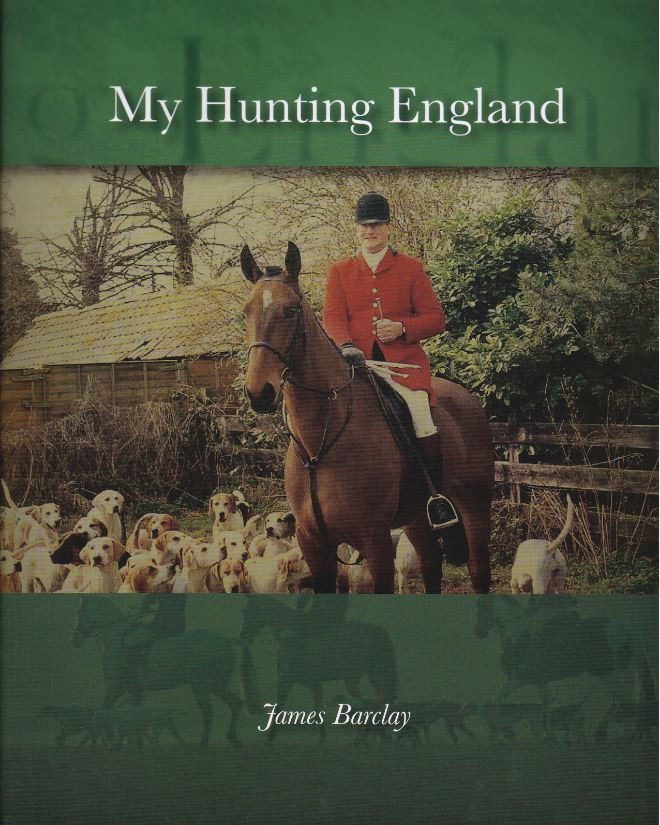
My Hunting England, James Barclay, Ruddocks, Lincoln, UK, 2015, cloth, illustrated, large format, 143 pages, £45Foxhunters are often regarded by the uninitiated as a pack of wealthy horsemen in fancy clothes galloping gaily over the countryside. Truth be told, some foxhunters riding in their private and select world above the fray see it the same way.
James Barclay learned differently. In his just-published My Hunting England, he tells of his life in hunting, his love for England, and—for a man born high above the fray—tells his story with humanity, sympathy, and respect for all manner of hunting man and his quarry.
A frequent contributor to the pages of Foxhunting Life, James Barclay was born to a banking family well-represented in the world of hunting. He, his sister, two brothers, mother, father, grandfather, and great-grandfather all served as Masters of Foxhounds—a family way-of-life that began in 1896 when his great-grandfather became Master of the Puckeridge. James served as Master of five hunts from 1983 to 2012: the Essex and Suffolk, Fitzwilliam, Cottesmore, South Wold, and Grove and Rufford.
James’s new book is part memoir, part snapshot of hunting in the twenty-first century, and part tribute to those who left their mark on the sport of his life. He entered hunt service at the bottom and toiled alongside the other lads in the kennels. Nor, as he was to find, were all kennels equal.
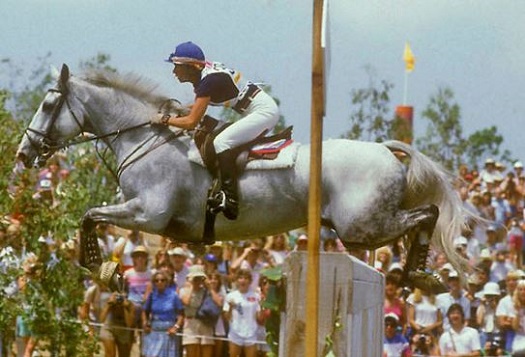
Karen Stives and Ben Arthur, 1984 Olympics
Olympic medal-winner Karen Stives died peacefully at her home in Dover, Massachusetts on August 14, 2015 after a five-year battle with cancer. She was sixty-four. Karen was a member of the Norfolk Hunt Club but her great passion was competition, and there she made history.
Karen showed hunters and jumpers successfully through the 1970s and then became smitten with eventing and dressage. She was the first woman to win an Individual Medal in an Olympic Three-Day Event, winning the individual Silver Medal in the 1984 summer Olympics in Los Angeles on her gray Irish-bred Ben Arthur. In doing so, she anchored the U.S. team in capturing the Team Gold Medal in the Three-Day Event that year. In 1982 she had represented the U.S. in the World Championship Three-Day Event at Luhmuhlen aboard her Thoroughbred horse, The Saint. She was the USEA Rider of the Year in 1981, 1987, and 1988.
In her induction into the USEA Hall of Fame, Karen is described as a “New England rider who rose to the top of international competition through sheer diligence, hard work, and plenty of natural ability, and is called a ‘small package with a thousand-pound brain,’ by longtime friend and colleague, Jim Wolf. At one time she contemplated trying out for both the U.S. eventing and dressage teams in the same year—an idea she discarded after riding in two separate selection trials in the same weekend!”
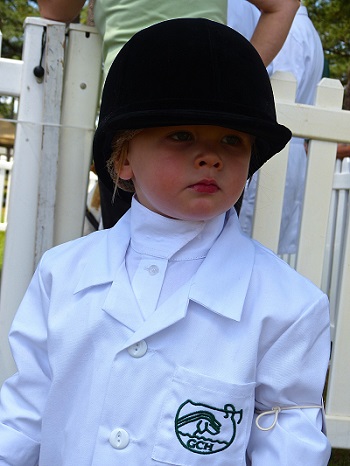
Carolina Foster at the 2015 Carolinas Hound Show / Anne Shue photoWith a bit of instruction from Tot Goodwin, MFH and huntsman of the Green Creek Hounds (SC), two-year-old Carolina Foster showed Green Creek Rita 2007 in the Junior Handler class with confidence beyond her years. Carolina’s pal, Sophie Martin, an older woman of five, also showed in the class. Carolina’s mother Anne Shue and Sophie’s mother Shanna Mauldin both whip-in to Tot. The two wee ladies appear to be following in their mothers’ irons. We hope so!
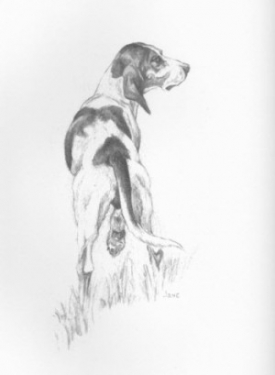
"Lost Hound" by Jane Gaston: illustration from the book of the same name by Robert AshcomWhat should we do when we see foxhounds in our yard or loose in the country? Our options are (1) try to capture and secure them in a kennel or horse stall and call the huntsman, (2) put them in our vehicle and drive them to the kennel, (3) call the huntsman or the kennelman, tell them what we saw, and leave it in his/her hands, or (4) do nothing.
It’s a conundrum because each of the above answers can be correct, depending on the circumstances. Has the pack been hunting from a meet in the vicinity? How far away are the kennels? Are there busy highways between hounds and kennels? Between hounds and the meet? Are hounds moving with a purpose or just nosing around? Is a hound injured?
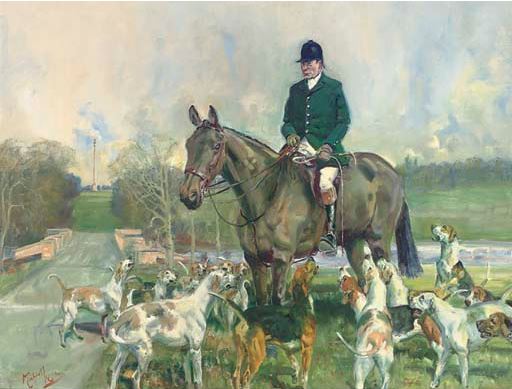
Captain Ronnie Wallace with hounds while Master of the Heythrop / Oil portrait by Michael Lyne
Captain Ronnie Wallace, MFH was the undisputed dean of British foxhunting and a frequent and popular visitor to the U.S. He was a genius in the art of venery and in his uncanny breeding sense. He was arguably the English breeder most influential in the development of today’s modern English foxhound.
It’s been thirteen years since Captain Wallace died in an automobile accident at age eighty-two, yet whenever hunting conversation turns to amazing feats of hound work performed by a superb huntsman, I’m reminded of an astonishing story that illustrates Wallace’s supremacy.
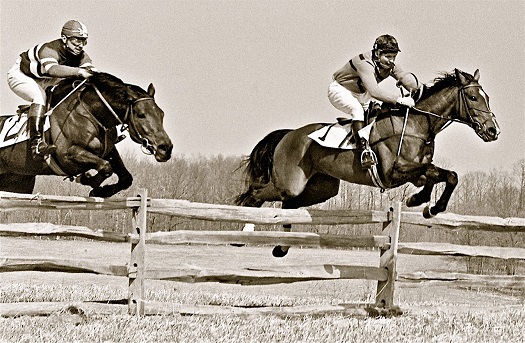
Harry Wight (to the right) and Randy Rouse battle for the lead at Seven-Corners circa 1970s. / Douglas Lees photo
Charles Henry Conley Wight, “Harry,” passed away on May 11, 2015 at INOVA Loudoun Hospital in Virginia. Harry hunted hounds at the Loudoun Hunt starting in 1985 and was appointed MFH in 1990. He retired from hunting hounds in 2001.
His steeplechase racing career spanned over forty years. He won Gentleman Rider titles several seasons, earning his last title at the age of sixty while besting many twenty-year-olds at the game. In 1967, with a committee of the late Dr. Joseph Rogers, S.D. Phillips, and others, he participated in the creation of the first Loudoun Hunt Point-to-Point races on the grounds of Oatlands. He managed these races until 2012.
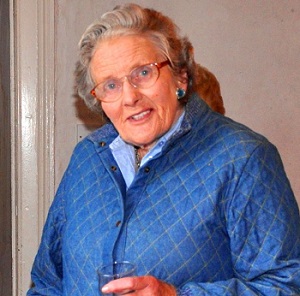
Lady Anne Hemphill (nee Ruttledge) passed away this week at Craughwell Nursing Home in County Galway. An elegant and friendly lady, with a pleasant greeting for everyone, she will be remembered as one of the most accomplished Field Masters for the Galway Blazers, a role she filled with style for fifteen seasons.
I remember hunting in Oranmore when Michael Dempsey was huntsman, and as he drew the last covert at the Rifle Range in near darkness, hounds found immediately and we were away. Lady Anne leading the field came down in a narrow lane when her horse slipped. Deciding to stop and help we got a glimpse of her hand barely visible over the wall waving us on as she was trying to extricate herself from under her horse, saying,” Go, on, go on, don’t mind me, enjoy yourselves!”
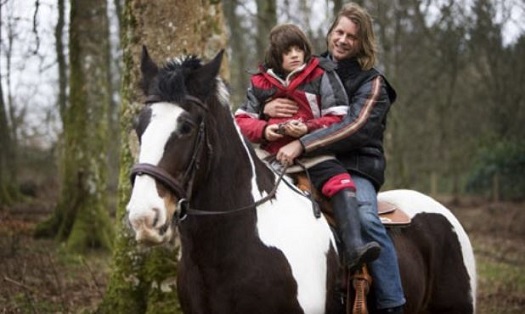
Rupert Isaacson discovered that horses were therapeutically beneficial to his autistic son Rowan. Their lives grew from that starting point.
When we talk about Rupert Isaacson and "Horse Boy," we could be talking about him and his autistic son Rowan, his internationally best-selling book, his award-winning documentary film, and/or his world-wide organization that helps autism families.
Rupert was an avid foxhunter until other imperatives occupied his life. He is also a gifted and persuasive writer. But Rupert’s principal gift to humanity is a mind set that allows no limits on what is possible. No cause, no matter the odds, is hopeless to Isaacson, and time and again he has tilted at windmills and accomplished astonishing results.
Rupert was born in England and roamed the world as a travel and environmental writer, specializing in Africa. It was there that he came upon a cause that captured him totally—the displacement and removal of the Bushmen of the Kalahari from their traditional hunting grounds by their own government. Isaacson became a vigorous activist for the Bushmen, gave speeches, wrote a book about their plight, and arranged for the Bushmen to appear before the United Nations to plead their case. They won.
At about that time, Isaacson and his wife, then living in Texas, discovered that their infant son Rowan was autistic. Conventional treatment protocols—and they tried many—were unable to improve the boy’s most troubling behavioral problems, and Isaacson immersed himself into finding alternate solutions. He discovered that horseback riding while holding his son in front of him in the saddle was therapeutic for the boy. But only temporarily.