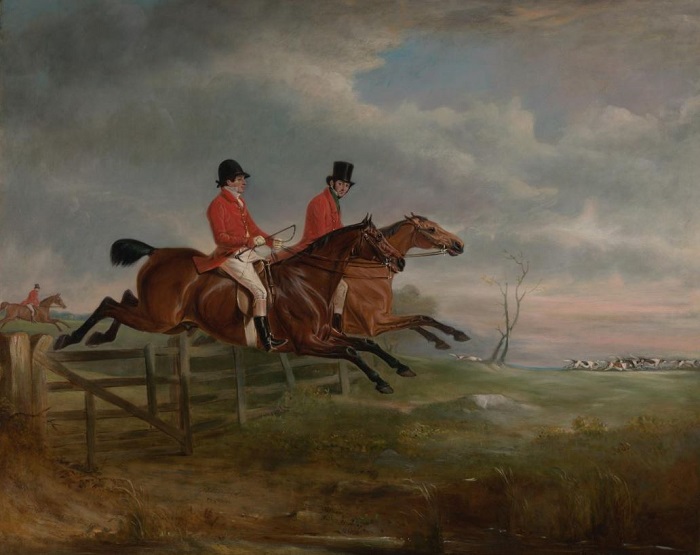
Squire Osbaldeston, MFH (foreground) on Ashton, with Sir Frances Holyoake-Goodricke on Crossbow, 1830, hunting the Pytchley in Melton Mobray, Leicestershire, England. Oil painting by John Ferneley
London-born in 1786, George Osbaldeston was a natural athlete. He rowed for various schools that he attended, including Eton and Oxford, neither of which he matriculated. He assiduously avoided academic work, but set high standards for rowdy behavior and was expelled from most of these fine institutions.
He was an outstanding cricketeer, bowling and batting as an amateur in numerous important matches. In 1818, however, he was barred for life from membership in a club as the result of an intemperate outburst, effectively finishing his career in important cricket matches.
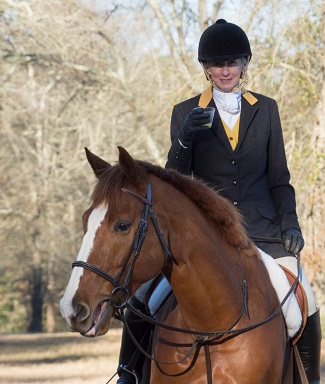
The author, a hunt coat, a stirrup cup, and a horse named Cort.I reached into the left, front pocket of my foxhunting jacket, a vintage black and grey-flecked wool frock made by Brittany Riding Apparel of New York. My fingers found something thin and soft—a faded blue pack of ten-cent stamps with an enthusiastic message from the postal service about using your zip code.
“Help us give your letters top speed.”
Five-digit zip codes were introduced in 1963; ten cent stamps were issued in the early 1970s; I was issued in 1955.
I inspected the stamp book further. What is the story of the stamps? And the story of a riding jacket I had been given by my mother on Christmas Day, 1972, but had never worn?
It’s the story of a woman’s place.
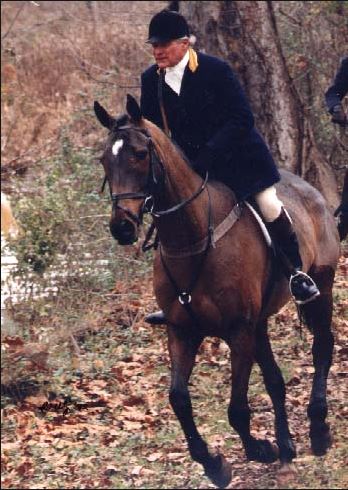
The late Erskine Bedford led the field brilliantly for the Piedmont Fox Hounds for many years.
A good Field Master is a blessing for any huntsman. The converse is equally true.
Have you ever wondered why your Field Master follows closely upon the huntsman and hounds at times, yet at other times keeps you further back than you, as a keen field member, would like? A good Field Master is always dancing between what he or she knows you want and what he/she knows the huntsman needs.
Good Field Masters ride well, of course, and are confident in their ability to jump whatever comes their way. They also need to be well mounted. I have seen many a good-riding Field Master made to look pretty poor because they were on horses that were simply not cut out to lead across country.
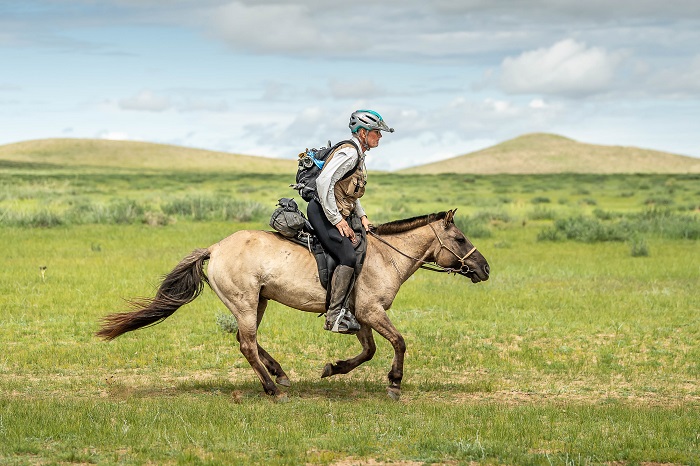
American western horseman Bob Long wins eleventh running of the Mongol Derby. / Sarah Farnsworth photo
There are crazy things to do. And then there’s the Mongol Derby.
Foxhunters have been known to compete in the Mongol Derby, as if the post-and-rail line fences in Mr. Stewart’s Cheshire country, the wire in New Zealand, the banks and ditches of Ireland, or the hedges of the English Shires aren’t enough of a challenge. The Mongol Derby, according to the Guinness Book of Records, is the world’s longest and toughest horse race. This year forty-five men and women from eleven countries gathered to race one thousand kilometers (621 miles) across Mongolia on semi-wild horses.
Finishing strongly, seventy-year-old Robert Long, originally from Cheyenne, Wyoming but now living in Boise, Idaho, was the undisputed winner of this year’s race. Long reached the finish at 11:03 am Mongolian time on August 14, 2019, seven days after the starting gun. Competitors will continue to cross the finish line for another three days.
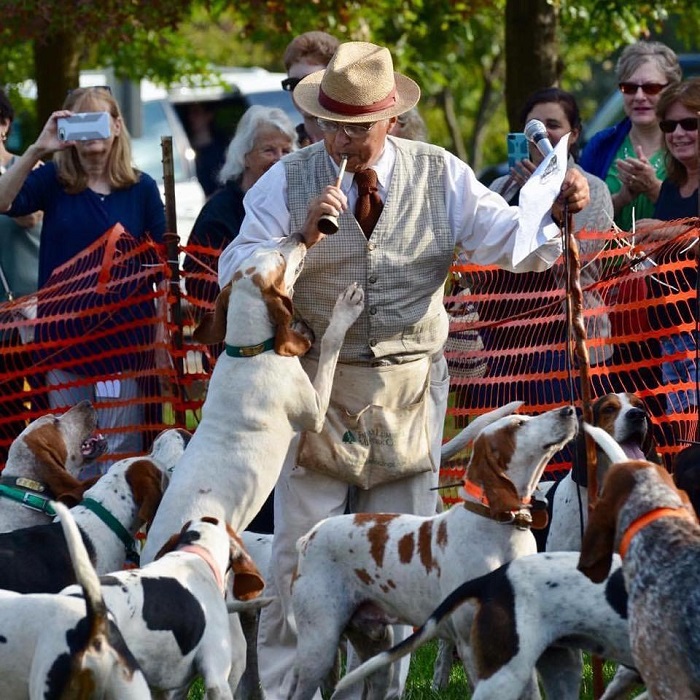
Todd "Doc" Addis, MFH, courtesy of Thornton Hill huntsman Beth Opitz. "This photo sums up the love he had for his hounds and the hounds' love for him," says his daughter.
Dr. Todd “Doc” Addis, one of the great champions of the American Penn-Marydel foxhound, died suddenly on July 24, 2019 at his home, Fox Hill, in Elverson Pennsylvania. He was eighty-five and with his family.
Doc was Master and huntsman of Warwick Village Hounds and a zealous advocate for the Penn-Marydel foxhound. He made it his crusade to convince foxhunters across North America of the advantageous traits, and superior abilities of his beloved Penn-Marydel compared to any other breed. He not only converted many successful Masters and huntsmen to his convictions, but was also personally responsible for helping, advising, and drafting good working bloodlines to those packs. In so doing, Doc was instrumental in extending Penn-Marydel bloodlines from their Pennsylvania/Maryland/Delaware roots to so many other hunts across North America.
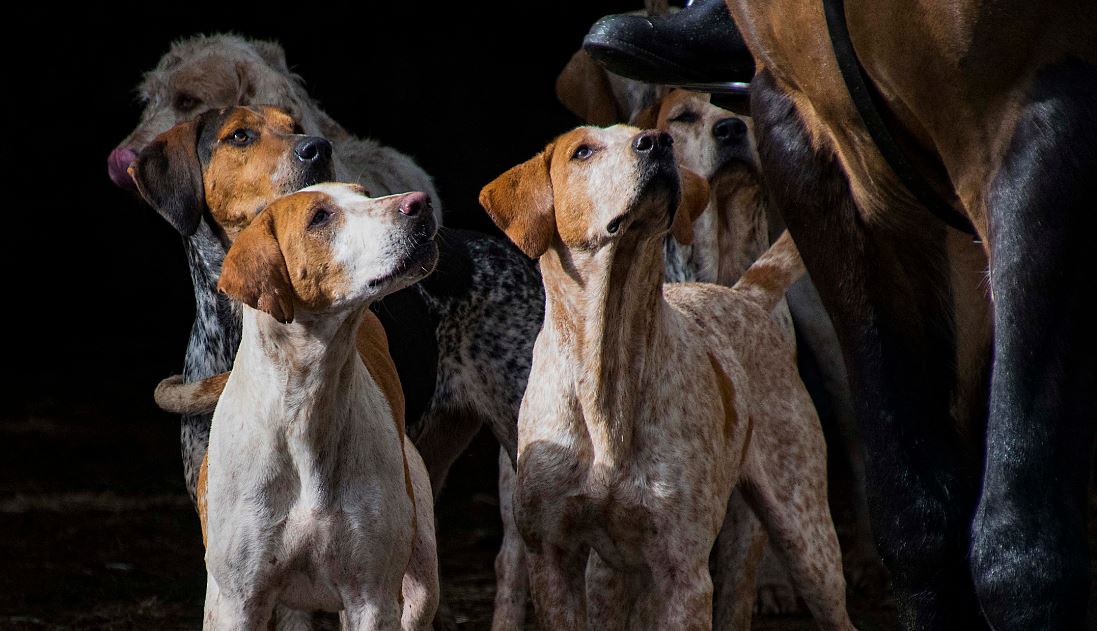
Western foxhounds, Cornwall, UK / Janet Ladner photo For many huntsmen the start of the season can’t come quickly enough. I remember blurting that thought once and the old Master replied, “Don’t wish the summer away, boy.” He was right; there are important things to be done during the summer.
What many members and even some Masters do not fully understand is how important it is for the new entry to enter well. For those unfamiliar with the term, the new entry are the young hounds that have not hunted yet. They are said to have entered once they have been hunting.
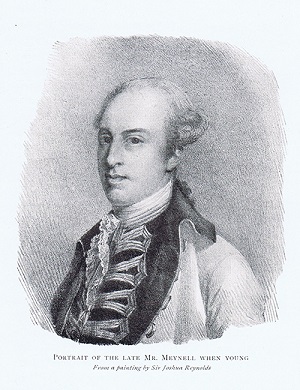
Hugo Meynell is known today as the father of modern mounted foxhunting. In the eighteenth century he transformed a sporting activity which attempted to control vermin with the slow and plodding Southern hound into an exhilarating chase at speed with fleeter Northern hounds and a scientific approach. In so doing, he set the stage for foxhunting’s Golden Age in the early nineteenth century.
The great Mr. Meynell, designated by his admiring friends “The King of Sportsmen,” or “The Hunting Jupiter,” earned those titles by the sport he had shown. Without owning an acre of land in Leicestershire (his extensive estates being situated in remoter countries), he carried on [his sport in that] best hunting country in the world.
He considered horses merely as vehicles to the hounds. There are different opinions as to Mr. Meynell’s proficiency as an elegant horseman; but it is never disputed that his progress over a country was, like the whole course of his life, straightforward.
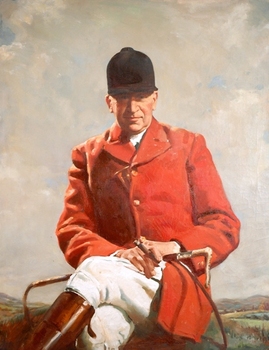
Alexander Henry Higginson, MFHAn Old Sportsman’s Memories, the autobiography written by A. Henry Higginson and J. Stanley Reeve tells the story of a proper Bostonian, Harvard class of 1898, who turned his back on a life of commerce, finance, and philanthropy—the route traditionally followed by New England men such as he. Smitten by the sport of foxhunting to the exclusion of all else, and with the support of his indulgent father, A. Henry Higginson followed his dream: a life of foxhunting.
His father, Major Henry Lee Higginson, more than fulfilled the family’s responsibilities to his community by his own philanthropy. The elder Higginson had dreamt of being a musician in his younger years, but Puritan Boston expected other things from her sons, and so he became a businessman as was expected. In time, he founded the Boston Symphony Orchestra, however, and was its earliest administrator.
He organized the corporation that built Symphony Hall, the first auditorium designed in accordance with scientifically derived acoustical principles. It is, as a result, widely regarded as one of the top concert halls in the world. Interestingly, with all the architectural flourishes of the period that architects McKim, Mead & White could bring to their creation in the year 1900, the structure displays only one composer’s name upon a large shield mounted on a frieze centered above the stage—Beethoven. There are other smaller shields upon the frieze framing the stage, but they are still blank! Boston is a careful and thoughtful old city.
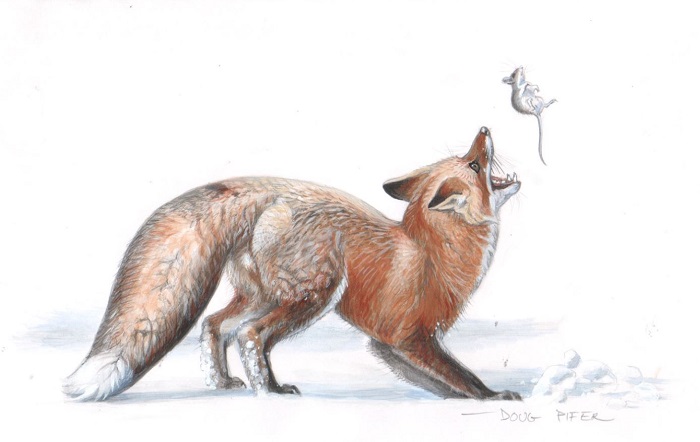
Illustration by Doug Pifer
The late Matthew Mackay-Smith—internationally renowned veterinarian, editor of EQUUS magazine, foxhunter, and elite endurance rider—began foxhunting at the age of eight behind his late father, Alexander Mackay-Smith (ex-MFH, author, and longtime editor of The Chronicle of the Horse). Matthew left a treasure trove of hunt reports and countryside observations which, thanks to the permission of Matthew’s wife, Winkie, FHL will publish from time to time.
In my veterinary rounds in the country of Mr. Stewart’s Cheshire Foxhounds (PA), I often took a shortcut by using West Road, a primitive gravel lane with grass between the tire tracks. There, on a blustery March afternoon, I spied a feminine fox upwind of me, nonchalantly toting half a rabbit. In the gloaming, she was heading toward her den with the family supper. I stopped. She stopped, too, but oblivious of me. She was maybe fifty feet away.





On Not Letting Standards Slide
He made us able to take hounds under strict control through the by-streets of Slough without a whipper-in. Later George Knight, Percy Durno, Bill Lander, Tony Collins, and now, Anthony Adams and Tony Wright were all trained to know there is a correct way of doing everything.