
Memoirs of a Foxhunting Photographer
Book Review by Norman Fine
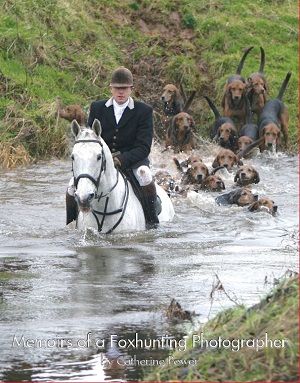
Memoirs of a Foxhunting Photographer by Catherine Power, hardbound, large format (8-1/2 x 11 inches), color, 202 pages, 55.00 euros shipped outside Ireland, order direct from the photographer or on the website.Inside this colorful book, Memoirs of a Foxhunting Photographer, is a collection of the best of Catherine Power’s foxhunting photographs. Accompanying the images are historical and descriptive pieces written by her husband and fellow hunting correspondent, Dickie Power. This large format volume showcases the mad-keen Irish hunting people, the hounds, the Irish hunters, the fox, and the glorious Irish landscape that makes foxhunting in Ireland so adventurous.
Having hung up her boots after forty-seven seasons hunting with the Scarteen, County Limerick, and the “Gallant” Tipps, Catherine Power decided to follow her other passion for photography. Many of the photos have been previously published The Irish Field, Foxhunting Life, Horse and Hound, The Field, Hounds Magazine, and other sporting journals. Her work takes center stage in The Irish Field where she is hunting correspondent, a role she shares with Dickie. The pair makes a complete package for any sporting publisher: exciting images and compelling text.
New Pro-Hunting Organization Kicks Off in UK
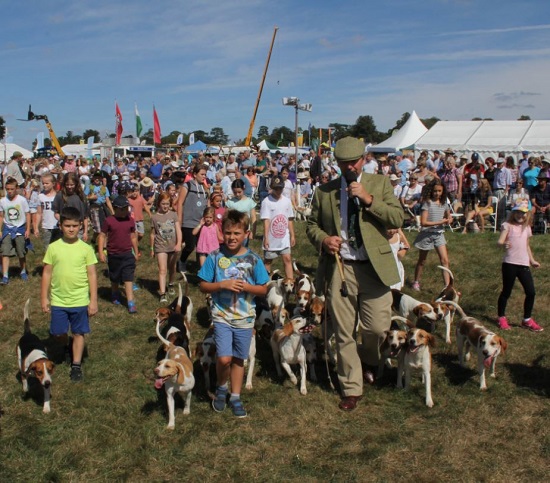
A new pro-hunting organization focuses on communicating at the grass roots level.
In the belief that a grass roots organization could do much good for foxhunting in the UK, a group of us hunting enthusiasts have formed a new organization—This Is Hunting UK. We are not in competition with the Countryside Alliance or any of the hunting associations. Quite the opposite, we seek to find ways of working together for the common good of all forms of hunting.
The essence of our mission is to communicate fully and openly, directly with the public, by providing the information they require to understand more about the conservation, cultural, social, and financial benefits that hunting provides. However, there was one key question: how to give our effort a kick start? Believe it or not, it turned out to be the anti-hunting activists who gave us just the incentive we needed.
Hazards at Howard County
When the screw holding the paddock-booted foot straight on the leg of his prosthesis broke one day out hunting, his little daughter Wendy rode up alongside, pointed at the odd way his toe was turned toward the horse’s belly, and said, “Dad!” Bob, of course, corrected the situation by reversing the foot so it pointed […]
Old North Bridge Hounds in the Footprints of Colonial History
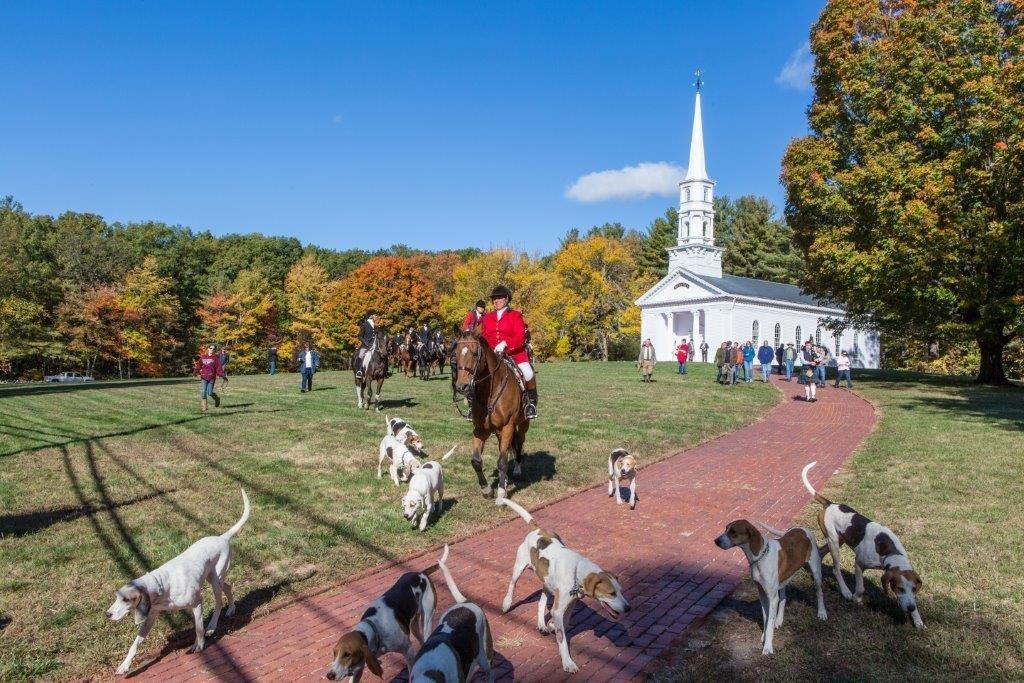
Old North Bridge Master and huntsman Virginia Zukatynski and hounds leave the Mary Martha Chapel at Longfellow’s Wayside Inn followed by piper Thomas Childs, the field, and guests after the Blessing of Hounds. / Jack McCrossan photo
by Patricia Jackson
The Old North Bridge Hounds (MA) held their Blessing of Hounds on the grounds of historic Longfellow’s Wayside Inn in Sudbury, Massachusetts on October 17, 2015. The blessing took place at Henry Ford’s Martha Mary Chapel on a perfect fall day in New England under clear blue skies and beautiful fall foliage. Master and huntsman Mrs. Virginia Zukatynski, hounds, staff, members, and guests joined together and proceeded past the Inn to the chapel for the blessing.
Spectators enjoyed the sights and sounds as Joint-Master Marjorie Franko led horses and riders over the brick pathways and across the old bridge, following the music of the bagpiper. Longfellow’s Wayside Inn has a long history of hosting foxhunts on the property, including the Norfolk Hunt, the old Millwood Hounds, Myopia, and Harry Worcester Smith’s Middlesex Hounds. Situated on the Boston Post Road, one of the oldest commissioned roads in the U.S., much of it built along the two-foot wide Pequot Path used first by native Americans, the Wayside Inn has the distinction of being the country’s oldest operating inn, offering hospitality to travelers along the old road since 1716.
The Wayside Inn, made internationally famous by Henry Wadsworth Longfellow’s book of poems, Tales of a Wayside Inn, was run by the Howe family. Longfellow visited the Inn in 1862 and his book of poems was published the following year. In it he republished his poem, “Paul Revere’s Ride,” which contains his immortal phrase, “Listen my children and you shall hear of the midnight ride of Paul Revere.” Henry Ford bought the Inn in 1923, restored it, and formed the charitable trust that operates the Inn today.
Foxes
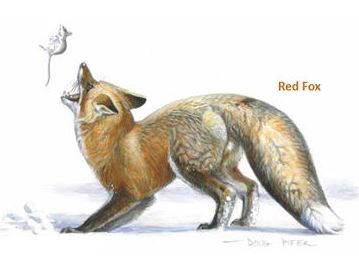
TRed fox / Illustration by Doug Piferhe Pennsylvania Game Commission has published on its website a series of excellent Wildlife Notes on nearly a hundred species of wildlife to be found in that state. With their kind permission, Foxhunting Life earlier republished their comprehensive study of the Eastern coyote, and here we present the Wildlife Note on foxes, once again with permission, which we believe our foxhunting readers will find substantive and revealing.
Red and gray foxes are small, agile carnivores belonging to the same family (Canidae) as the dog, coyote, and wolf. Both red and gray foxes are found throughout Pennsylvania. They are intelligent predators with extremely sharp senses of sight, smell, and hearing (a fox can hear a mouse squeal from about 150 feet).
Foxhunting Etiquette
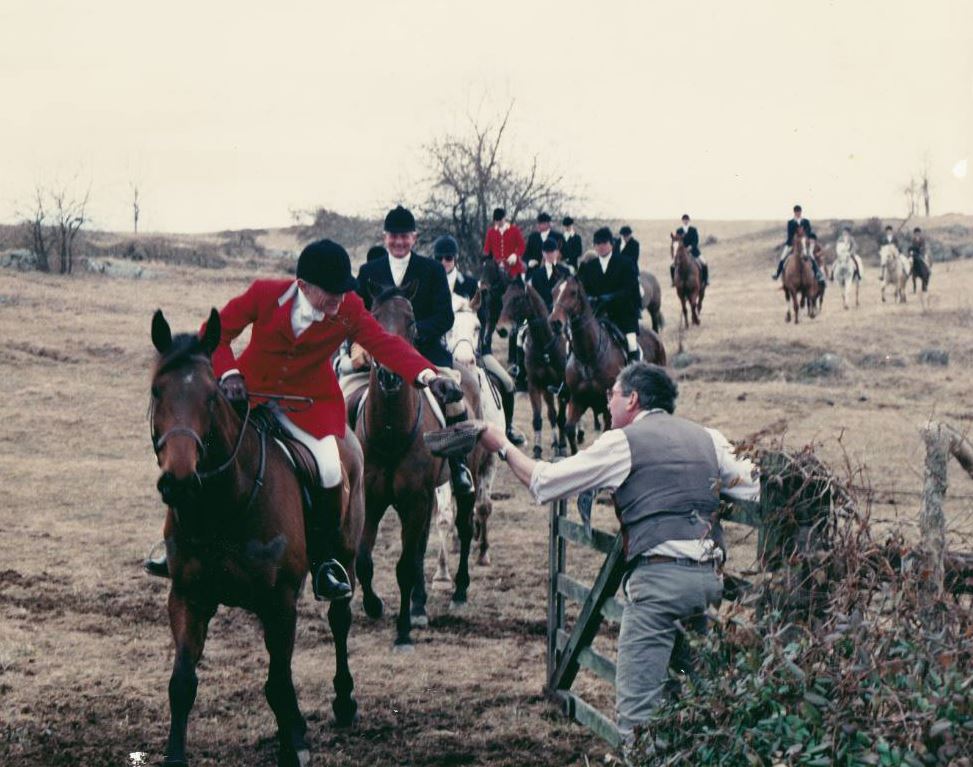
All civilized societies adopt rules of etiquette and conventions that allow individuals to interact without conflict. By the same token, unique activities, and especially those involving a measure of risk (motor driving, sailing, foxhunting), develop of necessity their own unique rules and conventions to help assure a safe and pleasant outcome at the end of the day for all participants. Thus, the courtesies and conventions of the hunting field, developed over the centuries, aim to produce an environment in which an exuberant sport may flourish pleasurably and safely. As each new season begins, it is never inappropriate to remind ourselves of the courtesies we owe to our landowners, Masters, staff, hounds, and fellow field members.
John Woodcock Graves: John Peel’s Boswell
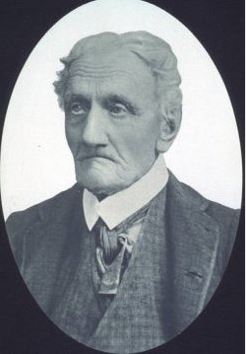
John Woodcock Graves (1795–1886)We’re all familiar with “John Peel,” surely the most well-known foxhunting song of all time. We’re perhaps less familiar with the songwriter, John Woodcock Graves, who turns out to be a most fascinating and unpredictable character—rogue some might say—in his own way. We owe this insight into Graves’ life to our Cumbrian friend, Ron Black, who sent us excerpts from A Ramblers Notebook at the English Lakes (H. D Rawnsley, 1902).
In an earlier article, Foxhunting Life describes that night in 1829 when John Woodcock Graves sat in his parlor in Caldbeck, in England’s Lake District, with John Peel. Peel was a farmer, horse dealer, and foxhunter whose hounds were highly celebrated by the local sheep farmers. From the adjoining room, Graves overheard his son’s granny singing an ancient Irish melody to the child. Graves took that old melody and wrote a new set of lyrics to honor his friend, John Peel.
“I sang it to poor Peel,” Graves wrote, “who smiled through a stream of tears which fell down his manly cheeks, and I well remember saying to him in a joking style, ‘By Jove, Peel, you’ll be sung when we’re both run to earth!’’
Just a few years after that cozy night, however, Graves became embroiled in a violent altercation with an employee, the aftermath of which induced him to leave England forever. His adventures were just beginning.
Further Adventures of Jack and Pete
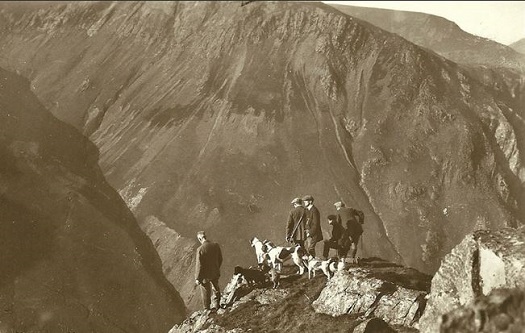
Foot hunting in the Cumbrian fells / photo courtesy of Ron Black
Further adventures of our old friends Jack and Pete in Cumbria, a majestic landscape populated by some who might see themselves as the only true purists of our sport. We hope mounted foxhunters won’t take too much offense at this story. A little will be well justified, though!
With the benefit of hindsight and a few drinks, there was a certain inevitability about the whole affair. It began innocuously enough, with Jack sitting in the pub telling us that a friend had invited him out for a day with hounds. “Wot pack?” said Pete, muscling in on the conversation.
Jack named a mounted pack some miles down the motorway. Pete took it all in and thought for a moment. “They ride,” he announced. “Not getting me on a hoss, smelly bloody things.”
Jack sighed. “We can follow in the Land Rover,” he said. “They will give us a guide.”
Politics and Sport: The Berlin Wall and Drag Hunting

The state of Brandenburg in Germany (formerly a part of Soviet-controlled East Germany from 1945 to 1990) is known for its well-preserved natural environment. Ambitious preservation policies began there in the 1990s, following reunification of East Germany and West Germany. Berlin, which was also divided into East and West Zones until the fall of the Berlin wall, lies as a separate city-state within the borders of Brandenburg. Just a short twenty-five years ago the scenes in this video could not have taken place.
This video of the Brandenburger Hunting Club was recorded by a rear-facing camera attached to my wife’s helmet. The Club was founded in 1991—shortly after the fall of the Berlin wall and German reunification—in Seeburg, close to the capital of Brandenburg in Potsdam. The fall of the wall actually enabled drag-hunting in the area, as the required space was simply not available in the isolated city of Berlin. Needless to say, in socialist East Germany, drag hunting and foxhunting were certainly not sports encouraged by the state.
How I Came to go Foxhunting
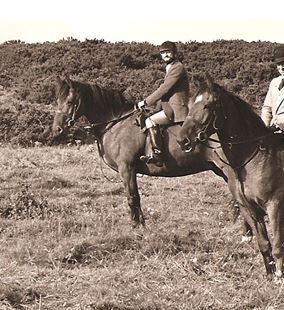
Steve Price on his first foxhuntSome time ago in Norm Fine’s Blog we asked the question, How to did you come to go foxhunting? Fine told his story and received some good Comments in response. Here’s Steve Price’s story. Use the Comments field to send us yours!
It happened nearly forty years ago. I was half of a two-person equestrian journalist junket to Ireland. Over lunch in his home at Scarteen, Master Thady Ryan invited us to join him the following day. My companion happily agreed, but I demurred. My jumping skills were limited to beginner courses—egg-rolls and twice-arounds—and I had seen the formidable banks and ditches separating the County Limerick fields.
“Aw, I’ll give you my best hunting horse,” Thady assured me, “you’ll be safe as houses.”
In for a penny… I shrugged, and went along.