Johnsey's tribute to Bagpipe was first published in the 2016 Yearbook of the Tennessee Valley Hunt. The hunt, founded in 1989, is unique in that most of the founding members had never foxhunted prior to forming the hunt. Fortunately, they found their way to Dr. Todd “Doc” Addis who, along with his wife Happy, brought his hounds to Tennessee and taught the fledgling foxhunters all about hunting. Before leaving, Doc made a gift of twenty couple of Penn-Marydels to the Tennessee Valley Hunt.
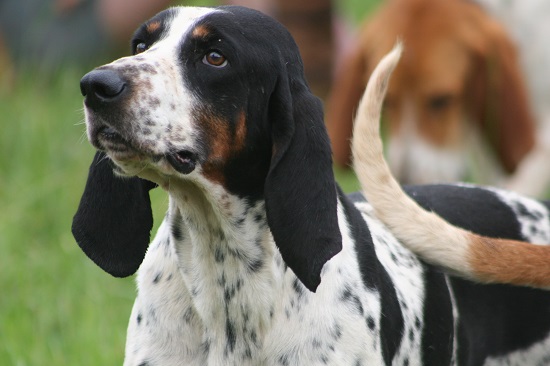
Kimberton's Bagpipe 2010 / Gretchen Pelham photo
I’ve chosen Kimberton’s Bagpipe 2010 as this year’s Hound of the Year. Prior to last hunt season, Bagpipe was nothing more than your everyday, stubborn, old filler hound. Terrified of his own shadow and extremely anti-social when it came to humans, Bagpipe did everything on his own terms. By the end of the 2014/2015 season he would pack in, walk out, and was only decent in the hunt field.
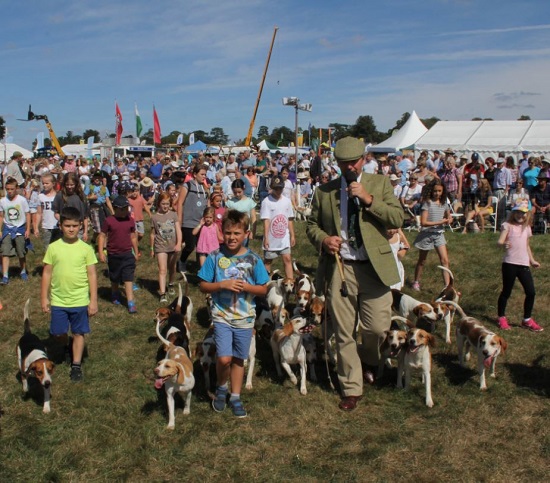
A new pro-hunting organization focuses on communicating at the grass roots level.
In the belief that a grass roots organization could do much good for foxhunting in the UK, a group of us hunting enthusiasts have formed a new organization—This Is Hunting UK. We are not in competition with the Countryside Alliance or any of the hunting associations. Quite the opposite, we seek to find ways of working together for the common good of all forms of hunting.
The essence of our mission is to communicate fully and openly, directly with the public, by providing the information they require to understand more about the conservation, cultural, social, and financial benefits that hunting provides. However, there was one key question: how to give our effort a kick start? Believe it or not, it turned out to be the anti-hunting activists who gave us just the incentive we needed.
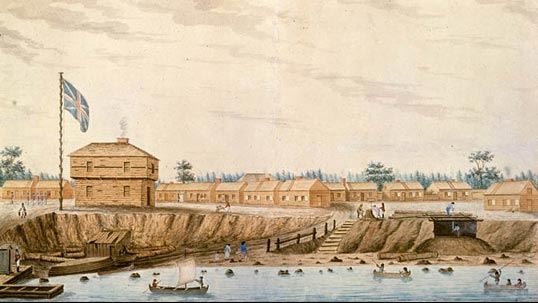
Fort York on Toronto Harbor, early nineteenth century
The Toronto and North York Hunt is proud of the long history of its pack of English foxhounds. Early in the nineteenth century, British military men, fond of sport, shipped hounds across the Atlantic to Fort York, which guarded Toronto Harbour on Lake Ontario. Not long after the City of Toronto was incorporated in 1834, we find mention of the Toronto Hunt. Between 1843 and 1869, eight of the hunt's nine Masters were army officers.

Back in the late 1950s, Deirdre and her friend Sarah, both just nineteen, came to America. The pair had left Britain, where post-war ration books were still in use. Sarah was to train horses and riders for Jamie Kreuz at Bryn Mawr Farms outside Philadelphia. Deirdre was to work for the Insurance Company of North America in Philadelphia and help Sarah on weekends. What follows is Part V of their adventures, which have included Part I: “How to Bridle a Green Field Hunter,” Part II: “The Witch With Warts,” Part III: "Pink Gin: The Beer Swilling Timber Horse," and Part IV: "Purrfec' Granary."
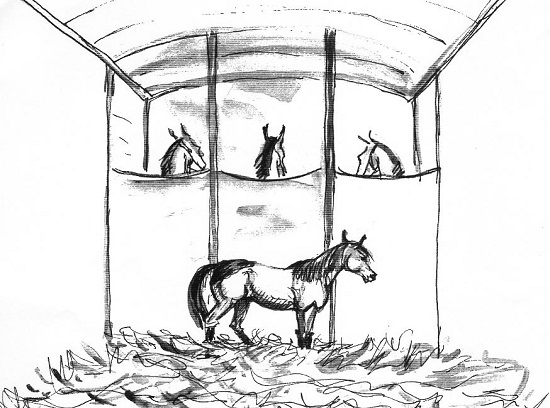
Illustration by Rosemary H. Coates
Two weeks after Sarah and I arrived in the States we were on the road northwards with twenty-five hunters. They were entered at the Piping Rock Horse Show on Long Island. The horses were loaded into nine-horse trailers for their journey. In the first compartment six horses faced each other across an aisle. Although three horses could be loaded into a separate compartment at the back, there was only one 11.2-hand pony in there—so small, he was up to his belly in straw. This was Sex Spot who would not travel with another horse; he had the three back stalls to himself. He got his name because he had a football-sized black spot on his rump, in an otherwise white coat.

Epp Wilson, MFH wrote this piece for members of the Belle Meade Hunt (GA). Foxhunting Life subscriber Howard Benson suggested that Epp’s recommendations deserve wider distribution. We agree. What follows is a sympathetic, timely, and heartfelt message as only Epp can deliver it!
Master and huntsman Epp Wilson and the Belle Meade hounds / Lauren Giannini photo
The hound-roading or exercise season is a good time to bring out green horses—or horses otherwise not used to hunting and hounds bolting out of the bushes and dashing at them from behind.
It is a lot easier for green horses to process surprises now, while we are just exercising hounds than it is when we are hunting, and their minds are already overwhelmed with the mental challenges of a coyote chase. Frequently the inexperienced horse is already at wit’s end during a coyote run, so, of course, he is more likely to kick a hound.
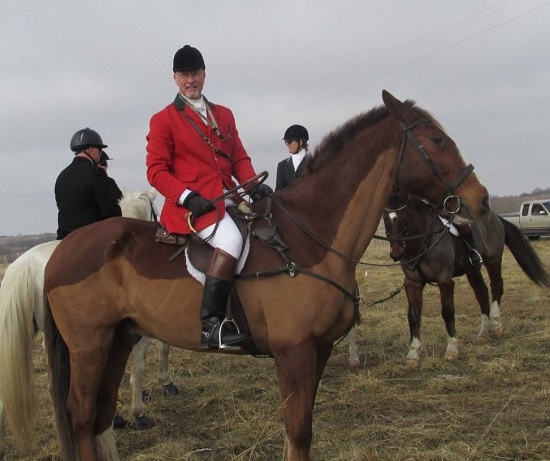
Dr. Steven Thomas, huntsman, Fort Leavenworth Hunt, on Romulus
His day job is demanding, and he’s never hunted hounds before, but Dr. Steven Thomas has been preparing for his new responsibility as huntsman of the Fort Leavenworth Hunt (KS) since childhood.
“Time management will be the biggest problem I’ll face,” Thomas acknowledged. “We’ll need a lot of volunteers,” he adds. But he has admiration for his fellow hunt members, the foxhounds in kennels, and the distinguished history of the Fort Leavenworth Hunt. He’s definitely looking forward to hunting hounds this season.
Thomas grew up riding Western, and, as a boy, coon hunted with his grandfather who ran his own hounds. He never rode without a pommel in front of him until he hooked up with the late Tommy Jackson, huntsman at the Mission Valley Hunt in Kansas.
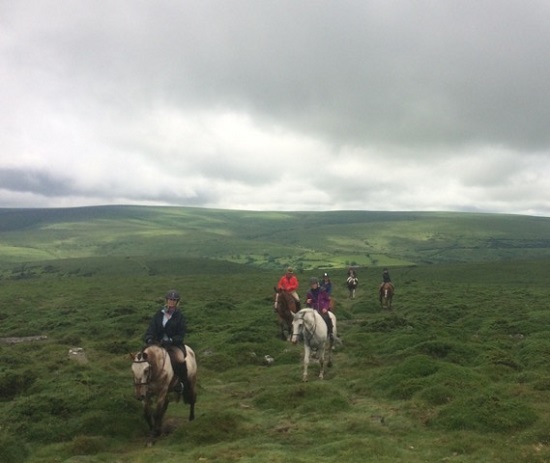
(Front to back) The author, Rosie Campbell, MFH, Live Oak huntsman Spencer Allen, his father Chris Allen, and two friends explore Dartmoor National Park, with Liberty Trail hosts Elaine and Robert Prior.
The first morning there was heavy mist across the moors, and visibility was limited. What I could see looked exactly like I imagined a scene from Hound of the Baskervilles or Jamaica Inn. Ghostly hedges revealed hidden farmyards, complete with thatched roof cottages and low barns.
We had come to Dartmoor National Park in Exeter, England to ride across the famous moors for a couple of days before continuing onto Devon and Cornwall. Rosie Campbell, MFH of Bull Run Hunt (VA), her husband Chris Allen and son-in-law Spencer Allen, and my husband Michael and I had driven down to Bovey Castle from London on Tuesday. It had been cool, with some showers, and by 4:00 pm we met in the lovely sitting room for a traditional Devon cream tea. Delicious and decadent. We had it only once! Buttery biscuits, topped with berry jam and then the cream, which really looks like butter, is so good.
Bovey Castle is a luxurious spa in the heart of Dartmoor and caters to hunting and fishing activities of all sorts. They have partnered with Liberty Trails, the equine brainchild of Elaine and Robert Prior, which offers riding holidays across these moors made famous by Sherlock Holmes and more recently, Stephen Spielberg's movie, War Horse.
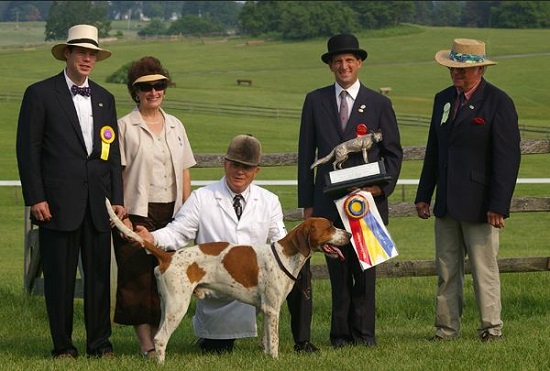
Potomac Jefferson 2005, the toast of North American Foxhounds, winning the Grand Championship at the 2007 Bryn Mawr Hound Show one week after capturing the same honor at Virginia. (L-R): George Hundt; Vicki Crawford, MFH; Larry Pitts, huntsman; Lance Taylor; Jake Carle, judge. / Karen Kandra Wenzel photo
The fabled American foxhound who, along with his get, cornered the silver market in North America has passed on. Potomac Jefferson 2005 was the MFHA Centennial Grand Champion Foxhound at both the 2007 Virginia Foxhound Show and the Bryn Mawr Hound Show one week later.
That year, 2007, marked the one hundredth anniversary of the founding of the Masters of Foxhounds Association. The entire year was filled with special exhibits, competitions, and events all across the country, attracting large and enthusiastic crowds of foxhunters, horses, and hounds. The classes of all the hound shows were swelled with the best examples of foxhounds that could be mustered, along with their supporters. The year 2007 was a big deal.