A Woman’s Place
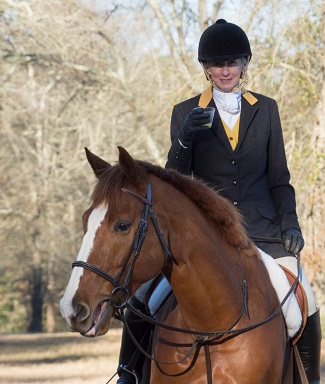
The author, a hunt coat, a stirrup cup, and a horse named Cort.I reached into the left, front pocket of my foxhunting jacket, a vintage black and grey-flecked wool frock made by Brittany Riding Apparel of New York. My fingers found something thin and soft—a faded blue pack of ten-cent stamps with an enthusiastic message from the postal service about using your zip code.
“Help us give your letters top speed.”
Five-digit zip codes were introduced in 1963; ten cent stamps were issued in the early 1970s; I was issued in 1955.
I inspected the stamp book further. What is the story of the stamps? And the story of a riding jacket I had been given by my mother on Christmas Day, 1972, but had never worn?
It’s the story of a woman’s place.
Like Falling Off a Log
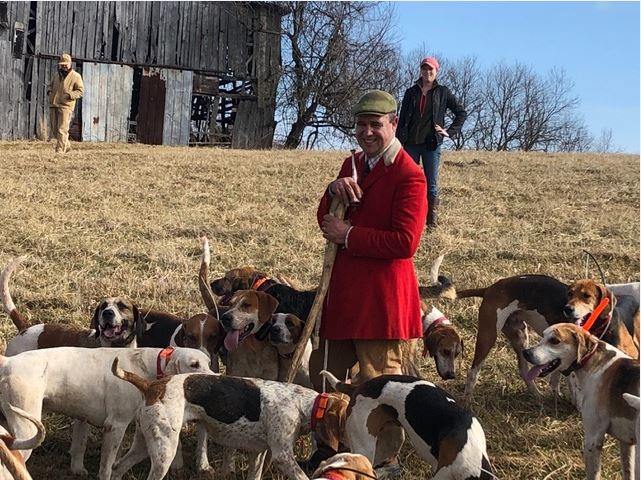
Andy Bozdan hunting the Camargo foxhounds on foot over wet country.
The author, as we reported in our last issue, is the new huntsman at the Camargo Hunt (OH). During his career, Andy Bozdan has served as huntsman in England, Australia, and the U.S. Recently, he’s been whipping-in at the Blue Ridge Hunt (VA). Foxhunting Life asked Andy what it’s like to carry the horn again and be The Man in Front!
So, after a couple of seasons whipping-in to Graham Buston at Blue Ridge Hunt, I took up the horn again at the Carmargo Hunt in Kentucky and Ohio. I can remember one or two of my friends jokingly asking if I’d remember how to blow the horn, or get on the right side of the horse, etc. But it is, for sure, very different when you take on a pack and suddenly … your it!
Everything becomes your responsibility, and very quickly you have to make decisions on the care of the hounds, how best to hunt the country, and plan ahead with a breeding program. To be honest I’ve been so busy since I arrived here that I have barely had time to stop and think!
Historical Foxhunting Treasure Rescued From Extinction
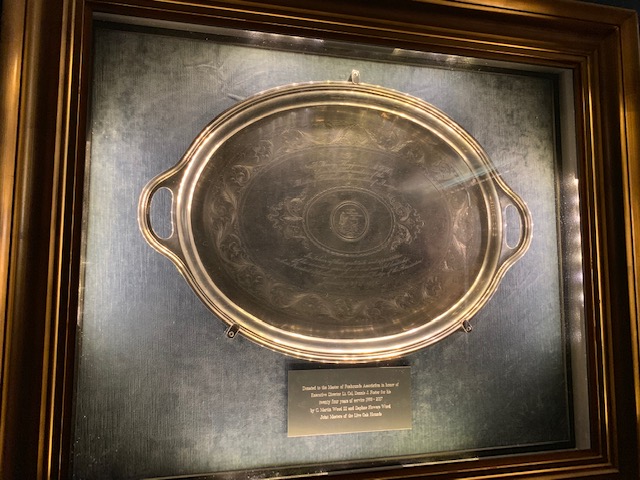
The old silver tray was headed for melt-down, as are most engraved and unknown relics of lives long past and out of memory. Fortunately, however, it was recognized and rescued. For that, foxhunters with a respect for history have foxhunting historian Peter Devers, Millbrook ex-Master John Ike, and Live Oak Masters Marty and Daphne Wood to thank.
On a January evening in 1931, A. Henry Higginson—Master, huntsman, author, and contender in the Great English-American Hound Match of 1905—tendered his resignation as president of the Masters of Foxhounds Association. At dinner that night, members presented him with a tea service and engraved silver tray as a token of their regard and appreciation for his many years of service to the sport. In the last chapter of Higginson’s book, Try Back, published the following year, he wrote:
Casanova Hunt and Tommy Lee Jones Honored by Virginia House of Delegates
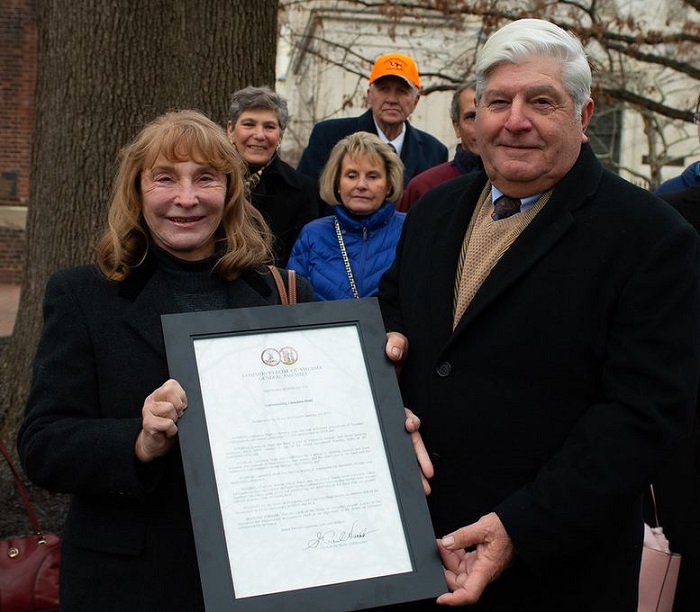
Photos by WLS Photography
Casanova Master Joyce Fendley and huntsman Tommy Lee Jones were honored by the Virginia House of Delegates in Richmond. On February 1, 2019, Representatives of The Virginia State Legislature approved a Resolution commending the Casanova Hunt in Fauquier County on its 110th anniversary. Casanova’s history and contributions to the land and the community were noted.
A second Resolution recognized Casanova’s professional huntsman of forty-nine years, Tommy Lee Jones, for his contributions to hunting and showing in his Fauquier County community as well. Tommy Lee is the show manager for both the Upperville Colt and Horse Show and the Warrenton Horse Show.
The Origins of “Tally Ho”
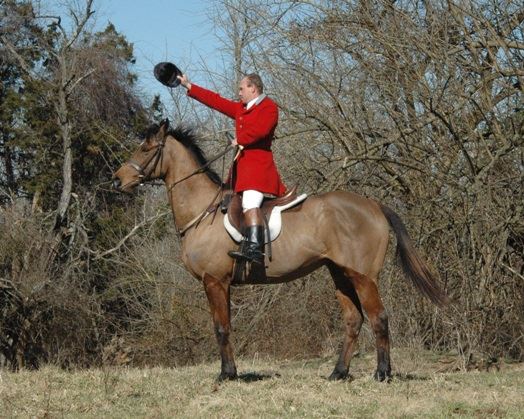
The “Tally Ho” / Nancy Kleck photo
The next time you view old Reynard or that sneaky coyote slipping away from covert, you may be tempted to call out “Tally Ho.” There are occasions in the hunting field when it is appropriate to yell this call out loudly-and-clearly, but with our modern methods it is more likely that the huntsman will be informed by a whipper-in with a quick call over the hunt radio that the quarry has broken cover.
The quiet approach will be less disturbing to the hounds but it will not stir the adrenaline like the old-fashioned blood-curdling call of Tally Ho, yelled out loud at the top of your voice! Such an old-school call in the hunting field causes the mounted field to take in that extra hole in their girth, to cease “coffee housing” with their companions, and for the horses’ ears to prick forward in anticipation of exciting action to come.
The Find: How to Watch and Listen
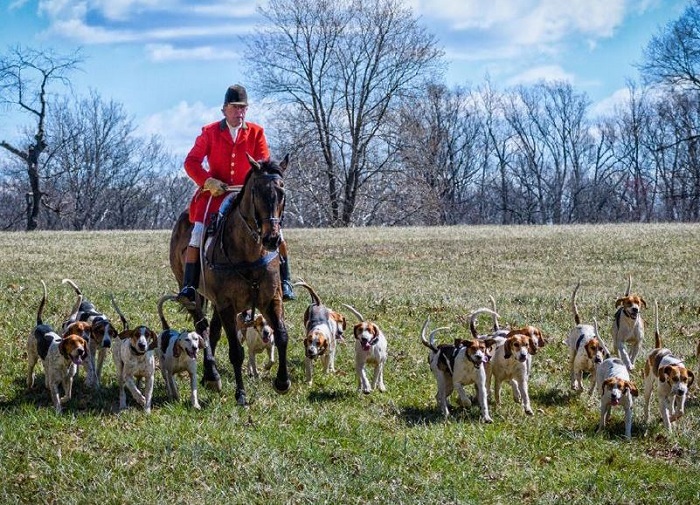
In this excerpt from “Foxhunting: How to Watch and Listen,” the author reveals what goes through the huntsman’s mind as hounds find their fox and push it into the open. In Robards’ celebrated book, the entire chase is chronicled from beginning to end, first from the standpoint of the huntsman, then from the viewpoints of the whipper-in, the Field Master, the hounds, and the fox.
Hugh Robards and the hounds of the Middleburg Hunt / Middleburg Photo
Try to position yourself so you can hear what the huntsman is doing. You may hear a hound whimper. The huntsman has not only heard, but he has seen Wagtail trying to take a line to the edge of the covert where some thick briars cover the boundary ditch. The pack also heard the whimper and, knowing it is Wagtail, a hound on whose opinion they can rely, have come in close to her and the huntsman. Now you might see the huntsman quietly edge his hounds toward the ditch. As you strain to hear what is going on, everything in the covert falls silent.
Letting Hounds Run in a New Season
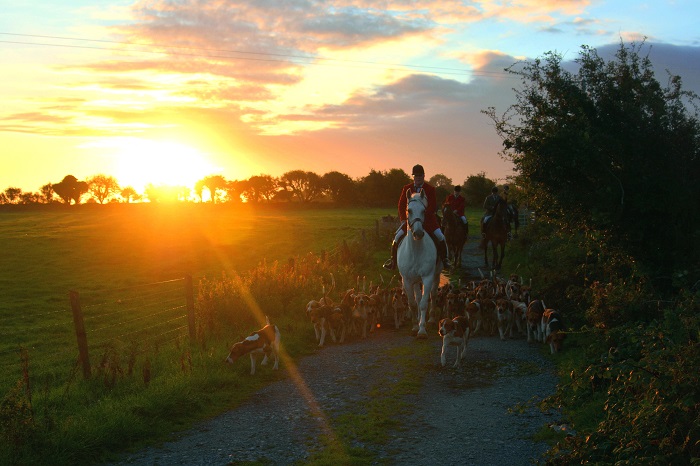
Huntsman Tom Dempsey and the County Galway foxhounds head to the first draw at Riona and John Naughton’s farm in Newcastle. / Noel Mullins photo
Everything that happens in the hunt kennels and hound shows during the spring and summer seasons are just activities and events that lead up to the first morning of the autumn hunting season. It can be August for some packs and September for others when hounds are allowed to run for the first time.
The huntsman will have planned and implemented the breeding of his new entry probably two years beforehand by selecting a stallion hound that he thinks would match a bi*ch in his kennels, and indeed raise the profile of the rest of his pack. He may want to breed more drive into his pack by selecting an Old English cross, or more voice by selecting an American cross.
The Dublin Horse Show: Pictures of my Memories

Noel Mullins, lifelong foxhunter and sporting photo/journalist in Ireland, and a frequent contributor to Foxhunting Life, launches his new book at the Dublin Horse Show this week.
The Dublin Horse Show: Pictures of My Memories is packed with eight hundred images of the world-famous show, selected from more than ten years-worth of thousands of Mullins’ show photographs as well as other historical images. Matthew Dempsey, past-president of the Royal Dublin Society (RDS) has written the Foreword.
First held in 1864, the Dublin Horse Show featured a “Leaping Competition” (as it was then known) in 1868. The first winner was Richard Flynn, a sheep farmer from County Roscommon, on his hunter Shaun Rhue. He shared a prize fund of £55 but sold the horse to Squire Conolly of Castletown House, the founder of the Kildare Foxhounds for £1,000. He jumped six feet one-and-one-half inches over the Stone Wall.
Metamora’s Annual Stable Tour Raises Funds, Makes Friends
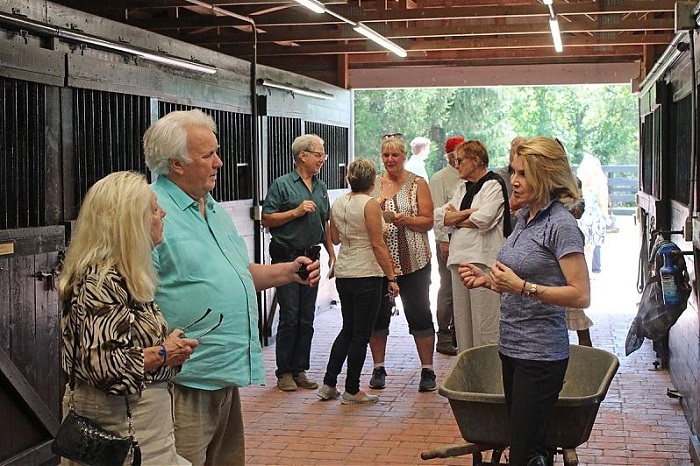
People leave with, ‘I never knew that!’ or, ‘So, you don’t shoot the fox!’
What a fine way to raise funds for the hunt and at the same time make friends for foxhunting!
“We keep the atmosphere relaxed and pleasant,” said Joe Maday, MFH, “and we try to offer visitors a variety, whether it’s a show stable, a driving stable, or a woman who raises Arabs and has foals and yearlings to show the children. We gain new hunt supporters for sure. People leave with, ‘I never knew that!’ or, ‘So, you don’t shoot the fox!’ There’s something for everybody, even if it’s just a pretty drive in the country.”
Badgering: A Fund Raiser for the Hunt
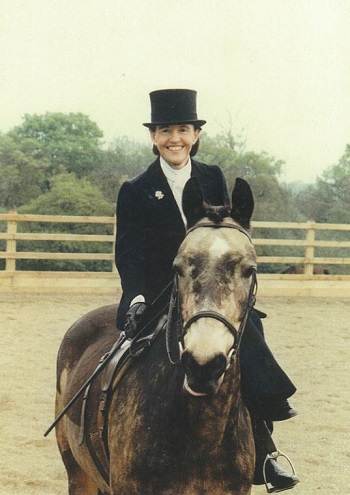
Deirdre Hanna, our elegant authorMany hunts are continually on the prowl for a new fund raising scheme. Here’s a game from Britain that may raise funds, but if the members get to brawling don’t blame FHL.
The idea of using badges to raise hunt funds was the brain-child of our Hunt Chairman and this is the way he made it work.
Every member of the Sennybridge Farmers’ Foxhounds in Powys, Wales, was issued a badge at the start of the season. The badge cost £10.00 and the scheme was to last a year, until the start of the next season. According to the rules, all members had to buy a badge and show the badge at anytime, anywhere, when challenged by another Hunt Member, who also had to show their badge at the same time. Some minor points eased the situation for the ladies. Whereas a man had to produce his badge from a pocket, wallet, or coat, ladies could keep them anywhere on their person, as well as in their handbags or shopping bags.