
A Vixen’s Leap
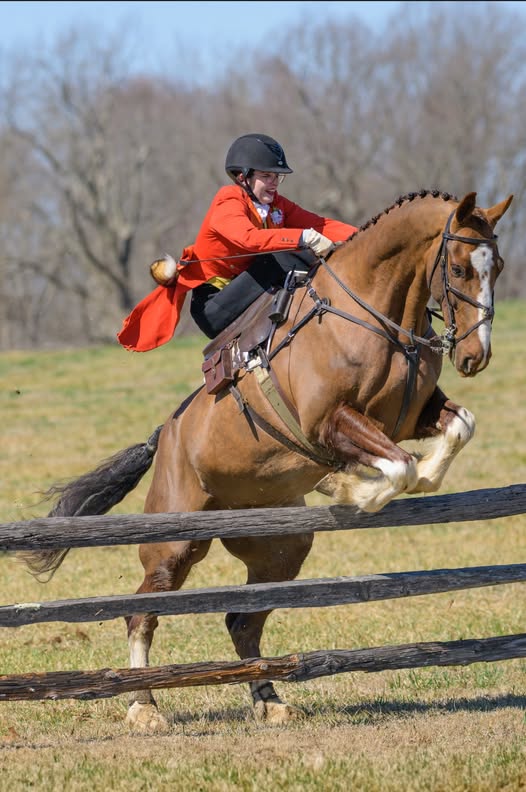
At this year’s Mr. Stewart’s Cheshire Foxhounds Vixen Hunt held on March 21, 2025, 24-year-old Audrey Buchanan took one of Cheshire’s famous post-and-rail fences riding aside with a very foxy accessory.
Fanciful Fibs and Other Sins
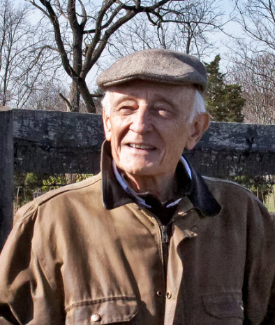
Photo by Karen MyerSome Foxhunting Life readers have already seen this opinion piece, published more than a year ago. While it attracted a number of comments for which I’m grateful, the message hasn’t, and of course never will reach everyone. So after having seen a new batch of newspaper articles from around the country, containing cringe-worthy quotes by foxhunters attending Opening Meets this season, I’m obliged to re-publish my argument. If it reaches another pair of eyes or ears and changes the mind attached, it will be worthwhile!
As Pogo once famously said, “We have met the enemy, and he is us.” I think of that bit of comic strip philosophy whenever I hear foxhunters attempt to con the public or distance themselves from the truth about our sport.
Lady Anne Hemphill (1929–2015)
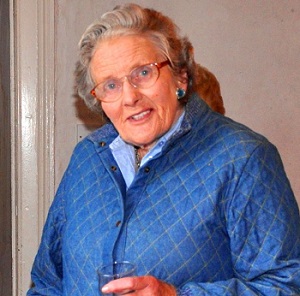
Lady Anne Hemphill (nee Ruttledge) passed away this week at Craughwell Nursing Home in County Galway. An elegant and friendly lady, with a pleasant greeting for everyone, she will be remembered as one of the most accomplished Field Masters for the Galway Blazers, a role she filled with style for fifteen seasons.
I remember hunting in Oranmore when Michael Dempsey was huntsman, and as he drew the last covert at the Rifle Range in near darkness, hounds found immediately and we were away. Lady Anne leading the field came down in a narrow lane when her horse slipped. Deciding to stop and help we got a glimpse of her hand barely visible over the wall waving us on as she was trying to extricate herself from under her horse, saying,” Go, on, go on, don’t mind me, enjoy yourselves!”
Rupert Isaacson and Horse Boy
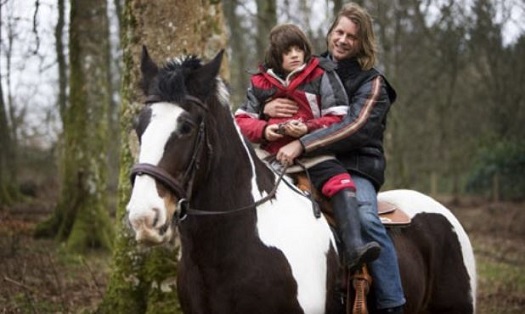
Rupert Isaacson discovered that horses were therapeutically beneficial to his autistic son Rowan. Their lives grew from that starting point.
When we talk about Rupert Isaacson and “Horse Boy,” we could be talking about him and his autistic son Rowan, his internationally best-selling book, his award-winning documentary film, and/or his world-wide organization that helps autism families.
Rupert was an avid foxhunter until other imperatives occupied his life. He is also a gifted and persuasive writer. But Rupert’s principal gift to humanity is a mind set that allows no limits on what is possible. No cause, no matter the odds, is hopeless to Isaacson, and time and again he has tilted at windmills and accomplished astonishing results.
Rupert was born in England and roamed the world as a travel and environmental writer, specializing in Africa. It was there that he came upon a cause that captured him totally—the displacement and removal of the Bushmen of the Kalahari from their traditional hunting grounds by their own government. Isaacson became a vigorous activist for the Bushmen, gave speeches, wrote a book about their plight, and arranged for the Bushmen to appear before the United Nations to plead their case. They won.
At about that time, Isaacson and his wife, then living in Texas, discovered that their infant son Rowan was autistic. Conventional treatment protocols—and they tried many—were unable to improve the boy’s most troubling behavioral problems, and Isaacson immersed himself into finding alternate solutions. He discovered that horseback riding while holding his son in front of him in the saddle was therapeutic for the boy. But only temporarily.
Cleveland Bays Bring Real Field Hunters to Upperville
If you want to see real field hunters at the Upperville Horse Show, the Cleveland Bay Hunter Division is for you. More than twenty-five percent of the entries in that division have seen service in the hunting field. Another twenty-five percent or so of the Cleveland Bay entries are still too young for the field, […]
Horse Collides with, Injures Racing Official at Gold Cup
Foxhunter and amateur whipper-in Peter Hitchen was injured while officiating at the Virginia Gold Cup Races at Great Meadow Park, Warrenton, Virginia, Saturday, May 2, 2015. Hitchen, who was on foot, was hit by a racehorse and suffered multiple breaks. Hitchen was taken to a hospital in Fairfax where the damage was assessed: fourteen broken […]
David Hopkins Semmes, ex-MFH
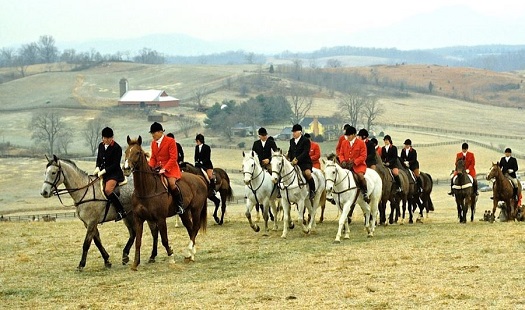
Joint-Masters David Semmes and Mildred Riddell move off at the head of the Old Dominion field from a meet at the Honorable and Mrs. Joseph W. Barr’s Houyhnhnm Farm near Hume, Virginia / Douglas Lees photo
David Hopkins Semmes—longtime Master of the Old Dominion Hounds (VA), amateur steeplechase rider, and deep-water sailor—died peacefully at his home, Indian Run Farm, near Flint Hill, Virginia, on New Years Day, just four days shy of his eighty-seventh birthday.
Born in Washington, D.C., Semmes graduated from Episcopal High School then served a tour of duty in World War II as an aviation radio crewman. He graduated from Princeton in 1949, and in 1950 served in Army intelligence on the Pusan perimeter during the Korean conflict. He worked as a government service officer in Japan, Taiwan, and Hong Kong before returning to Washington to practice law.
Semmes managed intellectual property for forty-one years, notably patenting the so-called “black box” used on airplanes, and the technology used for protective vests for jockeys.
Behind Enemy Lines
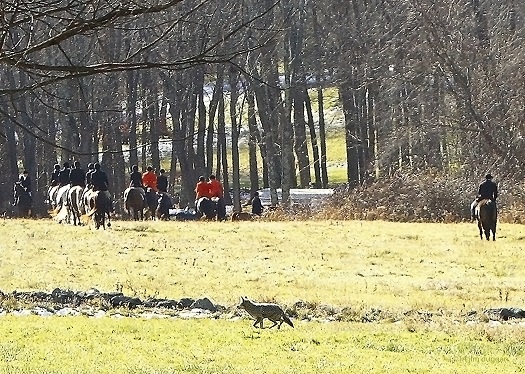
Click photo for larger view Photographer Jim Duggan was perfectly positioned to catch this clever coyote stealthily sneaking behind the field of the Golden’s Bridge Hounds (NY) at Vaile Lane. Posted November 28, 2014
Images of Opening Meet
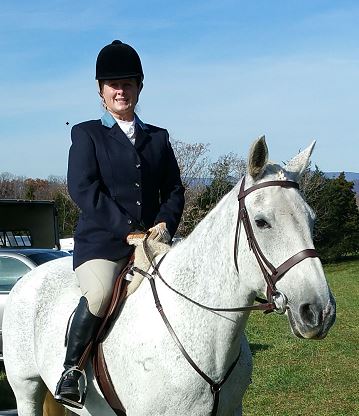
Here’s a poetic kaleidoscope of Opening Meet images conjured up by Martha Drum the evening before, while braiding her horse and cleaning her tack.
Opening Meet! Hounds assemble
Veterans chitchat, newbies tremble
Chilly wind, sky clear blue
Scent on frost, turning dew
Youngest rider nods and yawns
Oldest recalls many such dawns
Gents and ladies grin and greet
Ponies yank to reach and eat
Scarlet coats, mounts in braids
Flasks, in case courage fades
Some in perfect kit adorned
Others serviceably well-worn
Green horse wheels and tries to buck
Old horse naps beside the truck
Country Captain
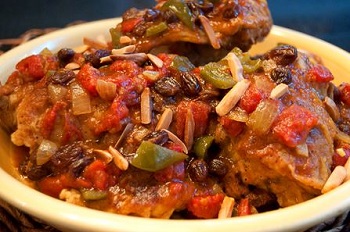
With the formal hunting season upon us, it’s time to add new hunt breakfast recipes to our collection! The following recipe, sent to us by Bill Getchell, comes with an interesting history and a connection to a famous American foxhunting general and Master of Foxhounds. We have a wonderful resource of recipes (point your cursor to the Social dropdown menu), and we invite your additions.
Country Captain has been a staple of southern cooking since the first half of the nineteenth century. Originating in India, the name may be a corruption of Country “Capon.” Legend has it that a British sea captain in the spice trade brought it to the United States through the ports of Savannah and Charleston.
Mary (“Miss Mamie”) Bullard of Columbus, Georgia revived the recipe for her frequent guest, Franklin D. Roosevelt, and later served it up for Army officers passing through nearby Fort Benning, including the Master of the Cobbler Hunt, General George S. Patton. In the early days of World War II, Patton sent a message to the Bullards: “If you can’t give me a party and have Country Captain, meet me at the train with a bucket of it.” In Patton’s honor the U.S. Army added it to the Meal, Ready-to-Eat (“MREs”) rations in 2000.