
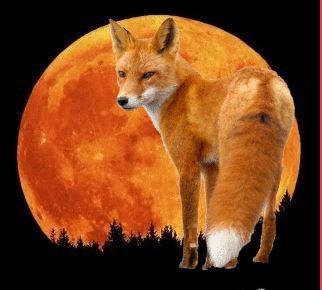
For any huntsman, staff member, or field member, wouldn’t it be helpful to know the specific time intervals on any given day when the fox or coyote is most likely to be afoot? And when it is most likely to be lying up? These times vary each day according not only to the phases of the moon, but are influenced also by how closely the moon rise and moon set correspond to the times of the sunrise and sunset in your particular hunting country.
Wouldn’t it be helpful also to know which specific days of the month you will experience average, good, or best conditions and the recommended time intervals for hunting on those days? There is a fascinating resource on the web that many sportsmen and women—hunters and anglers—use to advantage.
Epp Wilson, MFH and huntsman of the Belle Meade Hunt (GA), refers to this calendar regularly. “The game table predictions are more accurate than not in our experience,” says Epp.
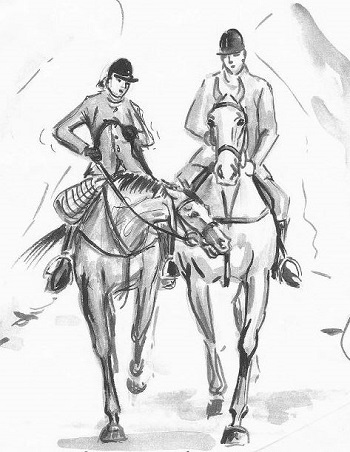
Illustration by Rosemary CoatesBack in the late 1950s, Deirdre and her friend Sarah, both just nineteen, came to America. The pair had left Britain, where post-war ration books were still in use. Sarah was to train horses and riders for Jamie Kreuz at Bryn Mawr Farms outside Philadelphia. Deirdre was to work for the Insurance Company of North America in Philadelphia and help Sarah on weekends. What follows is Part VI of their adventures. Find the first five in the Horse and Hound drop-down menu, under Humor.
Dinkum was a hideous black horse with a foul temper. He acquired his stable name, Stinkum, right from the start. Billy, who mucked out for us, warned us about him as soon as we set foot in the barn.
We enjoy publishing hunt reports. The emphasis may be on humor, a unique hunting country, the horse, or the substance of venery, but rarely all that in one package. Epp’s report covers every base, especially substance. In the course of one exciting hunt, the reader is there as the huntsman conjures the best place for the first draw; reads his hounds as individuals; reaps the fruits of hot summer work in the country; assists the Field Master; uses his road whips to advantage when chasing the wide-ranging coyote; makes quick but necessary decisions—right or wrong—to maintain the pace of his hunt and the safety of his hounds; all the while, tuned to the problems of his mount.
Day's end. / Ed Maxwell photo
The drought in the U.S. Southeast made September, October and November hunting in Georgia some of the most challenging we and the hounds have had in many years. Dust everywhere. Most of the streams long dried up. In others, just pockets of water.
It has been so dry and dusty that the puppies and even some of last year’s entry were tempted to run deer and pigs. Long, boring days where hounds cannot find a coyote to run tempt all but the most deer-broke dogs. We had two days that scent was so bad they could not run a freshly viewed coyote—even when we got them to the view in less than a minute.
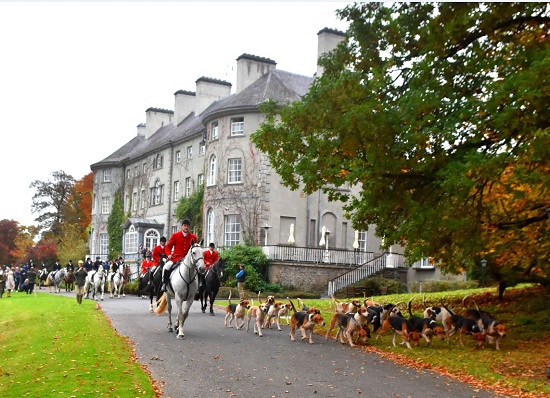
Kilkenny huntsman Peter Cahill and foxhounds move off from Mount Juliet, the spiritual home of the Kilkenny. / Noel Mullins photo
The Kilkenny Foxhounds were founded by John Power in 1797, and the founder was succeeded by his son Sir John Power in 1844. Hounds have been kennelled since 1921 at Mount Juliet when Major Dermot McCalmont, MFH built the kennels. His son Major Victor McCalmont (Master from 1949-1993) continued the hunting tradition until he passed away while in office.
Stepping into the kennels one can feel the sense of history. Although I have reported on the Kilkenny Foxhounds many times in the past, it has been more than thirty years since I attended a meet at Mount Juliet—the spiritual home of the Kilkennys. At the time, Major Victor McCalmont who hunted the pack for thirty-four seasons was Master. Peter Thomas was hunting hounds and Paddy McDonald was whipping-in. I recall the second horsemen dressed in charcoal grey livery and grey bowler hats arriving to exchange horses with Major Victor and the huntsman in the early afternoon.
The Kilkenny, by the way, is seeking new Joint-Masters.
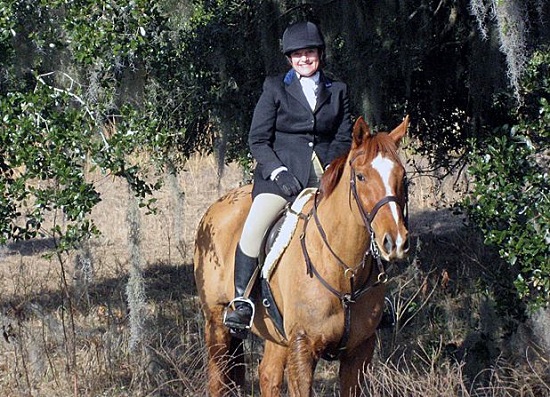
Author and Oz midst the Spanish moss, away down south
This trip was to be the first vacation I have been on for a long time, thanks mostly to our “special” naked cat Alf. With a tendency to occasionally attempt to have sex with a sleeper’s head, hallucinate, or attack without provocation, there are no house sitters lining up for the job of caring for him in our absence. Likewise, no family members or friends. Prozac or no Prozac. That, along with my employer’s— Kaiser Permanente’s—death sentence for time taken off, has us often traveling separately, if at all.
Staying home has not been a hardship since I am happiest at home, but with our horrific winter this year, this nervous traveler headed south on a trip I had watched people enjoy without me for several years. The bastards.
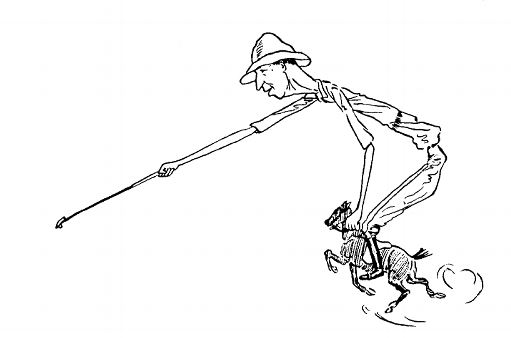
Born in Shanghai, China in 1870, the author of this story crossed the Pacific Ocean with his sea-going father three times by the age of four. A goat was carried aboard ship to provide him with milk. Nason Hamlin was the first recording secretary of the Norfolk Hunt and a member of the field on Norfolk’s first day with hounds in 1896. He took to hunting and polo with exuberance, but his hand-written records are more often expressed in seaman’s jargon than in the language of foxhunting. Here’s Hamlin’s record (abridged) of a Christmas Day live hunt on Cape Cod (pp 27–29, "The Norfolk Hunt: One Hundred Years of Sport" by Norman Fine).
Soapy Sponge, my new dappled-gray runaway, was yet to demonstrate his worth. On Christmas morn, 1899, just as the sun was peeping over the hill, Captain Samuel D. Parker, MFH was hunting the hounds at Eastham, away down on Cape Cod. It was a frosty, sharp morn and hounds were thrown in at the swamp lands fringing the ponds on the bay-side somewhere opposite Billingsgate Island. Shortly we heard a whimper from one hound, and almost immediately the pack took up the find and crashed away in the direction of the shore.
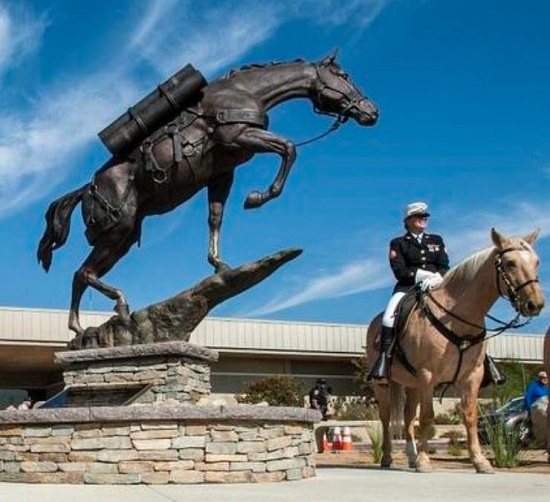
New Memorial to Marine Staff Sergeant Reckless is dedicated in ceremonies at Camp Pendleton, Oceanside, California, on October 26, 2016.
Of the many images still stuck in Harold Wadley’s head from his combat tour in the Korean War, there’s one scene he’ll never forget: the silhouette of a 13.1-hand pack horse, Corporal Reckless, climbing the steep ridge with recoilless rifle ammunition strapped to her back for the Marines as incoming fire and return fire exploded around her. Then he’d see her picking her way back down, alone, carrying wounded marines. One day, during the Battle of Outpost Vegas, she made fifty-one trips, mostly alone, covering thirty-five miles.
Reckless was separated from her youthful owner during the Korean War and became one of the Marine Corps’ greatest heroes. In 1997, when Life Magazine published a special Collectors Edition titled “Celebrating Our Heroes,” the story of Reckless was included alongside the stories of other heroes such as George Washington, Thomas Jefferson, Abraham Lincoln, Martin Luther King, and Mother Teresa.
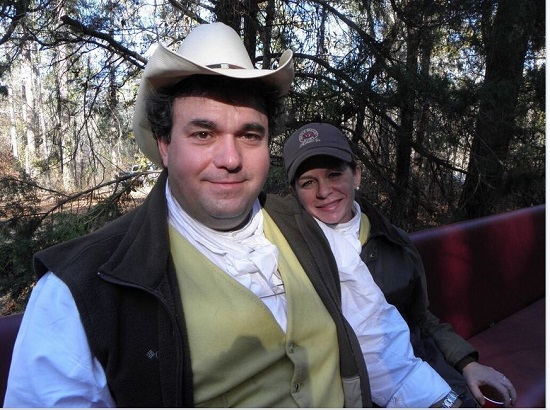
David and Ashley Twiggs
“It’s not often that one’s business and personal passions come together into a single opportunity,” says David Twiggs, the man selected to replace Dennis Foster as the new Executive Director of the MFHA. Dennis will retire on April 1, 2017.
David Twiggs’ business career has flowered from a passion for the successful integration of sporting activities into rural economies and, with an eye for conservation, developing them into widely recognized destinations and living space. He is currently Chief Operating Officer of the 26,000-acre Hot Springs Village in Arkansas, the largest planned sporting community in the country.