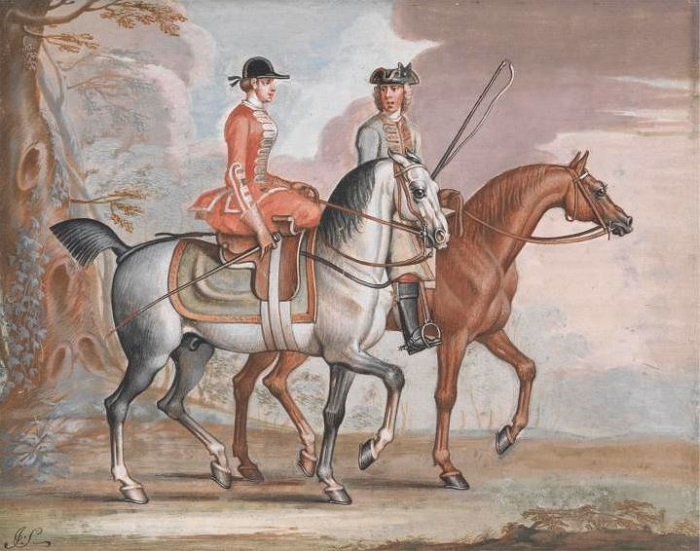
James Seymour (British, 1702 - 1752), A Lady and a Gentleman Riding Out, c. 1740, gouache on paper, 5 5/8 x 7 1/8 inches, Yale Center for British Art, Paul Mellon Collection
In the seventeenth and eighteenth centuries, the men of England were assaulted by a new and uncomfortable sight: women in masculine clothing! Even worse, these were upper class ladies, and they had donned cavalry-inspired costume to invade the male-dominated pastimes of riding and foxhunting. These daring women were often called ‘Amazons’ and were sometimes ridiculed for their riding habits. In 1666 Samuel Pepys lamented that, if not for their long skirts, these ladies wouldn’t be recognized as women at all! About fifty years later, Richard Steele satirically suggested that Amazons should “complete their triumph over us, by wearing breeches.”
Back in the late 1950s, Deirdre and her friend Sarah, both just nineteen, came to America from post-war Britain, where shortages still prevailed and ration books were in use. Sarah was to train horses and riders for Jamie Kreuz at Bryn Mawr Farms outside Philadelphia. Deirdre was to work for the Insurance Company of North America in Philadelphia and help Sarah on weekends. The pair's adventures discovering America, land of plenty, while struggling with a lively collection of foxhunting horses, timber horses, and show horses, have been published in these pages. (Use our Search function with the author’s name to find those stories.) What follows is a new installment revisiting “The Witch With Warts.”
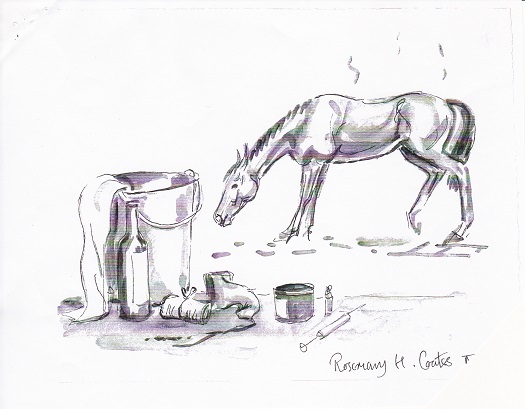
Witch / Rosemary Coates illustration
Soon after our arrival in the States, Sarah and I were left in charge of Bryn Mawr Farms while the rest of the help went with the show horses to the Harrisburg Horse Show for the week. Jamie promised the two of us cubhunting from the farm and cocktail parties at the show as a reward. I took the week off as a break from my office job. This I quickly realized was going to be anything but a vacation.
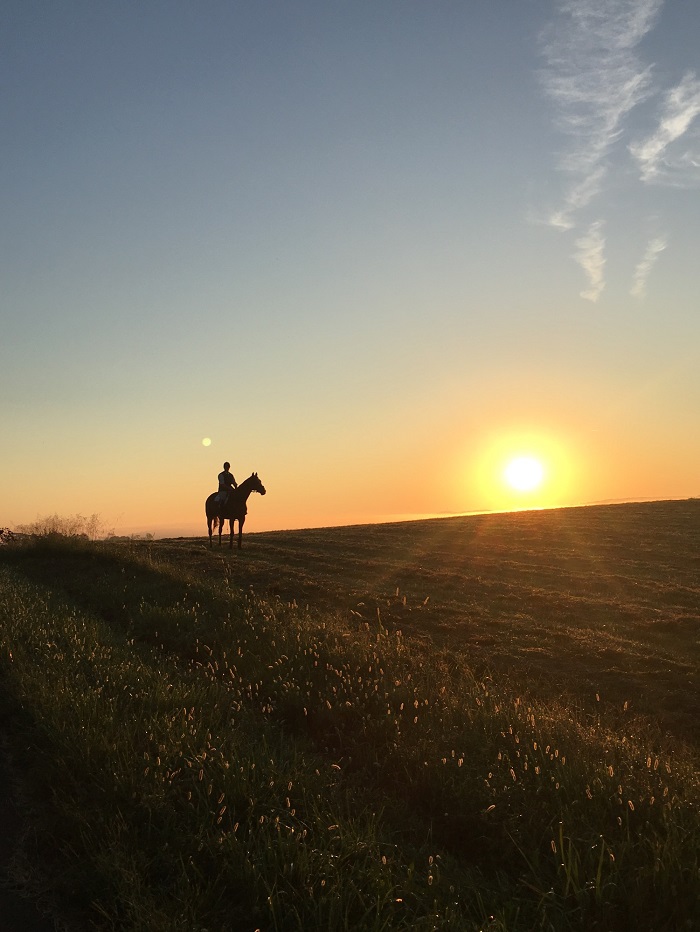
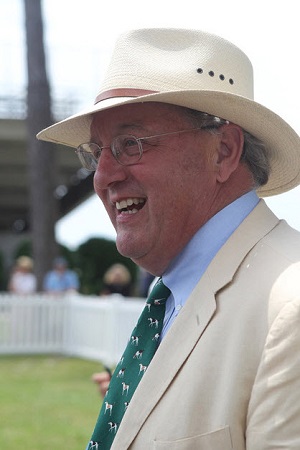
Mason Lampton, MFHMason Lampton, a long-serving leader of the sport of foxhunting in North America and MFH of the Midland Fox Hounds (GA), has another sporting life. His alternate Field of Dreams to the hunting field is a polo field. The phrase, “If you build it they will come,” must have rattled around in his head for a while before he decided to transform a fallow potato field in Northern Michigan into a first-rate polo field.
This year, having completed its eighth season, Bliss Polo is bringing players and spectators to matches all the way to the northernmost shores of Lake Michigan. Near the Straits of Mackinac. Who would have thought?
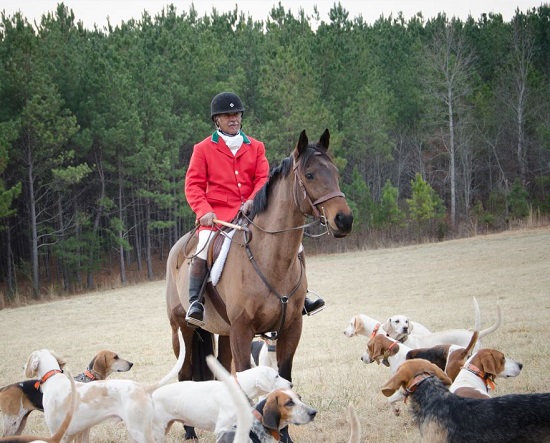
"Tot" Goodwin and his Midland Crossbreds / Mary Kalergis photo
Jefferson “Tot” Goodwin and his wife Colleen have established a new hunt, the Goodwin Hounds, to hunt country in Inman, Statesville, and Union, North Carolina. The country was previously hunted by the Stonebroke Hounds which disbanded in the late 1990s. Landowners seem to be prepared to welcome the return of foxhunting to the area.
Not long ago there were there were four hunts in the Foothills area in the northwestern part of the state: Green Creek Hounds, Tryon Hounds, Greenville County Hounds hunting the Gowensville area, and Stonebroke Hounds hunting in Inman. The Greenville country has been assigned to Tryon by the MFHA, and Goodwin has permission to hunt from landowners in the old Stonebroke country. He plans to start small and has applied to the MFHA for Registration.
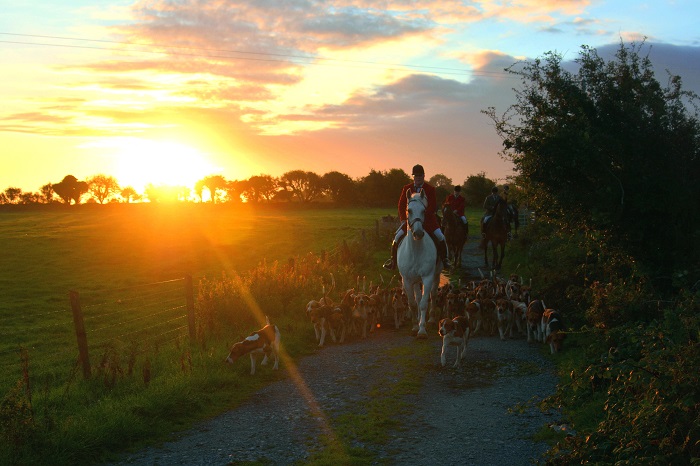
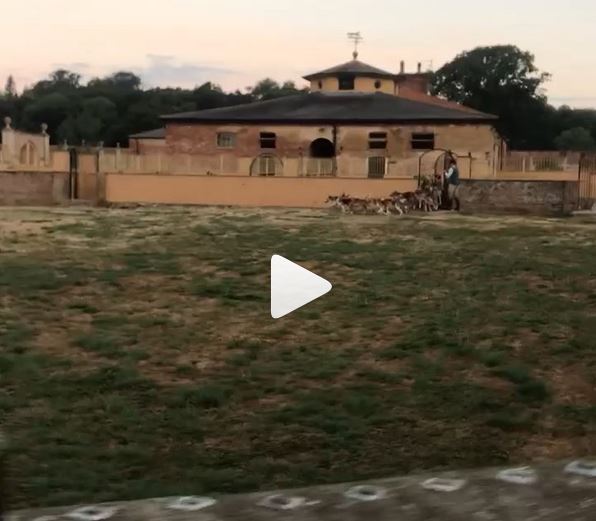
Huntsman Tom Dempsey and the County Galway foxhounds head to the first draw at Riona and John Naughton's farm in Newcastle. / Noel Mullins photo
Everything that happens in the hunt kennels and hound shows during the spring and summer seasons are just activities and events that lead up to the first morning of the autumn hunting season. It can be August for some packs and September for others when hounds are allowed to run for the first time.
The huntsman will have planned and implemented the breeding of his new entry probably two years beforehand by selecting a stallion hound that he thinks would match a bi*ch in his kennels, and indeed raise the profile of the rest of his pack. He may want to breed more drive into his pack by selecting an Old English cross, or more voice by selecting an American cross.

Noel Mullins, lifelong foxhunter and sporting photo/journalist in Ireland, and a frequent contributor to Foxhunting Life, launches his new book at the Dublin Horse Show this week.
The Dublin Horse Show: Pictures of My Memories is packed with eight hundred images of the world-famous show, selected from more than ten years-worth of thousands of Mullins' show photographs as well as other historical images. Matthew Dempsey, past-president of the Royal Dublin Society (RDS) has written the Foreword.
First held in 1864, the Dublin Horse Show featured a “Leaping Competition” (as it was then known) in 1868. The first winner was Richard Flynn, a sheep farmer from County Roscommon, on his hunter Shaun Rhue. He shared a prize fund of £55 but sold the horse to Squire Conolly of Castletown House, the founder of the Kildare Foxhounds for £1,000. He jumped six feet one-and-one-half inches over the Stone Wall.
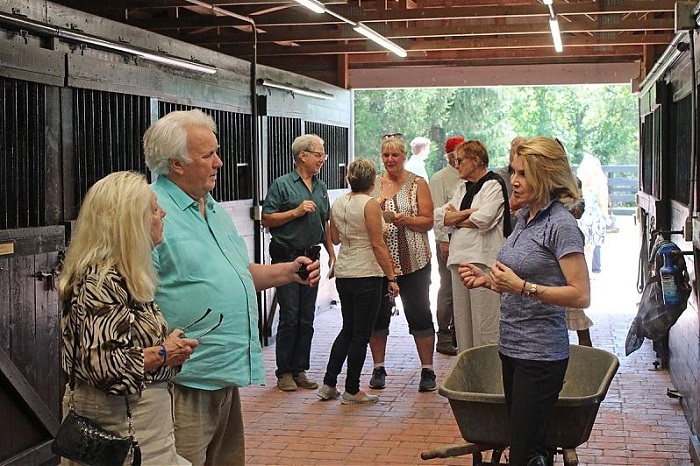
People leave with, 'I never knew that!’ or, ‘So, you don’t shoot the fox!’
What a fine way to raise funds for the hunt and at the same time make friends for foxhunting!
“We keep the atmosphere relaxed and pleasant,” said Joe Maday, MFH, “and we try to offer visitors a variety, whether it’s a show stable, a driving stable, or a woman who raises Arabs and has foals and yearlings to show the children. We gain new hunt supporters for sure. People leave with, 'I never knew that!’ or, ‘So, you don’t shoot the fox!’ There’s something for everybody, even if it’s just a pretty drive in the country.”
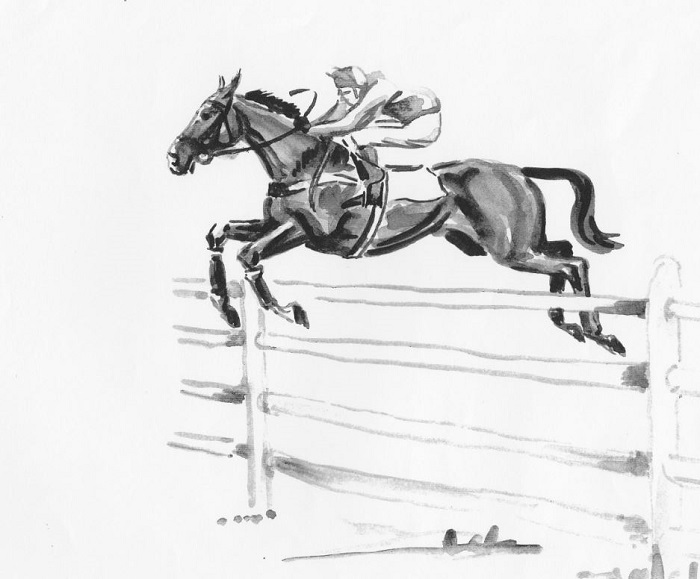
Back in the late 1950s, Deirdre and her friend Sarah, both just nineteen, came to America from post-war Britain, where shortages still prevailed and ration books were in use. Sarah was to train horses and riders for Jamie Kreuz at Bryn Mawr Farms outside Philadelphia. Deirdre was to work for the Insurance Company of North America in Philadelphia and help Sarah on weekends. Their adventures discovering America, land of plenty, while struggling with a lively collection of foxhunting horses, timber horses, and show horses, were published in five parts on these pages and popularly received. (Use our Search function with the author’s name to find those stories.) What follows is a new installment revisiting “Pink Gin, The Beer Swilling Timber Horse.”
Illustration by Rosemary H. Coates
Sarah and I had not been long in the States when Pink Gin arrived at Bryn Mawr Farms. Billy, who mucked out for us, was, as usual, the first to find fault with him.
“He do get drunk, he do. Proper beer-swiller he be. And he eats eggs and molasses with all his feed. Lord, if only I could eat like that!”
Surely, one of the great foxhunting packs of Old English (or traditionally bred) foxhounds—as distinguished from the Modern English foxhound—is the Belvoir (pronounced “Beaver”) in the UK. The kennels are at Belvoir Castle and have always been the property of the Dukes of Rutland. The hunt dates from 1750, and, except for a twenty-seven year period in the 1800s, the Mastership has always been held by the reigning Duke of Rutland. The Belvoir kennels are still considered by many breeders to be their primary source of Old English bloodlines.
Will Goodall served as the Belvoir huntsman from 1842 to 1859. Goodall’s hunting methods greatly impressed Lord Henry Bentinck, one of the leading MFHs of the day. Captain Simon Clarke, MFH of the New Forest foxhounds (UK) tells us that Lord Henry hunted three horses a day, kept copious notes, compared the best of England’s huntsmen, and believed Will Goodall to be the premier huntsman in England.
When in 1864 Lord Henry sold his famous hound pack, he wrote a letter to the purchaser, Mr. Henry Chaplin, describing Will Goodall’s hunting methods. The information in the letter so impressed Mr. Chaplin that, some years after Lord Henry’s death, he had it published under the title, The Late Lord Henry Bentinck on Foxhounds: Goodall’s Practice.
"Goodall’s Practice,” says Captain Clarke, “is the best treatise on hunting hounds ever written.” The revered Master and hound breeder Isaac “Ikey” Bell, the single individual most responsible for the modern English foxhound, is said to have had Goodall’s Practice painted on the ceiling over his bathtub! If you watch while hunting this season, you may see and recognize some of these same practices being used by your own huntsman. Here’s an extract: