A Son Remembers Essex Fox Hounds’ Tribute to His Father

Columnist Russ Hannah, writing for NorthJersey.com, recalls the day the Essex Fox Hounds (NJ) paid tribute to Bert Hannah, his late father. Bert wasn’t a foxhunter, a landowner, or a captain of industry. He was, writes Russ, an “ordinary man who had once been a Minnesota lumberjack with a third-grade education, if that.”
Bert was a caretaker on a large estate near the Brady estate and Hamilton Farms. The latter represented five thousand acres, constituting the primary Essex hunting country. The former, Martha Brookes Hutcheson’s estate of 104 acres, where Bert Hannah served as caretaker, was closed to the hunt by the owner as the result of a fallen rider being seriously injured there years earlier.
Nevertheless, Bert Hannah was an animal person. He bred field trial beagles—one a 1963 National Champion, Longview Susie at left in news photo with two of her offspring. And he loved horses.
Bert was always friendly to the Essex riders, stopping to talk as they went by. Any injured or lost foxhound that passed Bert’s way was taken in by him, fed, and cared for before being returned to kennels.
A Visit to Scarteen
Huntsmen on the Move
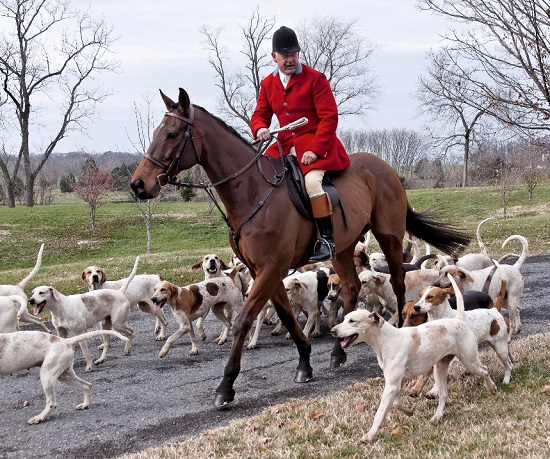
Dennis Downing is the new huntsman at the Bedford Hunt (VA). / Karen L. Myers photo
Huntsman Robert Taylor hasn’t had a good rest in five years. He’s been hunting two separate packs of foxhounds in Maryland—the Goshen Hounds as Master and amateur huntsman and the New Market-Middletown Valley Hounds as professional huntsman. Huntsman Ken George has been driving hounds and horses six hours each way twice a week from Kansas to Iowa to hunt hounds in both states. Huntsmen love what they do, but each season ends with changes in the wind.
As this hunting season draws to a close, we see huntsmen on the move again. Starting in the north and progressing southward then west, here’s what we know so far; please let us know who we’ve left out.
Pete Waxes Philosophical about Hunting
Foxhunting Life readers may not recognize their old friend, Pete, in this story. We generally find him drunk, misguided, and irresponsible. On this timely subject, however, the author allows him a sober and a somber moment.
Pete settled himself in the chair, took a pull from his pint, wiped the froth from his mouth and belched. Outside the pub it was pitch black and a wind drove hail against the windows, but inside a fire burned in the hearth and its warmth filled the room.
“Job’s buggered,” he said. “Hunting isn’t coming back.”
I looked at him. “Bonner, Barney, and the Countryside Alliance to name but a few would disagree,” I said.
Pete took another pull on his pint and sat considering. Finally he spoke.
“What would happen if it did?” he asked. “T’ hunt monitors will go back to being sabs. Never be like it was in our day.”
Drag Hunting Today
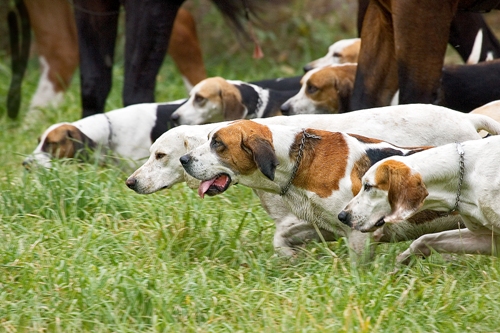
Wayne-DuPage drag hounds head to covert. / Chris Carney photo
Drag hunting, according to conventional wisdom, is what a hunt does when its country is constricted by suburban development. Sometimes that’s true, but, more often, hunts follow a dragged line of man-laid scent because the Masters want to. And a few hunts have been doing it for more than a century.
Each type of hunting—live or drag—has its pluses and minuses, depending on the needs and priorities of the participants. Drag hunting offers a controlled hunting experience to the benefit of hounds, riders and landowners. With a judicious laying of the drag, hounds are safer because roads and other hazards can be avoided; farmer’s crops are protected from horse’s hooves; homeowners’ lawns and yards are not trampled; and small pets are safe from the attention of hounds (all assuming that hounds don’t riot).
For riders who seek a gallop over fences, drag hunting offers a more efficient use of time, with no standing on a windy hillside while hounds search a covert for a fox (which may or may not be found). Thus the drag-hunting day typically lasts about two to three hours, with guaranteed galloping and jumping, better suiting those with a busy schedule, rather than the three- to five-hour day usually consumed by the ebb and flow of live hunting.
Whipper-In: What’s In the Name?
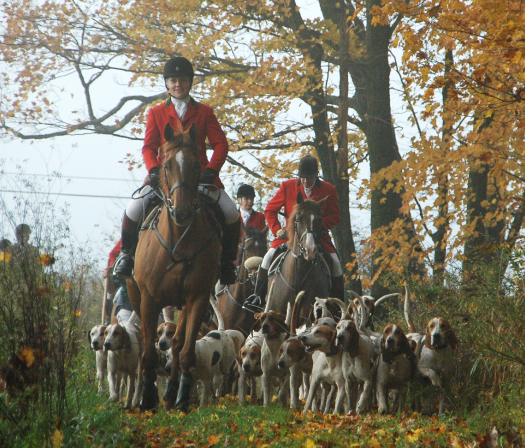
Booli Selmayr, professional whipper-in, Millbrook Hunt (NY): “A good day whipping-in is not having to be told, but instead, allowing natural instinct to guide me: listening to the horn and hounds, reading the terrain, and quickly distinguishing whether fox or coyote.” / Kirsten Edlund-Tunkel photo
Professional or Honorary
The world of whipping-in is split into two camps—professional and honorary. The professional whipper-in often fills the position to gain experience and recognition on his or her road to becoming a huntsman. As the title suggests, it is a paid position. The honorary whipper-in is not paid, is generally recruited from the ranks of the hunt membership, and generally does not aspire to become a huntsman. He or she may be a riding member or one of the Masters.
Professional hunt staff in England go through a structured period of apprenticeship. Years there are spent just doing kennel work before even being allowed to walk hounds out on exercise and before even being allowed on a horse. If recommended, they will finally be taken on as second whipper-in to a hunt. After a few moves, they may be recommended to fill an opening for a first whipper-in somewhere else. Under the system, they purposely move every few years from one hunt to another, gaining experience and exposure to different huntsmen and different methods before finally being offered a huntsman’s post. Clearly a strong foundation is laid through such a rigorous system.
Whipper-In: What’s In the Name?
This article was first published in 2013. With an archive of thousands of articles available on our website, we hope you will agree that at least a few are worth republishing!
Booli Selmayr, professional whipper-in, Millbrook Hunt (NY): “A good day whipping-in is not having to be told, but instead, allowing natural instinct to guide me: listening to the horn and hounds, reading the terrain, and quickly distinguishing whether fox or coyote.” / Kirsten Edlund-Tunkel photoTo the uninitiated, the term whipper-in might conjure images of a callous fellow laying his whip across the backs of hounds for every infraction. In fact, the whip is used primarily for its loud crack as an attention-getter. The explosive noise breaks the concentration of hounds from whatever they are doing that the whipper-in wants to stop.
The Whipper-In Is the Huntsman’s Right Hand
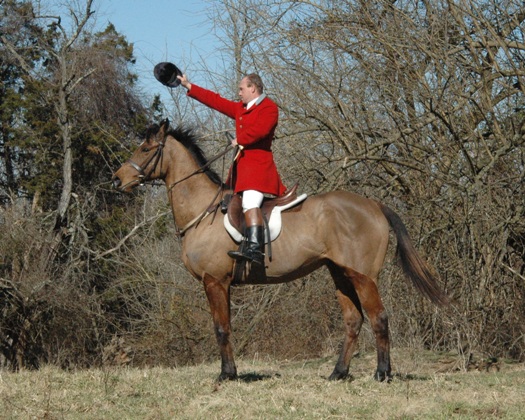
Neil Amatt, professional whipper-in, Piedmont Fox Hounds (VA): “Anticipation, punctuality, how you present yourself—all these things are drilled into you in the English system. You start in the kennels, and you have to really want it before you’re even allowed on a horse.” / Nancy Kleck photo
With the start of a new season just around the corner, we bring back this article, first published in 2013, not only for the benefit of all new and aspiring whippers-in, but also for those field members who wish to appreciate all that happens in the hunting field.
Last season, after forty-five years of hunting, I witnessed a simple act of sophisticated whipping-in that left me shaking my head in admiration. For a huntsman or an experienced whipper-in, it was perhaps no big deal.
My hunt fielded an all-new professional staff last season—huntsman and whipper-in—both of whom were learning the country on the fly. Hounds had checked in a thick covert, and we in the field could see them, heads down, trying to recover the line. The whipper-in came galloping by headed for the end of the covert.
“Over here,” called the Field Master, pointing to a concealed trail. “You can get in over here.”
The whipper-in came back, talked urgently to the Field Master, then turned his horse and continued in the direction he was originally going.
After the meet I asked him what that exchange was all about.
Museum of Hounds and Hunting Celebrates the Warrenton Hunt
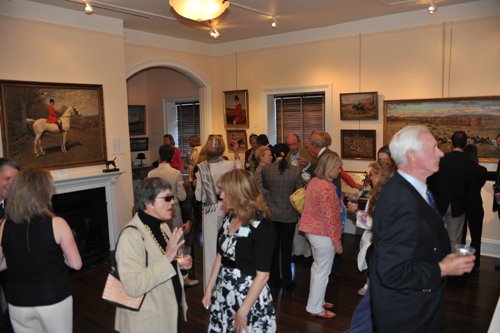
Lauren Giannini photo
The Museum of Hounds & Hunting NA opened its season with a reception for 200 members and guests Saturday evening, May 26, 2013 at Morven Park in Leesburg, Virginia. The Virginia Foxhound Show took place on the grounds the following day.
Visitors viewed new exhibits featuring art and artifacts of the Warrenton Hunt (VA), established in 1887 and celebrating its 125th anniversary. Warrenton’s three current Masters—Kim Nash, Celeste Vella and Rick Laimbeer—graciously sponsored the Member’s Reception.
Hunt Breakfast Recipe Contest
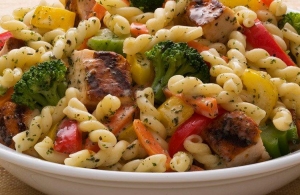
Matthew Klein photo Cool weather and foxhunting make for big appetites, so FHL is holding a Hunt Breakfast Recipe Contest. If you point to the Social drop-down menu above and click on Hunt Breakfast Recipes, you will see that our recipes are organized into seven categories: Appetizers, Breads, Desserts & Sweets, Flask Concoctions, Main Dishes, […]