Foxhunting Life Has a New Look!
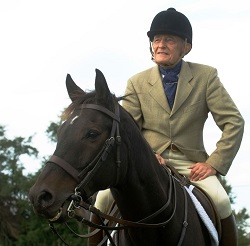
Joanne Maisano photoTa…dah! A new look for Foxhunting Life and two new subscription plans!
We’ve migrated to an up-to-date version of our platform that offers improved security and better viewing on personal devices. Also, we are introducing new subscription options.
Remember when we polled readers on whether or not PDF files of our entire e-magazine would be of interest to some of you? We were encouraged by your answers, so included with this issue of FHL WEEK we have attached a printable PDF file containing all the articles in their entirety. It’s a sample of what you get with either of our two new subscription offerings: a Printable PDF Subscription or an upgrade to the Combination Electronic/PDF Subscription.
We now offer three annual subscription plans: (1) the same Electronic Subscription that we have been offering since we started, (2) a new Printable PDF Subscription in which subscribers receive via email a PDF file of the entire e-magazine, FHL WEEK, twice a month, which they can print out in its entirety (no readmore links!), and (3) a Combination Electronic/PDF Subscription. Here’s how the new subscription plans will work:
You Ask; We Answer
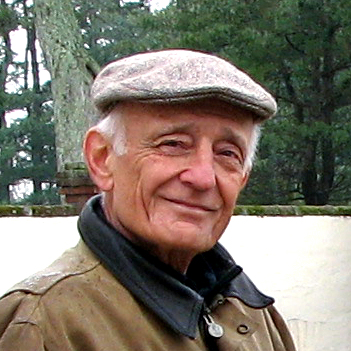
As the new season begins, I want to remind readers about one of Foxhunting Life’s features—our Panel of Experts. Every foxhunter has the occasional question, whether it be what the huntsman, the whipper-in, or the hounds are doing; the meaning of an arcane hunting term; breeding or judging hounds; correct attire; a point of etiquette; training the field hunter; even sporting art or literature.
I have found over the years that while there are no bad questions, sometimes there are bad answers! In the belief that our readers deserve only authoritative answers, we assembled a Panel of Experts whose breadth of knowledge and proven experience was unassailable.
Questions tackled by our Experts have included: why does a fox bark, what triggers the spring dance of huntsmen from one hunt to the next, are there different types of foxes in England, how to handle a hound that is shy of men, can foxhounds make good house pets, how to retrain a horse that exits the trailer like a cannonball, why is an afternoon after-hunt meal called a hunt breakfast, what is a July hound, what is the origin of ratcatcher, and many, many more. To see the answers to those questions and others, go to the Ask the Experts dropdown menu and click on Questions and Answers.
Fanciful Fibs and Other Sins
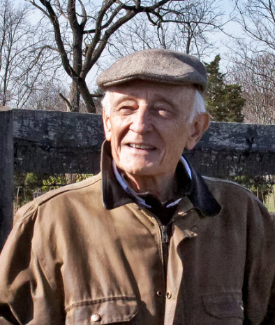
Photo by Karen MyerSome Foxhunting Life readers have already seen this opinion piece, published more than a year ago. While it attracted a number of comments for which I’m grateful, the message hasn’t, and of course never will reach everyone. So after having seen a new batch of newspaper articles from around the country, containing cringe-worthy quotes by foxhunters attending Opening Meets this season, I’m obliged to re-publish my argument. If it reaches another pair of eyes or ears and changes the mind attached, it will be worthwhile!
As Pogo once famously said, “We have met the enemy, and he is us.” I think of that bit of comic strip philosophy whenever I hear foxhunters attempt to con the public or distance themselves from the truth about our sport.
Foxhunting Life in Print?
We have an idea, but only you—Foxhunting Life readers—can tell us whether it’s a good one. Hence, we’re asking you to take a very short survey of no more than three yes-or-no questions. For the past few years, we have been emailing our twice-monthly e-magazine, FHL WEEK, in electronic form. We know many of you […]
Rupert Isaacson’s Horse boy
Rupert Isaacson is a horseman. He was an avid foxhunter until other life matters intruded. He is a gifted writer as well. But Rupert’s principal gift to humanity is a mind set that is constitutionally unable to accept limits on what is possible. No challenge, no matter the odds, is hopeless to Isaacson. Time and again he has tilted at the windmills of conventional wisdom and accomplished astonishing results.
Rupert was born in England and roamed the world as a travel and environmental writer, specializing in Africa. It was there that he came upon a cause that captured him totally—the displacement and removal of the Bushmen of the Kalahari from their traditional hunting grounds by their own government. He became a vigorous activist for the Bushmen, gave speeches, wrote a book about their plight, and arranged for the Bushmen to appear before the United Nations to plead their case. They won.
At about that time, Rupert and his wife, then living in Texas, discovered that their infant son Rowan was autistic. Conventional treatment protocols—and they tried many—were unable to improve the boy’s most troubling behavioral problems, and Rupert immersed himself into finding alternate solutions. He discovered that horseback riding while holding his son in front of him in the saddle was therapeutic for the boy. But only temporarily.
On Vacation!
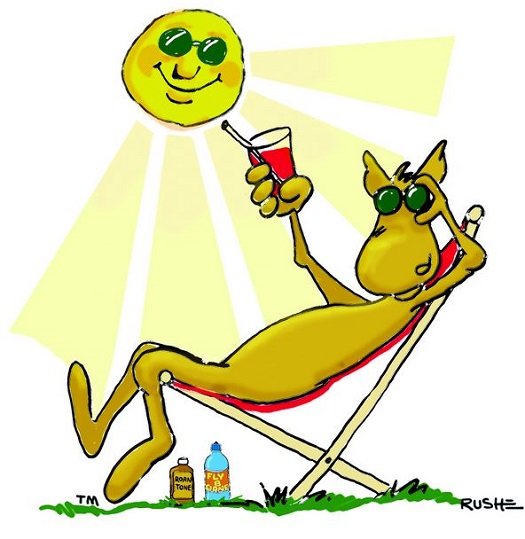
Foxhunting Life won’t publish any new articles through the next two weekends, June 12 through June 21, 2015. Time for a short break. We hope you’ll miss us!
The Blue Birdseye Stock Tie: A Smashing Style from the Past
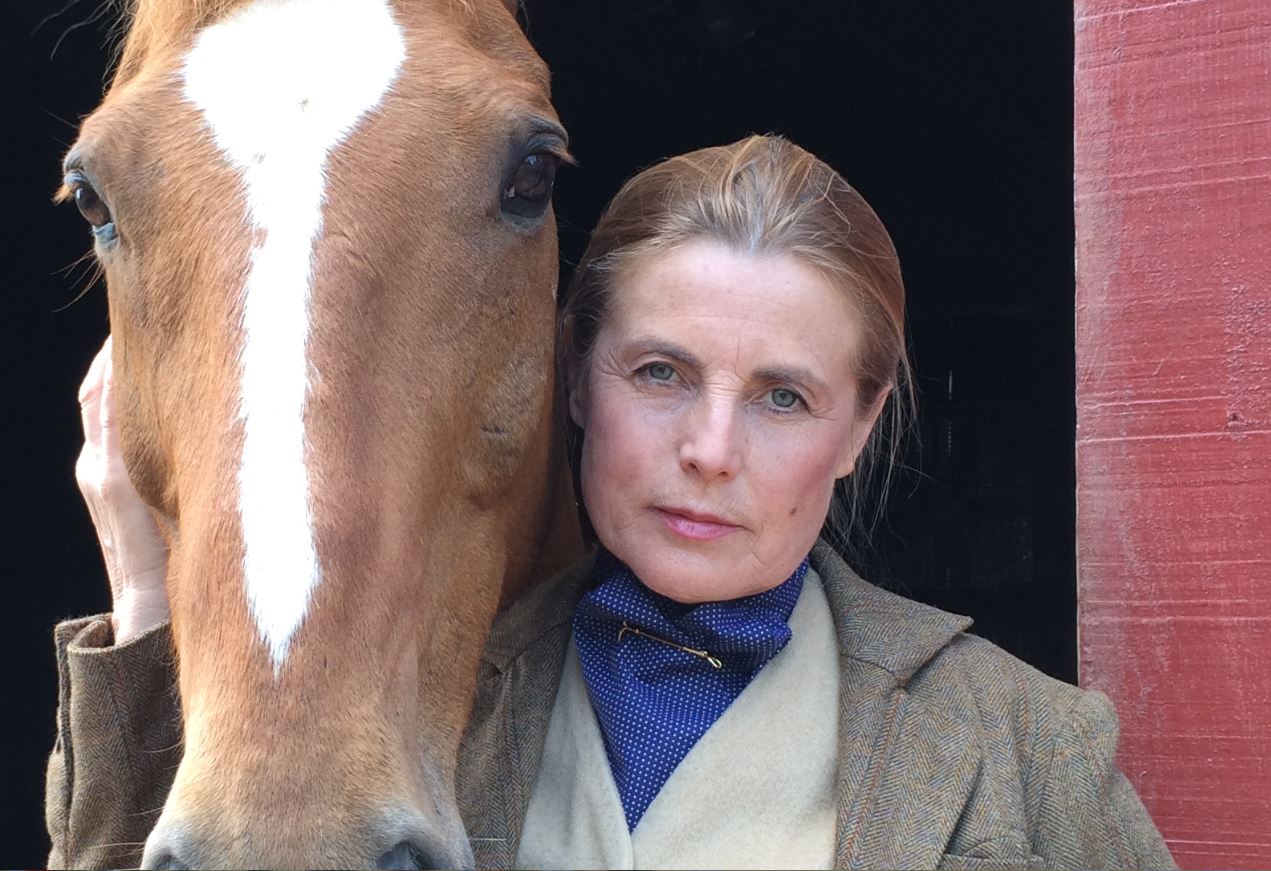
Karen Ewbank is ready for cubhunting in her blue birdseye stock tie.
I want to tell you about a little-known yet colorful article of foxhunting attire from the past that deserves to be resurrected. When I first saw it under the huntsman’s scarlet coat I asked myself, “What in the world is that man wearing about his neck?”
Here was an experienced foxhunter who had been a professional huntsman and whipper-in for world-class packs in England, Ireland, and America, yet he appeared to be oblivious to “proper” foxhunting attire. I’m referring to Hugh Robards, huntsman of the Middleburg Hunt. Robards is also an author, a student of the noble art, and possesses an extensive library. I thought he should have known better, but I didn’t want to embarrass him, so I didn’t ask.
It turns out that I was the ignorant one, but, I suspect, I’m not alone in this particular matter. Robards, I was to learn, was wearing a striking article of traditional foxhunting attire—a blue birdseye stock tie—under his scarlet coat. During his twenty-seven-year stint as huntsman for Lord Daresbury at the County Limerick (IRE), both he and Daresbury wore their blue birdseye stock ties through the autumn hunting season.
How many foxhunters of today have ever heard of such a thing, I wonder? The better question, though, is wouldn’t it be great fun to bring back this handsome stock tie into our own hunting fields?
How to Find Our Old Articles
Since we posted our first article on Foxhunting Life five years ago, more than five hundred articles have been published. And they’re all still here…easily recovered.
When new articles are posted to the top of the Home Page, the older material is pushed down. The five most recent articles are always visible on the Home Page; the titles of the six articles published before those five articles are shown at the bottom of the Home Page; and the hundreds of articles that preceded those eleven are still available and recoverable.
There are four ways to find an old article: the Search function, the Full Article List, the Hunt Club Pages, or by Category.
Tommy Hitchcock, Jr: Sportsman, War Hero
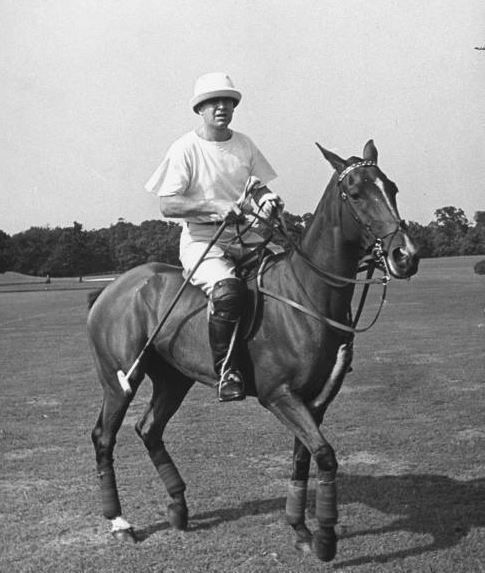
May 8, 2015 will mark the seventieth anniversary of V-E Day, Victory in Europe, the end of the Nazi menace. It’s a propitious time to remember a foxhunting sportsman named Tommy Hitchcock, Jr.
Most Foxhunting Life readers are familiar with his name. Born in Aiken, South Carolina, Hitchcock was an all-around sportsman, a foxhunter, and perhaps the greatest American polo player of all time. A ten-goal player by age twenty-two, Hitchcock led the U.S. team to their first victory in the 1921 International Polo Cup. He followed that feat by leading four teams to U.S. National Open Championships. In 1939, after the death of his mother, Louise Eustis Hitchcock, MFH of the Aiken Hounds, Tommy and his sister Helen founded what is know today as the Hitchcock Woods Foundation in Aiken—a magnificent gift to subsequent generations of horsemen and women from all across North America.
Perhaps less known, however, is the singular role that Hitchcock played in the winning of World War II. If not for Hitchcock, the date June 6, 1944 would most likely not be known to history as D-Day. The invasion of the European mainland would have necessarily been postponed. And if it hadn’t, thousands more Allied soldiers would have been slaughtered on the beaches by the German Air Force.
The Making of a Book…Starting From the Ending
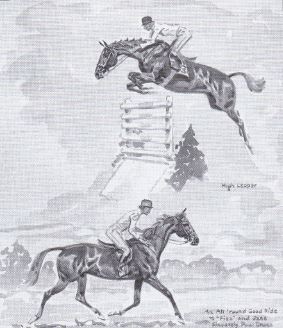
Jane Pohl and Fitzrada, painted by Paul BrownIn 2001 the Museum of Hounds and Hunting in Leesburg, Virginia, mounted an exhibit of the works of artist Paul Brown, famed for his elegant rendering of horsemen, horsewomen, and horses—racing, showing, and foxhunting. I was, at the time, a member of the Museum Advisory Board, and on the night of the exhibit I watched with curiosity and interest a slim, elderly, and proudly composed woman being carried in her wheelchair up the narrow back steps inside the Westmoreland Davis mansion to the second floor where the exhibit was hung.
I didn’t know whom she was, nor did I even meet her. Two months later she was dead, and I was equally unaware of even that occurrence. Her name, I was to learn some years later, was Jane Pohl, and, though she was terminally ill the night I saw her, she was determined to attend the exhibit, her last outing, because she had lent some of the Paul Brown art depicting her and her horse Fitzrada for the exhibit. I couldn’t know at the time that I was witnessing the ending of a story with which I was to become more than familiar.