How Disney Inspired the MFHA Conservation Award

It was the Disney Company that inspired the creation of the Chronicle of the Horse/MFHA Conservation Award, but for the wrong reasons!
And it’s most fitting that George Ohrstrom III was presented with the Conservation Award at the 2014 annual meeting of the MFHA, for he is connected through his family to the genesis of the award. Ohrstrom currently serves as co-chairman of the Piedmont Environmental Council (PEC), the respected and influential Virginia-based conservation organization that the Ohrstrom family was instrumental in forming in the 1970s.
The PEC gained national attention when they demonstrated how local grassroots efforts—combined with a clever strategy of enlisting the support of the nation’s most prominent historians—defeated the Disney Company’s efforts to build a theme park in Virginia’s historic countryside in the fall of 1994. At the time the PEC went to war, Disney had already quietly amassed political support in the Virginia legislature, had seduced the local Chambers of Commerce and real estate boards, and had secured the rights and promises of approval to the land they wanted, on the eastern border of some of Virginia’s prime foxhunting country.
Maryland and Virginia Lawmakers Consider Sunday Deer Hunting
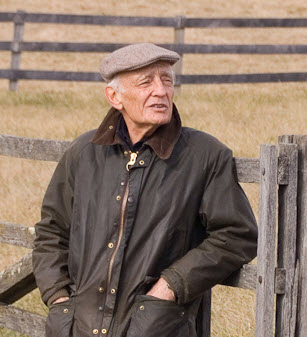
Karen L. Myers photoA bill to allow the hunting of deer and other wildlife on private property and state waters on Sunday has been passed by the Virginia House of Delegates and sent on to the state Senate for their consideration. Proponents of the bill cite the falling numbers of hunting licenses issued in the state, and believe that Sunday hunting will help stem the loss in revenue.
Maryland lawmakers are also considering the hunting of deer on Sunday, but seemingly for a different reason—the culling of the expanding deer herds.
There is resistance in both states to the enabling legislation. Some of the resistance comes from predictable directions—anti-hunting activists, hikers, trail riders, religious leaders—yet some of the resistance comes from a surprising quarter—foxhunters.
Bobby Joe Pillion Loved to Hunt
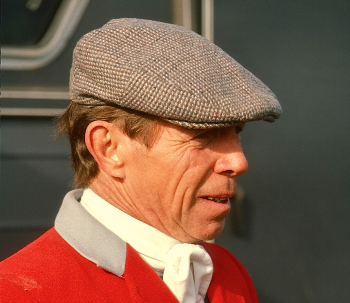
Bobby Joe Pillion, 1989, after judging the first Piedmont-Midland Foxhound Match / Douglas Lees photoRobert Joseph “Bobby Joe” Pillion died at home in Millwood, Virginia on January 12, 2014. He was seventy-nine.
“I just love to hunt,” he often said.
That’s how he concluded just about every foxhunting conversation we had. I can see him saying it, with a shake of his head and a thoughtful smile.
Bobby Joe was one of the most beautiful horsemen I have ever seen crossing the country. He whipped-in to the Blue Ridge Hunt for more than thirty years, riding nimble and athletic Thoroughbreds of such a uniform type that people trying to describe any new horse of that sort would simply say, “That’s a Bobby Joe horse.” In fact, you never knew which horse he was riding because they all went the same for him.
Bobby Joe was chosen to be a judge for both the 1989 and the 1991 highly publicized foxhound matches between the Piedmont and the Midland packs, both held in the Piedmont country. The matches were fashioned as a modern replay of the Great English-American Foxhound Match of 1905 and held in the same country. Sporting journalists came from England as well as the U.S. to cover the matches.
The Legitimate Sport of Drag Hunting
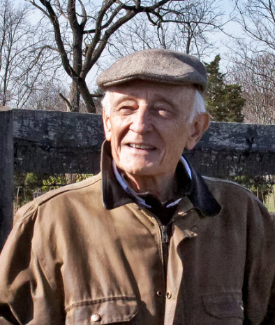
Karen L. Myers photoThe sport of drag hunting started as a competitive race in early seventeenth century England, developed into a fast dash over intimidating fences in early twentieth century North America, and evolved in more recent years into an artistic attempt to simulate live hunting.
Since foxhound packs that run a drag scent—either exclusively or periodically—account for about seventeen percent of all MFHA-Registered hunts in North America, we’re devoting much of this issue to a comprehensive view of the sport and its history, with observations, comments, and recommendations from some of today’s best practitioners.
Bay Cockburn, ex-MFH, Race Rider, Huntsman
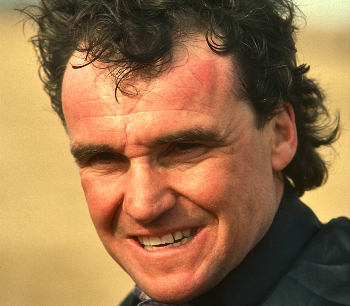
Douglas Lees photoBay Cockburn, ex-MFH, hard-riding huntsman, and former winning steeplechase jockey and trainer, died of complications from melanoma on December 25, 2013.
Confined to a wheelchair for the last fifteen years of his life as the result of a riding accident, Bay was an aggressive race rider and had been referred to as the Evel Knievel of all huntsmen. He represented the epitome of invincibility in the saddle until one fateful day, while exercising a hunter over a straightforward coop that he had jumped countless times, he fell and was left paralyzed from the chest down.
He stayed in the game as best he could, training steeplechase horses, and despite the wheelchair, he continued to live the only way he knew how: full speed forward. I saw him at the races one day propelling his motorized chair, rocking perilously over the lumpy ground across a hillside until it finally toppled over. Friends rushed to right him and rearrange him in his chair, and he continued his hurried progress to get a glimpse of his horse at the next fence. Just another of many falls to ignore. Bay maintained his training license and remained active through 2013.
Bay rode in sanctioned races and point-to-points from 1991 to 1997 with twelve sanctioned wins to his credit. I saw him steal a race down the stretch at the Blue Ridge Hunt Point-to-Point one year. He was lying second trying to overtake the leader. He anticipated just when the jock in first place would turn around to check on him. His body went quiet as if he had resigned himself to second place. The jock in front checked on Bay, was satisfied he had the race won, turned back to the wire and went to sleep. Bay got into his horse like a whirling dervish and passed his victim just before the wire.
Not Stupid; Just Misled
A recent poll by the Opinion Research Corporation revealed that seventy-one percent of Americans believe that the Humane Society of the United States (HSUS) is an umbrella organization for local humane societies across the country. They’re wrong.
Further, sixty-eight percent believe that donations made to HSUS help to fund these humane shelters. They’re ninety-nine percent wrong.
HSUS, according to IRS filings, gives one percent of their budget to animal shelters, according to JoAnn Alumbaugh’s article in Dairy Herd Network.
Are all these people wrong because they are stupid, or are they being misled?
The Whipper-In Revealed
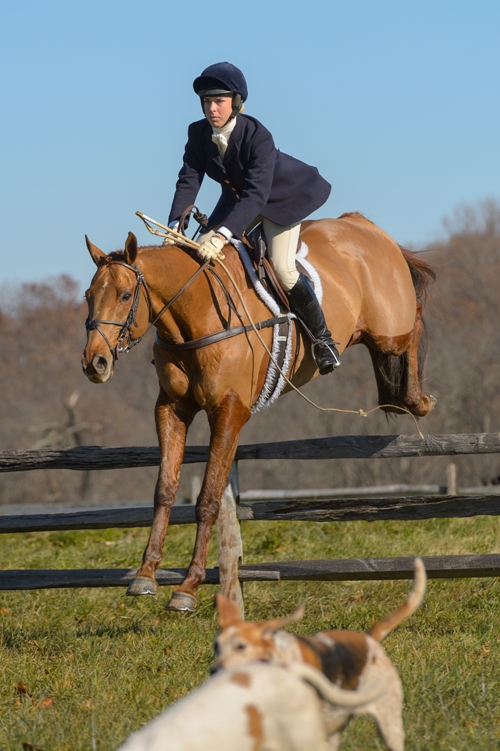
Stephanie Boyer, professional whipper-in, Mr. Stewart’s Cheshire Foxhounds (PA): “I am the huntsman’s eyes and ears, and I have to be honest with him at all times concerning what I see, whether he wants to hear it or not!” / Jim Graham photoYou may have noticed that the whipper-in has been Foxhunting Life’s theme this week. We field members watch these heroic figures, intent in their mission, standing in the irons, galloping on, claiming their “right-of-way” when passing the field, but what do they actually do?
For the answer to this question, read “The Whipper-In Is the Huntsman’s Right Hand” below.
The article “Whipper-In: What’s in a Name?” compares the differing agendas of the professional versus the honorary whipper-in and examines the best use of the whip they carry. “The Galloping Whip” by Brooksby is a poetic tribute to Charles Isaac, a nineteenth century whipper-in with the Pytchley (UK).
For anyone with aspirations to whipping-in one day, a particularly useful book devoted to the subject is Whipper-In by Dennis Foster, Executive Director of the MFHA. Indeed, it’s a good read for anyone interested in how the whipper-in, huntsman, and hounds work together in the field.
According to Peter Beckford, the whipper-in can be the decisive ingredient in turning a mediocre hunting day into a brilliant one. Here’s what he had to say in his classic, ageless 1781 treatise, Thoughts on Hunting.
WANTED: Opening Meet Photos!
It ‘s time to change the photos in our Foxhunting Life banner slide show (above), and with the formal season starting we’d like to post a collection of all Opening Meet photos in our new banner. Horses, hounds, blessing ceremonies—we posted some beautiful photos last season. Send your photo prospects directly to me at [email protected]. […]
How to Find Past Articles on FHL
Karen Myers photoI thought it might be helpful now and then to point out the tools provided on Foxhunting Life for finding past articles or for finding articles on any particular subject of interest.
Readers will notice, we hope, that our Home Page is continually being updated with new articles. As new articles are posted, the older material is pushed lower on the Home Page until it disappears. Or does it?
No, it doesn’t! After three years of publishing FHL, there are more than 800 articles covering virtually every aspect of our sport that are available to you with just a few keystrokes.
Here are three simple ways to find articles of interest: the Search function, the Hunt Club Pages, or the article Category.
Charles Church in Open Air
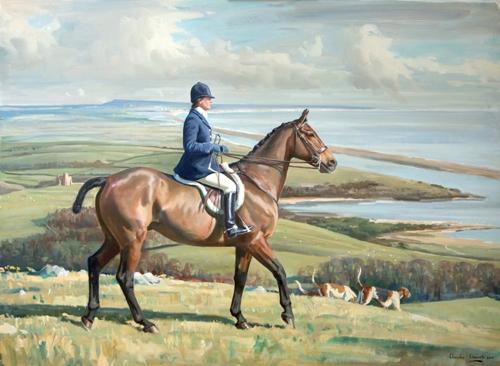
Private commission by Charles Church
I wrote recently about the paintings of Sir Alfred Munnings and his portrayal of the horse in motion—flowing, graceful, muscles rippling, indescribably beautiful—on the occasion of the brilliant exhibition of his works at the National Sporting Library in Middleburg, Virginia. I am hopeful that one day I can announce to you an exhibition of the works of a contemporary artist—Charles Church—at that same venue!
Church, 43, is today an internationally renowned painter of horses, landscapes, and country life. Upon the occasion of his last critically-acclaimed exhibition, the Prince of Wales wrote of Charles’ “unique sensitivity and profound understanding of his subject matter.” His commissions have included The Royal Pageant of The Horse for H.M. The Queen, as well as paintings for H.M. The Sultan of Oman and H.H. The Aga Khan. His racing commissions include more than thirty-seven Group or Grade 1 winners.