The Mockers and Lionel Edwards
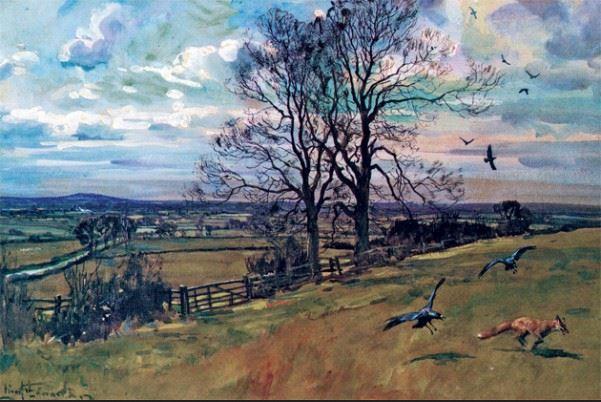
The Mockers, 1925, by Lionel Edwards, gouache (click painting for a larger version)
In a recent Country Life article, Michael Clayton proclaims The Mockers by Lionel Edwards to be his favorite painting.
Clayton is former editor of Horse and Hound, author of numerous books, and well-known as Foxford for his long-running series of hunting reports in “Foxford’s Hunting Diary.” Clayton has probably hunted with every hunt in the UK over his long career as a sporting correspondent, and has personally known certainly all of the British contemporary artists of note. Because I respect Clayton’s opinion, because I’ve loved Lionel Edwards’s work ever since I first started hunting, and because I was sufficiently struck by the drama of the scene, I thought that Foxhunting Life readers might appreciate the painting as well.
“I have seen foxes ‘mocked’ in this way by birds,” says Clayton in the Country Life article. “It symbolises just how tough nature can be.”
Indeed, the fox is not only running from a pack of hounds, seen as mere white dots in the far distance at the left, but is being cruelly mobbed by the diving, swarming crows. The masterful rendering of the landscape under a somber sky, typical to the English Shires, was one of Lionel Edwards’s special talents. What was not so typical was this view of quarry and birds in the foreground, with horses and hounds—Edwards’s usual subjects—mere suggestions in the background.
JoAnne Helfert Sullam Fuses Art and Activism
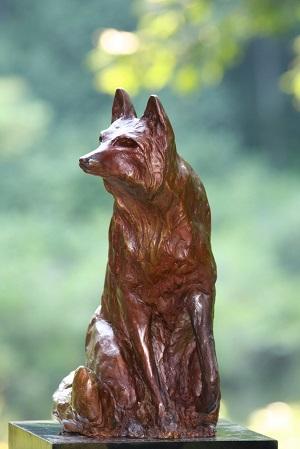
The Fox, bronze. See more examples of Ms. Sullam’s art on her website; she is represented by the Chisholm Gallery.Born in Brooklyn, New York, JoAnne Helfert Sullam is a celebrated animal and wildlife artist. Her award-winning works have been featured in the New York Times, Who’s Who in America, Art Business News, “The Best of Sporting Art” in Polo Players magazine, and on the on the cover of The Chronicle of the Horse. She received Special Congressional Recognition for Work in the Arts from then U.S. Senator Hillary Rodham Clinton. Ms. Sullam’s paintings and sculptures have been displayed in solo and group exhibitions in galleries and cultural centers thoughout the country.
An advocate for conservation, Ms. Sullam also writes, lectures, and produces films about wild and domestic animals. She is the author of a children’s book and has interviewed personalities such as Richard Gere, Bobby Kennedy Jr., and concert pianist/animal activist, Helene Grimaud.
Remembering Anthony Trollope
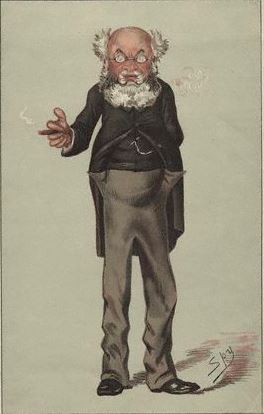
Anthony Trollope by Spy in Vanity FairIn 1971, Michael Hart, a student at the University of Illinois, conceived the most wonderful notion. He had access to a computer that was part of the government-sponsored research network that ultimately became the Internet. He set himself a goal to make the ten thousand most consulted books available to the public, digitally, by the end of the twentieth century. He plucked a copy of the Declaration of Independence from his backpack, and it became the first Project Gutenberg e-text. Hart named the project after the German printer Johannes Gutenberg, who revolutionized the printing press.
Today, there are about forty thousand texts in the Gutenberg collection, including works by Somerville and Ross, G.J. Whyte Melville, and other superb writers of foxhunting stories. Many are in the public domain and may be downloaded and freely reproduced. Periodically, we select a favorite and extract a selection both for your enjoyment and as a reminder of the wealth that Project Gutenberg keeps in store for us.
With this year marking the bicentennial of the birth of Anthony Trollope, a popular English novelist of the Victorian Era who tucked foxhunting scenes into most of his novels, we offer an excerpt from The Duke’s Children (1880), the last volume in his Palliser series.
Seabird
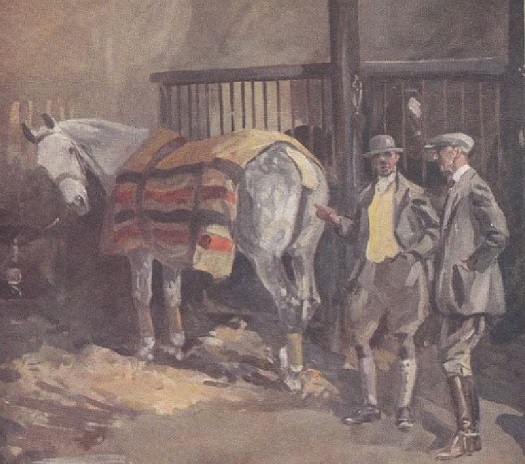
Seabird illustration by Lionel Edwards
by Edric G. Roberts
He’s not very young and he’s not very sound,
He’s not very fast, now, they say,
But nobody knows every inch of the ground
Like Seabird, the dealer’s old grey.
He’s hunted more years than I care to recall,
He’s carried us all in his day,
But no one has ever experienced a fall
On Seabird, the dealer’s old grey.
Hunters’ Moon

With this issue of FHL WEEK appearing the morning after the annual Hunters’ Moon,* we consider this poem especially appropriate!
Illustration by Gilbert Holliday
By Edric G. Roberts
The horizon, sapphire and amethyst,
Pales in the East and soon,
Like a copper shield through the evening mist,
Rises the Hunters’ Moon.
On the turnpike road every hoof-beat sounds
Clear in the frosty air,
As the Whip jogs home with the straggler-hounds
Jostling his weary mare.
The Great Hound Match of 1905: Alexander Henry Higginson, Harry Worcester Smith, and the Rise of Virginia Hunt Country

This book will be launched at the National Sporting Library, Middleburg, Virginia, on Sunday, November 8 at 2:00 pm. Author Martha Wolfe will speak and sign books.
Review by Martha A. Woodham
The Great Hound Match of 1905: Alexander Henry Higginson, Harry Worcester Smith, and the Rise of Virginia Hunt Country by Martha Wolfe, Lyons Press, 2015, Hardcover, 224 pages, $22.95Before Virginia became the epicenter of foxhunting in the United States, two men staged a contest to determine which was hound was better suited for hunting in America—the heavy, biddable English hound or the ill-mannered American hound that ran like a screaming banshee.
In The Great Hound Match of 1905: Alexander Henry Higginson, Harry Worcester Smith, and the Rise of Virginia Hunt Country, author Martha Wolfe sets a fictionalized version of this competition against the history of foxhunting in Virginia. She has written a wonderful account of the battle between two wealthy men—Higginson and Smith—with egos to match their fortunes, each adamant that his hounds were the best.
Set in an optimistic America just recovering from the 1893 depression, the match was very much a stuffy Old World versus the brash New. Against this background, Wolfe gives us a portrait of the vastly different men—Higginson, the gentlemanly foxhunter, and Smith, who liked his hounds intuitive, impulsive, independent, and to show “initiative…like any full-blooded American.” According to the author, “Smith and his [Grafton] hounds were mongrels—bold, forward, and independent to a fault. Higginson and his [Middlesex] hounds were the refined, reserved elite—passively aggressive, methodical, accustomed to queuing, happy in a crowd of equals.”
William Dunlap: The Walker Foxhound as an Allegory
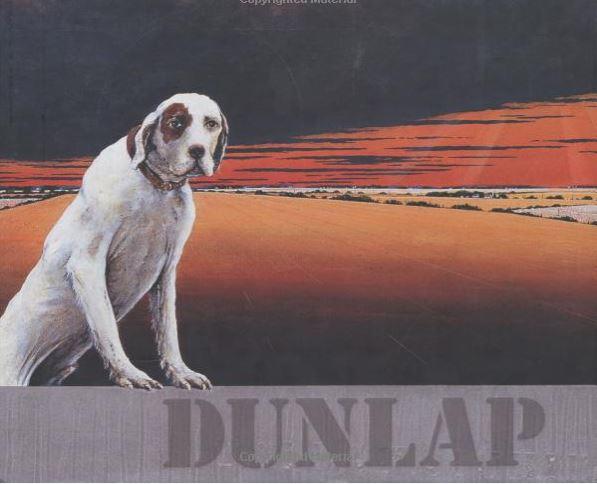
“Dunlap” by William Dunlap; foreword by Julia Reed, essay by J. Richard Gruber; Jackson, MS: University of Mississippi Press, 2006; available at Amazon
William Dunlap is an important contemporary artist of the South with a powerful affinity for southern landscapes and Walker foxhounds. Dunlap’s work may be seen in many prestigious collections, including the Metropolitan Museum of Art and the Corcoran Collection of the National Gallery of Art.
His book, Dunlap, features more than one hundred works, produced over a thirty-year period. It was published in a trade hardback and a limited edition of two hundred signed, bound-in-linen covers, housed in a matching linen-covered clamshell box. A signed, numbered print featuring four Walker foxhounds is included in the box. The book’s cover features a surrealist landscape with a white Walker foxhound, Delta Dog Trot, appearing ready to climb right out of the painting, a nod to nineteenth-century trompe l’oeil techniques. The painting, “Delta Dog Trot, Landscape Askew” hangs at the Alluvian Hotel in Greenwood, Mississippi.
Dunlap’s grandfather was “a foxhunter of the old school,” Dunlap writes. “He bred and hunted generations of pure blood Walker Hounds. With names like Lucky, Mary, Speck, Sally, and Bo, these dogs were all legs, lungs, nose, and heart. They lived to run but spent most of their lives laying around the kennel, eating, sleeping, stretching, and occasionally giving off the deep-throated mouth that would send any fox in earshot scurrying for the nearest hole.
William Dunlap: The Walker Foxhound as an Allegory
“Dunlap” by William Dunlap; foreword by Julia Reed, essay by J. Richard Gruber; Jackson, MS: University of Mississippi Press, 2006; available at Amazon
William Dunlap is an important contemporary artist of the South with a powerful affinity for southern landscapes and Walker foxhounds. Dunlap’s work may be seen in many prestigious collections, including the Metropolitan Museum of Art and the Corcoran Collection of the National Gallery of Art.
His book, Dunlap, features more than one hundred works, produced over a thirty-year period. It is published in a trade hardback and a limited edition of two hundred signed, bound-in-linen covers, housed in a matching linen-covered clamshell box. A signed, numbered print featuring four Walker foxhounds is included in the box. The book’s cover features a surrealist landscape with a white Walker foxhound, Delta Dog Trot, appearing ready to climb right out of the painting, a nod to nineteenth century trompe l’oeil techniques. The painting, “Delta Dog Trot, Landscape Askew” hangs at the Alluvian Hotel in Greenwood, Mississippi.
Dunlap’s grandfather was “a foxhunter of the old school,” Dunlap writes. “He bred and hunted generations of pure blood Walker Hounds. With names like Lucky, Mary, Speck, Sally and Bo, these dogs were all legs, lungs, nose and heart. They lived to run, but spent most of their lives laying around the kennel, eating, sleeping, stretching and occasionally giving off the deep-throated mouth that would send any fox in earshot scurrying for the nearest hole.
Wild Lone: The Story of a Pytchley Fox
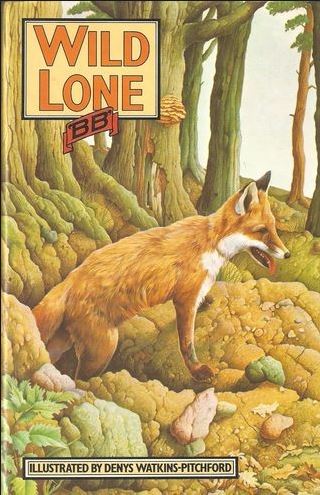
Everyone to whom I have recommended this book loved it. In Wild Lone: The Story of a Pytchley Fox, the reader experiences the sights and sounds of the woodlands by day, and the silence and stealth of the forest by night—not from our usual vantage point in the saddle, five or six feet above the ground, but down low, nearer the earth, where dry stalks of grass brush past our ears and our noses inhale the musky scent of decaying leaves.
Because the reader becomes acquainted with Rufus when he is whelped and gets to know him and his habits intimately, we feel his pain when he becomes caught in the wire snare and we root for him when pushed by foxhounds. We care about him deeply, because we know and respect him. Yet Rufus is an opportunist and kills whenever he can—birds, mice, hedgehogs, rabbits, chickens. He kills so often and so casually that we hardly notice. We feel nothing for these creatures—his quarry—because they are, unlike Rufus, anonymous.
The book’s message is revealed to us by a consummate woodsman: that life and death happen to every creature in the forest, mostly shortly after birth. Nature is harsh, but that is its way. And the pressure put on each species serves to improve the species, for only the best examples (and the luckiest) survive for a fulfilling time—as does Rufus.
The following excerpt, in which the author exercises his full powers of language and imagery, is quite lyrical. Yet, if an adventure story is what you prefer, I promise you won’t be disappointed by Wild Lone.
The Charm of Watercolor
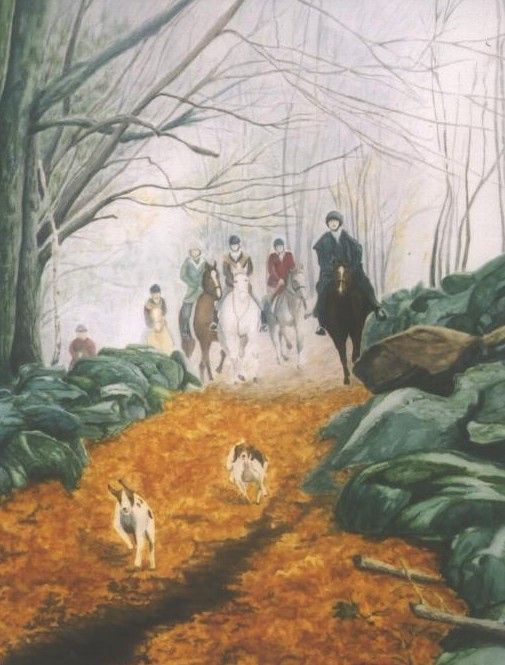
Morning Fox Hunt at Shady Lane Farm by Emily Thornton. Giclee prints of original watercolor are available.
I try to reveal the beauty of nature in my artwork through realism. From a young age I was drawn in by nature and my surroundings, from hiking in the woods to being an avid lover of animals and flowers. As I grew I became quite eclectic in my pursuit of art, but watercolors have remained my favorite medium with their opaqueness that can be full of surprises. Watercolor courses filled all my electives in college as I finished my degree in Psychology.
For twenty years now I have painted my own Christmas cards each year. Many of them were of animals, flowers, lighthouses or covered bridges. I became interested in foxhunting when a close friend and my daughter began actively foxhunting in the New England area.