
Foxhound whelps—tiny creatures that in a few short years will be the very ones we rely on for our sport—are making their entrance into our world as we slide into the tailing end of the season. Hunt members and hunt supporters—”puppy walkers”—will be taking the lucky ones from the kennels to their own homes and farms to start the puppies’ education in a free and pleasant environment.
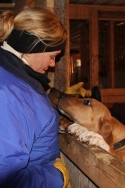 Puppy walker Heather Kuenzi wants to do her best for her huntsman and her puppies. She writes:
“I was recently asked by our huntsman to bring two puppies (Penn-Marydel bloodlines) to our farm for the winter and walk them out! Any words of wisdom, or training tips for when I’m out walking the fields with them? I’m curious to know if hounds are simply born “biddable” or if there are things I can do to work on developing those traits. I’d like to continue to walk puppies for our hunt with future pups and am working hard on returning them as honest members of the pack! I also have a half-foxhound house dog who is also enjoying “helping” me with raising them!
Nigel Peel, Master and huntsman of the North Cotswold (UK) and a member of FHL’s Panel of Experts says, “Puppy walking is one of the great joys of being part of the hunting family. I believe that a well-walked puppy should return to the kennels understanding about being on couples and being able to be led on a lead. The puppy should also know its name and be attentive when called. Too much shouting at an early age leads to hounds being cloth-eared. Do not alter the volume of your voice but alter the tone. The lower the tone the more the potential foxhound should realise that it has sinned. The higher the pitch, joy! Foxhounds are large animals, and when they are puppies they should not be given more exercise than they can cope with. Try not to let them hunt the deer, the cats or any other animal domestic. They should also be bombproof to chickens. I have walked many puppies and have found it a great pleasure. Well-walked puppies who are fond of their walkers will always give them a great greeting at the meet and that in itself is a great reward.”
Alexander Mackay-Smith’s comprehensive, entertaining, and educational book Foxhunting in North America contains a few paragraphs pertinent to our question. The late Master wrote:
“What are your responsibilities toward your young charges? First to make sure that they have plenty of feed, fresh water and a comfortable place to sleep. Second to further their education. At feeding time, call them by name so that they learn it and come when called. Put on a collar and teach them to lead. Expose them to cats, chickens, horses, cattle, sheep and pigs. If they try to give chase, explain forcefully that this is not the way to behave!
“Take them through briar patches, across streams, over stone walls and chicken coop panels. Try to show them how to get through a woven wire fence—if it has an 8″ x 12” mesh they can turn sideways and slide through the opening. This is far safer than trying to jump the fence. A hound that jumps and whose feet go through the top strands of the fence will flip forward and be hung….
“Within your driveway or farm road, try to make them afraid of cars and trucks—a loud blast on the horn often works. Encourage them to use their noses, to run rabbits, rats, ground hogs—but not deer or skunks! When you go riding let them come along for a short distance, which can be increased as they grow older and fitter. Their personalities, their rough and tumble play, even their misdeeds will charm and entertain you. The speed with which they learn their lessons will become a matter of pride. Finally, your ears will burn when they go back to the kennels and the huntsman praises the great job you have done.”
January 18, 2011