For your horse’s safety, here’s a reminder that springtime is a good time to take stock of your horse trailer and have it inspected by an expert. We asked an experienced dealer for her recommendations.
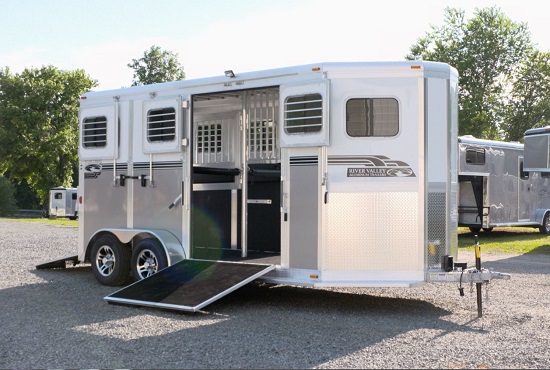 River Valley aluminum side and rear loading tag-along
“One of the first issues to address with trailer owners and buyers is horse safety and comfort,” says trailer dealer Donna Martin, co-owner of the Ruckersville, Virginia-based Blue Ridge Trailers. Martin said most people who have started to research their options know they should compare trailer sizes and floor plans to the size of their horses. However, she noted that there are several other angles to consider, too.
“While you certainly want to have enough space for your horse to feel comfortable, you should also prioritize light and ventilation, as well as how the horses will stand and balance themselves,” she advised. “How you intend to work out of the trailer also is an important consideration.”
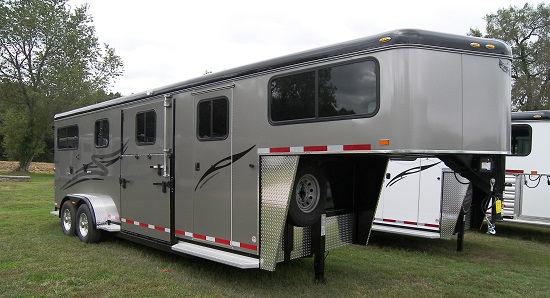 Hawk 21 goose-neck
Flooring material is another key issue to consider when shopping for a horse trailer. Martin said her priority is to educate people about Rumber flooring, made from recycled tires and plastics, which greatly reduces road vibration experienced in aluminum or wood floors. That translates to less muscle fatigue and joint stress traveling on Rumber floors.
Reputable trailer dealers should not only educate prospective owners on their options but should also help new and existing trailer owners keep their equipment safe and reliable on a continuing basis. Often this involves shattering misconceptions about trailer care. For example, says Martin:
“Tires should be driven at maximum tire pressure all year round, even in winter when the weather is cold. The most frequent problem we see is trailers being pulled with under-inflated tires. Tires also start to dryrot whether in use or not. You may have plenty of tread left if you only drive to local hunt meets each season, but if your tires are five or six years old and have been parked in the sun, they should be replaced. It takes a professional to determine the level of dryrot in a tire.
“Bearing grease absorbs dirt from the atmosphere whether you are using your trailer or not. And if the trailer isn’t covered, the bearings dry out faster under the heat of the sun. A professional should look at the condition of the bearings every two or three years, even if the trailer is standing most of the time.
“The roof calk generally needs to be removed, the roof cleaned, and the calk replaced every five to six years, totally depending on the amount of exposure to the sun.
There are other simple things that owners need to know– like always parking on concrete, gravel, or asphalt to prevent moisture from affecting tires and bearing grease. “If you have to park on grass for long periods,” says Martin, “put down sheets of plywood and park the trailer on these. This will really help extend the life of these components.”
“Also, covering a trailer with either a shed or a removable cover will make all components last longer, not just tires and bearing grease but rubber door stops and roof caulk as well. There are lots of manufacturers online offering RV covers that are large enough for horse trailers. Oddly, we have not found a manufacturer of covers for horse trailers that make them long enough to cover the tires!”
Two of the biggest myths Blue Ridge Trailers regularly busts involve trailer insurance and State Inspections.
“All states differ, of course, but the requirements of a Virginia inspection are very basic and do not encompass all repair and maintenance issues that can and do affect trailer safety. We advise a comprehensive safety inspection which looks at all trailer components, at least annually,” says Martin. “A current Virginia State Inspection certificate, for one, sadly does not insure that a trailer is safe to carry livestock.”
“Many trailer owners mistakenly assume that their tow vehicle insurance covers their trailer. However, typically only liability coverage extends to the trailer. That means that their insurance company will not pay for the cost of damage from accidents, storms, vandalism, or theft.”
“Trailer owners need comprehensive and collision coverage to be protected during a crisis,” Martin says. “Adding a trailer to an existing vehicle insurance policy provides this coverage at a very affordable cost.”
Not knowing about this and other trailer insurance and maintenance techniques can put a strain on your wallet. Comprehensive trailer repair costs can climb into thousands of dollars.
“Every horse and every horse owner is different. Your dealer should make it a point to learn as much as they can about your individual needs and goals,” Martin said. “It’s their job to find you a trailer that not only suits your horse, your tow vehicle, and your travel needs but also to gives you safety every time you hit the road.”
Re-Posted April 20, 2021
Blue Ridge Trailers is owned by Donna and Rob Martin, lifelong horse lovers who are committed to sharing their knowledge and experience with others.