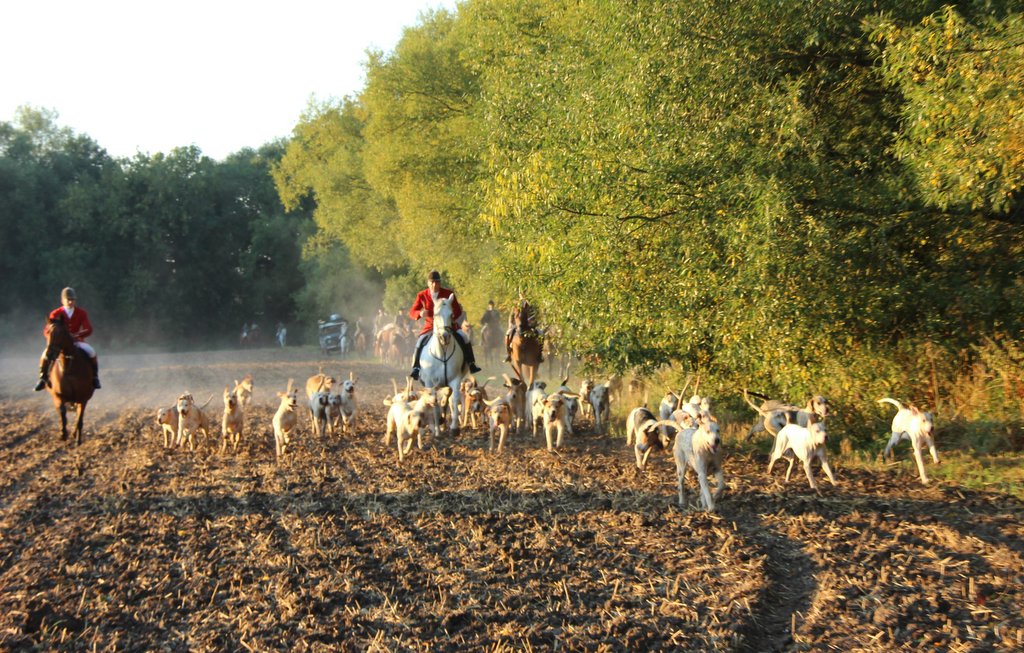
We republish, with permission, James Barclay’s article about Martin Scott, former MFH and eminent foxhound breeder. Martin Scott has been an engaged member of Foxhunting Life’s, Panel of Experts since our beginnings and has cheerfully answered any and all questions posed to him by our readers, for which we are continually grateful.
by James Barclay
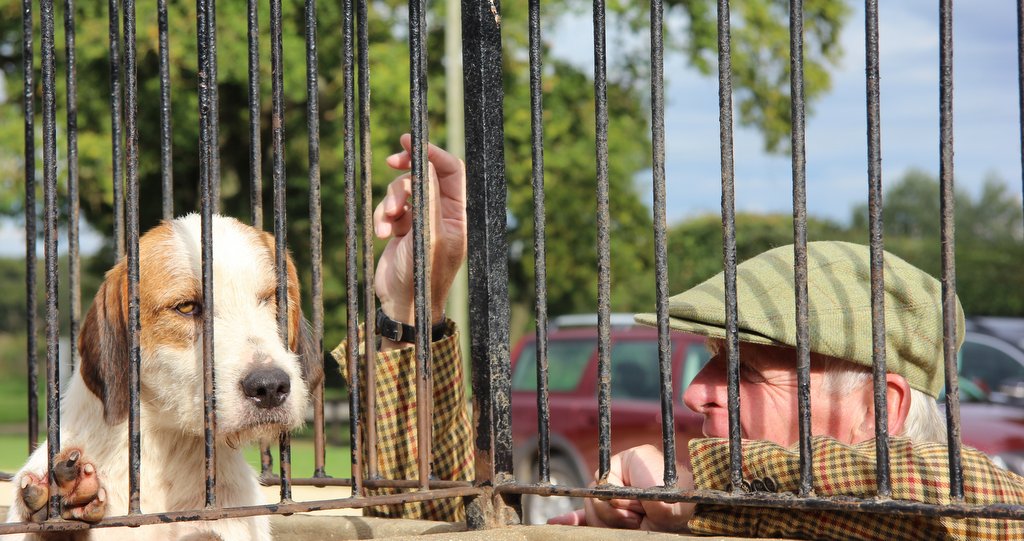 Martin Scott visits with a descendant of Glog Nimrod 1904 / James Barclay photo
Martin Scott is an extraordinary man. As well as being a true and dedicated foxhunter, he is probably the only person I know who has a completely encyclopaedic brain when it comes to the breeding of the Modern English Foxhound. There is no one quite like him when you need to tap into a vast depth of knowledge on this subject—not only their breeding but the attributes of each and every generation.
Foxhounds are interesting enough animals in themselves, but to see how they have evolved over the years is quite fascinating and there is no one who takes this more seriously than does Martin. In a way this is somewhat understandable as his own pedigree shows up a considerable commitment from his forebears to the breeding of top class hounds. His great uncle Charles Scott being Master of the North Cotswold and his father Bill hunted the United, Portman, North Cotswold, West Waterford, the Portman again, and lastly the Old Berks. It was in his father’s day at the North Cotswold, that he bred the famous Stallion Hound, North Cotswold Landlord ’44.
Martin, a former Master of the Tiverton and the VWH (Vale of the White Horse), has been responsible for breeding two exceptional packs of hounds, both of which have excelled over the years in their work and good looks. He would, I am sure, very much agree with the saying “You can have an ugly pack of hounds and they will hunt their heart out for you, and you can have a beautiful pack of hounds and they won’t hunt a yard. However, is it not of great reward to be able to say that you have been able to achieve the combination of both?” Not many have deserved that recognition but he certainly has. It is in the getting there that is the challenge and a real challenge at that.
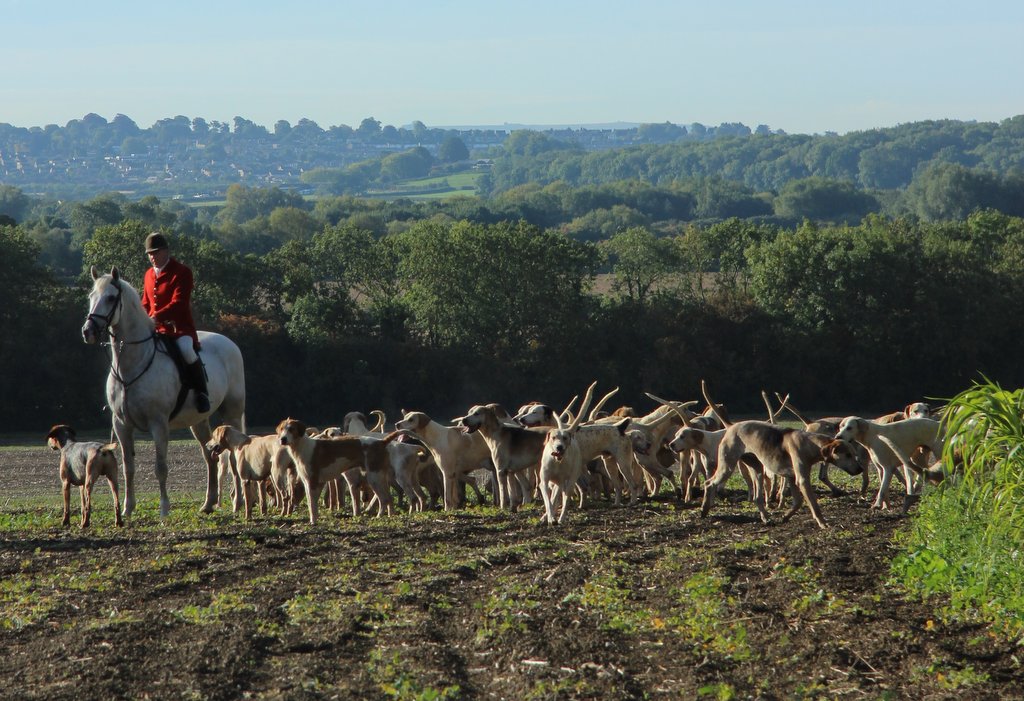 VWH hunting at Dudgrove on the River Thames, near Fairford / James Barclay photo
The VWH are the best example of Martin Scott’s work, and this is demonstrated by the fact that the sixty couple of hounds in kennel all go back in their breeding, like the majority of kennels in England, to just three tail male lines: (1) Glog Nimrod 1904, which he describes as his Welsh line; (2) Mr Meynell’s Quorn Stormer 1791, which Martin rates as probably the most popular; and (3) Brocklesby Bumper 1743.
So how is this all achieved and put into practice? It comes down to real attention to detail and it is where the term Line Breeding comes in. To quote Martin: “This is done to create and maintain a level pack of Hounds which can run up together, avoid dividing, and, on arriving at a check together, soon resolve the situation by putting themselves right. It is no good them being strung out like a washing line!” This will ensure as little time as possible is lost and the hunt will be able to continue to what is hoped would be a successful conclusion. Once one has established these lines in your mind, it is easy enough to get to know them, and is very rewarding to watch your pack develop.
To explain a little further about what Line Breeding actually is might help us understand what is also going through Martin’s mind in the plans he makes for the VWH foxhounds. It is a multiplication of the good names in the pedigree of the sire and dam in the fourth generation, and, therefore, is a form of inbreeding. Beware though, never get any closer than that. Also remember it is best to avoid putting a dog hound to a female, both of which share the same tail and female line. There are of course many benefits to this form of breeding, uniformity being one. The other, which stands out, is when hounds are running on a cold winter’s evening and the frost is coming in. There is a rare scent, and it is more than likely the pack will be then be covered by the proverbial pocket handkerchief. This is what a true hunting man’s dreams are well and truly made of and is the sort of sport produced by the best hounds. Line breeding will be a great a help in developing a first class pack. Those of us, who have been fortunate over the years to have received some of Martin’s draft hounds, must remember with gratitude the help he generously gave us, not only in getting us going but with sound advice in creating a sensible breeding policy. There certainly was not much wrong with the hounds that we received, and they soon fitted in to our respective kennels.
So, whether we hunt to ride or ride to hunt, or like me are now just one of those humble car followers, it is important to remember what we owe Martin. We cannot go hunting without a pack of hounds in front of us, that is for certain. And for someone to have selflessly dedicated themselves over the years to the science of their breeding and their welfare is no mean feat. Without doubt, the foxhound as a breed is far the better for Martin Scott’s contributions.
Posted October 22, 2015