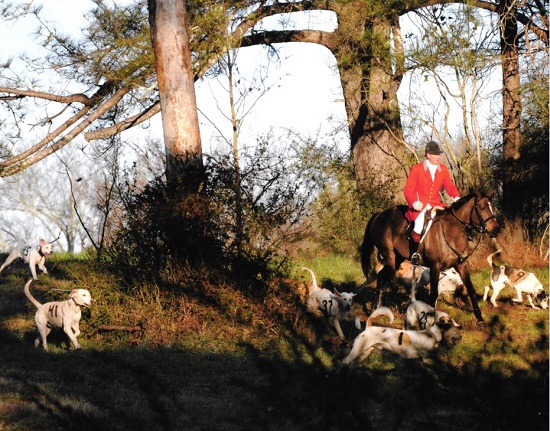
 Trial huntsman Charles Montgomery and competing hounds at the 2016 Belle Meade Hunt hound trials / Bella Vita Fotografie photo
The Brits must be getting used to this. Teach the Yanks something worthwhile, like foxhunting, and they go ahead and change it. They did it first with the foxhound. A braggart named Harry Worcester Smith came along at the beginning of the twentieth century with his long-eared, mouthy, hare-footed hounds, and claimed they were better than ours! He put together a Great Hound Match and tried to prove it. We spent two hundred years developing the perfect model of what a foxhound should look like, and then along came another American named Ikey Bell who started another revolution. And just twenty years ago—yesterday in the proper scheme of things—a couple of rebels named Ben Hardaway and Mason Lampton started painting numbers on foxhounds. Whatever for?
Well, for one thing, it’s a heck of a lot of fun. For another, it’s the only way we have of measuring a foxhound’s performance against other foxhounds under the same hunting conditions. Not a bad thing for Masters, huntsmen, and breeders who might like to know how a hound performs in the field before breeding to it. Anyhow, we’ll be reporting on quite a few hound trials through the upcoming Hark Forward! season, so let’s consider the foxhound performance trial.
Hardaway and Lampton, MFHs of the Midland Fox Hounds (GA), took a page out of the American foxhound field trialers’ book, and started the process of applying field trial competition methods to test pack hounds. They organized the first hound trial in their Fitzpatrick country in 1996, invited other hunts to bring hounds, and recruited Charles Montgomery, then huntsman for the Live Oak Hounds (FL), to be a judge. They hosted a second hound trial the following year, and, in fairness to the entries from other hunts, brought in a neutral huntsman without a dog in the fight. That huntsman was Charles Montgomery.
Since then, Montgomery has served as trial huntsman at probably a dozen hound trials, but had never competed his own hounds in a hound trial until last season at Belle Meade. Not surprisingly, he did pretty well, but I’m getting ahead of the story.
Back at the beginning, Hardaway and Lampton had a friend, Ed Bacon, who bred July hounds and was a field trialer. Bacon was a great help in getting the Midland hound trials and the Belle Meade trials well started. Bacon served as field trial president for many of the early pack trials, and taught us scoring techniques. However, as a test for pack hounds, the performance trials had to evolve away from some aspects of the field trial and find their own solutions.
It may not be totally obvious, but a good pack hound needs attributes that the field trialer doesn’t care about. Marking at the earth is one. Honesty is another. If a field trial hound skirts the line to get to the front, that’s ok as far as the field trialer is concerned. But a pack hound that skirts is cheating on the other hard working members of his pack. There were a number of differences in the scoring and in the hunting that had to be worked out differently for pack hounds. Charles Montgomery has been at the front of the action since the beginning, and he has developed many of the improvements that made performance trials better for riders in the field, better for judging, and fairer to the hounds being scored.
At the early performance trials, it usually took a good part of the first day’s hunting just for hounds to get over their confusion and uncertainty. At some of the early trials, some huntsmen even insisted on bringing their own hounds to the field and then would try to leave their hounds with the pack. Many of those hounds simply walked away from the pack on their huntsman’s heels as he retired to the field. The confusion could continue for hours.
It was Charles Montgomery who solved that problem. At one trial at Belle Meade he collected all the hounds from all the packs into one large holding pen shortly before the first meet and stayed among them for perhaps a half-hour before taking them to the meet. He soothed them and tossed biscuits. They got to know him, and they got to know each other. And it only took thirty minutes! When he moved off to go hunting, he had the beginnings of a pack of hounds ready to work.
Another problem Montgomery identified in his early experiences as trial huntsman was that, because he didn’t know any of the hounds, he didn’t know which he could rely on to speak the truth. Huntsmen need that to make good decisions! So he suggested that trial huntsmen bring two or three of their own hounds that they knew to be honest, not as competitors, but as known quantities.
Deer running was another problem, and hunts that prided themselves on having deer-proof packs were reluctant to expose their hounds to the bad habits of others. Montgomery was a member of the committee and a proponent of the decision that allowed judges or the huntsman to scratch problem hounds in the field and have them picked up immediately. That was a huge improvement in procedure, and made the hunting and the scoring more reliable for everyone.
After twenty years helping to develop the foxhound performance trial into a fair test for hounds and an enjoyable event for competitors and field members alike, Montgomery, now huntsman for the Bull Run Hunt (VA), finally got the chance to watch his own hounds in a trial for the first time last season. He and the Bull Run Masters agreed to enter their hounds in the Belle Meade hound trials last January for the first time ever. Sam Clifton, huntsman of the Green Spring Valley Hounds (MD), served as trial huntsman. When it was over, the Bull Run hounds had won the pack championship with the highest cumulative point score of all the competing hunts, Bull Run Spree was the highest scoring hound of the trial, and Spree was also independently selected by huntsman Clifton as the “Huntsman’s Choice”—the hound he would most like to take home after working for two days with the entire pack. Montgomery had to wait until the spring to win another hound trial-related ribbon, this for the Champion Performance Trial Foxhound of the Virginia Hound Show. Bull Run Ella, a finisher among the top ten high point scorers at the Belle Meade trial, was judged class champion at Virginia. Icing on the cake for Montgomery.
Montgomery grew up hunting with Epp Wilson in the Belle Meade Hounds (GA) country, where, as youngsters, both whipped-in to Epp’s father, the late James Wilson. Epp has continued hosting hound trials at Belle Meade each year since Midland started the game, and, as Performance Trial Chairman for the upcoming Hark Forward! season, he organized the schedule of trials across the country. You can be sure Epp will be relying on his old friend Charles in the busy season to come.
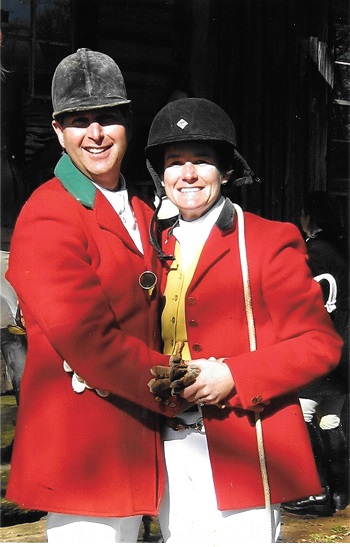 Charles and Boo Montgomery: a team in the hunting fieldCharles, in turn, will be ably assisted by his wife and first whipper-in Boo Montgomery, who is also an experienced hound trial judge. Boo, having been a professional huntsman for the Hardaway Whitworth Hounds (AL), can also fill at Bull Run as huntsman when Charles is called away.
Click for next season’s schedule of Performance Trials, and take to the field for two days of hunting and hospitality at one or more of the dozen trials across the country. Pick out your favorite working hounds and compare your choices with those of the judges. It’s easy; they’re numbered!
Posted July 24, 2017