
From ancient times to the recent past, most family histories were preserved by story-telling from generation to generation. Today, with families spread across continents, if not around the world, and no one living next to the old folks to even hear their stories, how are family histories to be preserved?
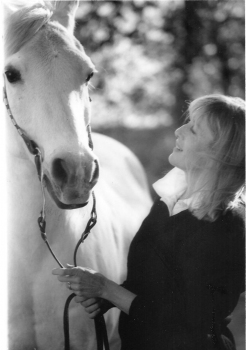
Karin Winegar has a solution. She provides a unique service which she calls “Histories for Horsepeople.” Karin writes and produces privately published family or hunt histories meant as special gifts for family, friends, business associates, and/or members. She describes herself as “sort of a private family scribe.”
Karin is an award-winning journalist in both maritime and equestrian subjects and author of the highly-acclaimed book, Saved: Rescued Animals and the Lives They Transform. When I was editor of Covertside magazine, I asked Karin to write profiles of selected Masters for publication in the magazine. One Master liked her feature so much that he commissioned her to write his life story and family history. “Histories for Horsepeople” was the natural outgrowth of that project.
Karin, a foxhunter herself, finds that foxhunters and equestrians make for lively material.
“Horse people are intrinsically full of action, anecdote, color, drama, beauty, and quite often they have archives of good photography,” she says. “I find they are generally more vital than other folks, with more dimensions and story to them. And equine sport tends to be transmitted through generations, too, so there can be decades or centuries of material to mine. In addition to all that, horse people and especially foxhunters as a group seem to be highly literate—or at least appreciate books about their sport.”
Karin observes that when people get to a certain age, or have accomplished their goals in life, some find that it’s time to set their story down for their family. Whether breeder, foxhunter, racing stable owner, or hobby rider, it allows the principal to tell not only their stories but the stories of beloved animals. It’s a form of immortality for the horses as well as the people.
“Another great thing about commissioning your own book is editorial control,” she says. “You get to have your version of events realized. As we all know, personal as well as public history is made by those who write the books!”
After having spent many years as a journalist and getting stories to press overnight, Karin says that the requirements for working accurately are similar, but a book takes more preparation, more interviewing, more design, and more production time.
“The scope of a life requires time to absorb, to understand, and to summarize in an entertaining way,” she says.
There are, of course, individuals who have written and produced their own memoirs, but it obviously takes patience, skill, stamina, diplomacy, memory, and most of all time. A lot of time. Karin feels that the use of a professional frees the client to carry on with his or her life.
“Use of a professional helps keep the story soundly structured, balanced, and gives it more even tone and tempo,” she insists. “And yet it can retain that personal voice as well. It’s very much like hiring a portrait artist in that we discuss (and discuss) their taste, their preferences, what’s important to them to include. As I write the book, I learn their style and values and the book reflects this back to them.”
Karin has discovered that she becomes very fond of her subjects. She is sometimes moved to tears by their stories, their own reliving of their history. Because it takes such concentration and effort, she says it’s like writing a novel—one with a lot of fact checking—plus deep listening with the heart as well as the mind.
“It’s so intense that it’s possible for me to do only one at a time,” she says.
The time to create a book like this varies widely. She generally estimates a two-year minimum period so long as photography is accessible and well-organized, and the subject(s) are available. Because people continue to live their lives as the book is created, the work is by necessity done in segments when convenient for them.
Cost depends on the client: how in-depth he or she would like to go, what sort of design, paper, photography and printing they would like. Typically, Karin spends thousands of hours of interviewing, researching, writing, editing, consulting and finally design and production supervision. It is not inexpensive, she says, but it is priceless. As one gentleman said to me, “I am only going to do this once! Let’s make it the best!”
For more information, go to www.karinwinegar.com.
January 31, 2011