with Horse and Hound

Fox Hunting News

Managing Flies on the Horse farm

Researchers have discovered a species of tiny wasp that may prove to be a sustainable way of managing fly population on horse farms without the use of insecticides. Preferring horse manure over cattle manure, a lab study showed that the Spalangia female wasp inserts her eggs into fly puparium in the manure. When her eggs hatch, the wasp larvae eat the fly pupae. (Another wasp species, the Muscidifurax, appears to prefer bovine manure to equine manure!) The two species of parasitic wasps are sold commercially. The authors of the study also provide advice on when, how, and how many wasps should be released. The paper was published by the Entomological Society of America in their Journal of Integrated Pest Management, written for farmers, ranchers, and extension professionals. Journal Reference:Erika T. Machtinger, Christopher J. Geden, Phillip E. Kaufman, Amanda M. House. “Use of Pupal Parasitoids as Biological Control Agents of Filth Flies on Equine Facilities.” Journal of Integrated Pest Management, September 2015 DOI: 10.1093/jipm/pmv015 Posted September 24, 2015
Read More

Fort Leavenworth Home to Only Military Foxhunt

The Fort Leavenworth Hunt (KS) is the only MFHA-registered hunt under military auspices. Every August, the hunt holds a free foxhunting camp—Eight Easy Lessons—to review riding and hunting customs for the benefit of current and potential members, according to the Fort Leavenworth Lamp. Organized in 1926 by the U.S. Tenth Cavalry Regiment, the Fort Leavenworth Hunt kennels are still on the Fort. Members hunt the coyote mostly on Fort Leavenworth lands in the region where the Santa Fe Trail begins. Hunt subscribers are military personnel, their families, as well as civilians. The first two of the eight lessons are riding lessons in which riding skills of the participants are evaluated. The third lesson involves riding drills. The fourth lesson is an informational session about the hunt and its traditions, and the remaining lessons are mounted lessons in the hunting country. The hunt offers four fields to mounted participants. Before World War II, nearly every major Army post had its own hunt. Today the Fort Leavenworth Hunt is the last remaining U.S. military-affiliated fox hunt. The Crossbred pack is cared for and trained by Stephanie Wilcox, MFH and huntsman. Because Kansas law limits foxhunting, hounds chase only coyotes now. Throughout the hunt’s history, numerous military leaders participated in the hunt, including General Jonathan Wainwright, MFH in 1929, and General George Patton. The hounds, first cared for by the 10th Cavalry Regiment or Buffalo Soldiers, chased foxes and coyotes on post. Click for the complete Fort Leavenworth Lamp article. Posted September 24, 2015
Read More

Red Fox “Terrorizes” Australian Neighborhood

red fox.cathy summersCathy Summers photo

The Daily Telegraph, Sydney, Australia, August 24, 2015: “DON’T be fooled by its furry face—this daring fox has been blamed for killing seven pets in Kellyville and terrorising children in the neighbourhood.”

Whew! How low has “journalism” sunk these days? (Not news, just our opinion.)

Journalist Angela Ranke continues with a subhead: “Fox on the prowl in Kellyville, residents warned to lock up their pets.”

Yikes! Would Australia declare a national emergency if a coyote or bear were seen crossing the driveway? C’mon Aussies, we know you guys are tougher than that. (Not news, just our long-held impression.)

Read More
ewbank fire

Ewbank Clothiers Gutted by Fire

ewbank fire

The fire that consumed Ewbank Clothiers in Berryville, Virginia on Thursday, August 13, 2015 couldn’t have come at a worse time for proprietor Karen Ewbank. Her custom tailoring shop was full of hunt coats and other foxhunting attire either being repaired or built in preparation for the upcoming hunting season.

"I woke up at three in the morning that night, counting red coats," she recalls.

In addition to the loss of clothing and fabrics, perhaps even more serious is the loss of her meticulously cut pattern drafts—now ashes—used to trace shapes onto fabrics. The patterns will have to be re-plotted on brown Kraft paper from client measurements and re-cut—a process that takes about five hours for each client’s hunt coat. As of the date of this article, Karen doesn’t yet know whether her client measurement charts survived. They’re in steel filing cabinets in the front of the shop, and she has hopes that they were spared.

“I’m kicking on,” Karen told me today, the first workday of a new week. “I’m moving everything to my house and will work from here until the shop is rebuilt. That could take months, even though the structure is still sound.”

Read More

Downton Abbey Conclusion Will Air Foxhunting “Issue”

By now most of us have heard (and shed tears) that the upcoming season of Downton Abbey will conclude the five-year series. The final season promises to resolve all those Grantham family dramas that have captivated viewers in 250 countries. Through a single family, we have witnessed the British aristocracy and its seemingly inviolate traditions crumble in the path of world events through the first half of the twentieth century. We have cared greatly about the characters, some of whom have been able to accept the inexorable changes, while other could not. Just like in real life. World wars, endemic class distinctions, and social revolution may have been the major glaciers that scoured Britain, reshaping the social landscape, but caught up in the crush of these events was the sport of foxhunting. Although storylines for the final episodes are still under wraps, it has been disclosed that foxhunting promises to be one of the contemporary themes of relevance to be aired. Click for more in The Independent. Posted August 14, 2015
Read More

Scottish National Party Delays Attempt to Relax Hunting Ban

In a reversal of expectations, the Scottish National Party (SNP) has threatened to oppose the pro-hunting effort to relax a key provision of the Hunting Act in England. The SNP move appears to doom chances of passage. As Foxhunting Life reported last week, British Prime Minister David Cameron, a former foxhunter, decided not to test the Hunting Act with a free vote in Parliament for a total reversal—an effort that would consume much Parliamentary time with questionable chance of success—but to attempt a statutory change instead. Cameron’s proposal would relax a key provision of the Act and consume only ninety minutes of Parliamentary time before a vote. Pro-hunting factions believed they had a chance of success, having been assured by SNP Leader Nicola Sturgeon that the party would refrain from voting since it was an English issue. However, pressure from the party’s anti-hunting constituents in Scotland persuaded SNP MPs to announce their readiness to participate in the vote and defeat the bill. The SNP reversal is somewhat surprising in that the statutory change sought by Cameron would, if passed, bring the foxhunting laws in England more in line with those in Scotland. In the wake of the SNP turnabout, Cameron will delay this week’s planned introduction of his proposal to amend the Hunting Act. The ramifications of pursuing his original course now transcend the relatively unimportant (to most) subject of foxhunting and enter the more explosive realm of Scottish independence. If Cameron goes ahead with the vote, and if SNP MPs vote with the Labour Party as threatened, a new precedent of SNP votes on purely English matters will be set, and renewed pressure could arise on fragile Scottish-English unity.   Read more details in The Guardian article by Rowena Mason and Libby Brooks and the more recent AP report. Posted July 14, 2015Updated July 15, 2015
Read More

Cleveland Bay Day in Maryland to Hack, School, Visit

Cleveland Bays and their owners will have a day together to trail ride, school over fences cross country or in a large sand ring, or on the flat in a dressage arena, or just hang out and chat with other Cleveland bay enthusiasts. The event will be held Sunday, July 19, 2015 at Woodstock Equestrian Park, Route 28, Poolesville, Maryland, starting at 9:00 am with lunch at about noon. Arrive when you can, and stay as long as you like. The event is free, but you are asked to bring a dish and your own beverage for the potluck lunch. There is a water complex, some small ditches, and a selection of varied cross-country jumps with the majority at beginner novice or novice level. If you plan to school cross country, please bring a protective vest. The wooded trails are even suitable for carriages. Non-Cleveland Bay horses and friends are welcome as well. Woodstock Equestrian Park is just slightly beyond the intersection of Route 28 and Route 109, heading toward Dickerson. Ample trailer parking is available. For more information or to RSVP, contact Marcia Brody ([email protected]). Posted July 13, 2015
Read More

A Plan to Modify England’s Hunting Act

With Prime Minister David Cameron now leading a majority government, pro-hunting Conservatives are looking to him to make good on his pledge to bring a free vote to the floor in Parliament to repeal the despised Hunting Act of 2002. Despite his majority, however, Cameron is loath to risk a free vote. Too many members of his own party, not to mention the Liberal opposition, have pledged to oppose him on the issue. But the natives are restless, and he must do something. A potential solution has been announced that would, rather than produce a protracted battle for repeal, require only a statutory change in the existing law. This approach would involve only ninety minutes of debate as opposed to weeks. The proposal, if passed, will make it legal once again to use a full pack—as many hounds as deemed necessary for wildlife management—to flush a fox to a gun, rather than the current limit of only two hounds. This, pro-hunters will argue, will help farmers who need predation control and will also help sick and mangy foxes to a speedier and kinder demise. Such a change will also bring the English Hunting Act more in line with Scottish law, thus rendering the plan less objectionable to members of the Scottish National Party than would an outright attempt to reverse the Act. Cameron’s plan is to put the idea to the Conservative party this week. If approved, the statutory instrument could be debated in Parliament as early as next week. Click for more details in Melissa Kite’s article in The Spectator. Posted July 8, 2015
Read More
rachel gray

Rachel Gray, Whipper-In, Former Jockey, Killed in Motorcycle Accident
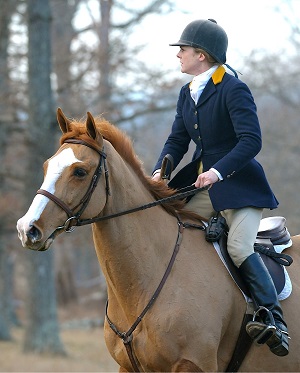
Douglas Lees photoRachel Lynne Gray, 31, died early Thursday morning, June 25, 2015, at the scene of a motorcycle accident around midnight. Born in Warrenton, Virginia, Rachel was a skilled horsewoman. She whipped-in to her husband, Spencer Allen, huntsman of the Piedmont Fox Hounds (VA), and she was a former jockey at Charles Town and other racetracks. She is survived by her parents—her father, Butch Gray, is a former Piedmont huntsman—three children, four sisters, and extended family and friends. A celebration of her life will be held on Wednesday, July 1, 2015 at 12 pm at Trinity Episcopal Church in Upperville. Interment to follow at Bright View Cemetery, Warrenton, with a reception from 3-6 pm at Black Horse Inn. In lieu of flowers, donations may be made to a Memorial Fund for the benefit of her children. Details to follow. Click for more information provided by the Moser Funeral Home. Posted June 29, 2015
Read More

Scientists Claim Thoroughbreds Are Running Faster

For the past thirty years, conventional wisdom has held that horses have attained their maximum speed. Now, researchers at the University of Exeter in England claim that racehorses are running faster. Looking at data from more than 616,000 races run by more than 70,000 horses, these scientists have found the winning speeds greatly improved, particularly over the shorter distances. The big question, according to a professor at Exeter is whether the improvement is a result of breeding or technical changes. In the early 1900s, the speed of horses improved when jockeys shortened their stirrups and got out of the saddle. Speed improved again in the 1970s and 1980s when jockeys shortened their stirrups still further. How now to evaluate the effects of improved vet care, better draining of track surfaces, and hi-tech track surfaces that absorb energy from the horse’s footfalls and return a portion of that energy back to the horse in springiness? Click for more details in the complete article. Posted June 26, 2015
Read More