with Horse and Hound

Latest

GAO Says U.S. Congress Harmed Horse Welfare

In a blunt report to the U.S. Congress, the General Accounting Office (GAO) says that horse welfare has been harmed by Congressional action. Prompted by animal rights groups, Congress, in 2006, passed a law which eliminated funding to the U.S. Department of Agriculture (USDA) for the inspection of horses in transit to slaughter and at slaughter facilities. Since the law still required inspection, it was a back-door attempt at ending the slaughter of horses in the U.S. It worked. Within a few years the last domestic slaughter house closed. At the time about 100,000 horses a year were being shipped to slaughter facilities. It was the dream that these horses would somehow be taken by equine retirement facilities to spend the remainder of their natural lives in green fields tended by loving caretakers. The dream became a nightmare for horses. With retirement facilities unable to absorb even a small fraction of unwanted horses, the GAO reported that in 2010, 138,000 horses were exported to Mexico and Canada for slaughter. “The horses are traveling farther to meet the same end…in foreign slaughtering facilities where U.S. humane slaughtering protections do not apply,” said the GAO. The agency goes on to say that horses are sometimes shipped in too small containers—conditions that were not allowed when USDA inspections applied. Read more in Stephen Dinan’s article in The Washington Times. Posted June 24, 2011
Read More
Derek_OConnor_wins_with_Phar_From_A_Friend

Derek O’Connor Is 2011 Point-to-Point Champion in Ireland
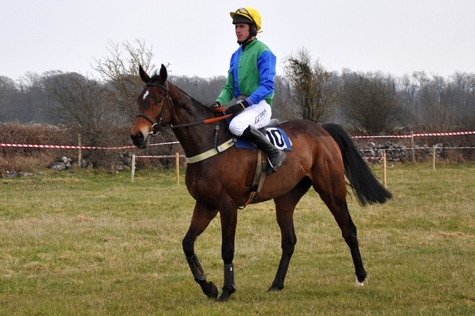
‘The 2011 Irish Point-to-Point season came down to the wire as jockeys Derek O’Connor and Jamie Codd created a spectacular finish to what has been recognised as one of the most exciting seasons on record. The final season’s tally is O’Connor with 110 winners and Codd, the runner-up, with 104 wins. This is the first time that Codd has ridden over 100 winners in one season. The final weekend of racing was at the South Union Foxhounds meeting in Kinsale in County Cork and the Ormond Foxhounds meeting in Ballingarry in County Offaly. O’Connor who had four winners on the final days of racing now has won his eighth Irish Point-to-Point Riders Championship title in succession. He has ridden more than 700 point-to-point winners in his career so far. Posted June 24, 2011 Derek OConnor wins with Phar From a Friend
Read More

Sportsmen Win Court Battle over Hunting on Public Lands

A long courtroom battle to stop hunting on sixty wildlife refuges was decided by a federal judge in favor of sportsmen. The case started with a lawsuit brought in 2003 by the Fund for Animals, which later merged with the Humane Society of the United States (HSUS). The judge’s decision was rendered in April, and the appeal period ended on June 20, 2011 with HSUS failing to file an appeal. The suit attempted to use the National Environmental Policy Act to close hunting on the refuges. In his decision, Federal Judge James S. Gwin said, “Plaintiffs…are not entitled to an inviolate sanctuary for their preferred uses….Congress has determined that, to the extent possible, hunters, fishers, observers, photographers, and educators must share the refuge.” Congress, with its 1997 Refuge Improvement Act, made hunting, fishing, and other wildlife-oriented activities priority uses on refuge lands. Groups representing hunters—the U.S. Sportsmen’s Association (USSA), Safari Club International, Ducks Unlimited, National Rifle Association, Izaac Walton League, and local organizations—defended the case through numerous and costly briefings. See the Outdoor News article of June 20, 2011 for more details. Posted June 21, 2011
Read More
don_maley.karen_kandra

Donald Maley Is New Whipper-In at Potomac

Don, Sara and Alice Maley at the Virginia Foxhound Show / Karen Kandra Wenzel photoDonald Maley, an experienced honorary whipper-in with several Virginia hunts, has joined the ranks of the professionals. He will whip-in to the Potomac Hunt (MD) foxhounds starting this season. Maley, a farrier, has whipped-in to Oliver and Michael Brown at Rappahannock, Troy Taylor at Middleburg, and Billy Dodson at Thornton hill, all over a period of twenty-two seasons. “I’ve been doing it for free for so many years, I decided that if I’m going to keep at it I might as well get paid,” quipped Maley. Then he turned serious. “I’ve been a horse shoer for twenty-five years,” he said. I shod three-day horses on an international level, traveling the world. Now I have a daughter growing up, and I’ve done enough traveling. I think I have what it takes to hunt hounds eventually, and that’s what I’m aiming for. Maley will be whipping-in to huntsman Larry Pitts at Potomac—a highly regarded huntsman and a brilliant breeder of foxhounds. “I’m learning so much from Larry already,” Maley said. “I need to learn the kennel side of hunting—breeding and raising hounds, and Larry is helping me a lot.” Posted June 20, 2011
Read More

Thoroughbred Industry Woes Linked to Medication

The Thoroughbred racing industry is tanking in the U.S., and racing industry leaders from around the world blame the decline on our permissive medication practices. From 2007 to 2010, on an annual basis, the registered foal crop in the U.S. declined nineteen percent, races run declined almost ten percent, purses fell more than twelve percent, and betting dropped twenty-two percent. World racing leaders spoke up at a recent International Summit on Race Day Medication at Belmont Park on June 13 and 14. Denis Egan, the chief executive of the Irish Turf Club, said, “European buyers are drifting away because we view the performance of U.S. horses with skepticism because of the medication policies, and the stallions are not comparable to clean European stallions.” The Hong Kong Jockey Club has perhaps the most stringent medication rules in the racing world. Yet Hong Kong, with a population of seven million, and with racing only eighty-three days per year, saw nearly $10.3 billion in bets pass through the windows last year—almost as much as the entire U.S. The strict policies are good for business, insists Bill Nader, executive director of the Hong Kong Jockey Club. Over the past five years only one racehorse in 5,692 experienced sudden death while racing. In the U.S. the fatality rate is one in five hundred starters—worse by a factor of more than ten.   Much of the conference’s focus was on Lasix, a drug used to reduce exercise-induced bleeding in the lungs. Lasix also improves performance, so nearly all horses in the U.S. go to the gate with a dose of the drug, whether they need it or not. Dr. Anthony Stirk, senior veterinary advisor to the British Horse Racing Authority urged American horsemen to get in step with the rest of the world, not only in medication policies but also in racing less frequently. Joe Drape’s article of June 13 in the New York Times is the source for this material. Posted June 15, 2011
Read More

“War Horse” Wins Tony Award for Best Play

A British play about a boy and his horse during World War I that leaves adults weeping in their seats has won the Tony Award for Best Play. The horse—a life size puppet created by the Handspring Puppet Company—was winner of a special Tony. War Horse originated at the National Theater in London and was a runaway hit. It is currently at the Lincoln Center in New York and will tour the U.S. starting next summer. The sensitive melding of humans and puppets is said to create visually stunning theatrical magic. The play is based on a children’s novel by Michel Morpurgo. Steven Spielberg is working on a film version. Read Ben Brantley’s review in The New York Times for more details. Posted June 13, 2011
Read More
IMG_0614

Collin McNeil Is Elected MFH at Radnor
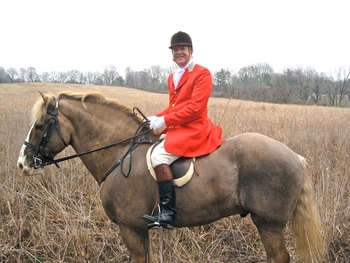
Collin McNeil has been elected Joint-Master of the venerable Radnor Hunt (PA). McNeil joins Mike Tillson, who has served as sole MFH since the untimely death of Terry Griffin in 2008. The Radnor Hunt was founded in 1883 and is claimed to be the oldest continuously active MFHA-Recognized hunt club in the United States. The hunt’s history is told in Bright Hunting Morn: The 125th Anniversary of the Radnor Hunt. This beautifully designed and lavishly executed book was written by McNeil and published by The Derrydale Press in 2008. McNeil is an award-winning journalist, philanthropist, and former media executive. He has served as Chairman of the Board of Trustees of the Historical Society of Pennsylvania for more than ten years. Posted June 7, 2011
Read More

Equine Herpes Scare Abating

Horse owners in the west, where many horse shows, rodeos, and other equine activities have been cancelled or postponed because of an outbreak of the potentially deadly equine herpes virus, are breathing easier. According to the Colorado Department of Agriculture, no new cases of the disease have been confirmed there since May 20. In Washington, Dr. Leonard Eldridge, the state veterinarian believes that sufficient time has elapsed for signs of the disease to appear in horses that attended the Cutting Horse event in Ogden, Utah, from where the disease spread. Any positive or exposed animals showing no symptoms after twenty-one days may be released from quarantine with written laboratory confirmation that the horse is no longer contagious. Dr. Eldridge has recommended further that any horse that has not tested positive, exhibited symptoms, or been exposed to a confirmed positive horse be cleared for travel. The virus is most commonly spread via direct horse-to-horse contact, but horse tack, equipment, and people’s clothing may also be a contributor. Symptoms in horses include fever, sneezing, nasal discharge, decrease in coordination, and hind end weakness. Horse owners in the affected states—California, Colorado, Idaho, New Mexico, Oregon, Texas, Utah, and Washington—are still urged to be vigilant. More details may be had in John Tattum’s Greeley Tribune report and the King 5 report, both of June 3. Posted June 4, 2011
Read More

Huntsman Stan Luckhurst

Stan Luckhurst, huntsman for the West Kent Foxhounds from 1967 to 1999,  departed this world on April 26, just a few days before his seventy-seventh birthday. Stan served in the British Army as a mounted Lead Gunner with the King’s Troop Royal Horse Artillery at St Johns Wood in London, where he performed in all Ceremonial Duties of State, including the world famous Musical Ride. Stan entered hunt service with the Ashford Valley Hunt in Kent, where his family lived. In 1957 he was put on as second whipper-in to the Master, Col. A.S. Gaselee, at the West Kent Hunt, under kennel huntsman Harry Lenthall. When Harry moved to the Axe Vale Harriers in 1962, Stan was promoted to first whipper-in/kennel huntsman in his place. When Richard Thorpe took the Mastership in 1967, Stan was made huntsman, a position he kept until his retirement in 1999, when the West Kent amalgamated with the Old Surrey & Burstow Hunt. The West Kent achieved the greatest accolade in 1973 when they took the Peterborough Royal Foxhound Show Bitch Championship with their Payment. Stan gained many friends in Canada and the USA, when his son Paul hunted the Hamilton Hounds in Ontario. Posted May 23, 2011
Read More

Equineherpes Virus Breaks Out in the West

An outbreak of Equine Herpes Virus (EHV-1) has been confirmed in eight western states and Canada. Most of the confirmed positive horses recently attended the national cutting horse championships in Ogden, Utah. Health officials have concluded that the EHV-1 outbreak started there. Owners of horses that attended that event have been urged to notify their veterinarians and isolate and monitor their horses. Seven of the infected horses have died or have been euthanized. Cases have been confirmed across California, Colorado, Idaho, New Mexico, Oregon, Texas, Utah, Washington, and Canada. California has the most confirmed cases with thirteen. The outbreak should not be a cause for alarm, but should be taken seriously, experts say. “The first thing to remember,” says Equus Medical Editor Joe Bertone, DMV, “is that these outbreaks have happened for years and years, but didn’t get the press they are getting nowadays. People need to remain calm and follow good hygiene and management practices. The vast majority of horses will not have any issue with this disease.” EHV-1 is highly contagious and is transmitted mainly through nose-to-nose contact between horses. It can also be transmitted by tack, clothing, or through the air for limited distances. Although the disease is not transmitted to people, it is a serious threat to horses and may cause respiratory, neurologic disease, and death. For more details, see Keith Coffman’s article in Reuters. Posted May 20, 2011
Read More