
with Horse and Hound

Latest

fox by lees

Douglas Lees to Speak, Exhibit Photographs
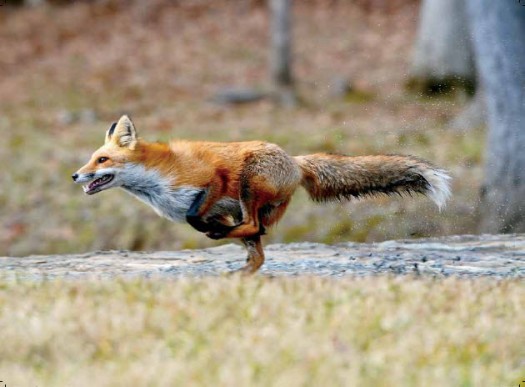
Douglas Lees photo The photography of Douglas Lees has long been a benchmark of such excellence that Lees has earned the admiration of even the best of his camera-toting peers. Lees will speak and exhibit his photographs on Sunday, March 2, 2014 at 4:00 pm at Blue Ridge Farm, 1858 Blue Ridge Farm Road, Upperville, Virginia, 20184. This meet-the-photographer event is sponsored by the Mosby Heritage Area Association, a Northern Virginia Piedmont preservation and education organization. Lees will showcase some of his best-known photos and recount the fascinating experiences of photographing foxhunts, steeplechases, fly fishing, and beautiful scenes in nature. Participants will have the opportunity to talk to Douglas following his presentation and to purchase prints of his works that he has personally chosen for this event. His award-winning photos will also be on display. Douglas Lees is a two-time Eclipse Award winner for his racing photography, and his images are widely published. Foxhunting Life regularly features his foxhunting and point-to-point photography in its e-magazine, FHL WEEK; on its website, FoxhuntingLife.com; and in its annual Foxhunting Calendar. Lees was born in Washington, D.C., but has lived all his life in Warrenton, Virginia, where his family has lived for generations. He started taking an interest in photography at age sixteen and published his first photograph at age seventeen on the front page of the Fauquier Times-Democrat. His career is in insurance, dealing with property, casualty, farm and equine. He spends his spare time taking photographs and with his other great passion, fly fishing. He also serves on the board of the Mosby Heritage Area Association as Treasurer. The event has limited space, so reservations are recommended. Tickets are $25 for MHAA members, $30 for non-members. Please call 540-687-6681 or purchase at the Association’s website. The mission of the nonprofit Mosby Heritage Area Association, formed in 1995, is to help preserve the Northern Virginia Piedmont and increase public knowledge about this historic area. MHAA provides classroom history programs for fourth- and eleventh-grade Virginia students, sponsors lectures, programs and field trips, and brings nationally known scholars to the area for its award-winning annual Civil War Conference. Posted February 19, 2014
Read More

Wise Dan in Rarified Company after Second Horse of the Year Title

Not since 1971—the introduction of the modern system of Eclipse Award voting—has a horse won three categories of awards—Horse of the Year, Older Male, and Male Turf Horse—two years in a row. Wise Dan did so by winning six of his seven starts on turf, carrying high weight in five races, and winning four Grade I races in 2013 at tracks across North America. He had a consistent season and was never scratched. In Horse of the Year voting he polled ten times the number of votes as his closest runner-up, Mucho Macho Man. The year before, after his 2012 season, Wise Dan became the first horse to win all three categories since John Henry in 1981. One of only six horses in modern history that have won consecutive Horse of the Year honors, Wise Dan joins Secretariat, Forego, Affirmed, Cigar, and Curlin in that accomplishment. Now seven years old, the chestnut gelding is by Wiseman’s ferry out of Lisa Danielle by Wolf Power. He was bred at home by owner Morton Fink in Kentucky and is trained by Charlie LoPresti near Lexington. His post-season rest over, Wise Dan is now gearing up for the 2014 season at Keeneland, his home base. Click for more details in Claire Novak’s article in Bloodhorse. Posted February 17, 2014
Read More

RSPCA Ratchets Up the Pressure Against Foxhunters

In what the Western Morning News calls a “game-changer,” the Royal Society for the Prevention of Cruelty to Animals (RSPCA) will soon be able to intensify its surveillance of foxhunting practices in England. An article by Martin Bell claims that The League Against Cruel Sports (LACS) has financed the hiring and equipping of ex-armed forces personnel and covert surveillance specialists to replace the volunteers that have been monitoring hunting activities. The LACS believes that these professionals will be able to furnish the RCPCA with better evidence with which to prosecute foxhunters that do not hunt within the law. In his article, Bell removes all doubt—if any doubt ever existed—about what England’s Hunting Act is really about: class hatred. Supporting the role of the RSPCA in prosecuting animal abusers, Bell writes, “It should not make any difference whether the abuser is a crack-cocaine dealer with a maltreated dog in his council flat, or a land-owning toff with a double-barrelled name and a rural mansion who kills foxes illegally.” [Italics ours.] Bell scoffs at any hope that the Hunting Act might be repealed by Parliament. He points out that a recent petition by Members of Parliament to allow sheep farmers to flush a fox with a full pack fizzled out when only 40 out of 650 MPs signed it. Click for more details. Posted February 14, 2014
Read More
John Harrison 1

Huntsman John Harrrison Returns to Toronto and North York
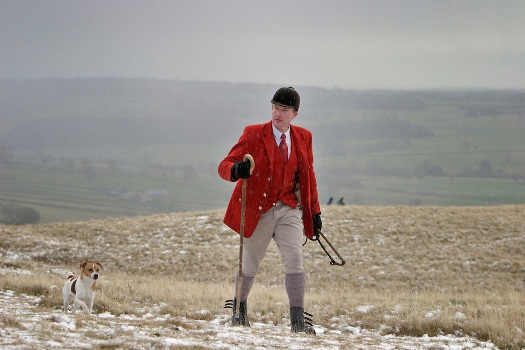
John Harrison 1Former Toronto and North York huntsman John Harrison has been hunting the Ullswater Foxhounds in the Cumbrian fells for the past eighteen years.

John Harrison will return next season to the Toronto and North York Hunt (ON) to carry the horn once again—a post he had previously filled from 1991 to 1996. During those years, Harrison bred a number of outstanding hounds and won many championships at the Virginia Foxhound Shows.

Harrison was born and raised in the Cumbrian Lake District of England, where hunting is in the genes and the country is so rough, horses cannot be used. The literature of foxhunting is replete with accounts of grueling days with the famous foot packs of the area, climbing and descending the scree-strewn crags and struggling to snow-filled borrans.

Read More

Congress Bans Horse Slaughter…Again

The Congress passed, and the President signed the new budget, effectively banning horse slaughter once again by cutting funding for USDA inspections at horse slaughter facilities. Congress did this very same thing in 2006, an action which effectively closed all horse processing plants in the country. Much has happened between then and now. In 2011, the highly respected General Accounting Office (GAO)—Congress’s own watchdog agency—reported bluntly to Congress that their funding cut and the resultant plant closures actually had the opposite effect from that intended. The GAO told Congress that horses were now traveling further (to Mexico and Canada) and in many cases were slaughtered under worse conditions than before, and that their legislation had harmed horse welfare. After receiving that report, in 2011 Congress reinstated the funding for USDA inspections, opening the door for a resumption of horse processing in this country. As a result of that action, the USDA recently gave approval for the opening of horse slaughter plants in New Mexico and Missouri. However, lawsuits filed by animal rights activists repeatedly delayed those openings. “Americans do not want to see scarce tax dollars used to oversee an inhumane, disreputable horse slaughter industry,” said Wayne Pacelle, president and CEO of The Humane Society of the United States (HSUS). “We don’t have dog and cat slaughter plants in the U.S. catering to small markets overseas, and we shouldn’t have horse slaughter operations for that purpose, either.” HSUS and the Obama administration both lobbied to end horse slaughter in the U.S. Yet unsolved, however, is the issue of how to humanely cope with the more than 100,000 unwanted and abandoned horses that used to pass through those processing facilities each year. Click for more details. Posted January 15, 2014
Read More

NYC Mayor Vows to Banish Horse Carriages

Two days before New York Mayor-Elect Bill de Blasio was to be sworn into office he vowed to eliminate the horse carriages that have for so long played a romantic role in Central Park. “It’s over,” he said. “We are going to quickly and aggressively move to make horse carriages no longer a part of the landscape in New York City. They are not humane. They are not appropriate to the year 2014.” While de Blasio’s announcement has elicited opposition, it appears that he comes to power with sufficient votes in the City Council to eliminate the sound of horse’s hooves from the streets of New York for all time. “De Blasio has handed animal rights activists a major victory. Harry Bruinius, staff writer for the Christian Science Monitor writes, “Liberals have swept into office across the city, and now PETA is in, and top hats—which many hansom cab riders wear—are out.” Click for more details in the CSM report. Posted January 4, 2014
Read More

Horse Slaughter: State Judge Trumps Federal Appeals Court

A district judge in New Mexico has delayed for ten days the planned operations of the nation’s first horse slaughter plant in seven years. On January 13, 2014, State District Judge Matthew Wilson will listen to testimony in a lawsuit brought by state Attorney General Gary King. King filed the lawsuit last month after a federal appeals court vacated a temporary restraining order blocking the openings. It seemed, momentarily, that the way was cleared—once again—for processing plants to reopen. Going back in time, that temporary restraining order was allowed in July after the U.S. Department of Agriculture gave the go-ahead for resumption of the regulated slaughter of horses. This latest lawsuit by the New Mexico attorney general claims that the processor would violate the state’s food safety, water quality, and unfair business practices laws. The processor’s attorney argues that the state lacks jurisdiction because the meat would not be sold or consumed in the U.S., that the federal government has sole jurisdiction over meat shipped to international markets, and that the company is working with environmental officials to ensure lawful disposal of all waste. Click for more details in the Associated Press report by Jeri Clausing. Posted January 4, 2014
Read More
boxing day.2013

Boxing Day Meets Revive Conflict in UK
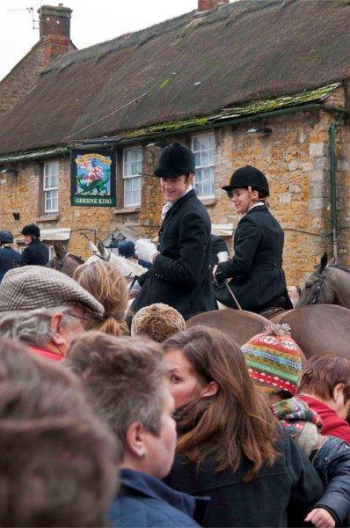
boxing day.2013Two-hundred-fifty-thousand foxhunting supporters—both mounted and on foot—were expected to turn out on Thursday, the day after Christmas, for the annual Boxing Day meets across the UK. About 250 hunts participated in foxhunting’s biggest day of the year there.

“The incredible support for hunts has not wavered since the Hunting Act and shows the demand for repeal of this unfair and unworkable act, which was not born of concern for animal welfare, but rather prejudice against those people standing in fields across Yorkshire today,” wrote Ted Bonner, director of campaigns for the Countryside Alliance in The Information Daily.

Despite Chairman Lord Burns’s 2003 pronouncement at the conclusion of the government Inquiry into Hunting with Dogs—that the committee did not find hunting to be cruel—a prohibition on hunting was inevitable. The Hunting Act was passed and became effective in 2004.

Read More

Horse Slaughter Plants “Expected” to Open in NM, MO

Horse slaughter plants in New Mexico and Missouri expect to resume processing again in the U.S. in a matter of days. “Expect” is the operating word in this ongoing battle between the opposing views. Horse slaughter plants expected to open back in July of this year after the U.S. Department of Agriculture (USDA) cleared the way, but a last-moment appeal spearheaded by the Humane Society of the United States (HSUS) resulted in a temporary restraining order on the plant openings. That emergency ban has now been vacated by a federal appeals court, deciding that the humane organizations “failed to meet their burden” of proof that the injunction was necessary. The way is cleared once again for the plants to open. Most media news articles continue to approach this contentious issue from the horsemeat angle. The sensitivity of many in this country to the use of horses for human consumption is powerfully emotional, and such headlines sell newspapers. However, what the media mostly ignore in their coverage is that the Government Accounting Office (GAO), Congress’s independent investigative arm, bluntly reported to Congress in 2011, that horse welfare had been harmed by their legislation that resulted in the closing of all horse processing plants in this country. Prompted by animal rights groups, Congress, in 2006, passed a law which eliminated funding to the U.S. Department of Agriculture (USDA) for the inspection of horses in transit to slaughter and at slaughter facilities. Since existing law required USDA inspection, it was a back-door method of ending the slaughter of horses in the U.S. Within a year the last domestic slaughter house closed. At that time about 100,000 horses a year were being shipped to slaughter facilities. It was the ideological dream that these horses would somehow be absorbed by equine retirement facilities to spend the remainder of their natural lives in green fields tended by loving caretakers. That dream became a nightmare for horses. With retirement facilities unable to absorb even a small fraction of unwanted horses, the GAO reported that in 2010, 138,000 horses were exported to Mexico and Canada for slaughter. “The horses are traveling farther to meet the same end…in foreign slaughtering facilities where U.S. humane slaughtering protections do not apply,” said the GAO. The agency went on to say that horses are sometimes shipped in too small containers—conditions that were not allowed when USDA inspections applied. Not only have more horses been shipped greater distances under conditions unregulated by the USDA, to be slaughtered in facilities unregulated by the USDA for humane treatment, but thousands more horses are simply abandoned and neglected for lack of a commercial outlet that slaughter facilities used to provide. Horse slaughter may not be the best solution for the unwanted horse. Surely we must continue to pursue and develop all practical ideas that have come forward to solve the problem of unwanted horses in a kinder way. But the cessation of horse slaughter in the U.S. as the result of Congressional legislation has resulted in more suffering, not less, according to the GAO. Posted December 17, 2013
Read More

Hamilton Fox, ex-MFH, WWII Hero, Dead at 93

Hamilton Phillips Fox, ex-MFH, died at his home on Maryland’s Eastern Shore on November 26, 2013 at age 93. He was a decorated Naval veteran of World War II and enjoyed a distinguished law career in Salisbury, Maryland for nearly fifty years, starting in 1947. He served as MFH of the Wicomico Hunt (MD) for forty years, starting in 1964. Friends and colleagues describe Mr. Fox as a kind man who treated all people fairly both in his sporting and professional life. He served two terms as State’s Attorney between 1948 and 1956. Foxhunting was his favorite pastime. Mr. Fox enlisted in the Navy after the attack on Pearl Harbor and began his military service as an ensign. He commanded landing a craft ferrying tanks to the coast of Sicily in 1943. General Patton boarded his craft in Sicily to commend the crew for a job well done. Mr. Fox, who recalled hunting behind the general in Virginia as a teenager, talked foxhunting to Patton’s delight. On D-Day—arguably the most important single day of the twentieth century—Mr. Fox ferried troops and equipment to Omaha Beach in Normandy. He is mentioned in Stephen Ambrose’s definitive and best-selling history of that day, D-Day: June 6, 1944: The Battle for the Normandy Beaches.  Mr. Fox left the Navy as a First Lieutenant having won five battle stars. He was a graduate of Randolph Macon Military Academy and Washington and Lee University (1941). After the war ended, he graduated from the University of Maryland Law School in 1947. Click for more details in DelMarvaNow.com. Posted December 3, 2013
Read More