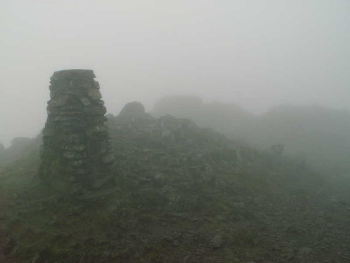
A thick mist descended upon Red ScreesAs reported by The Westmorland Gazette, April 14, 1900
On Monday the meeting of the Coniston Foxhounds was at Grove farm. Hounds got upon a drag close to the farm and carried it up Martindale Pasture, by Hind Cove, to Troutbeck Hundreds. Here a fox was unkennelled, which went across Woundale Bottoms, crossed the Kirkstone Road, and climbed up Brow End Allotment. Climbing along the top to Woundale Head, he made a sharp turn to the left, and came down behind Kirkstone House. He now crossed the road at the Ullswater side of the Pass, near the Kirk Stones, and scrambled up the sides of Red Screes.
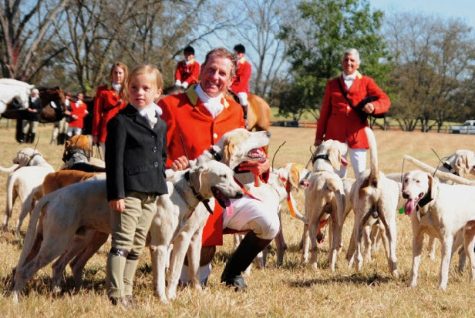
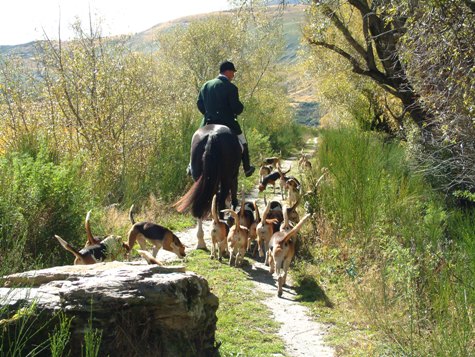
Central Otago Hunt, South Island, New Zealand
Second and final installment by national award-winning journalist and author Karin Winegar
At midweek Glynne Smith, MFH of the Central Otago Hounds (COH) and I drove up to a meet above the Ida Valley. Mountains stretched away below us in silver, slate, lichen and plum. Glynne greeted farmers driving a pickup truck carrying a wrinkle-nosed ram uphill in spatters of cold rain, shepherds crooks rising from their truck bed.
Chill wind buffeted the phantasmagorical rocks at the top of the ridge where we unloaded the horses. Lord of the Rings Riders of Rohan scenes were filmed in this forlorn country. And Ted Ottry, a COH whipper-in who had been an extra in the film, rides a white Thoroughbred he purchased from the Lord of the Rings herd.
A few minutes after moving off, we faced an uphill six-strand bare wire fence. Etta easily sailed it, and Glynne zoomed past me grinning under his white mustache: “Ha! Now you are one of us.”
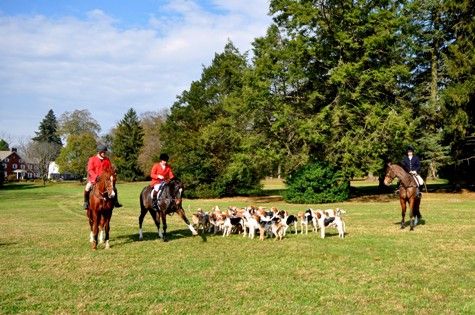
Cheshire Honorary Whipper-In Paddy Neilson, Huntsman Ivan Dowling, and professional whipper-in Stephanie Boyer at Brooklawn / Noel Mullins photo
Mr. Stewart’s Cheshire Foxhounds (PA), founded in 1912, are celebrating their Centennial this season. W. Plunkett Stewart, a Philadelphia banker, set out to find the perfect hunting country and settled on the rolling hills, rich pastureland and extensive woods around Unionville. As what in modern terms could be classed as a committed environmentalist, he purchased thousands of acres of land and, before reselling, amended deeds to restrict development and nurture conservancy, clean water, and natural habitat. As a result of his efforts and the culture of conservation he passed on, the Cheshire hunting country today boasts thirty square miles and twenty-six thousand acres free from ribbon residential and commercial development that has allowed foxhunting and National Hunt racing to thrive.
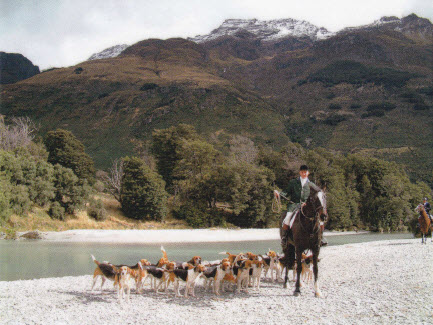
Central Otago Hunt, South Island, New Zealand
First of two installments by national award-winning journalist and author Karin Winegar.
Yes, they jump wire.
Wire and mostly wire fences, three to four feet high, five or six taut strands with a top strand, often barbed, is what contains New Zealand’s thirty million sheep, defines its vast stations, and renders rides thrilling for outsiders.
No one—at least not the Kiwis—thinks anything of it.
Kiwi horses, harrier hounds, and riders just barrel cheerfully along in a landscape that resembles (depending on the hunt country and the season) Provence, Africa, Montana, Ireland, California, or Norway. And given the size of New Zealand’s population—only 4.4 million—there are lots of horses, hounds, and riders.
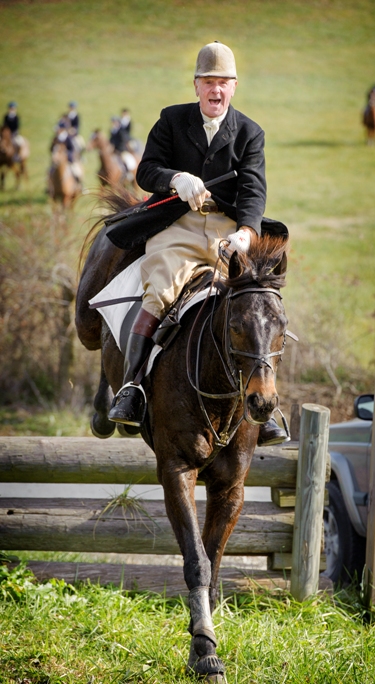
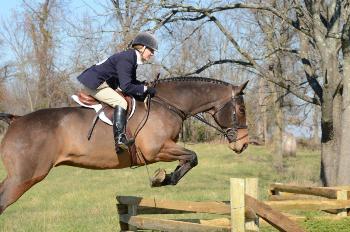
Barbara Batterton, riding Linda Armbrust's Nicki-Z, is 2012 Virginia Field Hunter Champion / Liz Callar photoBarbara Batterton, riding Nicki-Z for the Blue Ridge Hunt, won the Virginia Field Hunter Championships on Sunday, November 11, 2012. Nicki is owned by Blue Ridge MFH Linda Armbrust, who often leads the field on him. An Argentina-bred Dutch Warmblood, Nicki did some showjumping in that country before finding his home in Virginia’s hunt country.
Kathleen O’Keefe, riding for the Casanova Hunt, was Reserve Champion. Best Turned Out was won by Helen Brettell of Middleburg Hunt.
The Virginia Field Hunter Championships were hosted this year by the Fairfax Hunt at Winter Farm in Middleburg, as a result of Fairfax member Karyn Wilson's win last year.
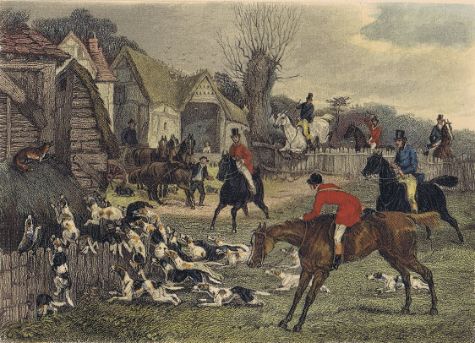
The Finish by Henry Alken
Foxhunters often evoke the nineteenth century as the belle-époque of English foxhunting. This may have to do with the extensive documentation provided by the famous artists and writers of the time. The efforts of Nimrod, Alken, and friends immortalized an age of rollicking runs across open countryside, dashing horsemen and women, and fine stout foxes flying across hill and dale.
Whilst The Golden Age as it is known has long since provided a benchmark of foxhunting excellence and excitement, we note that today’s foxhunters are blessed with some decided advantages.