by Tami Masters
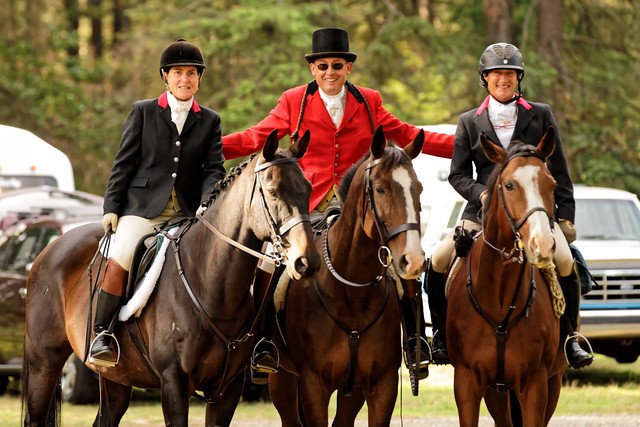
(l-r) Field Master Patty Steimert, Eric Stiemert, and author Tami Masters / Andrew Towell photo
The Woodbrook Hunt Club in Washington State was established in 1925 and is the oldest hunt west of the Mississipi. The drag hunt was recognized by the MFHA in 1962 and has recently undergone a changing of the guard. Huntsman Jennifer Hansen has brought about much newfound energy and enthusiasm to the clubhouse and to the hunting field. We have a rather diverse pack of hounds that Andrew Barclay helped us to acquire from all around the country.
Opening Weekend was a spectacular affair, starting with our annual Hunter Trials and Hunter Pace on Saturday and ending on Sunday with a lively eight-mile drag hunt through the beautiful woods and prairie on military land just southeast of the kennels.
Awash in the political tsunami of hopeful presidential nominees swarming over us on TV, Bena Mae Seivers, writing for the Corbin News Journal in Kentucky, is reminded of something she read a few years ago. At the time she just thought it was just a funny story. Now, she says, it begins to make some sense.
by Bena Mae Seivers
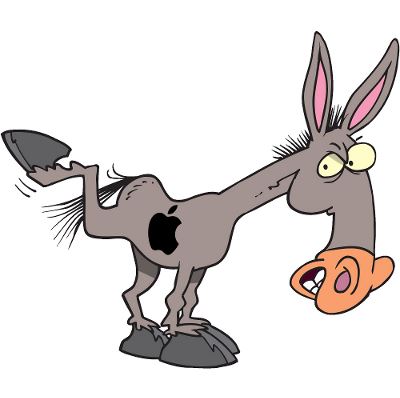
The story goes that one fine evening a Mrs. George Wood called a Dr. Martin Satterfield, a veterinarian, from her home. It was about her mule, Horace. After asking a few questions and hearing the answers, Dr. Satterfield said, “Give him a dose of mineral oil, and if he ain’t alright in the morning, call me, and I’ll come out and take a look at your mule.”
She wanted to know how to give the mule the mineral oil and the Doctor said “Give it through a funnel.”
She protested that the mule might bite her, and the Doctor, becoming exasperated, said, “You’re a farm woman, and you know about those things. Give it to him in the other end.”
Awash in the political tsunami of hopeful presidential nominees swarming over us on TV, the author, writing for the "Corbin News Journal" in Kentucky, is reminded of something she read a few years ago. At the time she just thought it was just a funny story. Now, she says, it begins to make some sense.
The story goes that one fine evening a Mrs. George Wood called a Dr. Martin Satterfield, a veterinarian, from her home. It was about her mule, Horace. After asking a few questions and hearing the answers, Dr. Satterfield said, “Give him a dose of mineral oil, and if he ain’t alright in the morning, call me, and I’ll come out and take a look at your mule.”
She wanted to know how to give the mule the mineral oil and the Doctor said “Give it through a funnel.”
She protested that the mule might bite her, and the Doctor, becoming exasperated, said, “You’re a farm woman, and you know about those things. Give it to him in the other end.”
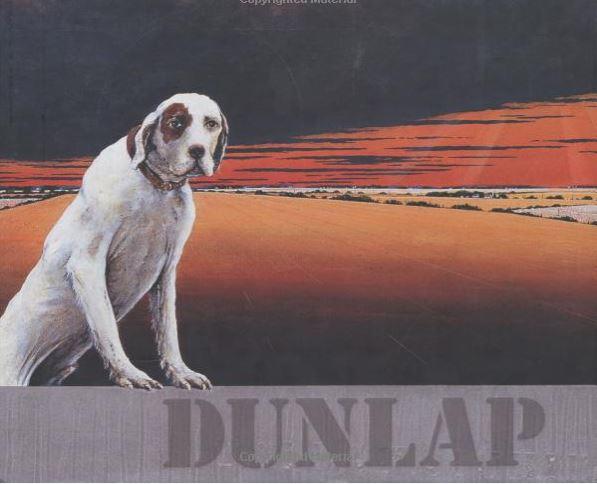
“Dunlap” by William Dunlap; foreword by Julia Reed, essay by J. Richard Gruber; Jackson, MS: University of Mississippi Press, 2006; available at Amazon
William Dunlap is an important contemporary artist of the South with a powerful affinity for southern landscapes and Walker foxhounds. Dunlap’s work may be seen in many prestigious collections, including the Metropolitan Museum of Art and the Corcoran Collection of the National Gallery of Art.
His book, Dunlap, features more than one hundred works, produced over a thirty-year period. It is published in a trade hardback and a limited edition of two hundred signed, bound-in-linen covers, housed in a matching linen-covered clamshell box. A signed, numbered print featuring four Walker foxhounds is included in the box. The book's cover features a surrealist landscape with a white Walker foxhound, Delta Dog Trot, appearing ready to climb right out of the painting, a nod to nineteenth century trompe l’oeil techniques. The painting, “Delta Dog Trot, Landscape Askew” hangs at the Alluvian Hotel in Greenwood, Mississippi.
Dunlap’s grandfather was “a foxhunter of the old school,” Dunlap writes. “He bred and hunted generations of pure blood Walker Hounds. With names like Lucky, Mary, Speck, Sally and Bo, these dogs were all legs, lungs, nose and heart. They lived to run, but spent most of their lives laying around the kennel, eating, sleeping, stretching and occasionally giving off the deep-throated mouth that would send any fox in earshot scurrying for the nearest hole.
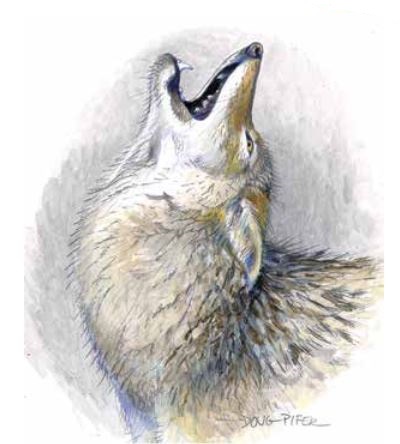
Illustration by Doug Pifer
Early in the twentieth century, at the behest of western ranching and agricultural interests that were losing stock to predators, the U.S. Government instituted program after program designed to erase the wolf, grizzly bear, mountain lion, and coyote from the landscape. The programs were mostly successful in their purpose: the wolf, grizzly, and mountain lion were driven nearly to extinction. The coyote, however, was the one predator that not only survived the pressure, but increased its population and its range. How it did that is one of the mysteries of the animal world.
The Pennsylvania Game Commission has published an excellent study of the eastern coyote (Wildlife Note 39), which we believe readers—even those familiar with the species—will find substantive and revealing. We republish it here with the kind permission of the Pennsylvania Game Commission.
The eastern coyote has stirred as much interest and emotion as any other animal in Pennsylvania. Seeing a coyote or hearing the howl of this wild, wily animal is a great reward of nature to many people. Others fear this animal just knowing it is in the wild. Some sportsmen dislike coyotes because they think the predators kill too many game animals. Trappers and hunters find coyotes to be especially challenging. Some farmers lose livestock due to coyote predation. The coyote has been referred to as the brush wolf, prairie wolf, coy-dog (misnomer) and eastern coyote.
The eastern coyote, Canis latrans, is found throughout the northeastern United States and southeastern Canada. Recent research shows the eastern coyote is an immigrant, the origin of which likely involved interbreeding between coyotes and gray wolves. Analysis of DNA suggests coyote-wolf hybridization has occurred. Other studies indicate that the eastern coyote is intermediate in size and shape between gray wolves and western coyotes. As a result, the eastern coyote exhibits different behavior, habitat use, pelt coloration, prey preferences and home-range sizes from its western cousin. The eastern coyote is the largest canine found in Pennsylvania. The following information pertains to the coyote in Pennsylvania and throughout northeastern United States.
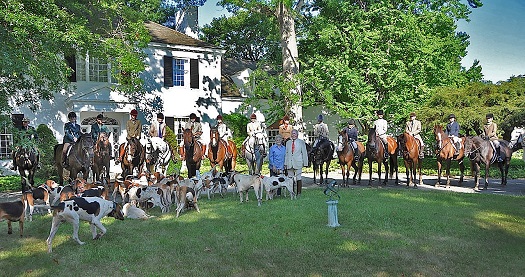
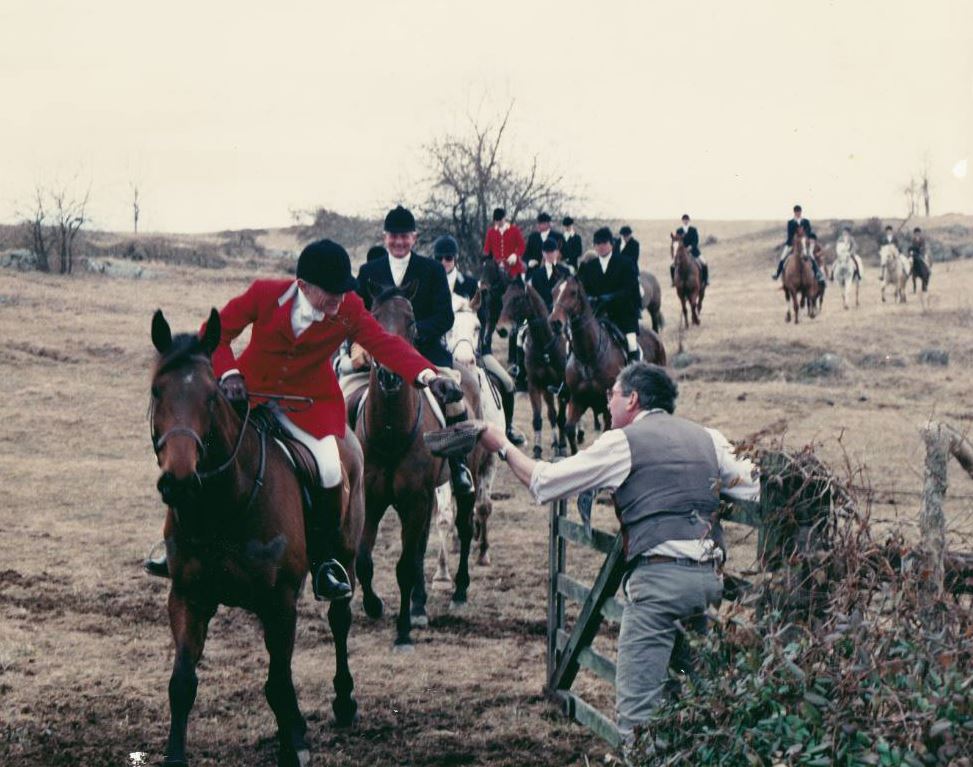
All civilized societies adopt rules of etiquette and conventions that allow individuals to interact without conflict. By the same token, unique activities, and especially those involving a measure of risk (motor driving, sailing, foxhunting), develop of necessity their own unique rules and conventions to help assure a safe and pleasant outcome at the end of the day for all participants. Thus, the courtesies and conventions of the hunting field, developed over the centuries, aim to produce an environment in which an exuberant sport may flourish pleasurably and safely. As each new season begins, it is never inappropriate to remind ourselves of the courtesies we owe to our landowners, Masters, staff, hounds, and fellow field members.
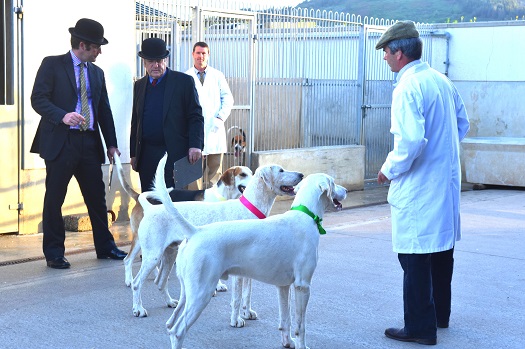
Rank these three hounds—green, pink, and yellow—to match the judges’ card, and you’re a winner! In the ring during the Spectators’ Class at the Wicklow Foxhounds (IRE) Puppy Show are (l-r) Judges Mark Ollard and Noel Mullins, whipper in Peter Kavanagh and Master and huntsman Philip Lazenby.
Here’s a superb idea for puppy shows guaranteed to increase spectator interest in and knowledge of foxhounds, and have fun at the same time...and it’s so easy to do!
Noel Mullins, a regular contributor to Foxhunting Life, recently judged the Wicklow Foxhounds (IRE) puppy show along with Scarteen huntsman Mark Ollard. After the pair had finished judging the puppy classes and chosen their Champion and Reserve foxhounds, a final class was held as a judging competition for the spectators.
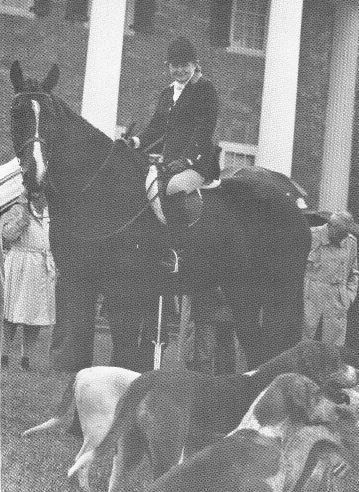
Field Master Joan Batterton, Opening Meet, 1986, on her homebred North American Field Champion Beacon RockJoan Batterton, one of the finest Field Masters I have ever followed across a hunting country, died on Monday, August 31, 2015 at the age of ninety-eight. She was born in Auckland, New Zealand in 1917 and died at her home in Berryville, Virginia.
A diminutive but magnificent horsewoman, she led the field for the Blue Ridge Hunt (VA) for fifteen years, while in her sixties and seventies, on a succession of bold, grand jumping horses, some off the timber racecourses. She knew her country, knew how the foxes ran, and what I remember best is how she led her field at a steady hand-gallop, at an even pace, whether over fences or in the open, keeping us in touch with hounds in a lovely and seductive rhythm.
She never raised her voice, but spoke in her soft New Zealand accent, always with a touch of a smile, an inquiring arch of her eyebrows, maintaining an eye contact as expressive as her words. She didn’t suffer fools, however, and could flay them with a quiet single-sentence opinion.