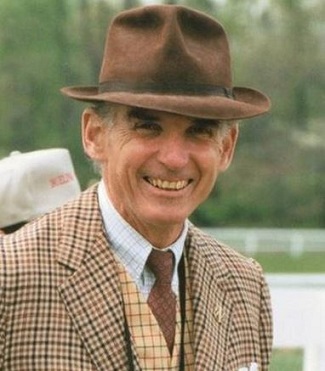
Edward S. “Ned” Bonnie, ex-MFH of the Long Run Hounds (KY), died on Saturday, March 17, 2018, in Louisville, at age eighty-eight.
He was a Master at Long Run from 1988 to 2014 and served terms as a director of the Masters of Foxhounds Association. He was a complete horseman, conservationist, and a leading equine lawyer for top Thoroughbred breeding farms in Kentucky.
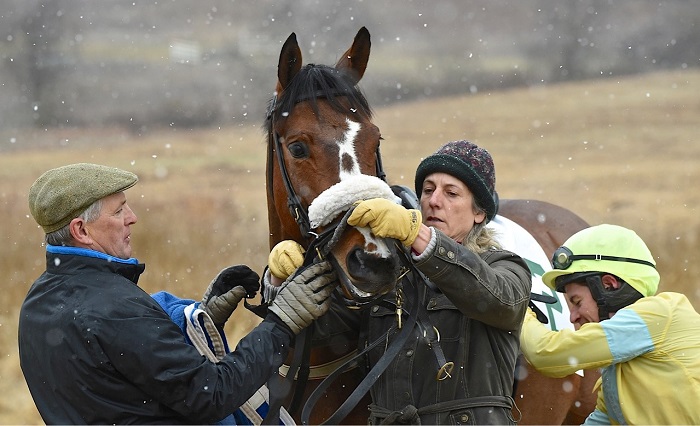
Warrenton Hunt opened the Virginia Point-to-Point Season on the first hospitable Saturday in the month of March this year. It was a spring-like day everywhere except at the Airlie Racecourse, where it snowed!
It was St. Patrick’s Day, and a good day for the Irish at that, with trainer Jimmy Day winning one Hurdle and two Flat races and two Irish horses winning the Open Timber and the Foxhunter Timber Races.
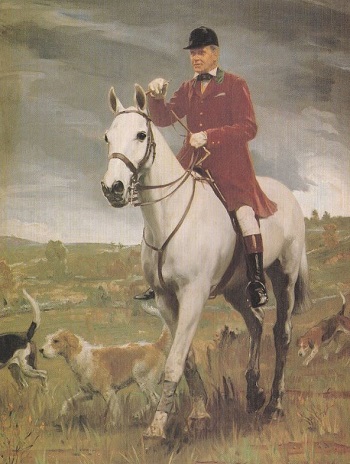
The Norfolk Hunt (MA) can boast of well-known men of American history throughout its earliest rosters—Louis Brandeis, Justice of the U.S, Supreme Court and Leverett Saltonstall, a three-term Governor of Massachusetts and three-term U.S. Senator—but none of its members so dominated the reputation and future of the hunt as did Henry G. Vaughan. He appeared as a member’s guest in 1900 and three years later was elected MFH, a position he held to acclaim for the next thirty years. He was a complete New England gentleman and one of the founding fathers of organized mounted foxhunting in America.
His was hardly the case of a man arriving at a backwater village and uplifting the native savages. Vaughan arrived in Boston from a small town in Maine by way of Harvard University into the midst of the Boston Ames, Cabots, Forbes, Peabodys, Perkinses, and Saltonstalls to be not only embraced, but feted, revered, and almost deified.
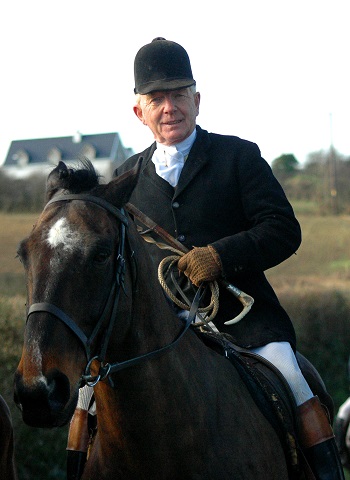
Noel Mullins photoThe passing of Michael Higgens earlier this year is a huge loss to the hunting world. He was truly gifted in every aspect of our great sport—exceptional huntsman, horseman, hound breeder, judge, raconteur. He found his true life’s vocation in foxhunting, and he found his true soul-mate in Yvonne McClintock, a partnership that stood the test of time.
Only last November, the Tipperary Foxhounds made a presentation to Michael, their former Master and huntsman, on his fiftieth season hunting with the Tipps. I interviewed Michael on a number of occasions, and he kindly penned the foreword for a book I wrote some years ago on biographies of thirty-one equestrian personalities, some living, and others that had passed on. He described my book as featuring “The departed, those about to depart, and those with no intention of departing”! I don’t think Shakespeare could have matched that for word-craft. Michael could always effortlessly find the most fitting expressions for every occasion.
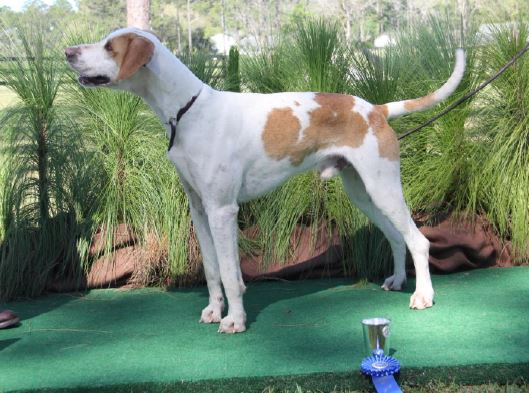
Hillsboro Godfrey 2016 was last year’s Grand Champion at the Southern Hound Show, hosted by the Live Oak Hounds (FL) / Leslie Shepherd photo
With the foxhunting season closing, and a new season of hound and puppy shows approaching, I always determine to improve my eye for a hound by judging from ringside just for fun. I would encourage any foxhunter to try it. The exercise not only makes the day more interesting, but educational as well. Especially when you can collar a friendly judge after the class and ask him why he didn’t like the hound you adored, or why he picked a hound you thought was ordinary.
It can be intimidating when you watch a procession of foxhounds enter and leave the ring and wonder how in the world the judge can sort them all out. For example, how does he compare a hound he is looking at to one he saw ten minutes ago? I have asked, and it seems there are almost as many methods as there are judges.
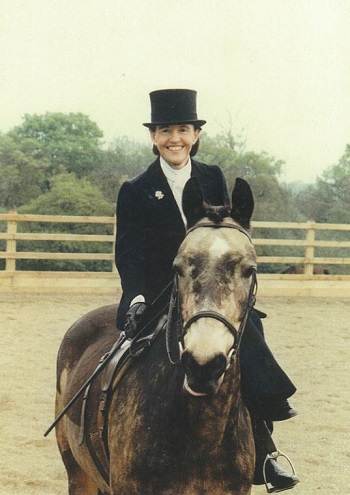
Deirdre Hanna, our elegant authorMany hunts are continually on the prowl for a new fund raising scheme. Here’s a game from Britain that may raise funds, but if the members get to brawling don’t blame FHL.
The idea of using badges to raise hunt funds was the brain-child of our Hunt Chairman and this is the way he made it work.
Every member of the Sennybridge Farmers' Foxhounds in Powys, Wales, was issued a badge at the start of the season. The badge cost £10.00 and the scheme was to last a year, until the start of the next season. According to the rules, all members had to buy a badge and show the badge at anytime, anywhere, when challenged by another Hunt Member, who also had to show their badge at the same time. Some minor points eased the situation for the ladies. Whereas a man had to produce his badge from a pocket, wallet, or coat, ladies could keep them anywhere on their person, as well as in their handbags or shopping bags.
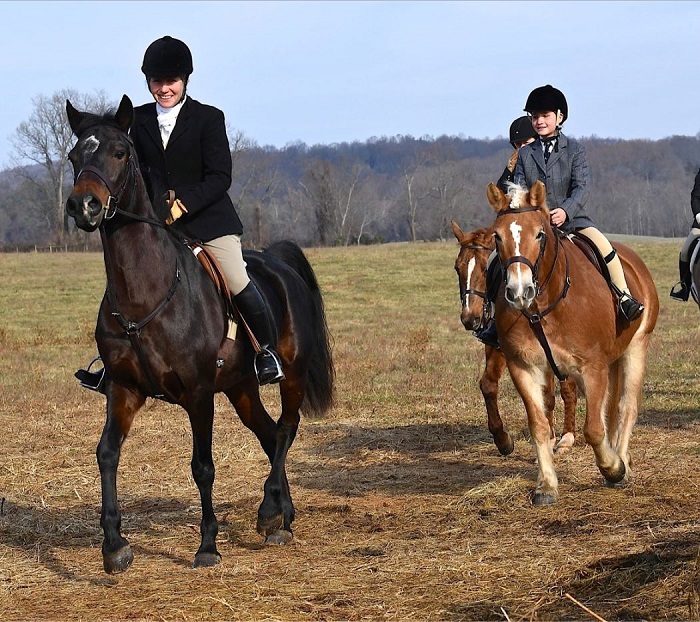
Nina McKee and daughter Lily McKee at the Warrenton Hunt Junior Meet in December, 2017. Lily is the great-great-granddaughter of William Almy. / Douglas Lees photo
Ninety-nine years ago, William Almy, twenty-two, was Master of the Quansett Hounds in South Westport, Massachusetts. Almy and his hounds hunted the fox from Quansett Farm, in the possession of the Almy family since 1700. The farm was situated on the northern shore of Buzzards Bay where the bay meets Rhode Island Sound. At the time of his death in 1979, he’d been a member of the Masters of Foxhounds Association for nearly fifty-six years.
In his time, Almy was recognized as the leading amateur huntsman in North America. He hunted English, American, and Crossbred hounds through his career as Master and huntsman of Quansett and Groton Hunts in Massachusetts, and Culpeper and Warrenton Hunts in Virginia. Almy was constantly in demand as a judge at horse shows and hound shows.
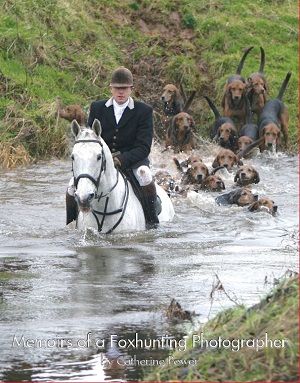
Book Review by Norman Fine
Memoirs of a Foxhunting Photographer by Catherine Power, hardbound, large format (8-1/2 x 11 inches), color, 202 pages, 55.00 euros shipped outside Ireland, order direct from the photographer or on the website.Inside this colorful book, Memoirs of a Foxhunting Photographer, is a collection of the best of Catherine Power’s foxhunting photographs. Accompanying the images are historical and descriptive pieces written by her husband and fellow hunting correspondent, Dickie Power. This large format volume showcases the mad-keen Irish hunting people, the hounds, the Irish hunters, the fox, and the glorious Irish landscape that makes foxhunting in Ireland so adventurous.
Having hung up her boots after forty-seven seasons hunting with the Scarteen, County Limerick, and the “Gallant” Tipps, Catherine Power decided to follow her other passion for photography. Many of the photos have been previously published The Irish Field, Foxhunting Life, Horse and Hound, The Field, Hounds Magazine, and other sporting journals. Her work takes center stage in The Irish Field where she is hunting correspondent, a role she shares with Dickie. The pair makes a complete package for any sporting publisher: exciting images and compelling text.
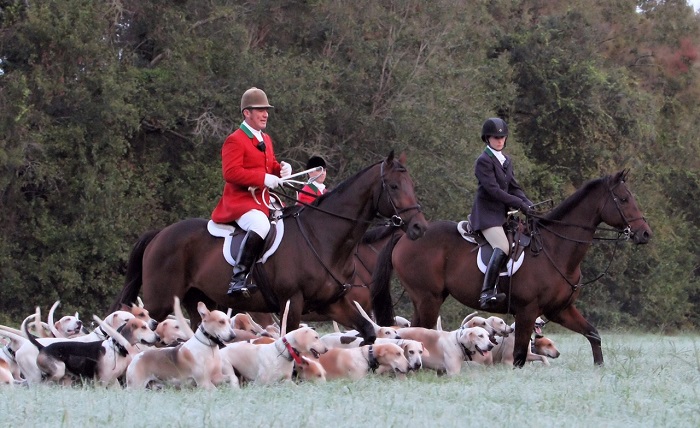
Huntsman Spencer Allen with the LIve Oak foxhounds, accompanied by whipper-in Alexandra Taber and kennel huntsman Sam Andrews. / Leslie Ballenger photo
Marty’s Weather Channel said no way but my Weather Bug gave me hope, and hope springs eternal! It looked highly likely that we might have to cancel due to heavy rain and possible thunderstorms, but, never wanting to cancel unless totally necessary, the call was made at 5:30 a.m. to go for it.
We were in the saddle at 8:30 and headed for the Dip Vat. What a shame, as it turned out, that so many were put off by the weather prediction of three inches of rain, to have only two in the field—Cameron and David Reid. “Small field, good hunt” could not have been more true!
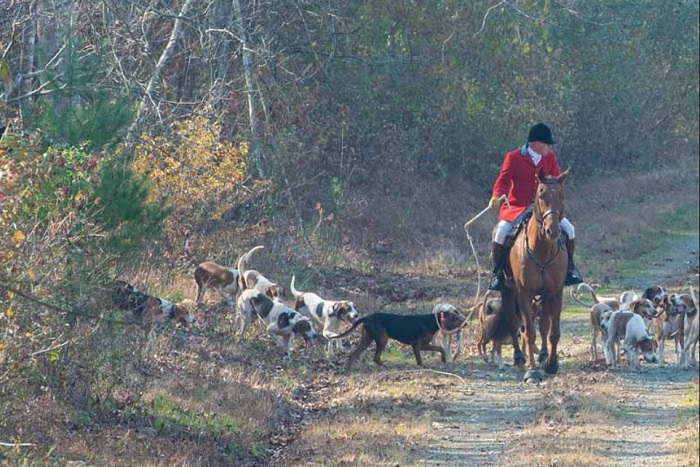
Professional huntsman Matthew Cook and hounds of the Farmington Hunt (VA). / Cathy Summers photo
On a hot midsummer afternoon, huntsman Matthew Cook rode up to meet me on a green John Deere lawn mower. Cutting grass is just part of the work it takes to maintain the grounds and kennels at the Farmington Hunt Club (VA), home to sixty noisy, rambunctious foxhounds.
Coming to Farmington in the summer of 2013 from the Los Altos Hunt in northern California, Cook faced a new set of challenges, both in topography and local culture. He was learning his new job in the shadow of the forty-year reign of the revered Jill Summers, MFH, whose practice and policy of hunting only foxes laid the foundation for Farmington’s hounds. The pack was bred and trained to ignore anything non-vulpine.