Sporting Art Auction 2019 at Keeneland
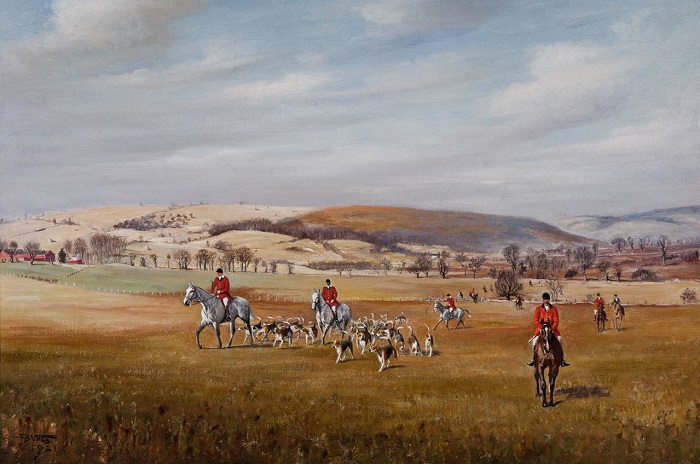
Lot 51, Franklin Brooke Voss (American, 1880–1953), THE MIDDLESEX FOXHOUNDS IN THE MILLBROOK COUNTRY, signed, dated 1921, $8,000. – 10,000
Sunday, November 17, 2019 will mark the seventh annual Sporting Art Auction at the Keeneland Sales Pavilion—a cooperative venture between the world’s largest Thoroughbred auction house and its Lexington, Kentucky neighbor, Cross Gate Gallery, a leading source of the world’s finest sporting art. Collectors will take home works by highly regarded artists at prices possibly as low as $900, many under $3,000…others, truly exceptional works, as high as six figures.
This year’s offerings feature 189 lots of paintings and sculptures by masters long gone as well as by leading contemporary sporting artists of the day. Among the European artists represented are Henry Alken, Peter Curling, John Emms, Harry Hall, the various Herrings, Michael Lyne, Sir Alfred Munnings, and many others. American artists this year include Paul Brown, Juli Kirk, Booth Malone, LeRoy Neiman, Sandra Oppegard, Andre Pater, and Larry Wheeler.
AAEA Art Show Returns to Its Roots
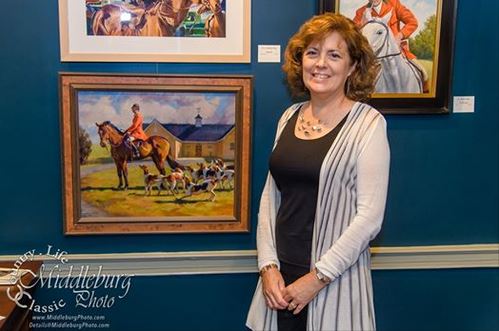
Linda Volrath from White Post, Virginjia, with one of her oils, a handsomely mounted huntsman, Jordan Hicks, and his Piedmont foxhounds / Middleburg Photo
The American Academy of Equine Art, after an absence of thirty years, has returned to its original home, Middleburg, Virginia, with a delightful exhibit of equine art. The works chosen for the AAEA 39th Annual Open Juried Exhibition will be available for viewing until October 26, 2019 from 10:00 am to 4:30 pm, Monday through Saturday, at the newly occupied headquarters of the Masters of Foxhounds Association, 301 East Washington Street (U.S. Route 50), Middleburg, Virginia 20117.
The MFHA headquarters is “a beautiful facility inside and out, fully restored and expanded,” writes AAEA President Booth Malone. “The Academy plans to give them a show they can be proud of.”
Ellen Emmet Rand Exhibition “Leads the Field” at NSLM
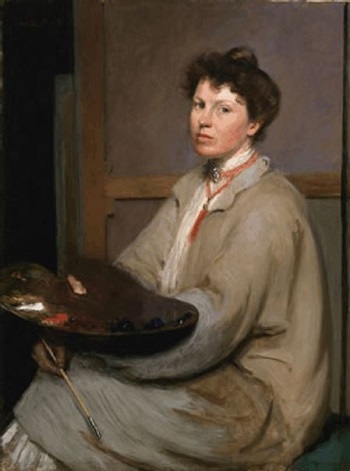
Ellen Emmet Rand painted by Mary Foote in 1907A new exhibit, Leading the Field: Ellen Emmet Rand, opens at the National Sporting Library & Museum (NSLM) with a reception for members on October 4, 2019, and will hang through March 22, 2020. Rand was the first female student of American painter and sculptor Frederick MacMonnies, spent decades studying and painting in Paris, and for decades more was a successful portrait painter, commuting from her beloved Connecticut farm to her studio in New York City and across the country on commissions. Her subjects included sportsmen and women, captains of industry, judges, lawyers, socialites, children, and politicians—notably the first presidential portrait of Franklin Delano Roosevelt.
During a journey that fulfilled her dream of becoming a foxhunter, she crossed paths with some of the most influential sporting figures of the 1920s and 1930s, memorializing Masters of several prestigious hunts such as Fletcher Harper of Orange County (VA), Dr. Howard Collins of Millbrook (NY), and Evelyn Thayer Burr of Norfolk (MA). This important exhibition brings together several of these sporting commissions as well as paintings, studies, and sketches of the artist’s family and friends, and creates a personal picture of Rand as a fiercely talented painter, loving mother, countrywoman, and horsewoman.
The Recognizable Foxhounds of John Emms
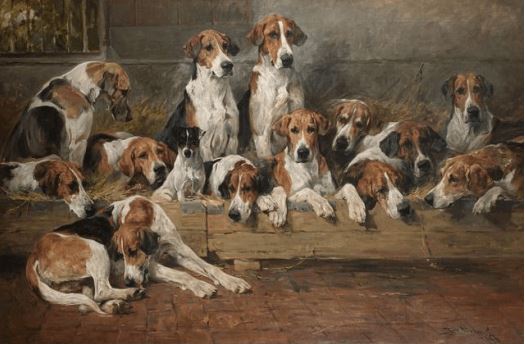
The New Forest Foxhounds by John Emms
John Emms (1843–1912) is one of the most admired animal painters of the nineteenth century. He was an avid foxhunter himself, and his paintings of foxhounds are easily recognizable as clearly and uniquely his work. The postures, characteristic attitudes, and expressions of Emms foxhounds, in kennels especially, confirm his hand before even seeing his signature. I can stare from one hound to the other and the essence of his foxhounds will awaken even my olfactory senses and suggest my presence in a well-kept foxhound kennel.
The Old Coop on My Half Farm
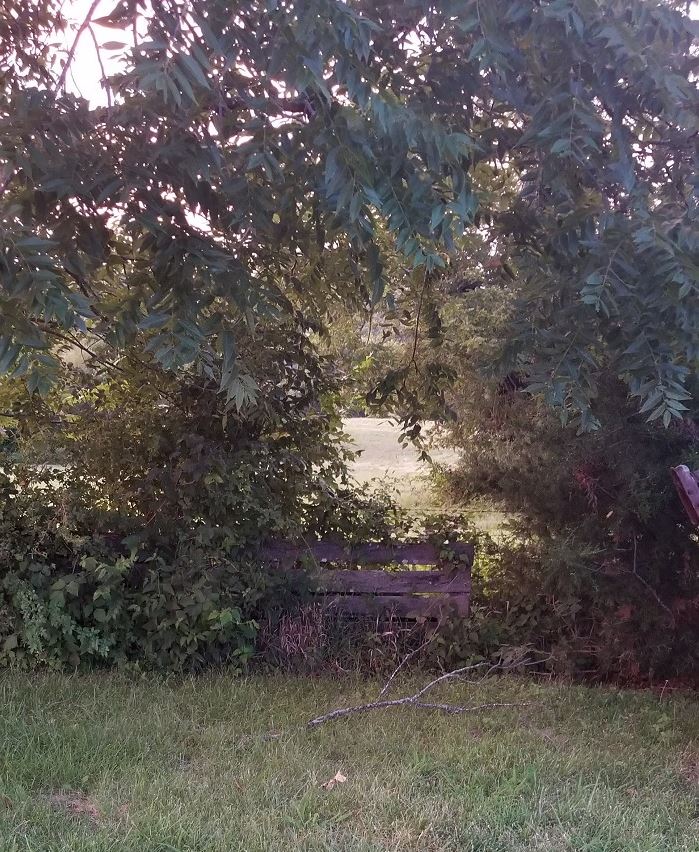
My Half Farm, in Wentzville, Missouri, was a part of the main fixture of the Bridlespur Hunt Club (IL) from 1957 to 2006, before urbanization forced the club to relocate further west. My Half Farm is still home to hunt horses, the My Half Farm Beagles, and is a regular fixture for the Three Creek Bassets.
The Old Coop on My Half Farm
The Old Coop she stands bended, a dip across her bow
Where time has weathered wood, barely even two-six now.
Many years have passed and she beckons as if to say,
Do you remember when the hunters came my way?
The Old Coop sits heavy, where imposing she once stood.
Many a hunter snapped his knees, back when times were good.
Up and over they did go, landing downhill, facing north.
Over I’ve flown many times on beasts now left this Earth.
Andre Pater: An American Journey
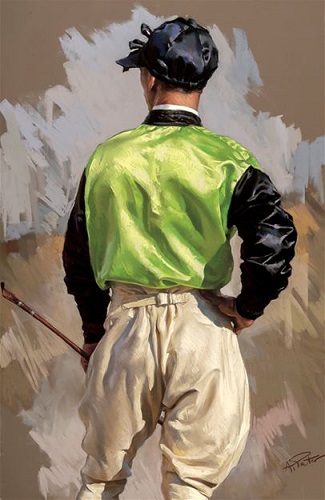
Oil painting by Andre PaterThe Headley-Whitney Museum in Lexington, Kentucky will mount a retrospective exhibit of the impressive work of Andre Pater. Sixty-six equine, sporting, and recent Native American works borrowed from private collections will hang from Friday, September 13 to Sunday, November 17, 2019. The closing day will coincide with the Keeneland Sporting Art Auction in that city.
Mr. Pater will give a talk on Saturday, September 14, the first full day of the exhibition. He has been described by many as the heir to the late Sir Alfred Munning’s throne, and a glance at his racing and hunting works are convincing evidence that the comparison is valid.
The Recognizable Foxhounds of John Emms
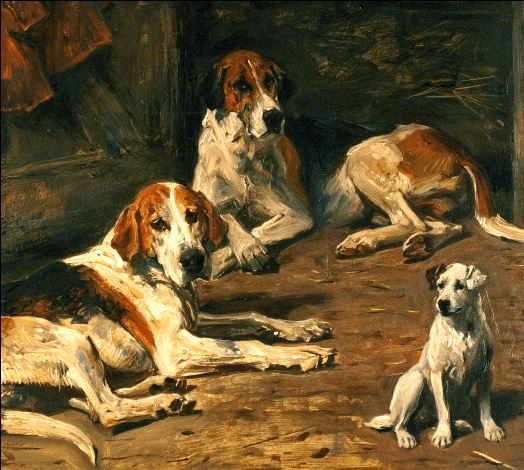
Foxhounds and Terrier, oil painting by John Emms
John Emms (1843–1912) is certainly one of the most admired animal painters of the nineteenth century. He was an avid foxhunter himself, and his paintings of foxhounds are easily recognizable—clearly and uniquely his work. The postures, characteristic attitudes, and expressions of Emms foxhounds, in kennels especially, confirm his hand before ever seeing a signature. I can stare from one hound to the other and the essence of his foxhounds will awaken even my olfactory senses and suggest my presence in a well-kept foxhound kennel.
Born on April 21, 1843, the son of an amateur artist in Norfolk, England, the young Emms moved to London where he apprenticed with the great academic painter, Lord Frederick Leighton. Emms very quickly developed his own distinctive style, however, and soon struck out on his own.
Jack
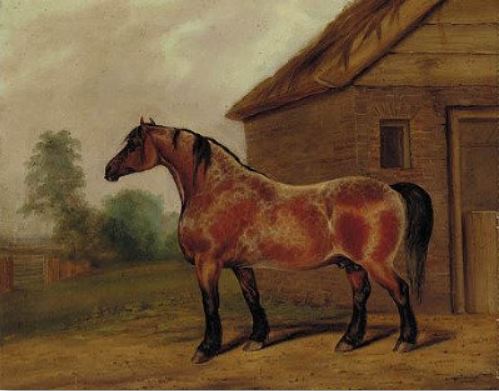
How pleasant the yellow butter
melting on white kernels, the meniscus
of red wine that coats the insides of our goblets
where we sit with sturdy friends as old as we are
after shucking the garden’s last Silver Queen
and setting husks and stalks aside for the horses
The Hillmen
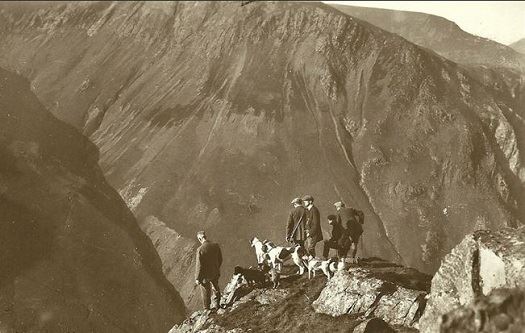
Foxhunters and foxhounds in Cumbria have been hunting the fox from time immemorial in the magnificent Lake District on the English-Scottish border. It is a hard and dangerous place for hounds and humans alike—climbing borrans (stone piles), crags (cliffs), and crossing the scree beds (fallen stone from the crags). It’s country that would ruin a horse the first time out, and so the hunting is on foot. Dangerous and exhausting enough to fill the Cumbrians with pride and feelings of purity for their special brand of hunting.
We don’t turn out in scarlet,
We are more at home in tweeds;
We have no aristocratic hounds
Or blood three figure steeds:
Our home is in the up-lands
Where the Great Creator spills
His richest browns and purples
On our everlasting hills
The Key to the Quarter Pole
Book Review by Norman Fine
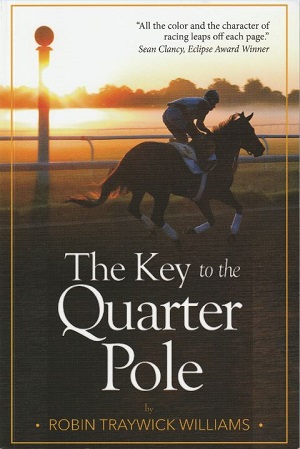
The Key to the Quarter Pole, Robin Traywick Williams, Dementi Milestone Publishing, VA, 2019, Soft Cover, 278 pages, $16.00A person who writes about horses and people has first to really know both subjects, then bring to the project a compelling way with words. Robin Traywick Williams delivers it all in The Key to the Quarter Pole. She’s a horsewoman and a foxhunter, and for six years was chairman of the Racing Commission for the Commonwealth of Virginia.
Plus, she’s been a feature writer for the Richmond Times Dispatch and a statewide finalist for UPI’s Journalist of the Year. She has several books to her credit, and this one is terrific—a page-turning novel filled with a variety of characters who inhabit that most exclusive inner sanctum of the horse world—the backstretch of the racetrack.
Louisa Ferncliff is one. She’s been beat up by a life with horses, but though her body is failing, she motors on with a will of steel. She knows very well that if she doesn’t take over the care and welfare of deserving racehorses, they will be raced and ruined. It happens all around the backstretch, but there are certain horses that she can’t let that happen to—especially the ones that give so much and expect so little. The principal object of her ministrations is Alice’s Restaurant, a horse with a fragile knee and a dubious future, who you’ll be rooting for every step of his tortuous way.