
Morning Stables
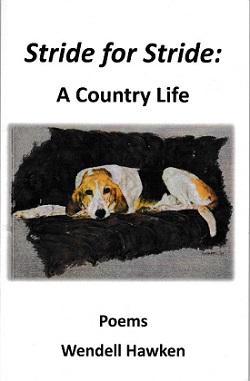
Stride for Stride: A Country Life, Bartley Books, an imprint of Three Pounds Press, Millwood, Virginia, 2020, paper, cover art by Anita Baarns, 70 pp, 43 poems. Available from the author.This slim, award-winning volume of forty-three poems by Wendell Hawken speaks of horses, foxhounds, and country life. Writing with authority on hunting, scent, whelping, riding, animal husbandry, and woodlore, Wendy conjures vivid mental images easily recognized and pleasurably savored by foxhunters who have ‘been there.’ Several of the poems have been previously published in Foxhunting Life, eliciting high praise from readers and establishing this author, in my view, as the most prolific, talented, and serious writer of sporting poetry of the present time.
Wendy’s poem, “Morning Stables,” from this collection will resonate with horsemen and horsewomen who have tended their own, and will jiggle old memories especially of those who were favored with the horse gene as children, and no one else really understood!
Who is Edith Somerville?
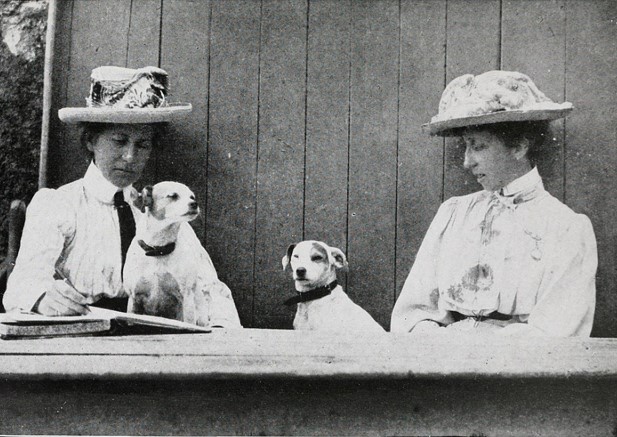
Edith Somerville (left) and Violet Martin (right) from “Irish Memories” (1919) by E. Œ. Somerville and Martin Ross. Image from Wikimedia Commons.
I discovered Edith Œnone Somerville (Irish, 1858-1949), cousin and writing partner of Violet Martin (Irish, 1862-1915), while searching the National Sporting Library & Museum archives for content to post on the NSLM’s Facebook page for Women’s History Month. One of my favorite things about my job are the opportunities I have to research our collections and share them digitally, but I felt that Edith Somerville’s story deserved more than a Facebook post.
Somerville was the first female Master of Foxhounds in Ireland, the West Carbery in Skibereen, County Cork. By no means incidentally, she was also a writer, humorist, artist, suffragist and feminist, and believer in the occult. She was President of the Munster Women’s Franchise League, was awarded the degree of Doctor of Letters by Trinity College Dublin in 1932, and was invited to become a member of the Irish Academy of Letters by W.B. Yeats the following year.
Racing Time: A Memoir of Love, Loss, and Liberation
Book Review by Steven D. Price
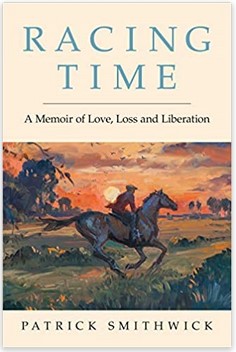
Racing Time: A Memoir of Love, Loss, and Liberation, Patrick Smithwick, Dementi Milestone Publishing, Manakin-Sabot, VA, 2019, cloth, illustrations by Sam Robinson, 481 pagesIn 2006 Patrick Smithwick published Racing My Father, a memoir of his legendary steeplechaser forebear, A.P. “Paddy” Smithwick. Six years later came Flying Change, the account of the author’s youth as a race rider under his father’s tutelage before leaving the track for a writing and teaching career until the sport’s siren song drew him back.
Now comes Racing Time. Subtitled A Memoir of Love, Loss, and Liberation, it is at once a celebration of the author’s appreciation of family and friends, both human and equine, and an elegiac recollection of three men with whom Smithwick’s life was as closely entwined as the braids on a hunting whip lash: the late former-jockeys-turned trainers Tom Voss and Dickie Small (names familiar to all race enthusiasts) and groom Speedy Kiniel.
Dartmoor and Doyle
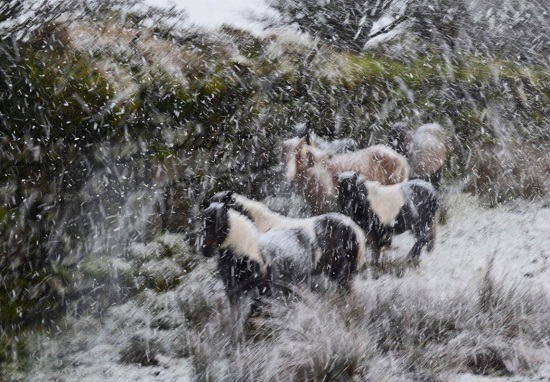
Janet Ladner photo
Photographer Janet Ladner was out following the Mid-Devon Foxhounds when she came across these wild ponies taking shelter from the snow. I have hunted on Dartmoor, in England’s West Country, and found it to be a fascinating landscape of bleakness and beauty, with visible reminders of cultures that serially take one back in time all the way to prehistory. While hunting, one comes across ditches left by tin mining activity that began in pre-Roman times and continued to the twentieth century, evidence of farm tillage going back to the Bronze age in the parallel rows running across the slopes, and standing stones erected in prehistoric times. During quiet moments when hounds check, one can allow the imagination to soar.
For me, Dartmoor also conjures memories of cold winter boyhood days at home, reading the spooky mystery, Hound of the Baskervilles by Arthur Conan Doyle. It was the third of his Sherlock Holmes novels to be published, and this Dartmoor mystery filled my young head with delicious terror.
By coincidence, Janet Ladner’s photos of the ponies on Dartmoor arrived just as writer/editor Steve Price sent me this foxhunting poem, written by Arthur Conan Doyle. A confluence of Dartmoor and Doyle. Who knew he wrote such poetry?
Whelping Foxhounds
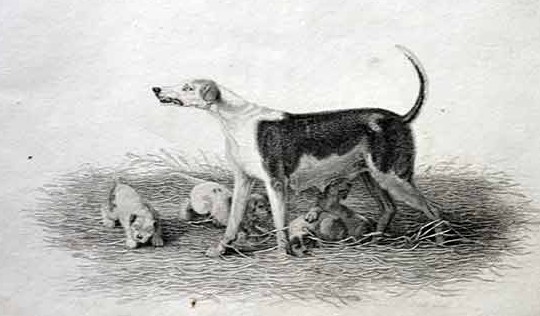
When Bay Cockburn was huntsman of the Loudoun West Hunt (VA), he would allow the author to bring the bitches home to whelp in a quiet place during the point-to-point season when he was busy racing. “It was so much fun,” says Wendell.
Beneath the cone of heat lamp light,
in the time it takes to break
a sack, wipe clear a face, and head-down shake
all wet away, I urge this not-yet-
breathing-thing: Come in,
The Veteran: A Favorite

Illustration by Lionel Edwards A few lines from this stirring poem were used by the author in his tribute to Lady Melissa Brooke. The work is a favorite of many foxhunters, so why not have it all?
The Veteran
Illustration by Lionel EdwardsIn our last issue we published a short biography of Scottish poet Will Ogilvie written by Erica Libhart, the Mars Technical Services Librarian at the National Sporting Library & Museum. Erica accompanied her article with three of Ogilvie’s poems. Richard Power, also a regular contributor from Ireland to Foxhunting Life, commented that of all Ogilvie’s poems, “The Veteran” is his ‘favourite.’ It happens to be one of my all time ‘favorite’ hunting poems as well.
Horses, Hounds, and Wishes: the Poems of William Ogilvie
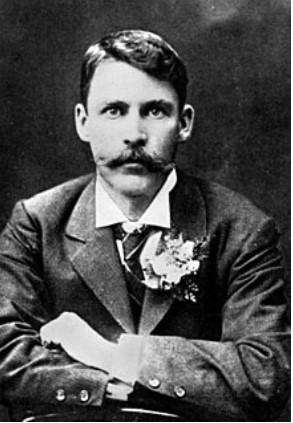
Will Ogilvie in 1901. Kerry & Co. of Sydney, from the collection of The State Library of Queensland / Wikimedia Commons. Many sportsmen have been inspired by country life to put brush to canvas. So too have many whose talents have a more literary cast. The canon of fiction, prose, verse, and song generated by the lovers of country sports and the lifestyle in which they are set fill many shelves at the National Sporting Library & Museum. The poems and songs of William H. Ogilvie are among them.
William (or more commonly, Will) Ogilvie was born into a large family based in the Scottish border town of Kelso during the summer of 1869. He was educated at Kelso High School before attending Fettes College in Edinburgh where he was a good athlete, participating in rugby and running, and an excellent student, winning a prize for Latin verse.
Falling Off
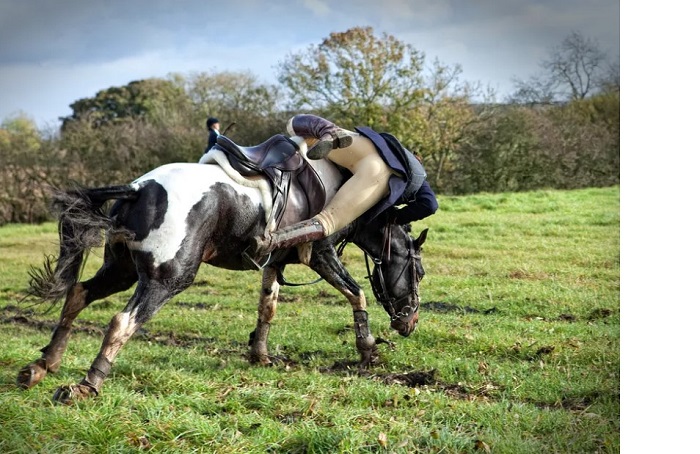
No fear, suspended
in slow time.
Afterward,
recite your name,
say you’re fine.
Believe it.
Climb back on to prove it.
Ride along, wondering
how you got to Goose Creek –
Secular Prayer
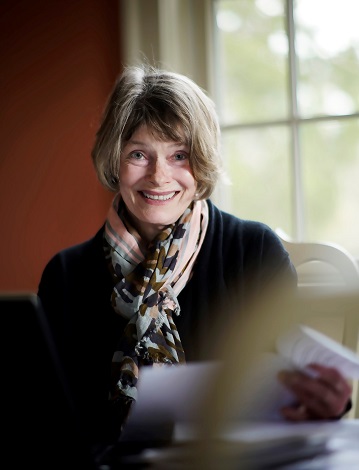 This poem is from a collection by the author being prepared for publication with the working title, Stride for Stride. Wendell Hawken earned her MFA in Poetry at Warren Wilson College in Swannanoa, NC. Collections of her poems include, The Luck of Being, published by The Backwaters Press, Omaha (2008) and The Spinal Sequence by Finishing Line Press, Georgetown, Kentucky (2013). Individual poems have appeared in literary magazines including Narrative, Shenandoah, Southern Poetry Review, and Poet Lore as well as in Foxhunting Life.