British Trail Hunting Video
The British Hound Sports Association put out an informational video explaining Trail Hunting versus hunting live game (now illegal in the England, Scotland, Wales, and Northern Ireland).
A Whipper-In Lays Down His Whip
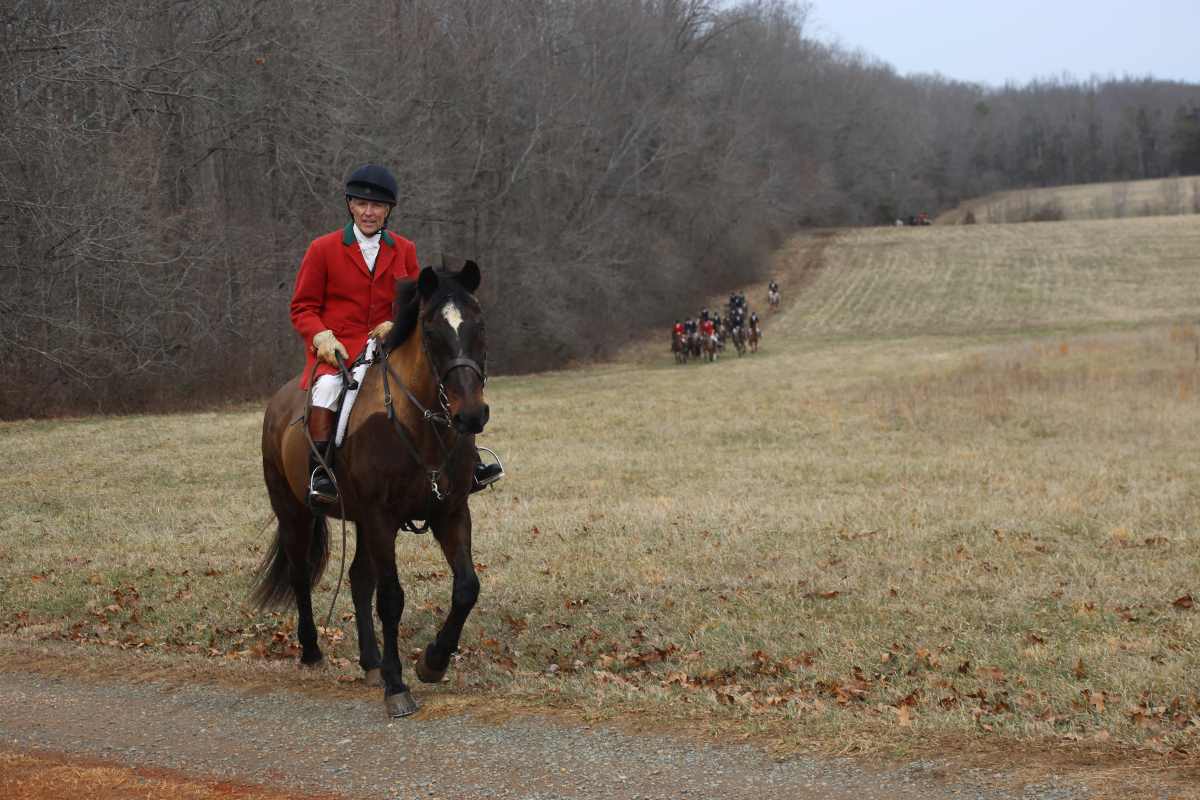
Barclay Rives decided that at the end of this 2023-2024 season, he would retire from hunting with Keswick Hunt Club in Virginia. Rives has been whipping-in for 53 years with Keswick, and he is a prolific writer (his book called “See You at Second Horses” is a personal favorite). To meet Barclay is to experience the most gentle and charming smile. I was privileged to interview him at Keswick’s Closing Meet party this past March.
Close Encounters with My Vulpine Friends
James Barclay was born to foxhunting. He, his sister, two brothers, mother, father, grandfather, and great-grandfather all served as Masters of Foxhounds—a family way of life that began in 1896. James served as Master of five hunts from 1983 to 2012: the Essex and Suffolk, Fitzwilliam, Cottesmore, South Wold, and Grove and Rufford. Click for a fuller introduction to James Barclay in Norm Fine’s Blog.
With over two hundred years involvement with various packs and types of hounds under our belt, you will understand it was and always will be the number one rule in the Barclay family to have the greatest respect for our quarry species, be it the fox, deer, or hare. The pleasure they give us is immense, and this comes from not only close observation on a hunting day but during the summer months when they are all, in their own distinctive ways, equally fascinating.
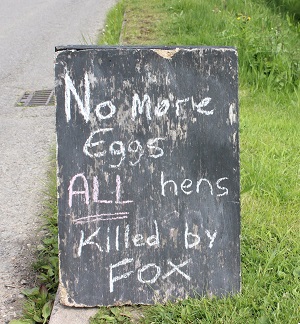
It is the fox, however, that has taken up a very large part of my life, and hardly a day passes when he doesn’t enter my mind in one way or another. And more than likely he will be discussed at some point, especially when he is being blamed for eating someone’s prime poultry! Whenever foxes are talked about, however, it is generally with a large degree of affection, except of course on the day a heinous crime has been committed in his role as the ruthless killer!
My pleasure in writing this has come from looking back and remembering moments when my vulpine friends have behaved in ways that remain etched on my mind. In the past, I have recollected their somewhat strange habits after the death of a particularly well-loved character. This enters another realm, although there are places where both realms meet and it is then when it really does become all the more fascinating!
Foxhunting Etiquette
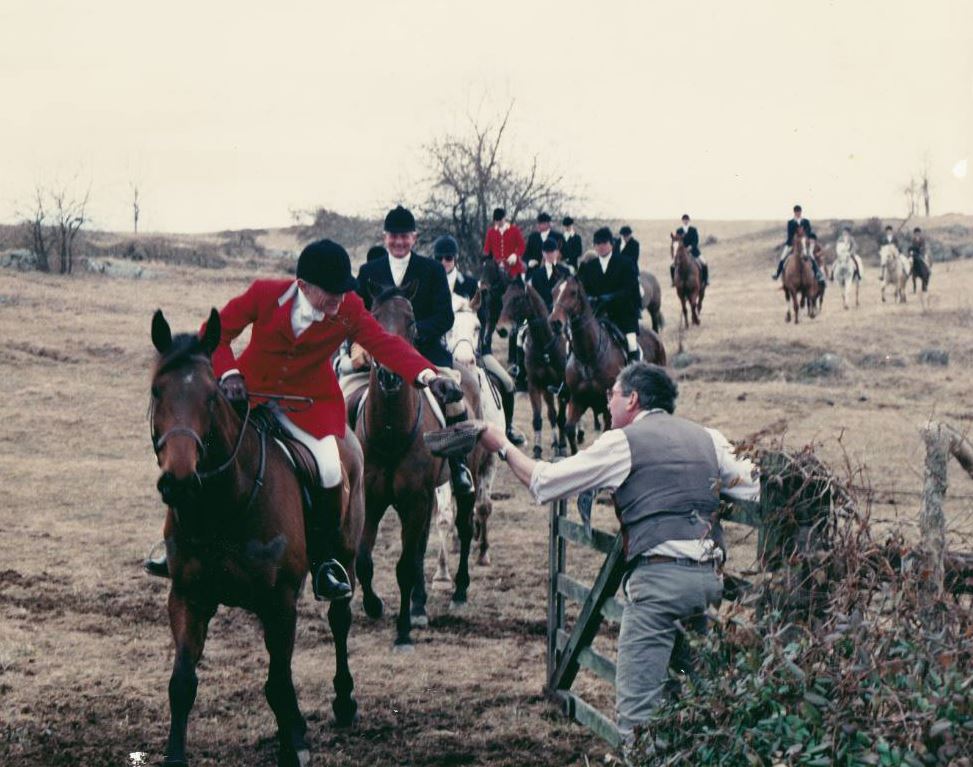
All civilized societies adopt rules of etiquette and conventions that allow individuals to interact without conflict. By the same token, unique activities, and especially those involving a measure of risk (motor driving, sailing, foxhunting), develop of necessity their own unique rules and conventions to help assure a safe and pleasant outcome at the end of the day for all participants. Thus, the courtesies and conventions of the hunting field, developed over the centuries, aim to produce an environment in which an exuberant sport may flourish pleasurably and safely. As each new season begins, it is never inappropriate to remind ourselves of the courtesies we owe to our landowners, Masters, staff, hounds, and fellow field members.
Joan Batterton (1917–2015)
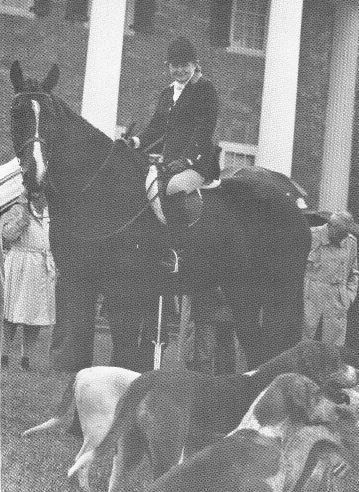
Field Master Joan Batterton, Opening Meet, 1986, on her homebred North American Field Champion Beacon RockJoan Batterton, one of the finest Field Masters I have ever followed across a hunting country, died on Monday, August 31, 2015 at the age of ninety-eight. She was born in Auckland, New Zealand in 1917 and died at her home in Berryville, Virginia.
A diminutive but magnificent horsewoman, she led the field for the Blue Ridge Hunt (VA) for fifteen years, while in her sixties and seventies, on a succession of bold, grand jumping horses, some off the timber racecourses. She knew her country, knew how the foxes ran, and what I remember best is how she led her field at a steady hand-gallop, at an even pace, whether over fences or in the open, keeping us in touch with hounds in a lovely and seductive rhythm.
She never raised her voice, but spoke in her soft New Zealand accent, always with a touch of a smile, an inquiring arch of her eyebrows, maintaining an eye contact as expressive as her words. She didn’t suffer fools, however, and could flay them with a quiet single-sentence opinion.
You Ask; We Answer

As the new season begins, I want to remind readers about one of Foxhunting Life’s features—our Panel of Experts. Every foxhunter has the occasional question, whether it be what the huntsman, the whipper-in, or the hounds are doing; the meaning of an arcane hunting term; breeding or judging hounds; correct attire; a point of etiquette; training the field hunter; even sporting art or literature.
I have found over the years that while there are no bad questions, sometimes there are bad answers! In the belief that our readers deserve only authoritative answers, we assembled a Panel of Experts whose breadth of knowledge and proven experience was unassailable.
Questions tackled by our Experts have included: why does a fox bark, what triggers the spring dance of huntsmen from one hunt to the next, are there different types of foxes in England, how to handle a hound that is shy of men, can foxhounds make good house pets, how to retrain a horse that exits the trailer like a cannonball, why is an afternoon after-hunt meal called a hunt breakfast, what is a July hound, what is the origin of ratcatcher, and many, many more. To see the answers to those questions and others, go to the Ask the Experts dropdown menu and click on Questions and Answers.
Cubbing
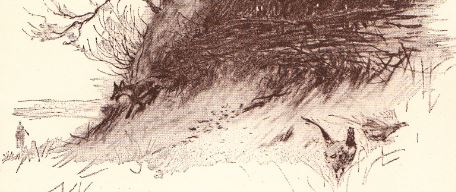
Illustration by Cecil Alden
by Duncan Fife
I wouldn’t change places with any man,
Were he powerful, rich, or wise,
As I stand in the early morning chill
While we wait for the mist to rise.
There are silver threads on the bracken fronds,
And a peaty tang in the air
That goes to the head like a draught of wine,
As we stand by the cover there.
If the creak of leather and clink of bit
Makes me yearn—well I’m not ashamed,
For I’ve got no horse of my own to ride,
And I don’t suppose I’ll be blamed
If I look around with an envious heart
At the satiny coats nearby,
At the twitching ears and the nostrils wide,
And the eagerly watching eye
That seeks to pierce through the curtaining mist
Where it clings to the dripping trees,
Concealing the cubs as they wait, alert,
For a chance to run. Then a breeze
So faint, so soft, that the glittering drops
Which hang on the bramble and thorn,
Are scarcely disturbed, but the low-lying haze
Dissolves at the coming of dawn.
Blue Birdseye Stock Ties: They’re Back!
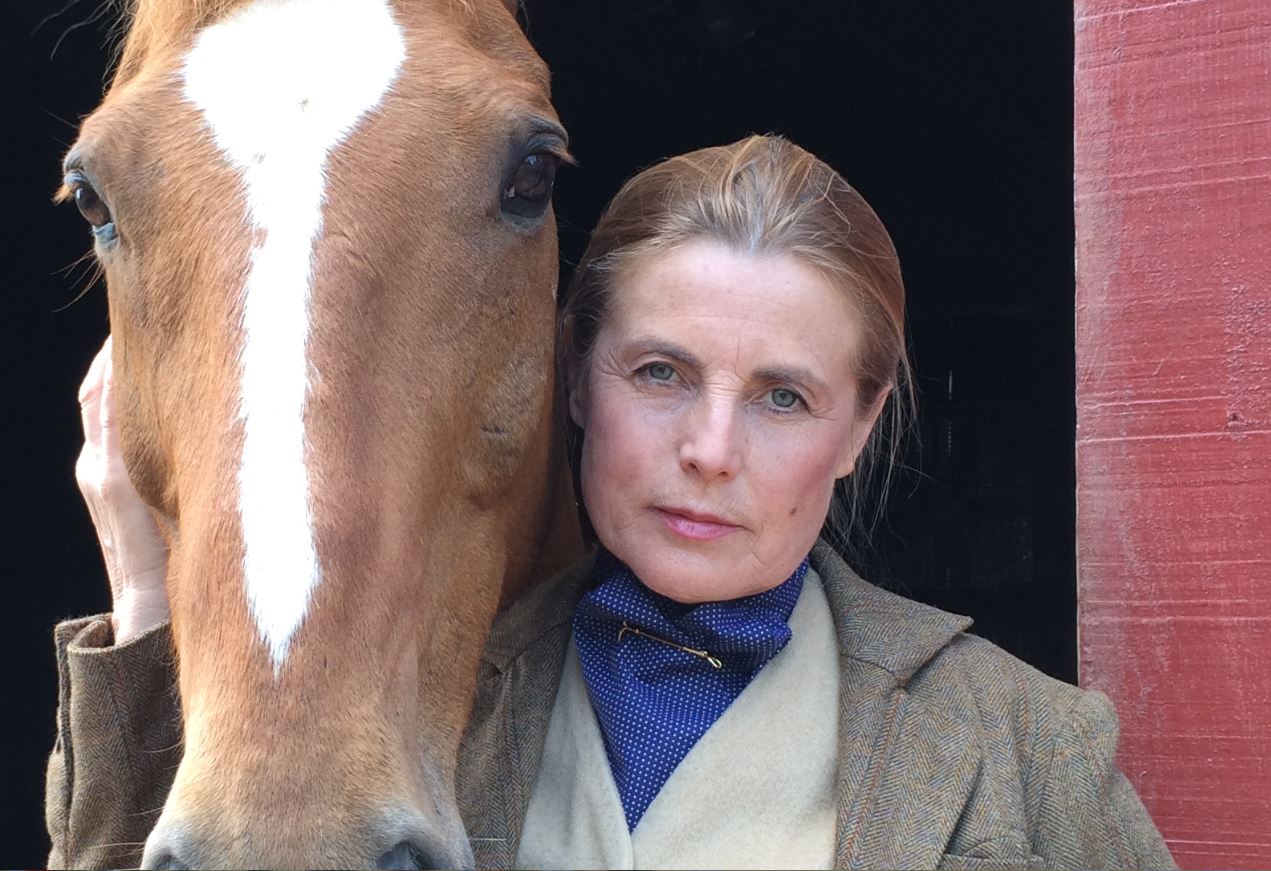
Karen Ewbank is ready for cubhunting in her blue birdseye stock tie.
Back in early May we ran a story titled “The Blue Birdseye Stock Tie: A Smashing Style from the Past.” The story, about a little-known, mostly forgotten, yet very attractive and traditional item of foxhunting attire, turned out to be our best-read story of the entire spring season!
We thought it would be fun to bring the blue birdseye stock tie back into the hunting fields of the twenty-first century, and many of you agreed. So we researched the fabric, purchased a few yards, and launched its rebirth at the Virginia Foxhound Show at the end of May. It was a hit!
Here then, is a reminder: our informal season is only weeks away. If you’d like to start the season sporting one of your own, click here!
Downton Abbey Conclusion Will Air Foxhunting “Issue”
By now most of us have heard (and shed tears) that the upcoming season of Downton Abbey will conclude the five-year series. The final season promises to resolve all those Grantham family dramas that have captivated viewers in 250 countries. Through a single family, we have witnessed the British aristocracy and its seemingly inviolate traditions […]
Sheep May Safely Graze

Sheep May Safely Graze, L.M. Clancy, 2015, 423 pages, paperback, $14.95, available at AmazonIrish sporting artist Liam Clancy has expanded his repertoire. He’s written a novel.
While foxhunting, prodigious drinking, and sex are well-handled ingredients of Clancy’s story—which takes place mostly in Ireland and England—those ingredients are only a framework upon which hangs a larger story of people, relationships, and the times. Our times: the Millennial, hunt sabs, the pathos of the hoof and mouth epidemic, the runup to the hunting ban, the dagger thrust into the heart of the English countryside by a government focused elsewhere.
If the publishing industry were not in turmoil, as it has been for the last decade at least, and if publishers would give first-time novelists half-a-chance, Clancy’s book could well replace titles by authors with household names that now occupy undeserved spots on the Best Seller lists. His dialog crackles, and his characters are wholly-formed individuals that you will care greatly for. Think of Maeve Binchy on steroids.