The Mardale Hunt: Chapters 8 to 10
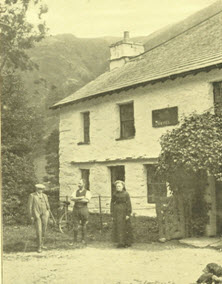
The Dun Bull Hotel, 1920Here are Chapters 8 to 10 of The Mardale Hunt by Ron Black. Through the courtesy of the author, Foxhunting Life is bringing you the entire book in installments every two weeks. You are free to download the book to your computer. We hope you have enjoyed the previous installments. There […]
The Mardale Hunt: Chapter 7
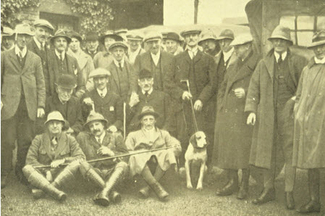
Here is Chapter 7 of The Mardale Hunt by Ron Black. Through the courtesy of the author, Foxhunting Life brings you the entire book in installments every two weeks. You are free to download the book to your computer. We hope you have enjoyed the previous installments. Excerpt from Chapter 7Visitors to Mardale Shepherd’s Meet—and […]
The Mardale Hunt: Chapters 5 and 6
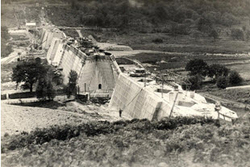
The Mardale Dam under constructionHere are Chapters 5 and 6 of The Mardale Hunt by Ron Black. Through the courtesy of the author, Foxhunting Life is bringing you the entire book in installments every two weeks. You are free to download the book to your computer. We hope you have enjoyed the previous installments. Chapter […]
The Mardale Hunt: Chapter 4
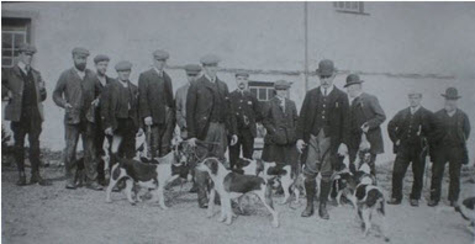
The Windermere Harriers at the Mardale Shepherds Meet, 1899 Here’s Chapter 4 of The Mardale Hunt by Ron Black. Through the courtesy of the author, Foxhunting Life is bringing you the entire book in installments every two weeks. You are free to download the book to your computer. We hope you have enjoyed the previous […]
A Rum One to Follow, A Bad One to Beat
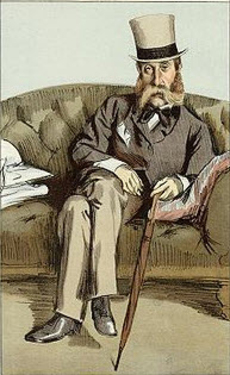
George Whyte-Melville as caricatured in Vanity Fair, 1871You may have noticed that White-Melville and Ogilvie are my favorite poets. These two establish a cadence in their meter that transports me to the field atop a horse, rhythmically pumping his hindquarters and stretching his neck beneath me.
I was pleased to learn from the Dictionary of National Biography, edited by Sirs Stephen and Lee, that Whyte-Melville, being a gentleman of means, “devoted all the earnings of his pen…to philanthropic and charitable objects, especially to the provision of reading rooms and other recreation for grooms and stable boys in hunting quarters.”
This poem has long been a favorite of mine. Whyte-Melville, having been a major in the cavalry and having devoted his life to foxhunting, was an able horseman, I’m certain. Yet though he was thrown out this day, he expresses his admiration for the rider who left him in the dust.
The Mardale Hunt: Chapter 3
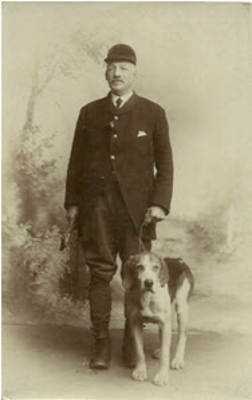
Ullswater huntsman Joe BowmanHere’s Chapter 3 of The Mardale Hunt by Ron Black. Through the courtesy of the author, Foxhunting Life is bringing you the entire book in installments every two weeks. You are free to download the book to your computer. We hope you enjoyed the previous installments. Excerpt from Chapter 3:As I was […]
The Mardale Hunt: Chapter 2
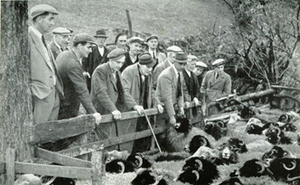
Picking out the straysHere’s Chapter 2 of The Mardale Hunt by Ron Black. Through the courtesy of the author, Foxhunting Life is bringing you the entire book in installments every two weeks. You are free to download the book to your computer. We hope you enjoyed the first installment. “As long as there are sheep […]
Special Offer: The Songs of Foxhunting
Brand New, First Edition (1974), signed by the author
“Foxhunting and music are as inseparable as bread and butter, whether it be the music of hounds, of the horn, or of ‘John Peel,’” wrote the late Alexander Mackay-Smith in the preface to his book The Songs of Foxhunting.
Mackay-Smith spent ten years collecting the music, the lyrics, seventy-seven illustrations, and the background and color behind twenty songs that foxhunters have loved to sing for over two centuries. The book was published in 1974 by the American Foxhound Club.
Through the courtesy of Mrs. Mackay-Smith, Foxhunting Life is proud to offer a limited number of brand new, first edition, signed-by-the-author copies directly from our Bookstore.
The Mardale Hunt: Installment I
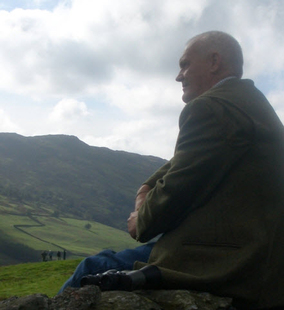
Author Ron BlackOnce upon a time there was a village—now submerged under a man-made lake—in the Mardale valley in the English Lake District. The occupants of the village were shepherds who tended their sheep high on the rugged fells surrounding the valley. Each year they would meet to exchange strayed sheep, and from these humble […]
The Mardale Hunt
Author Ron Black…In the north-eastern corner of the English Lake District there is a valley known as Mardale. This secluded valley contains a lake, under which rest the remains of a submerged village. The occupants of the village were shepherds who tended the local sheep high on the unforgiving fells surrounding the valley. Once a year they would meet to exchange strayed sheep, and from these humble beginnings The Mardale Shepherds Meet—best-known of all the meets of the Lakeland Fell foxhound packs—began.
It is often said that the origin of the meet is “older than the memory of man.” The introduction of the Ullswater Foxhounds increased the popularity of the meet, which soon attracted a much larger following than just the local shepherds. In the evening a public house called The Dun Bull was the venue for song and laughter. In time, The Mardale Shepherds Meet achieved worldwide fame.