Forty-Five Years Carrying the Horn
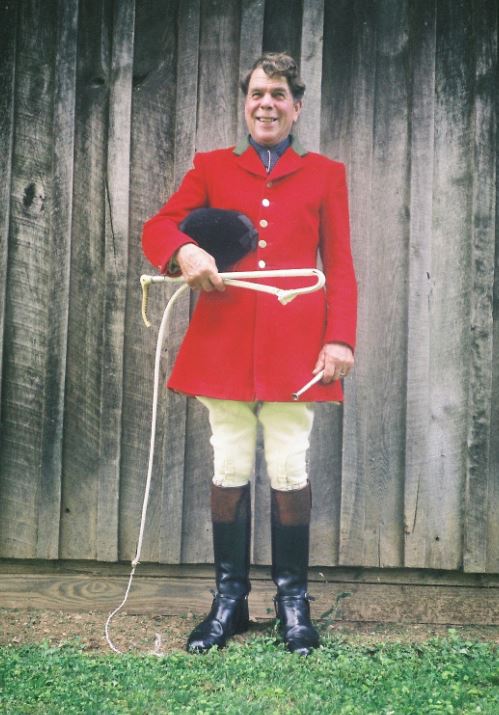
Hugh Robards / Emily Robards photoHugh Robards, huntsman for the Middleburg Hunt (VA), was recently photographed by his daughter Emily before mounting up for a cubhunting morning. Robards has been hunting hounds for forty-five years. After whipping-in to some of the most notable huntsmen in England—including Captain Ronnie Wallace at the Heythrop—Robards began his long […]
Sally Young (1942-2015)

Douglas Lees photoSally Fendall Harrison Young of Marshall, Virginia, died peacefully on October 1, 2015 at age seventy-two. Her beloved husband of fifty-two years, James L. Young, MFH, Orange County Hounds (VA), predeceased her in 2012. Back in their day, when Melvin was still hunting the Orange County hounds, my phone would ring. “When are […]
Foxhunting Life Has a New Look!
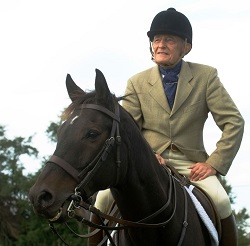
Joanne Maisano photoTa…dah! A new look for Foxhunting Life and two new subscription plans!
We’ve migrated to an up-to-date version of our platform that offers improved security and better viewing on personal devices. Also, we are introducing new subscription options.
Remember when we polled readers on whether or not PDF files of our entire e-magazine would be of interest to some of you? We were encouraged by your answers, so included with this issue of FHL WEEK we have attached a printable PDF file containing all the articles in their entirety. It’s a sample of what you get with either of our two new subscription offerings: a Printable PDF Subscription or an upgrade to the Combination Electronic/PDF Subscription.
We now offer three annual subscription plans: (1) the same Electronic Subscription that we have been offering since we started, (2) a new Printable PDF Subscription in which subscribers receive via email a PDF file of the entire e-magazine, FHL WEEK, twice a month, which they can print out in its entirety (no readmore links!), and (3) a Combination Electronic/PDF Subscription. Here’s how the new subscription plans will work:
William Dunlap: The Walker Foxhound as an Allegory
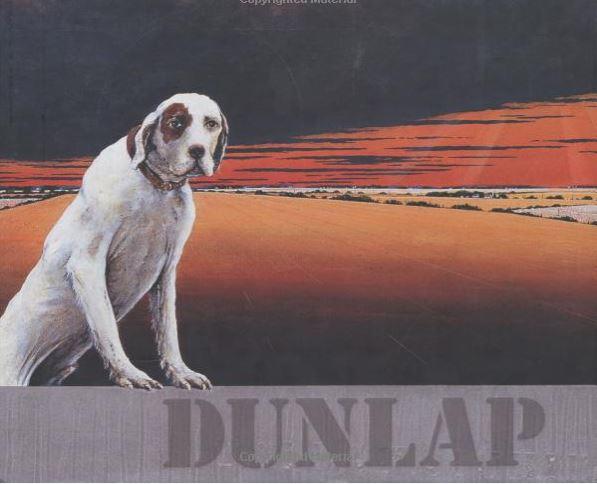
“Dunlap” by William Dunlap; foreword by Julia Reed, essay by J. Richard Gruber; Jackson, MS: University of Mississippi Press, 2006; available at Amazon
William Dunlap is an important contemporary artist of the South with a powerful affinity for southern landscapes and Walker foxhounds. Dunlap’s work may be seen in many prestigious collections, including the Metropolitan Museum of Art and the Corcoran Collection of the National Gallery of Art.
His book, Dunlap, features more than one hundred works, produced over a thirty-year period. It is published in a trade hardback and a limited edition of two hundred signed, bound-in-linen covers, housed in a matching linen-covered clamshell box. A signed, numbered print featuring four Walker foxhounds is included in the box. The book’s cover features a surrealist landscape with a white Walker foxhound, Delta Dog Trot, appearing ready to climb right out of the painting, a nod to nineteenth century trompe l’oeil techniques. The painting, “Delta Dog Trot, Landscape Askew” hangs at the Alluvian Hotel in Greenwood, Mississippi.
Dunlap’s grandfather was “a foxhunter of the old school,” Dunlap writes. “He bred and hunted generations of pure blood Walker Hounds. With names like Lucky, Mary, Speck, Sally and Bo, these dogs were all legs, lungs, nose and heart. They lived to run, but spent most of their lives laying around the kennel, eating, sleeping, stretching and occasionally giving off the deep-throated mouth that would send any fox in earshot scurrying for the nearest hole.
William Dunlap: The Walker Foxhound as an Allegory
“Dunlap” by William Dunlap; foreword by Julia Reed, essay by J. Richard Gruber; Jackson, MS: University of Mississippi Press, 2006; available at Amazon
William Dunlap is an important contemporary artist of the South with a powerful affinity for southern landscapes and Walker foxhounds. Dunlap’s work may be seen in many prestigious collections, including the Metropolitan Museum of Art and the Corcoran Collection of the National Gallery of Art.
His book, Dunlap, features more than one hundred works, produced over a thirty-year period. It was published in a trade hardback and a limited edition of two hundred signed, bound-in-linen covers, housed in a matching linen-covered clamshell box. A signed, numbered print featuring four Walker foxhounds is included in the box. The book’s cover features a surrealist landscape with a white Walker foxhound, Delta Dog Trot, appearing ready to climb right out of the painting, a nod to nineteenth-century trompe l’oeil techniques. The painting, “Delta Dog Trot, Landscape Askew” hangs at the Alluvian Hotel in Greenwood, Mississippi.
Dunlap’s grandfather was “a foxhunter of the old school,” Dunlap writes. “He bred and hunted generations of pure blood Walker Hounds. With names like Lucky, Mary, Speck, Sally, and Bo, these dogs were all legs, lungs, nose, and heart. They lived to run but spent most of their lives laying around the kennel, eating, sleeping, stretching, and occasionally giving off the deep-throated mouth that would send any fox in earshot scurrying for the nearest hole.
William Dunlap: The Walker Foxhound as an Allegory
“Dunlap” by William Dunlap; foreword by Julia Reed, essay by J. Richard Gruber; Jackson, MS: University of Mississippi Press, 2006; available at Amazon
William Dunlap is an important contemporary artist of the South with a powerful affinity for southern landscapes and Walker foxhounds. Dunlap’s work may be seen in many prestigious collections, including the Metropolitan Museum of Art and the Corcoran Collection of the National Gallery of Art.
His book, Dunlap, features more than one hundred works, produced over a thirty-year period. It is published in a trade hardback and a limited edition of two hundred signed, bound-in-linen covers, housed in a matching linen-covered clamshell box. A signed, numbered print featuring four Walker foxhounds is included in the box. The book’s cover features a surrealist landscape with a white Walker foxhound, Delta Dog Trot, appearing ready to climb right out of the painting, a nod to nineteenth century trompe l’oeil techniques. The painting, “Delta Dog Trot, Landscape Askew” hangs at the Alluvian Hotel in Greenwood, Mississippi.
Dunlap’s grandfather was “a foxhunter of the old school,” Dunlap writes. “He bred and hunted generations of pure blood Walker Hounds. With names like Lucky, Mary, Speck, Sally and Bo, these dogs were all legs, lungs, nose and heart. They lived to run, but spent most of their lives laying around the kennel, eating, sleeping, stretching and occasionally giving off the deep-throated mouth that would send any fox in earshot scurrying for the nearest hole.
Downton Abbey’s Costume Designer Got It Right!
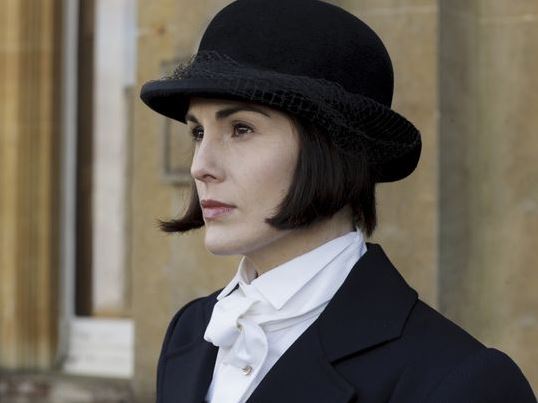
Lady Mary Crawley, ready for a day’s hunting in Downton Abbey’s concluding season
According to one of our experts, Downton Abbey’s costume designer got it right. But was it just by luck?
While the “correctness” of one’s foxhunting attire doesn’t help hounds one iota in giving us a good day’s hunting, it’s always fun to wrangle over what’s “correct” and what’s not. Especially when we see faux foxhunting scenes on the screen. So when I saw the images of Lady Mary Crawley and her father Robert, Earl of Grantham dressed to go hunting, I wondered why the costume designer hadn’t checked in with Foxhunting Life’s Panel of Experts first.
Managing Flies on the Horse farm
Researchers have discovered a species of tiny wasp that may prove to be a sustainable way of managing fly population on horse farms without the use of insecticides. Preferring horse manure over cattle manure, a lab study showed that the Spalangia female wasp inserts her eggs into fly puparium in the manure. When her eggs […]
Fort Leavenworth Home to Only Military Foxhunt
The Fort Leavenworth Hunt (KS) is the only MFHA-registered hunt under military auspices. Every August, the hunt holds a free foxhunting camp—Eight Easy Lessons—to review riding and hunting customs for the benefit of current and potential members, according to the Fort Leavenworth Lamp. Organized in 1926 by the U.S. Tenth Cavalry Regiment, the Fort Leavenworth […]
Foxhunting Etiquette
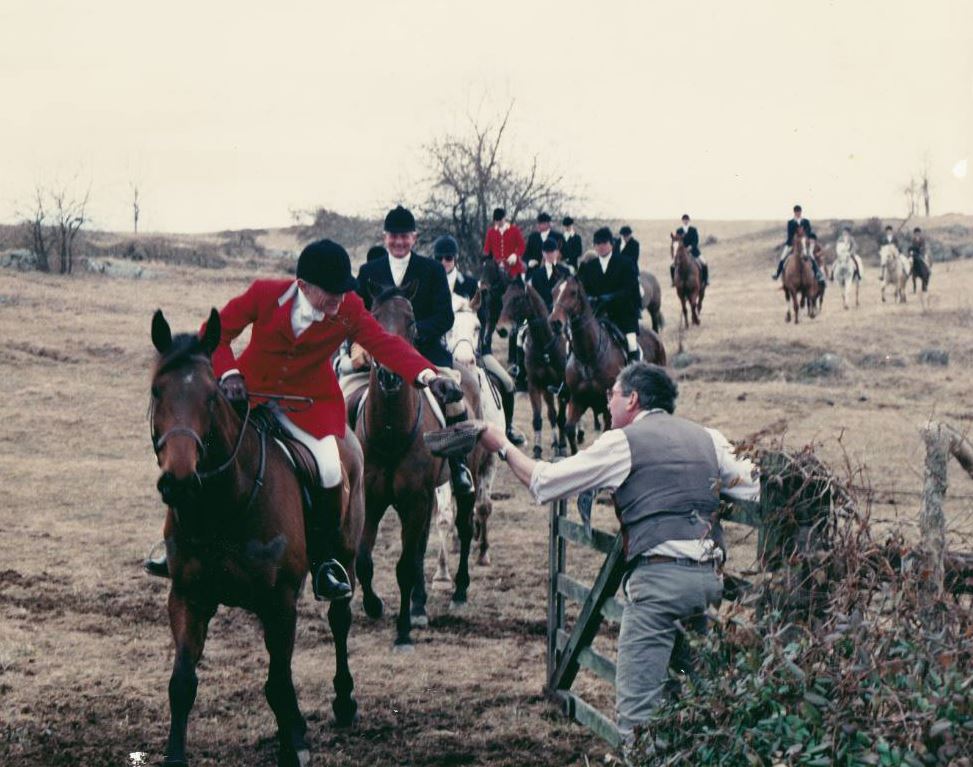
All civilized societies adopt rules of etiquette and conventions that allow individuals to interact without conflict. By the same token, unique activities, and especially those involving a measure of risk (motor driving, sailing, foxhunting), develop of necessity their own unique rules and conventions to help assure a safe and pleasant outcome at the end of the day for all participants. Thus, the courtesies and conventions of the hunting field, developed over the centuries, aim to produce an environment in which an exuberant sport may flourish pleasurably and safely. As each new season begins, it is never inappropriate to remind ourselves of the courtesies we owe to our landowners, Masters, staff, hounds, and fellow field members.