The Whipper-In Revealed
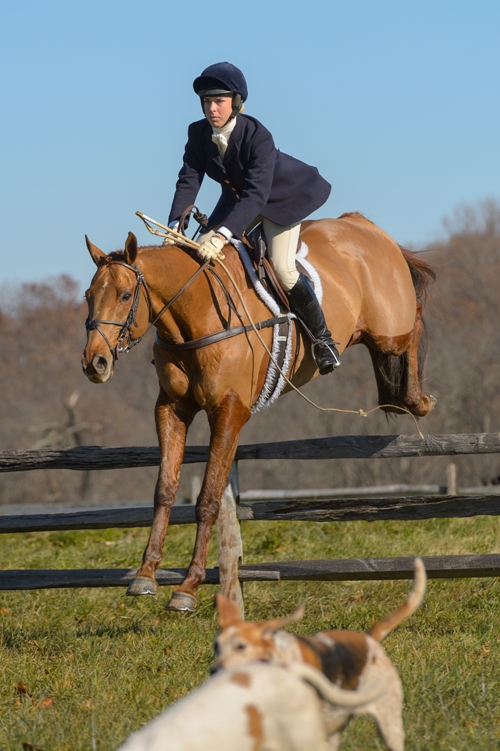
Stephanie Boyer, professional whipper-in, Mr. Stewart’s Cheshire Foxhounds (PA): “I am the huntsman’s eyes and ears, and I have to be honest with him at all times concerning what I see, whether he wants to hear it or not!” / Jim Graham photoYou may have noticed that the whipper-in has been Foxhunting Life’s theme this week. We field members watch these heroic figures, intent in their mission, standing in the irons, galloping on, claiming their “right-of-way” when passing the field, but what do they actually do?
For the answer to this question, read “The Whipper-In Is the Huntsman’s Right Hand” below.
The article “Whipper-In: What’s in a Name?” compares the differing agendas of the professional versus the honorary whipper-in and examines the best use of the whip they carry. “The Galloping Whip” by Brooksby is a poetic tribute to Charles Isaac, a nineteenth century whipper-in with the Pytchley (UK).
For anyone with aspirations to whipping-in one day, a particularly useful book devoted to the subject is Whipper-In by Dennis Foster, Executive Director of the MFHA. Indeed, it’s a good read for anyone interested in how the whipper-in, huntsman, and hounds work together in the field.
According to Peter Beckford, the whipper-in can be the decisive ingredient in turning a mediocre hunting day into a brilliant one. Here’s what he had to say in his classic, ageless 1781 treatise, Thoughts on Hunting.
Whipper-In: What’s In the Name?
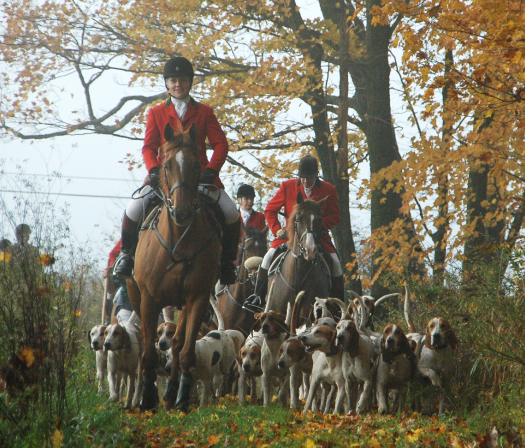
Booli Selmayr, professional whipper-in, Millbrook Hunt (NY): “A good day whipping-in is not having to be told, but instead, allowing natural instinct to guide me: listening to the horn and hounds, reading the terrain, and quickly distinguishing whether fox or coyote.” / Kirsten Edlund-Tunkel photo
Professional or Honorary
The world of whipping-in is split into two camps—professional and honorary. The professional whipper-in often fills the position to gain experience and recognition on his or her road to becoming a huntsman. As the title suggests, it is a paid position. The honorary whipper-in is not paid, is generally recruited from the ranks of the hunt membership, and generally does not aspire to become a huntsman. He or she may be a riding member or one of the Masters.
Professional hunt staff in England go through a structured period of apprenticeship. Years there are spent just doing kennel work before even being allowed to walk hounds out on exercise and before even being allowed on a horse. If recommended, they will finally be taken on as second whipper-in to a hunt. After a few moves, they may be recommended to fill an opening for a first whipper-in somewhere else. Under the system, they purposely move every few years from one hunt to another, gaining experience and exposure to different huntsmen and different methods before finally being offered a huntsman’s post. Clearly a strong foundation is laid through such a rigorous system.
Whipper-In: What’s In the Name?
This article was first published in 2013. With an archive of thousands of articles available on our website, we hope you will agree that at least a few are worth republishing!
Booli Selmayr, professional whipper-in, Millbrook Hunt (NY): “A good day whipping-in is not having to be told, but instead, allowing natural instinct to guide me: listening to the horn and hounds, reading the terrain, and quickly distinguishing whether fox or coyote.” / Kirsten Edlund-Tunkel photoTo the uninitiated, the term whipper-in might conjure images of a callous fellow laying his whip across the backs of hounds for every infraction. In fact, the whip is used primarily for its loud crack as an attention-getter. The explosive noise breaks the concentration of hounds from whatever they are doing that the whipper-in wants to stop.
The Galloping Whip
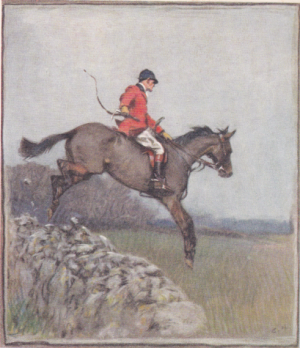
Gilbert Holliday illustrationIf life is a business, existence is fun
When duty and pleasure and sport are in one;
And so he wears ever a smile on his lip–
‘Tis a labour of love to the Galloping Whip.
The moon of September’s his light in the morn,
When the cub’s to be killed and they’ve carried the corn;
The moon of December’s his lamp for the trip,
As home with the pack goes the Galloping Whip.
For hours never vex him, and work cannot tire,
That dapper pink fits on a framework of wire;
He’ll go without sup, and he’ll go without sip
From daylight to dark will the Galloping Whip.
The phiz of bold Reynard is shaped on his mug,
Mouth wide as an oxer, as deep as a jug;
That feature was fashion’d to scream, not to nip,
And the bumper’s no charm for the Galloping Whip.
The last to leave covert, he’ll cheer on the pack;
Twenty couples are out, then away with a crack;
In a mile he has given the quickest the slip–
The wind from their sails takes the Galloping Whip.
The Whipper-In Is the Huntsman’s Right Hand
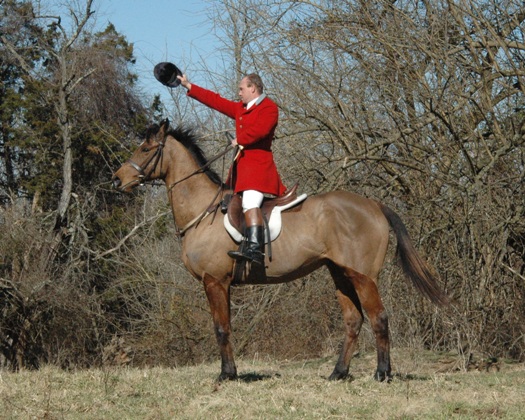
Neil Amatt, professional whipper-in, Piedmont Fox Hounds (VA): “Anticipation, punctuality, how you present yourself—all these things are drilled into you in the English system. You start in the kennels, and you have to really want it before you’re even allowed on a horse.” / Nancy Kleck photo
With the start of a new season just around the corner, we bring back this article, first published in 2013, not only for the benefit of all new and aspiring whippers-in, but also for those field members who wish to appreciate all that happens in the hunting field.
Last season, after forty-five years of hunting, I witnessed a simple act of sophisticated whipping-in that left me shaking my head in admiration. For a huntsman or an experienced whipper-in, it was perhaps no big deal.
My hunt fielded an all-new professional staff last season—huntsman and whipper-in—both of whom were learning the country on the fly. Hounds had checked in a thick covert, and we in the field could see them, heads down, trying to recover the line. The whipper-in came galloping by headed for the end of the covert.
“Over here,” called the Field Master, pointing to a concealed trail. “You can get in over here.”
The whipper-in came back, talked urgently to the Field Master, then turned his horse and continued in the direction he was originally going.
After the meet I asked him what that exchange was all about.
Nancy Dillon Honored
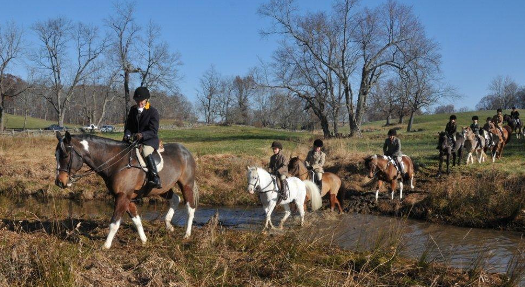
Nancy Dillon has taught children to ride and hunt for nearly half a century. / Liz Callar photo
Nancy Dillon is a living, legendary treasure of the Piedmont Fox Hounds in Virginia. She is the longest subscribing member of the hunt, having started hunting at age eight in 1943. For nearly a half century she has taught and led more children into the hunting field than anyone can count. Her truck and trailer pulling into the meet have been likened to the car at the circus where the clowns just keep coming out.
On Friday, November 8, 2013, the hunt threw a party at Buchanan Hall in Upperville to screen a specially-produced documentary—Lessons in the Piedmont—in tribute to Nancy. Throughout this beautifully-produced and heart-warming film, children (some grown, others still growing), Masters, hunt members, and citizens of the community expressed their love for this woman and their heart-felt appreciation for what she has done to instill a love of the sport, respect for the land, and personal values to generations of children.
Night Hunting with Dad
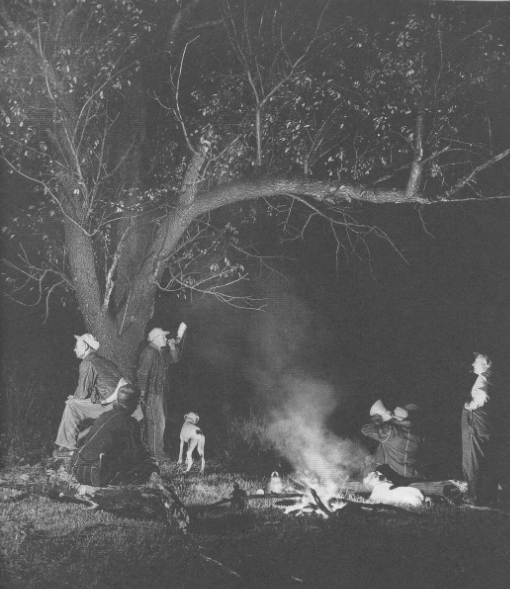
This is a true story as best as I can recollect. I was about six or seven years old that night, but as you can imagine this was a story told and retold around many a local foxhunter’s fire for many years thereafter.
Dad often took me foxhunting with him when I was little. I don’t have many memories of those hunts other than falling asleep in the back of whatever old car dad had at the time. The foxhunting that dad and his friends participated in did not involve horses or fancy scarlet coats. Their steeds were Ford and Chevy, GM and Oldsmobile; the uniforms worn were usually whatever work clothes they had been wearing that morning.
Mr. Mellon’s Tribute to the War Horse
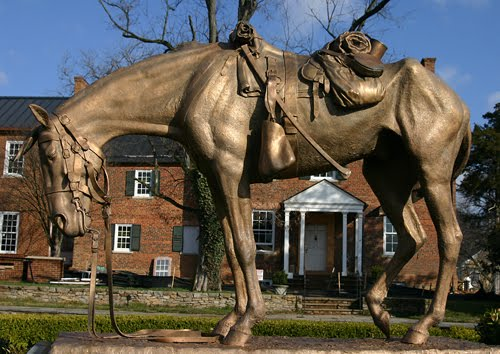
Appalled as we are by the human death and casualty figures resulting from the Civil War, less known is the fact that well over a million horses died in service during that conflict. Many of those horses, belonging to officers and cavalrymen of both sides, must have carried their riders after foxhounds in happier days.
The late Paul Mellon believed that these animals deserved to be remembered, and he determined to create an authentic memorial for them. The result, a product of artistic genius coupled with painstaking research, is an exceedingly moving piece of sculpture. Any foxhunter or horse lover will be well-rewarded by a visit to the National Sporting Library and Museum in Middleburg, Virginia or to the U.S. Cavaly Museum at Fort Riley, Kansas to see either of the two castings from the original mold. (-Ed.)
The sculpture of the war-weary Civil War horse in the courtyard of the National Sporting Library had its origin in the mind of the late Paul Mellon.
In 1994 Mr. Mellon received a book for his eighty-seventh birthday titled The Cavalry Battles of Aldie, Middleburg and Upperville, June 10-27, 1863 by Robert F. O’Neill, Jr. O’Neill had conducted an enormous amount of research through books and newspapers of the period and letters and diaries of the participants that vividly brings those seventeen days to life. Reading of battles and bloodshed of human and horse right in this community had a profound effect on Mellon.
John Dean Is New Huntsman at Radnor
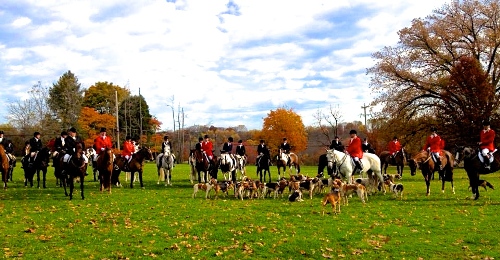
John Dean has returned to Pennsylvania to become huntsman for the Radnor Hunt. Although he spent his last seven years hunting coyotes in Missouri, Dean is well-known to veteran foxhunters in Pennsylvania. Dean was huntsman for the old West Chester Hunt, an un-recognized pack in that state, and served as professional huntsman for the Wicomico […]
Temporary Injunction Delays Resumption of Horse Slaughter
On Monday, November 4, a federal appeals court granted an emergency request by animal rights groups to temporarily block the expected reopening of horse slaughter plants in the U.S. After eleven years, horse slaughter was expected to resume as early as this week after a U.S. District judge in New Mexico last Friday threw out […]