Fout Saddles Three Winners at Warrenton
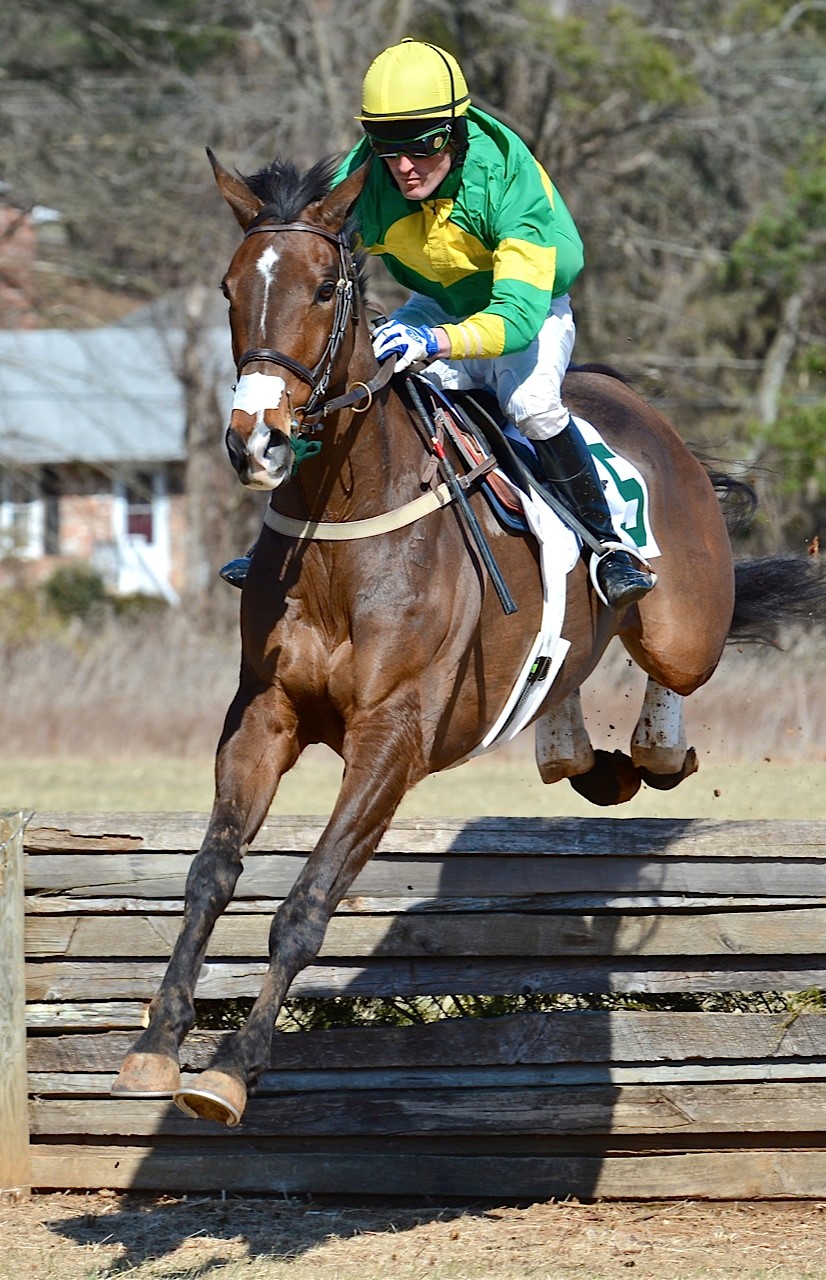
Aero, Kieran Norris up, wins Open Timber at Warrenton. / Doug Lees photoTrainer Doug Fout and jockey Kieran Norris—the latter just out of the Novice Rider ranks this season—accounted for three wins at the Warrenton Hunt Point-to-Point at Airlie Race Course, Warrenton, Virginia on Saturday, March 15, 2014. Warrenton’s was the first hunt race to go off as scheduled this wintry spring season.
Fout’s and Norris’s three winners included Aero in the Open Timber Race. Aero settled into the third position in a three-horse, closely-bunched field. With a half mile to run, Aero drew up to the leader and pulled away in the final quarter mile for the win. Aero is owned by Alfred C. Griffin, Jr.
Mr. Stewart’s Cheshire Foxhounds: A History

Scarlet on Scarlet: 100 Years of Hunting with Mr. Stewart’s Cheshire Foxhounds 1912-2012, Prue Draper Osborn, 278 pages, Illustrated, color, $100.00 (benefits The Cheshire Hunt Conservancy)
As many of our North American hunts reach their hundredth anniversary milestone, some have produced history books rich with photos and other memorabilia to tell their stories. One of the best is Scarlet on Scarlet: 100 Years of Hunting with Mr. Stewart’s Cheshire Foxhounds 1912-2012 by Prue Draper Osborn. This handsome coffee-table book is not only the history of the legendary hunt, but it’s also the story of the many families who have hunted with the Cheshire Foxhounds, often through three and four generations.
The history of Mr. Stewart’s Cheshire Foxhounds could be divided into three phases: its founding by Plunkett Stewart in 1912; its five-plus decades under the leadership of the late Nancy Penn Smith Hannum; and the latest and perhaps most controversial, the transformation from an all-English pack to a Crossbred pack.
All Fox Pens Are Not Equal
Hunter (and foxhunter) Robin Traywick Williams recently addressed the fox pen issue in an article published in the Richmond Times-Dispatch. The subject has been in the news recently as the Virginia House of Delegates considers phasing out the practice of penning. (See Phase-Out of Fox Pens One Step Closer in VA, as reported in Foxhunting Life last month.)
In her article, Williams claims that for a few of the 37 pens operating in Virginia, activity is relatively light. Only a few hounds are in the pen at any one time; the fox population in relation to the size of the pen mirrors the density found in nature; and the vixens within are able to reproduce. This activity level would conform to the fox pen’s use as a training aid for young foxhounds.
In perhaps 12 of the pens, however, activity is heavier year-round. Competitive foxhound trials are held with many hounds in the pen at the same time and for longer periods; the fox population in one pen is 10 times the population density found in nature; fox mortality rate is high; and with no limit to the season, vixens are not reproducing.
Huntsmen on the Move
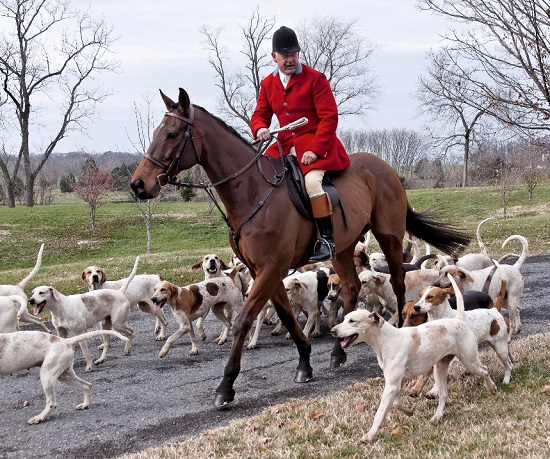
Dennis Downing is the new huntsman at the Bedford Hunt (VA). / Karen L. Myers photo
Huntsman Robert Taylor hasn’t had a good rest in five years. He’s been hunting two separate packs of foxhounds in Maryland—the Goshen Hounds as Master and amateur huntsman and the New Market-Middletown Valley Hounds as professional huntsman. Huntsman Ken George has been driving hounds and horses six hours each way twice a week from Kansas to Iowa to hunt hounds in both states. Huntsmen love what they do, but each season ends with changes in the wind.
As this hunting season draws to a close, we see huntsmen on the move again. Starting in the north and progressing southward then west, here’s what we know so far; please let us know who we’ve left out.
British PM Has New Plan to Ease Hunting Ban
British Prime Minister David Cameron is seeking Members of Parliament who will support a backdoor attempt at easing the foxhunting ban, according to a report in the Sunday Times. Cameron along with environment secretary Owen Paterson want to use a device known as a “statutory instrument” in Parliament to amend the Hunting Act—which currently allows […]
New USSA Office in California Is a Plus for All Hunters
The Columbus, Ohio-based U.S. Sportsmen’s Alliance (USSA), a national organization dedicated to protecting the rights of hunters, anglers, and trappers, has opened an office in Sacramento, California, the state capital. “Expanding our operations is a natural progression…as we plan to move more effectively to protect the interests of sportsmen across the country,” said Nick Pinizzotto, […]
Horse Country to Launch John Anderson’s New Novel
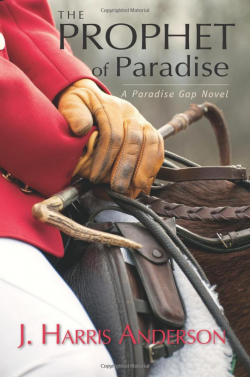
The Prophet of Paradise, J. Harris Anderson, 2014, 487 pages, Soft Cover, $22.95J. Harris Anderson’s new novel, The Prophet of Paradise, will by launched Thursday, March 20, 2014, from 6:00 to 9:00 p.m. at Horse Country Saddlery in Warrenton, Virginia. Anderson’s byline, which appears regularly in the pages of In & Around Horse Country, may […]
The Look of Eagles
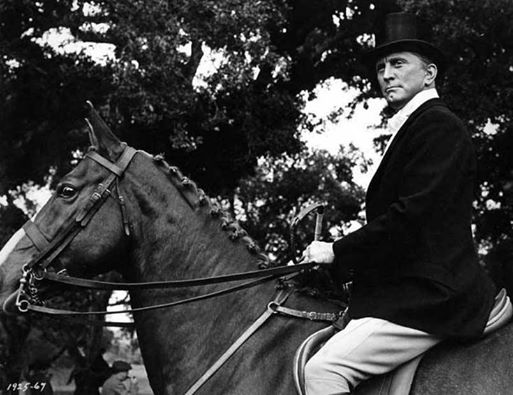
A phrase often ascribed to a proud and majestic horse,“The Look of Eagles” in this photo surely applies to both horse and rider.
This photo of Kirk Douglas in hunting attire is thought to be a publicity still for The List of Adrian Messenger. The film was directed by John Huston, father of Anjelica Huston, whose memoir of growing up at St. Clerans, the family home in Ireland, is reviewed below.
John Huston was a Joint-Master of the Galway Blazers, and he brought many screen stars to St. Clerans, including Kirk Douglas. The foxhunting scenes for The List of Adrian Messenger, in which George C. Scott also appeared, were filmed in Ireland. Scott, along with other Hollywood stars, hunted with the West Hills Hunt in California. John Huston was also a member of West Hills. Whether or not Kirk Douglas hunted with West Hills, we don’t know.
“Dr. Joe”: An Appreciation
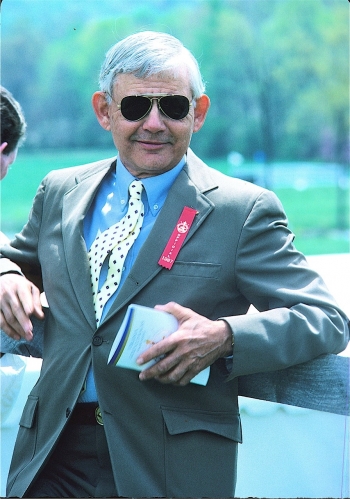
“Dr. Joe” Rogers, MFH / Douglas Lees photoDr. Joseph M. Rogers, who died March 8 at his beloved Hillbrook farm near Hamilton, Virginia, was of a rapidly disappearing breed of Virginians whose financial resources made possible the pursuit of a mission to preserve the countryside before it passed from reality to a lithographic memory.
These Virginians did not keep score with coin. The acquisition of land was not an egotist’s pursuit, and its preservation was not a beauty contest. Land was acquired and cared for because it represented an irreplaceable resource. That it provided the setting for pursuit of agricultural business and field sport was a cherished benefit, not a root rationale. To do otherwise, he believed, was to leave God’s earth to the vagaries of the marketplace.
“Dr. Joe,” as he was known by all, was at heart a man of that earth. He admired a craftsman who could build a proper four-panel fence or shoe a horse as much as he respected a man who made his fortune in business. In many cases, more so. He took pride in being able to train one species of canine to be capable of pursuing another much craftier, quicker, and agile species—a sport called foxhunting, in which the hunted had nearly insurmountable advantage over the hunter. It is a picturesque sport, photographed, illustrated, written about, and otherwise memorialized. But it was also a lot of hard work when you were in charge of bringing the show to the field.
Dr. Joseph M. Rogers, MFH, Dies at Home on Hillbrook Farm
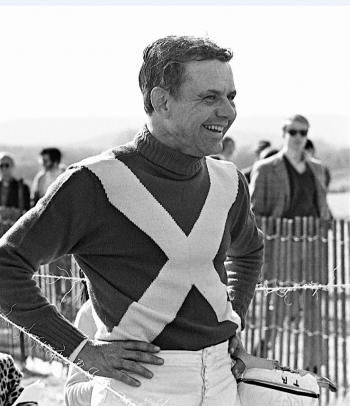
At the Piedmont Point-to-Point in the 1970s / Douglas Lees photoDr. Joseph Megeath Rogers, 90, died on Saturday, March 8, 2014 at his Hillbrook Farm near Hamilton following a stroke. While he occupied a gigantic space in the world of foxhunting, that world was but a small part of his very full, productive, and generous life.
Physician, farmer, Master of Foxhounds, steeplechase rider and trainer, businessman, rural land conservationist, and philanthropist, Dr. Rogers was a tireless advocate and practitioner of country living whose contributions in a broad range of interests were made quietly and with little fanfare.
His public persona was most closely connected with remarkable success as an owner, trainer, and rider of some of Virginia’s most successful steeplechase horses running under his familiar red with white cross sash silks. But his success in that rugged and dangerous sport was merely a visible extension of his commitment to protect Virginia’s rural countryside, a mission he often defined as a moral obligation.