Lord Oaksey Goes Hunting
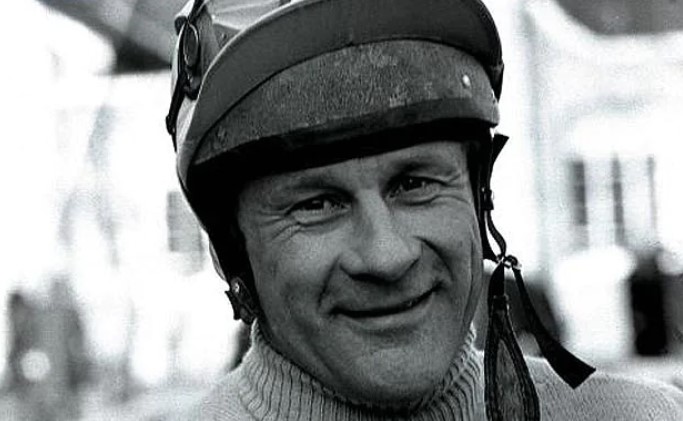
My first ride on Carrickbeg was in the Leopardstown Chase [run on the final day of the Dublin Racing Festival]. With England frozen solid, he had not run for five weeks, and I had been leading the life of Riley―or rather of Soapy Sponge: ten wonderful days hunting in Ireland.
Of course, the fox and the hound play essential parts, and I wish I understood them better. I respect and envy those to whom every cry of a hound or a note of a horn brings an immediately recognizable image―the experts to whom one clever, successful cast means more than five minutes across the best of Leicestershire, Limerick, or Tipperary.
The Kriz Horseshoeing Dynasty: A Tribute
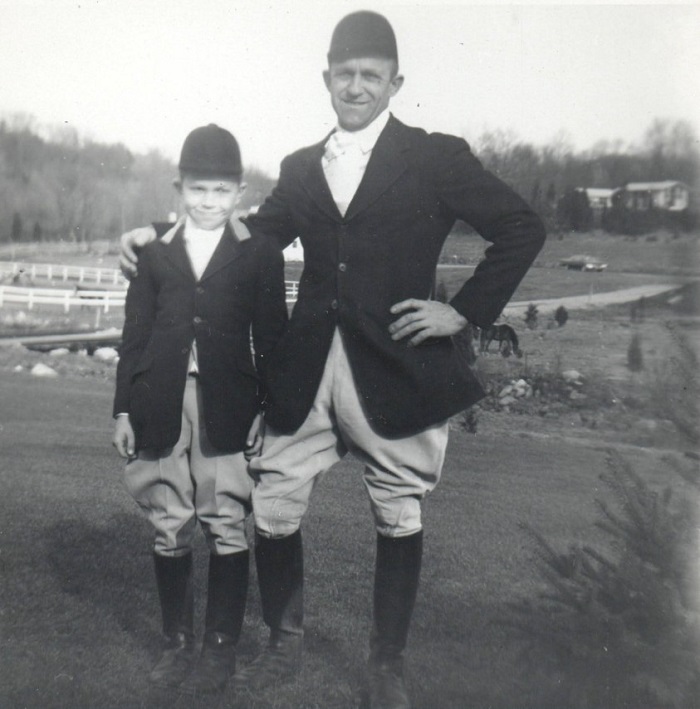
Joe Kriz and son ready for a day with the Middlebury Hunt (CT), circa 1962
Joe Kriz, known by family and friends as “UJ” (Uncle Joe), and his son Joe Kriz, known as “Little Joe,” appear in the photo above in hunting attire for a day with the Middlebury Hunt (CT), circa early- to mid-1960s. In the background is the family farm in Bethany, Connecticut, owned by UJ and his brother Johnny.
UJ and Jonny were seventh-generation farriers in a family that immigrated to the United States from Czechoslovakia. The brothers lived side-by-side on the farm for most of their adult lives, including their final years. Because of their hospitality and generosity, their farm was the local hub for horsey folks in the area. Sundays and many holidays were Open House with food and drink and good cheer in abundance.
PP Hogan (1922-2005)
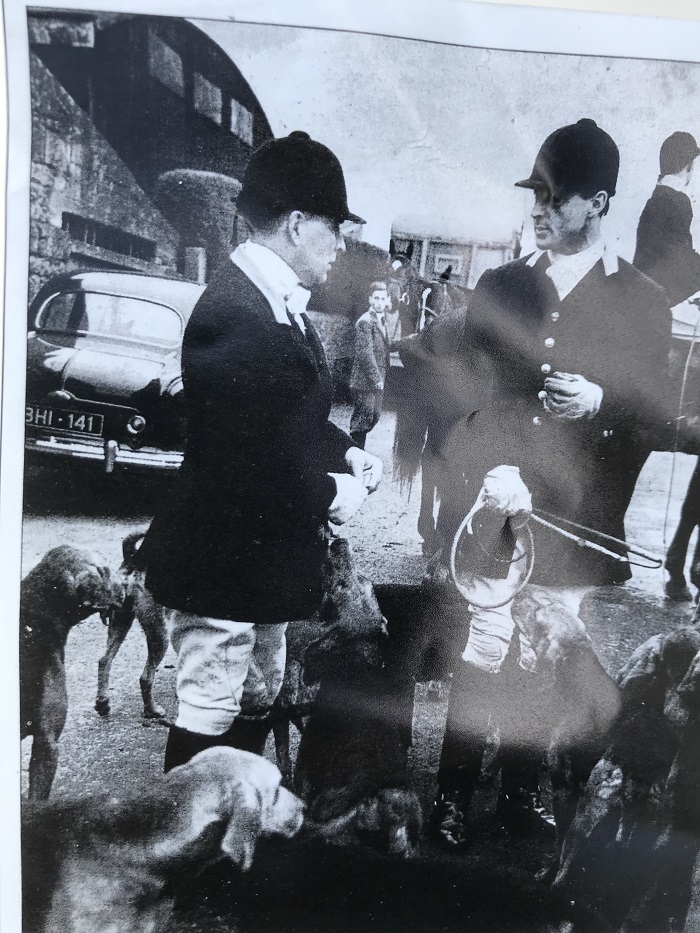
In Ireland, the early 1950s through the 1960s was an era of amateur Master/huntsmen―young men of some means―who took on a pack of hounds more as an avocation than a job,” writes our correspondent, Dickie Power. He was fortunate to have hunted with many of them, such as Thady Ryan in Scarteen, Evan Williams in Tipperary, Lord Daresbury in Limerick, Capt. Harry Freeman-Jackson in Duhallow, Victor McCalmont in Kilkenny, Elsie Morgan in West Waterford, and PP Hogan in Avondhu. This centenary year of Hogan’s birth is an appropriate time to remember him―a legend of Irish foxhunting and point-to-point racing.
(L-R) PP Hogan with his friend Thady Ryan, Master and huntsman, Scarteeen Black and Tans (1956)
PP (Pat) Hogan was born in Ireland into a family of horse dealers, farmers, and huntsmen, with an odd Bishop thrown in. His great uncle was the sporting bishop of Limerick, who always encouraged his clergy to ride to hounds.
The Hogans were a well-to-do farming family, with farms dotted around east Limerick, then as now an area steeped in everything to do with the horse. PP rode almost before he could walk. He rode his first race at the age of twelve. In those days before health and safety reigned supreme, it was only a matter of months before he made the first of countless visits to the winner’s enclosure.
North Galway Foxhounds at Canavans’ Bar, Belclare
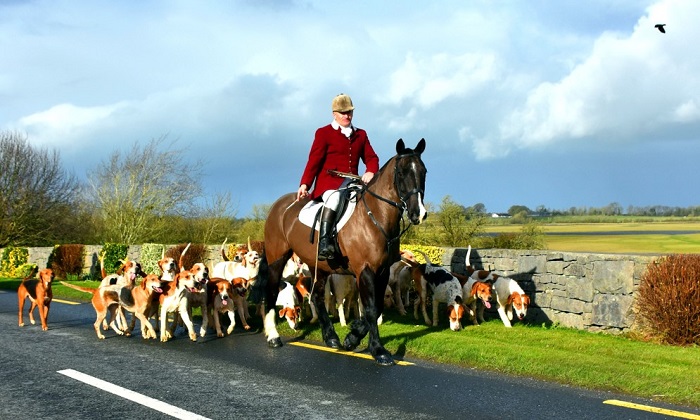
North Galway huntsman David Masterman and hounds / Noel Mullins photo
The history of foxhunting in North Galway goes back to the Galway Blazers, who hunted the county of Galway before lending the northern portion to the Bermingham & North Galway Foxhounds. That hunt was founded by Sir Dermott and Lady Molly Cusack Smith in 1946. Lady Molly was the principal huntsman and Master. In 1985, her active participation in the field having waned, the hunt was renamed the North Galway Foxhounds. Lady Molly, who also had the distinction of being the only lady to hunt the Galway Blazers pack, continued as a Master of the North Galway until her death in 1998. Her daughter Oonagh Mary was also a Joint-Master with her, and her grand-daughter Joanna Hyland follows in her footsteps as a Joint-Master of the North Galway and, currently, the Galway Blazers.
Turned Out
The author sat in the viewing room above the arena waiting for her daughter and the instructor to appear for the weekly lesson. A groom led a horse into the empty arena and released it for a few minutes of turnout. The horse’s antics inspired Jennifer’s poem.
“Life jolts us at certain moments,” she says.
We are never truly free
but tell that to the horse
who on a Saturday morning
has a few minutes to himself
in the pasture
just for the purpose of
thundering
in his moment
to do whatever wild thing
he has conceived
in the early half-light.
Foxhunting in Siberia
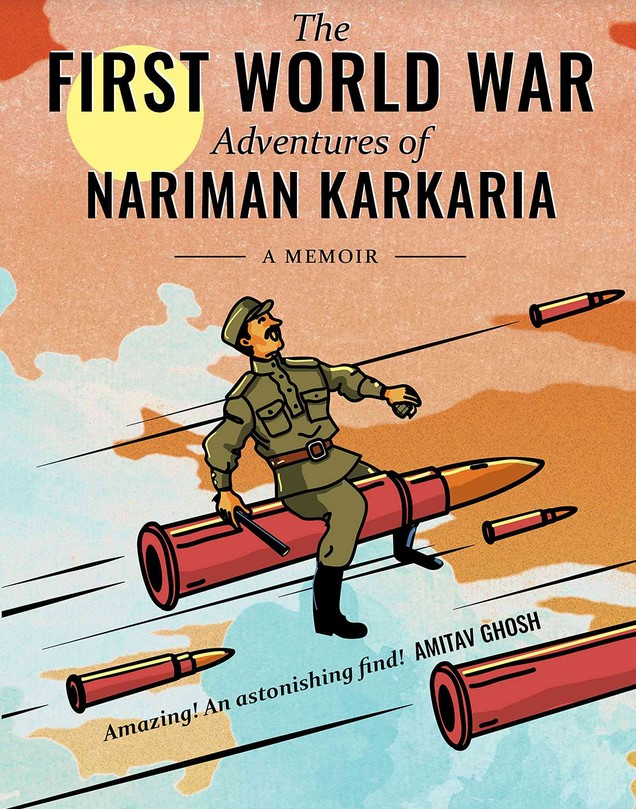
The author, while still a teenager in India, had always wanted to see the world. So with fifty rupees in his pocket, he left home to do just that. After working in Hong Kong and Peking for a few years, he decided, upon the outbreak of World Wat I, to volunteer for the British Army. He struck out for London from China, crossing Manchuria, Siberia (from where we have excerpted a foxhunting piece), Russia, and Scandinavia. Upon arriving in London in 1915, he registered as a private with the 24th Middlesex Regiment.
Over the next three years, Karkaria saw combat action on three major World War I fronts and was wounded only once. After being discharged, he returned home to India and wrote a book about his years of travel and adventure. His memoir was published in 1922. One century later, brilliantly translated into English, it was released in April 2022.
Manchuria
From Manchuria station, a separate line goes towards Mongolia and Inner Manchuria, but we have nothing to do with it. We are going to board the train to Siberia, which leaves at nine in the morning.
Pat Coyle: Forty-Two Seasons, Huntsman, Ward Union Staghounds
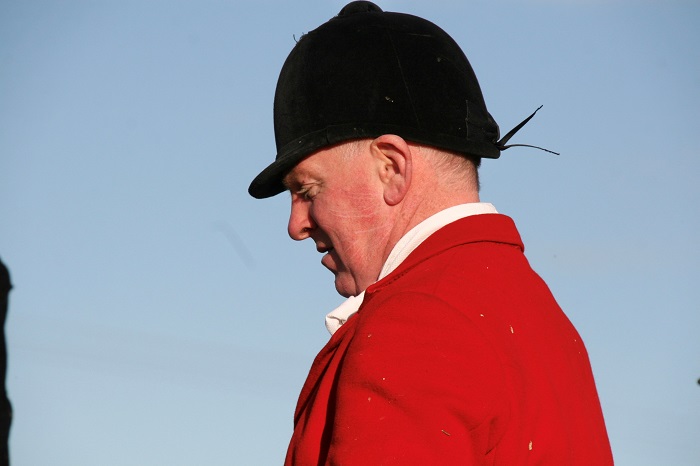
Pat Coyle, huntsman, Ward Union Staghounds (IR) / Catherine Power photo
Pat Coyle, born and reared in Two Mile House, Co Kildare, has been huntsman of the Ward Union Staghounds since 1980. It was as natural for young Pat to follow a hunting career as it was for a bank manager’s son to join the bank. Pat’s maternal uncle, Eamonn Dunphy, was the much-revered huntsman of the Ward Union, but age and falls had taken their toll. By the late 1970s, he was nearing the end of his tether. So when the job of yardman in the kennels fell vacant, seventeen-year-old Pat Coyle applied and was hired. By that point, he was no longer red raw.
Do More Foxhunting
One of ten resolutions by the author to help his next fifty years pass more smoothly than his first Do more fox hunting. I know I keep banging on about this but here’s the deal: if you were suddenly to find a hobby which combined the buzz of class A drugs, the adrenaline rush of […]
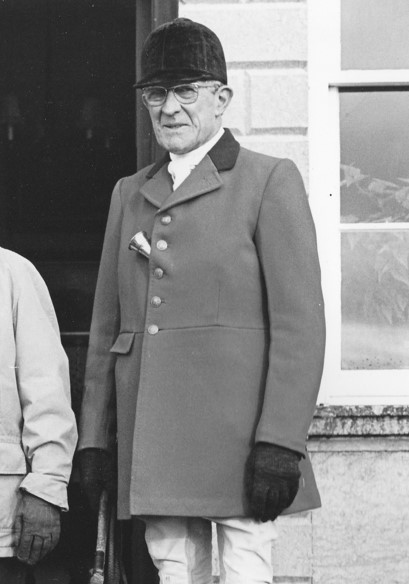
Lord Daresbury, MFH, Co Limerick Foxhounds
“In Ireland, the early 1950s through the 1960s was an era of amateur Master/huntsmen―young men of some means―who took on a pack of hounds more as an avocation than a job,” writes our correspondent, Dickie Power. He was fortunate to have hunted with many of them, such as Thady Ryan in Scarteen, Evan Williams in Tipperary, Lord Daresbury in Limerick, Capt. Harry Freeman-Jackson in Duhallow, Victor McCalmont in Kilkenny, Elsie Morgan in West Waterford, and PP Hogan in Avondhu. This is our second installment in Dickie’s series about these remarkable men and women.
Edward ‘Toby’ Greenall, Lord Daresbury, MFH of the County Limerick foxhounds from 1947 to 1977 / Photo courtesy of Hugh Robards
I started my hunting career with the Co Limerick foxhounds and the late Lord Daresbury, MFH and huntsman. In the eyes of a small boy, he appeared a forbidding figure, tall and straight in his pink coat, elegantly turned out, and always beautifully mounted. It was an era of long hunts where hounds didn’t go home until they had accounted for their fox, regardless of the hour.
With the war over and the committee needing to restaff the hunt, they had wisely settled on Edward Greenall, 2nd Baron Daresbury. He had been Master of the Belvoir Hunt in Leicestershire for thirteen seasons (1934 to 1947). While Edward was his christened name, he was known to one and all as Toby, probably because it is a brand of ale from their family brewery, Greenall’s, which was the source of almost unlimited finance. Lord Daresbury came to Limerick and took up residence in Clonshire, then as now the property of the Co. Limerick Hunt.
The Flying Change
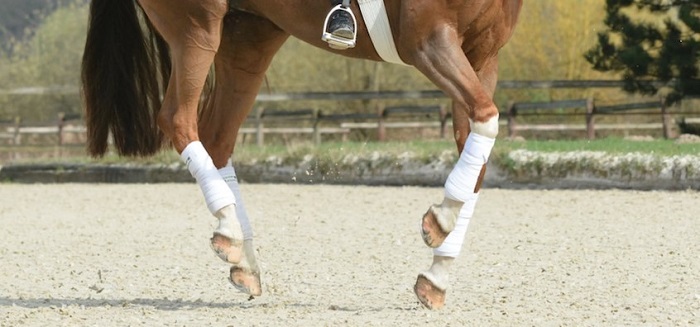
The best description of the flying change―the mechanics and the moment―I have ever read. Riding instructors should give a copy of this poem to their students to study before even explaining how to achieve the maneuver.
The moment of suspension during the flying change in which the horse changes his lead on the fly from one lead to the other, left-to-right or vise versa. The horse can initiate the flying change on its own, generally as it changes direction at the canter, or the trained rider may induce the horse to change its leads at any given moment.
1
The canter has two stride patterns, one on the right
lead and one on the left, each a mirror image of the
other. The leading foreleg is the last to touch the
ground before the moment of suspension in the air.
On cantered curves, the horse tends to lead with the
inside leg. Turning at liberty, he can change leads
without effort during the moment of suspension, but
a rider’s weight makes this more difficult. The aim of
teaching a horse to move beneath you is to remind
him how he moved when he was free.