Another Hunting Prosecution in England
Three members of the College Valley and North Northumberland Foxhounds were charged under the Hunting Act. Two Masters—former champion jockey Ian McKie and Timothy Smalley—along with kennel huntsman Andrew Proe are accused of hunting illegally on February 27, 2014. Charges are based on evidence furnished by the League Against Cruel Sports (LACS) and investigations […]
The Puppy Walker
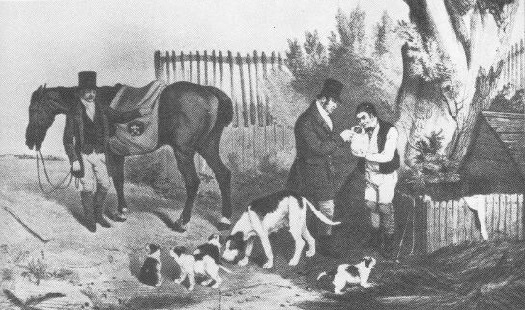
No members of your hunting community are loved by Masters and huntsman as dearly as the puppy walkers. Each year these intrepid folk accept the arrival of a couple of playful pups to their country home in early summer to teach them their names, walking on lead, a semblance of civilized behavior, and a taste of life outside the kennel.
In a couple of months, after the cuddly innocents have grown into marauding, thieving, hunting fanatics, the puppy walkers cry, “Uncle!” and the huntsman returns to reclaim them. The huntsman will be back the following summer, however, and these generous puppy walkers will smilingly welcome yet another couple of wide-eyed puppies to their property.
So, when your Masters praise the puppy walkers at the annual puppy show and bestow a small trophy upon those who walked the winning hounds, recall this poem by Will H. Ogilvie and give the puppy walkers their due!
Will You Walk a Puppy?
‘Will you walk a puppy?’ the Hunt enquired.
Being sportsmen, we did as the Hunt desired.
And early in June there arrived a man
With an innocent bundle of white and tan.
A fat little Foxhound, bred to the game,
With a rollicking eye and a league-long name,
And he played with a cork at the end of a string;
And walking a puppy was ‘just the thing.’
Goodall’s Practice: A Huntsman’s Guide
The highest praise that can be given to a huntsman is for a fool to say, ‘We had a great run and killed our fox; as for the huntsman, he might have been in bed!” –Lord Henry Bentinck
This week we look at another legendary huntsman of the past, William Goodall, huntsman in the nineteenth century to the Duke of Rutland’s Belvoir foxhounds (UK).
Goodall’s methods greatly impressed Lord Henry Bentinck, one of the leading MFHs of the day. Captain Simon Clarke, MFH of the New Forest foxhounds (UK) tells us that Lord Henry hunted three horses a day, kept copious notes, compared the best of England’s huntsmen, and thought William Goodall to be the premier huntsman in England.
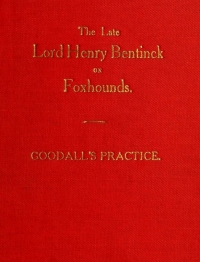
When in 1864 Lord Henry sold his famous hound pack, he wrote a letter to the purchaser, Mr. Henry Chaplin, describing William Goodall’s hunting methods. The information in the letter so impressed Mr. Chaplin that, some years after Lord Henry’s death, he had it published under the title, The Late Lord Henry Bentinck on Foxhounds: Goodall’s Practice.
“Goodall’s Practice,” says Captain Clarke, “is the best treatise on hunting hounds ever written.” The revered Master and hound breeder Isaac “Ikey” Bell, the single individual most responsible for the modern English foxhound, is said to have had Goodall’s Practice painted on the ceiling over his bathtub. If you watch while hunting this season, you may see and recognize some of these same practices being used by your own huntsman. Here’s an extract.
Autumn Morn: Ode to a Huntsman
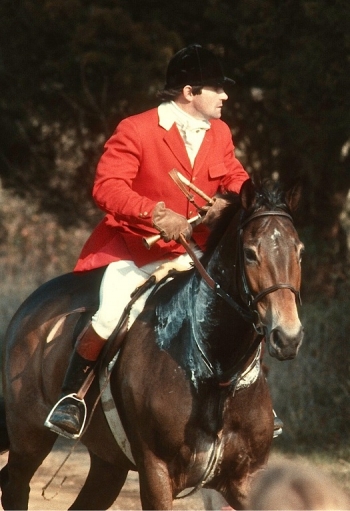
Huntsman Michael Power / Douglas Lees photoAlthough this poem was written in tribute to a huntsman in his prime, it is especially poignant because it seems to prophesy his tragic end.
Fay Bohlayer, a member of the Shakerag Hounds (GA), wrote the poem in 1981 for huntsman Michael Power on the occasion of his move from Shakerag to the Warrenton Hunt (VA). Ten years later, Bolayer’s poem was read at Power’s memorial service after he suffered a fatal accident in the hunting field. It could as well have been written for that sad occasion.
Power was a keen, hardworking, talented huntsman, and he showed exceptional sport at Warrenton. I watched one day as he had someone throw a coat over a barbed wire fence, which he then jumped to stay with hounds.
Once Bohlayer asked him which he thought was more fun: hunting or racing. Power replied, “Whichever I happen to be doing at the time.” She recalls one day behind Power when hounds were running, and to stay with them Power galloped without pause straight toward an iron gate, which he jumped. Bohlayer chose not to follow Power’s line, and after the run she came up and apologized for going around. “Not at all,” he piped in his Irish tenor. “It’s your sport, but it’s my living. I must go.”
Here’s Fay Bohlayer’s tribute to Michael Power:
Looking at the Huntsman
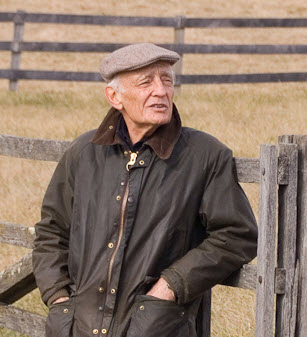
No hunting all summer. The huntsman must be having himself a nice vacation, right? Wrong. There’s an old saying that “foxes are killed in kennel,” meaning that all the good work you see in the field during the hunting season is established during the off-season in the training of the young entry and in the making of the pack. Feed, care, routine, discipline, and exercise through the hot summer months all add up to performance in the field. Then there’s the whelping and care of the puppies who will be entered not this season, but the next. All told, summer is an exceedingly busy time for any huntsman who plans to field a high mettle pack of hounds and show good sport.
As the summer weeks slide by and the start of the informal season approaches, Foxhunting Life will have a look at the huntsman in the next few issues, including some of the legendary huntsmen of the past to see what they had to teach us about the handling of hounds in the field. Chances are, when the season comes alive, you will see your own huntsman employing similar techniques in the handling of his or her hounds in pursuit of the quarry.
Richard Normington to Carry the Horn for Radnor
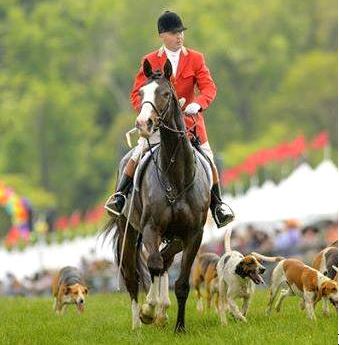
Jim Graham photoThe Radnor Hunt (PA) is pleased to announce the appointment of Richard Normington as professional huntsman. Richard brings an impressive level of expertise and horsemanship that bodes well for Radnor’s ability to show good sport for seasons to come.
Before coming to the U.S., Richard was first whipper-in at the Grafton Hunt (Northamptonshire), the Worcestershire, the Crawley and Horsham (Sussex), and the Cheshire Hunt. He is third generation hunt staff, and a crack horseman, with experience in point-to-points and other cross-country competitions.
Hugh Robards to Hunt Hounds for Middleburg Hunt
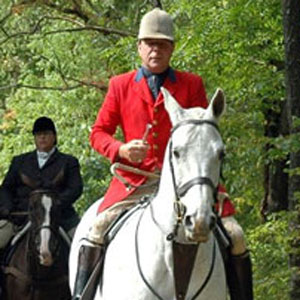
Hugh Robards cubhunting with the Rolling Rock HuntTalk about experience. Hugh Robards has spent fifty-three years in hunt service. He whipped-in to some of the legendary huntsmen in England—Brian Gupwell at the Eridge (later to become huntsman for the Duke of Beaufort), Percy Durno and Captain Ronnie Wallace at the Heythrop, and Charlie Wilkin at the Wynnstay.
Upon Captain Wallace’s recommendation to Lord Daresbury, MFH of the County Limerick Foxhounds, Hugh moved to Ireland to take up his first post as huntsman. There he remained for twenty-seven seasons showing world-class sport to the Irish—none keener—and visiting sportsmen and women from around the globe.
After parting from the Limerick, he came to the U.S. to help rebuild the Rolling Rock Hunt (PA), remaining there as Master and huntsman until 2007. From Rolling Rock he moved to the Saxonburg Hunt (PA) where he served as huntsman until coming to the Middleburg Hunt last year as first whipper-in to huntsman Barry Magner. (Barry is moving to Australia this season, and we hope to catch our readers up with him in another article.)
“Hugh continually reinvents himself because of his love for his work,” said Juli Robards, his wife. “Transcending change is one of his great qualities, and I’m unabashedly one of his biggest fans!”
Those who have hunted behind him are big fans as well. Tony Leahy, who grew up in Ireland, is first vice-president of the MFHA and serves as Master and huntsman of the Fox River Valley Hunt (IL). “Hugh is without question one of the best huntsmen I’ve seen,” said Tony. “I remember hunting behind him at Limerick, and I’ve seen him do amazing things!”
Huntsman John Harrrison Returns to Toronto and North York
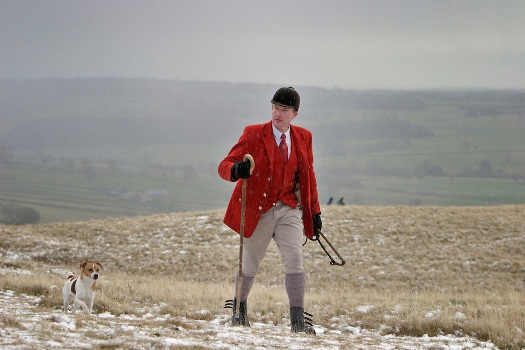
Former Toronto and North York huntsman John Harrison has been hunting the Ullswater Foxhounds in the Cumbrian fells for the past eighteen years.
John Harrison will return next season to the Toronto and North York Hunt (ON) to carry the horn once again—a post he had previously filled from 1991 to 1996. During those years, Harrison bred a number of outstanding hounds and won many championships at the Virginia Foxhound Shows.
Harrison was born and raised in the Cumbrian Lake District of England, where hunting is in the genes and the country is so rough, horses cannot be used. The literature of foxhunting is replete with accounts of grueling days with the famous foot packs of the area, climbing and descending the scree-strewn crags and struggling to snow-filled borrans.
Heather Player to Carry the Horn at Norfolk
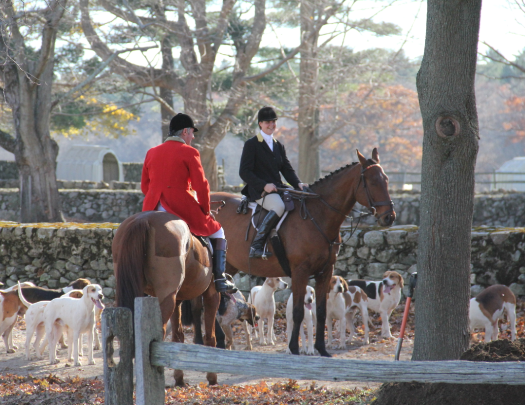
Heather Player carried the horn and Norfolk huntsman John Elliott whipped-in to her at the All New England Hunt hosted by Myopia in 2010. / Mary Marks photo
Myopia Hunt whipper-in Heather Player will move inland from Boston’s North Shore to become huntsman for the nearby Norfolk Hunt next season. Founded in the late 1800s, both hunts are among North America’s most venerable hunting institutions, and both have been hunting the drag since that time.
Heather grew up hunting with Myopia under the tutelage of well-known North Shore trainers Patrick and Barbara Keough.
“When I was around seven years old I started riding with Patrick and Barbara at the Myopia Hunt Club Stables,” said Heather. “Patrick started me hunting at eleven, and from
then on that’s all I wanted to do. I would do the local horse shows but never enjoyed it as much as hunting. I earned my Junior Colors at fourteen. My first paying job was at the Myopia Hunt Club at sixteen, riding and hunting horses.
Chip Anderson Was a Hunting Man
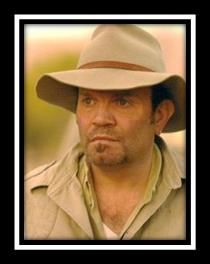
Huntsman Chip Anderson lay terminally ill on the morning of December 7, 2013 as the Santa Ynez Valley Hounds met for their Opening Meet at Master Steve Lyons’ KickOn Ranch in Santa Barbara, California. Before hounds moved off, word came quietly to the Masters that Chip had died. Lyons chose to withhold the sad news until after the meet, when, along with the announcement, he dedicated the day to Chip.
I got to know Chip when I was editor of Covertside magazine. He submitted a hunting story to me for publication, and I was riveted. I published a number of his hunting stories and loved every one; they were full of adventure, suspense, danger, and exotic locales.
Chip was mad-keen to hunt. Whatever the game; wherever the habitat; he devoured the experience. He hunted wild boar with foxhounds in California, with Ariegeois hounds in Italy, with the Aidi dogs of the Berber tribes in Morocco, and with the Dogo Argentino on the South American pampas—sometimes with guns, sometimes with short swords, and sometimes with daggers in close combat. He was, for a time, a professional guide for dove and pigeon shoots in South America, and he wrote a fingernail-biter about shooting a cattle-killing jaguar that he tracked with a pack of dogs, one of which was a foxhound from the Tryon Hunt in North Carolina that he had bred while huntsman there.