
Fout Saddles Three Winners at Warrenton
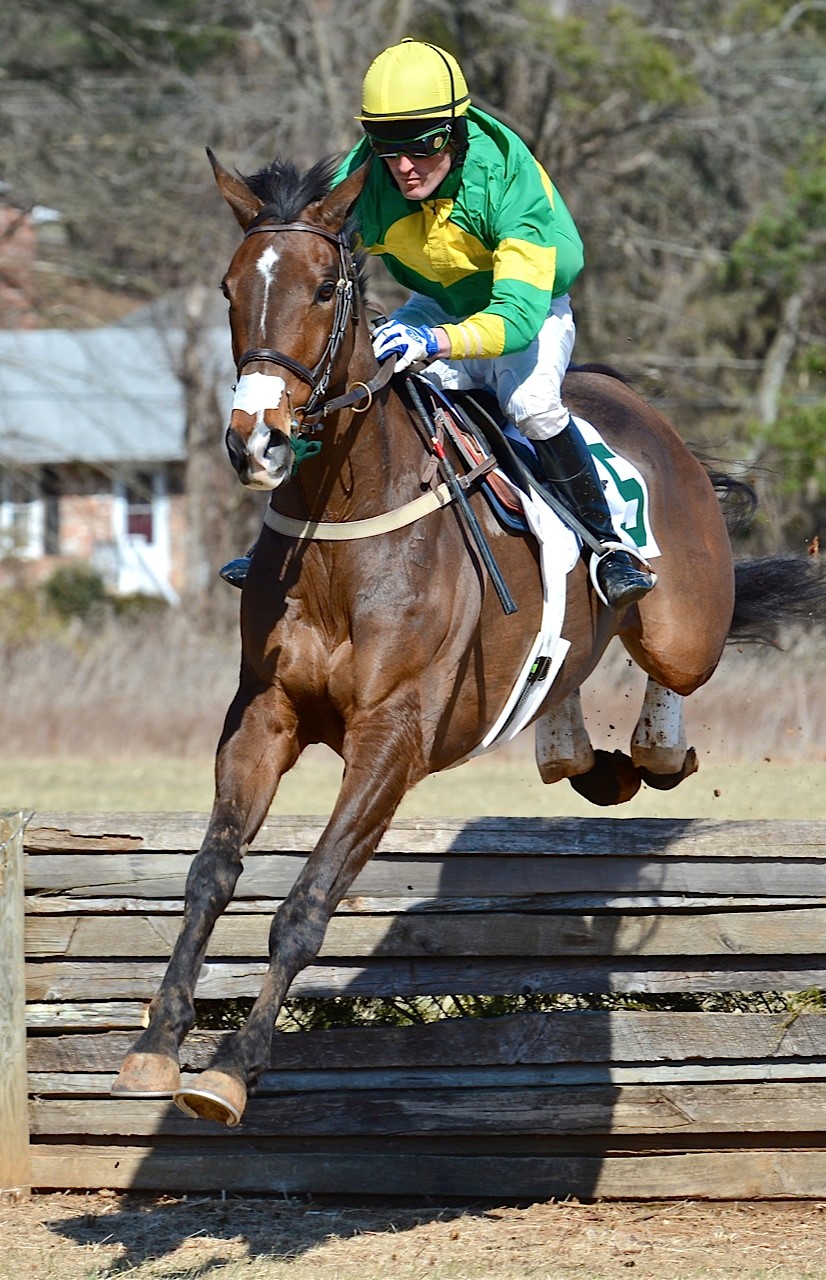
Aero, Kieran Norris up, wins Open Timber at Warrenton. / Doug Lees photoTrainer Doug Fout and jockey Kieran Norris—the latter just out of the Novice Rider ranks this season—accounted for three wins at the Warrenton Hunt Point-to-Point at Airlie Race Course, Warrenton, Virginia on Saturday, March 15, 2014. Warrenton’s was the first hunt race to go off as scheduled this wintry spring season.
Fout’s and Norris’s three winners included Aero in the Open Timber Race. Aero settled into the third position in a three-horse, closely-bunched field. With a half mile to run, Aero drew up to the leader and pulled away in the final quarter mile for the win. Aero is owned by Alfred C. Griffin, Jr.
All Fox Pens Are Not Equal
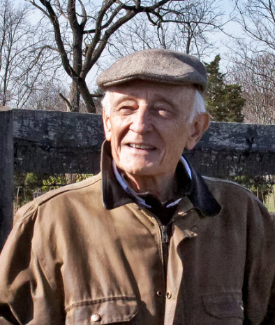
Hunter (and foxhunter) Robin Traywick Williams recently addressed the fox pen issue in an article published in the Richmond Times-Dispatch. The subject has been in the news recently as the Virginia House of Delegates considers phasing out the practice of penning. (See Phase-Out of Fox Pens One Step Closer in VA, as reported in Foxhunting Life last month.)
In her article, Williams claims that for a few of the 37 pens operating in Virginia, activity is relatively light. Only a few hounds are in the pen at any one time; the fox population in relation to the size of the pen mirrors the density found in nature; and the vixens within are able to reproduce. This activity level would conform to the fox pen’s use as a training aid for young foxhounds.
In perhaps 12 of the pens, however, activity is heavier year-round. Competitive foxhound trials are held with many hounds in the pen at the same time and for longer periods; the fox population in one pen is 10 times the population density found in nature; fox mortality rate is high; and with no limit to the season, vixens are not reproducing.
“Dr. Joe”: An Appreciation
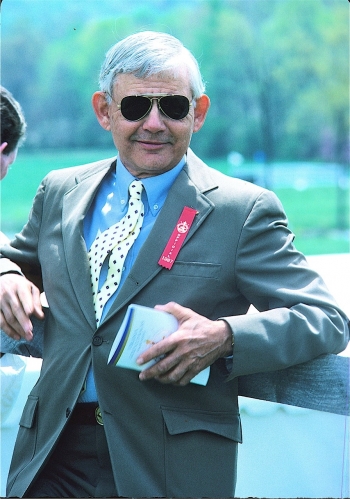
“Dr. Joe” Rogers, MFH / Douglas Lees photoDr. Joseph M. Rogers, who died March 8 at his beloved Hillbrook farm near Hamilton, Virginia, was of a rapidly disappearing breed of Virginians whose financial resources made possible the pursuit of a mission to preserve the countryside before it passed from reality to a lithographic memory.
These Virginians did not keep score with coin. The acquisition of land was not an egotist’s pursuit, and its preservation was not a beauty contest. Land was acquired and cared for because it represented an irreplaceable resource. That it provided the setting for pursuit of agricultural business and field sport was a cherished benefit, not a root rationale. To do otherwise, he believed, was to leave God’s earth to the vagaries of the marketplace.
“Dr. Joe,” as he was known by all, was at heart a man of that earth. He admired a craftsman who could build a proper four-panel fence or shoe a horse as much as he respected a man who made his fortune in business. In many cases, more so. He took pride in being able to train one species of canine to be capable of pursuing another much craftier, quicker, and agile species—a sport called foxhunting, in which the hunted had nearly insurmountable advantage over the hunter. It is a picturesque sport, photographed, illustrated, written about, and otherwise memorialized. But it was also a lot of hard work when you were in charge of bringing the show to the field.
Maryland and Virginia Lawmakers Consider Sunday Deer Hunting
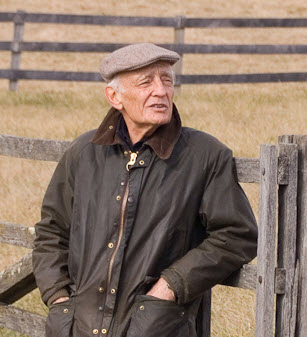
Karen L. Myers photoA bill to allow the hunting of deer and other wildlife on private property and state waters on Sunday has been passed by the Virginia House of Delegates and sent on to the state Senate for their consideration. Proponents of the bill cite the falling numbers of hunting licenses issued in the state, and believe that Sunday hunting will help stem the loss in revenue.
Maryland lawmakers are also considering the hunting of deer on Sunday, but seemingly for a different reason—the culling of the expanding deer herds.
There is resistance in both states to the enabling legislation. Some of the resistance comes from predictable directions—anti-hunting activists, hikers, trail riders, religious leaders—yet some of the resistance comes from a surprising quarter—foxhunters.
Belle Meade, Beagles, and Bunnies
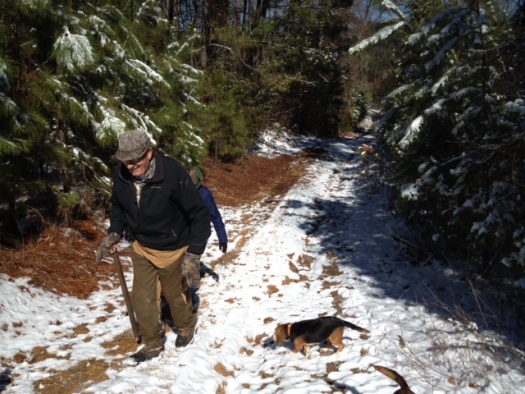
Beagle huntsman Dalton Reeves
“My name is Dalton Reeves, I’m eighty years old and a retired high school football coach and teacher, originally from South Carolina,” our huntsman said, introducing himself to his field of foot-followers—mainly foxhunting guests and members participating in Belle Meade’s “Gone Away with the Wind” Hunt Week—some of whom were out beagling for the first time.
“I’m very happy to hear that I’m following an eighty-year-old huntsman,” I replied. “It means I’m not likely to get left too far behind, the prospect of which has been worrying me.”
“No worries,” Mr. Reeves assured me. “I’ve got two knee replacements and one new hip; I don’t travel too fast any more.”
That said, by the time Mr. Reeves brought the beagles in four hours later, I had been back to the deer camp meet three times to stick my boots into a fire blazing in an outdoor pit to thaw my toes. I also had a bite of breakfast and took a side trip with John McNeil, Sr. to the Rock House—thought to be the oldest house in the state of Georgia—previously a part of the McNeil property, over which the beagles were hunting, but now in the hands of the historical association. In between my retreats to comfort, I enjoyed along with the rest of the field several hours of hound music—some with voices that represented the beagle version of the booming “aroos” of the Penn-Marydel foxhound.
Michael L. Strang, ex-MFH, Rancher, U.S. Congressman
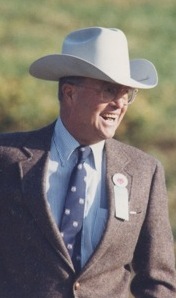
Michael Lathrop Strang, ex-MFH of the Roaring Fork Hounds, died at home on his ranch outside Carbondale, Colorado on January 12, 2014. Born in Bucks County, Pennsylvania on June 17, 1929, his family moved to Colorado in 1932, to a ranch they purchased in the mountains above Golden. Times were tough, so the family made ends meet by bringing eastern kids out west for “summer camp” at the ranch. Mike developed his passion for horses early in life caring for the string of ranch horses that were used to work the cattle and outfit the campers. The family used a team of draft horses to cut and rake the hay they put up and to skid Ponderosa pine logs off the mountain to their sawmill. Mike’s father also raised Thoroughbred racehorses.
Mike and his brother, Bart, were home-schooled by their father until they went to Princeton University. Mike took time off from his studies at Princeton (’56) to serve as a lieutenant in the Army from 1950 to 1953. It was while training future officers at the army’s Officer Candidate School at Fort Benning, Georgia that he met Ben Hardaway and developed his passion for hounds and foxhunting.
Heather Player to Carry the Horn at Norfolk
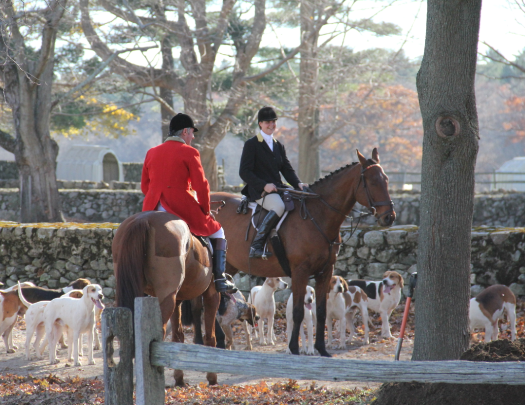
Heather Player carried the horn and Norfolk huntsman John Elliott whipped-in to her at the All New England Hunt hosted by Myopia in 2010. / Mary Marks photo
Myopia Hunt whipper-in Heather Player will move inland from Boston’s North Shore to become huntsman for the nearby Norfolk Hunt next season. Founded in the late 1800s, both hunts are among North America’s most venerable hunting institutions, and both have been hunting the drag since that time.
Heather grew up hunting with Myopia under the tutelage of well-known North Shore trainers Patrick and Barbara Keough.
“When I was around seven years old I started riding with Patrick and Barbara at the Myopia Hunt Club Stables,” said Heather. “Patrick started me hunting at eleven, and from
then on that’s all I wanted to do. I would do the local horse shows but never enjoyed it as much as hunting. I earned my Junior Colors at fourteen. My first paying job was at the Myopia Hunt Club at sixteen, riding and hunting horses.
How We Match the Foxhunter to the Hireling
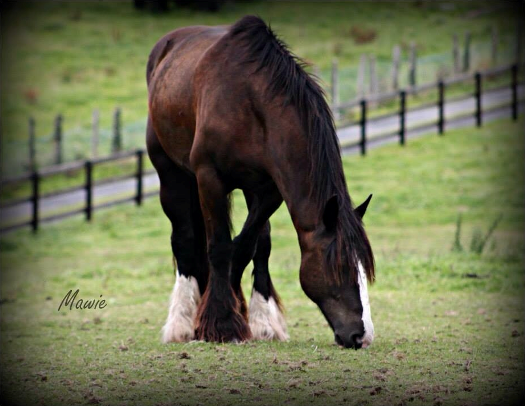
Midnight, a 16-hh black Irish cob at Coopers Hill is everyone’s favorite, young and old.
How do I match riders I have never met with horses that will take care of them out hunting? The answer to that question starts with how the animal was gentled into riding and jumping to begin with. That’s the key.
It takes a number of years to get a horse hunting right. Anyone who hunts knows that you can get pullers, stoppers, and downright cranky horses. And then there are the ones that kick, bite, and buck. An odd buck of joy is fine, but the buck that is directed toward the rider’s dismount is coming from a horse that wasn’t respected and won’t give respect.
Down through the years the locals have brought very difficult animals to our yard for breaking. But we like to turn that word—breaking—on its head. We prefer to say we gentle and respect the animal and allow them the time to come to the conclusion that it is okay to accept the bit, okay to be brushed, okay to have their feet lifted up, to be saddled and eventually mounted. Some animals accept sooner than others simply because some trust sooner than others. The manner in which this is done determines the product—the horse—you are going to mount for your day’s hunting.
Leith Griswold, Matriarch of Maryland Hunting Family
Leith Symington Griswold, matriarch of a Maryland riding and foxhunting family, died at the age of ninety-seven, on Tuesday, October 29, 2013 at her home in Monkton. Her favorite sport was foxhunting, and she hunted not only in Maryland, but in England and Ireland as well. It was in Ireland at Molly Cusack-Smith’s Bermingham House […]
Irish Foxhunter Sets Side Saddle High Jump Records
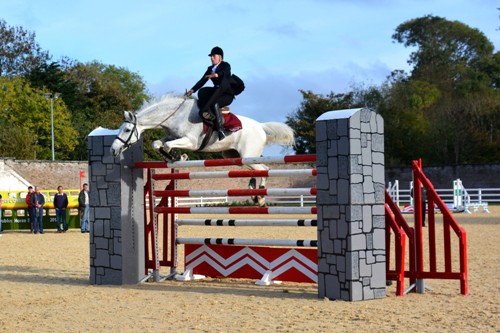
Susan Oakes establishes new side saddle record for jumping triple bar at six feet, four-and-a-half inches from ground level. / Noel Mullins photo
Susan Oakes—Joint-Master of the Grallagh Harriers and the organizer of last year’s international ladies’ side saddle hunt with the Meath Foxhounds—set two side saddle high jump world records at the Irish National Sports Center on October 24, 2013.
Oakes jumped six feet, eight inches over a puissance wall, breaking her own record of five feet which she established just this summer at the RDS Dublin Horse Show. Then she established a world record of six feet, four-and-a-half inches for jumping a triple bar from ground level.
A world record of six feet, six inches for the triple bar set in Australia in 1915 still stands unbroken, but that record was established by jumping off a ramp. Foxhunting Life reported on Oakes’s attempt to break that record last year and also reported on the international ladies’ side saddle hunt that Oakes organized at the Meath last year. Fifty ladies from nine countries including the U.S. participated in that elegant affair.