Outrageous Fortune
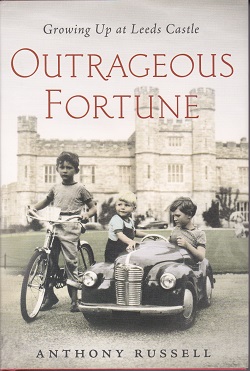
Outrageous Fortune: Growing Up at Leeds Castle, Anthony Russell, St. Martin’s Press, New York, 2013, 306 pages, Illustrated, $26.99Imagine having two grandmothers who both live in their own castles. Anthony Russell, a writer, musician, and composer in Los Angeles, comes from a family that served England’s kings and queens for five hundred years, which left them very, very wealthy…wealthy enough for his grandmums to purchase castles in England and Ireland.
Russell tells the story of a childhood at the highest levels of British aristocracy in Outrageous Fortune: Growing Up at Leeds Castle. His father, Lord Ampthill, was Prince Philip’s roommate at boarding school. Lord Ampthill also was known as “the Russell baby,” whose paternity and conception were at the heart of a sensational divorce case in the 1920s and a court challenge to his right to the title.
Lord Amptill’s mother (Lady Ampthill, she of the castle in Ireland) swore that he was the son of her husband, despite the fact that their marriage was never fully consummated. (It all had something to do with a bath sponge.)
Lady Ampthill (the author’s grandmother) was a well-recognized figure hunting with the County Galway Foxhounds (the Blazers). She rode side saddle well into her later years, until suffering a fatal accident in the hunting field in 1976.
Why We Cover the Hunt Races

My answer to the question is threefold: first, the very notion of the point-to-point race originated with foxhunters; second, many of our great field hunters have come from the ranks of the timber horses, and conversely many of the best steeplechase horses have their start in the hunting field; and third, most of the steeplechase jockeys are foxhunters as well.
As Catherine Austen reminds us in Thoroughbred Owner & Breeder, “Hunt racing has its roots firmly lodged in the hunting field. Point-to-pointing started when two hunting men, Edmund Blake and Cornelius O’Callaghan, challenged each other to a race in 1752 for four-and-a-half miles across country from Buttevant Church to Donraile Church in County Cork. They jumped everything in their path, and by keeping the steeple of Donraile Church in sight (steeple-chasing), the two men kept to the planned route along the banks of the Awbeg River. The same line can still be taken while hunting with the Duhallow Foxhounds now.
“Amateur jump racing evolved from there….”
Why We Cover the Hunt Races
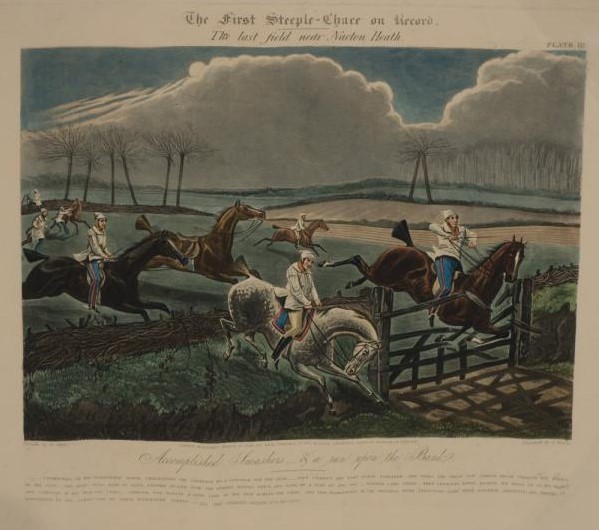
The first point-to-point race of the 2022 season is scheduled in Virginia for March 5 (rain date, March 12). The eighth and final hunt point-to-point of the season will be run on May 1. Foxhunting Life reports on most of these jump races as the season progresses. Some readers across North America might wonder why.
My answer is threefold: first, the very notion of a steeplechase race originated with foxhunters; second, many of our great field hunters have come from the ranks of the timber horses and conversely, many of the best steeplechase horses have their start in the hunting field; and third, most of the steeplechase jockeys are foxhunters as well.
Why We Cover the Hunt Races
My answer to the question is threefold: first, the very notion of the point-to-point race originated with foxhunters; second, many of our great field hunters have come from the ranks of the timber horses, and conversely many of the best steeplechase horses have their start in the hunting field; and third, most of the steeplechase jockeys are foxhunters as well.
As Catherine Austen reminds us in Thoroughbred Owner & Breeder, “Hunt racing has its roots firmly lodged in the hunting field. Point-to-pointing started when two hunting men, Edmund Blake and Cornelius O’Callaghan, challenged each other to a race in 1752 for four-and-a-half miles across country from Buttevant Church to Donraile Church in County Cork. They jumped everything in their path, and by keeping the steeple of Donraile Church in sight (steeple-chasing), the two men kept to the planned route along the banks of the Awbeg River. The same line can still be taken while hunting with the Duhallow Foxhounds now.
“Amateur jump racing evolved from there….”
Timber Horses Romp at Piedmont
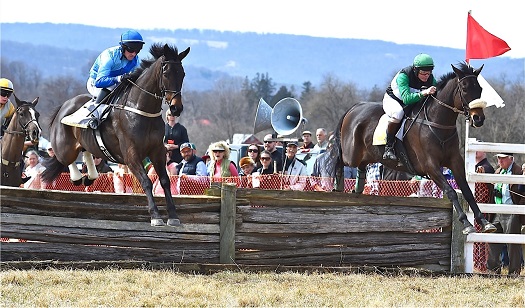
Running for the Rokeby Bowl are (l-r) winner Dakota Slew (Robert Walsh up) and Zulla Road (Woods Winants up). / Douglas Lees photo
Virginia point-to-point fans were treated to a full weekend of racing on March 22 and 23, 2014. The Piedmont Fox Hounds Point-to-Point went off as scheduled on Saturday and the Blue Ridge Hunt races, postponed from their original date, were held on Sunday. In a spirit of cooperation, races over fences were split so that Piedmont ran timber races and Blue Ridge ran just hurdle (brush) races, thus assuring a good field of entries for each specialty.
In the Open Timber Race, Zulla Road (Woods Winants up) set the pace for the first mile, but Dakota Slew ridden by Robert Walsh took control from there to the wire. Skunked ran a strong second, but Dakota Slew in prevailing notched his second consecutive Rokeby Bowl win. Dakota Slew is owned by Magalen Bryant and trained by Richard Valentine. Ms. Bryant shared last season’s Virginia Leading Owner title with Pennsylvanian Irvin Naylor. Although Winants pulled up Zulla Road in that race, the fourth on the card, he had earlier shown his 2013 Virginia Leading Rider form by winning the first two races of the day, Maiden Timber and Amateur Highweight Timber.
British PM Abandons Plan to Ease Hunting Ban
Speculation about any near-term relaxation of the hunting ban in England has been laid to rest. The BBC reports that British Prime Minister David Cameron informed the House of Commons that there will be no change to the Hunting Act as passed in 2004. Expressing regret, Cameron said that coalition ministers had failed to reach […]
William Almy III Dead at Eighty-five
William Almy III died on February 28, 2014 at age eighty-five. A native of Massachusetts, he loved riding and foxhunting in his younger days with the old Quansett Hunt of which hi father, William Almy, Jr. was Master. (His father also served, from 1960 to 1970, as the tenth president of the Masters of Foxhounds […]
Bennett’s Blue Ridge Blues
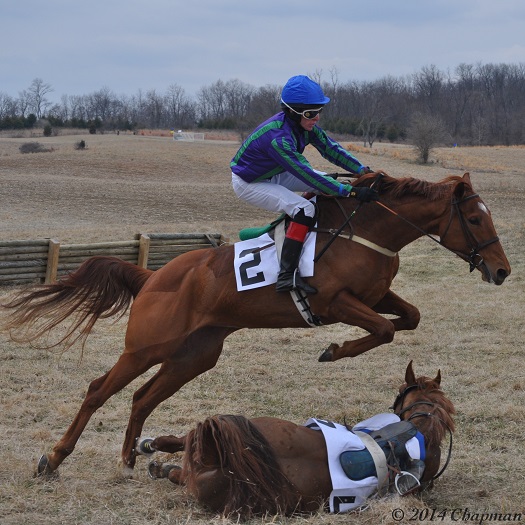
David Chapman photo
Novice rider Tom Bennett, riding for trainer Jimmy Day, fell at the same fence in the first two races at the Blue Ridge Hunt Point-to-Point on Sunday, March 23, 2014, but came back strongly to notch two wins on the day’s card. This spectacular photograph was taken by David Chapman. See the entire sequence by clicking on the photo and starting the slide show. Prints of these photographs are available from the photographer. Contact FHL to be connected.
Bennett’s blues started in the first race, the Maiden Hurdle, when his horse, Fall Colors (number 5) owned by Bruce Smart, fell. Bedizen (number 2) jumped Fall Colors cleanly (photo), but unseated his rider, Gerard Galligan, the two going their separate ways as well. (Click on the photo to see the entire sequence.)
Fout Saddles Three Winners at Warrenton
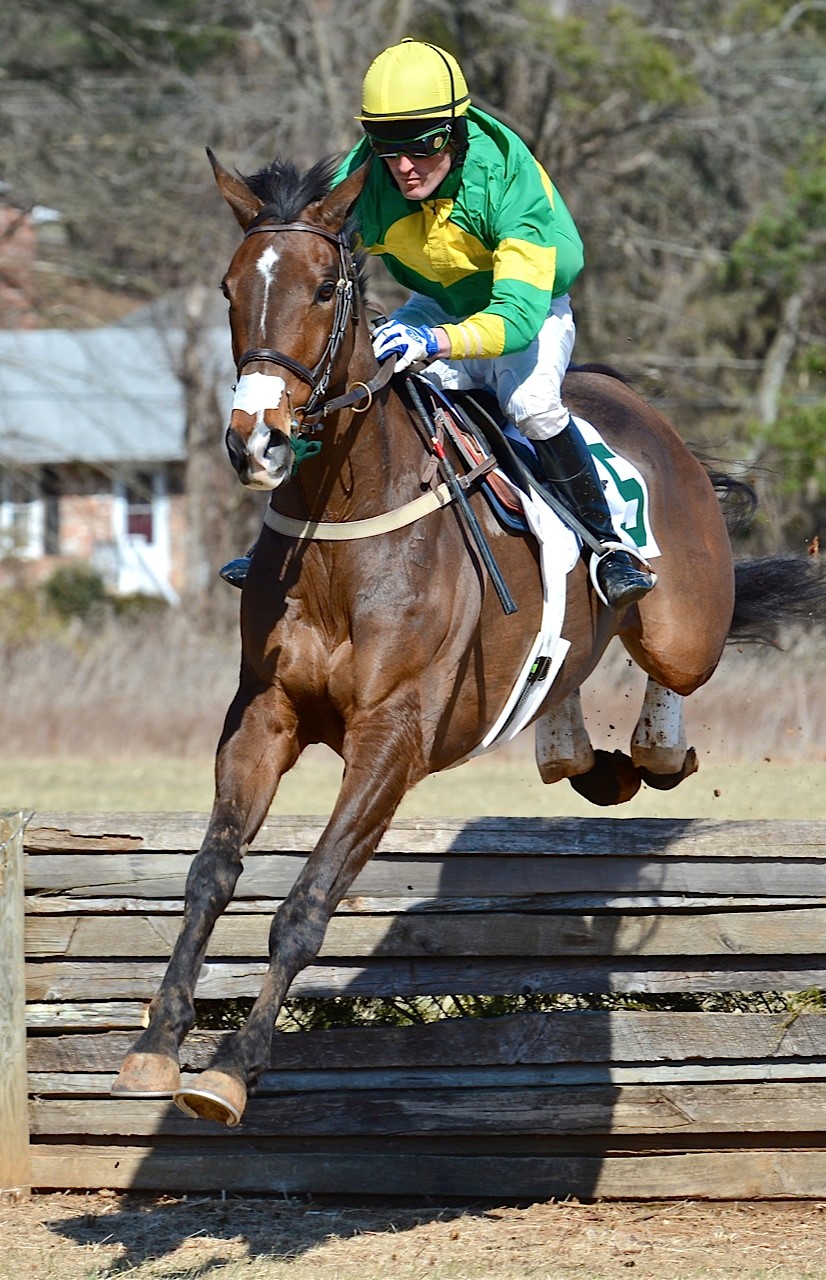
Aero, Kieran Norris up, wins Open Timber at Warrenton. / Doug Lees photoTrainer Doug Fout and jockey Kieran Norris—the latter just out of the Novice Rider ranks this season—accounted for three wins at the Warrenton Hunt Point-to-Point at Airlie Race Course, Warrenton, Virginia on Saturday, March 15, 2014. Warrenton’s was the first hunt race to go off as scheduled this wintry spring season.
Fout’s and Norris’s three winners included Aero in the Open Timber Race. Aero settled into the third position in a three-horse, closely-bunched field. With a half mile to run, Aero drew up to the leader and pulled away in the final quarter mile for the win. Aero is owned by Alfred C. Griffin, Jr.
All Fox Pens Are Not Equal
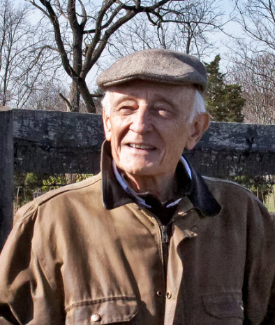
Hunter (and foxhunter) Robin Traywick Williams recently addressed the fox pen issue in an article published in the Richmond Times-Dispatch. The subject has been in the news recently as the Virginia House of Delegates considers phasing out the practice of penning. (See Phase-Out of Fox Pens One Step Closer in VA, as reported in Foxhunting Life last month.)
In her article, Williams claims that for a few of the 37 pens operating in Virginia, activity is relatively light. Only a few hounds are in the pen at any one time; the fox population in relation to the size of the pen mirrors the density found in nature; and the vixens within are able to reproduce. This activity level would conform to the fox pen’s use as a training aid for young foxhounds.
In perhaps 12 of the pens, however, activity is heavier year-round. Competitive foxhound trials are held with many hounds in the pen at the same time and for longer periods; the fox population in one pen is 10 times the population density found in nature; fox mortality rate is high; and with no limit to the season, vixens are not reproducing.