Elusive Live Oak Foxhound Is Finally Captured
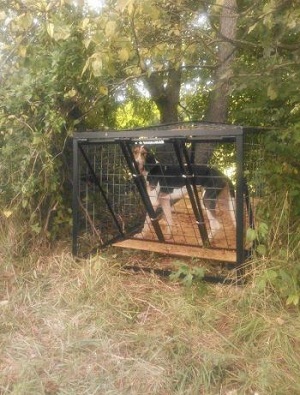
Charter, secured at last / Nancy Kleck photoCharter, the elusive foxhound that has been on the lam for nearly four months, has finally been secured. A happy ending to a series of News items we ran after Charter and Perfect—male and female unentered hounds belonging to the Live Oak Hounds (FL)—became frightened and escaped from the Virginia Foxhound Show at Morven Park just before the Memorial Day weekend.
Perfect, who never left the Morven Park grounds, was caught a couple of weeks later in a box dog trap and returned to Live Oak, but Charter has been on an odyssey that took him from Leesburg south across two major east-west Virginia highways, Routes 7 and 50. He traveled on his own as far as Middleburg—perhaps twenty miles as the crow flies—where he settled in near Zulla Road and cadged a living wherever he could. He would not allow anyone to get near enough to capture him, however.
Cubhunting at Old Dominion
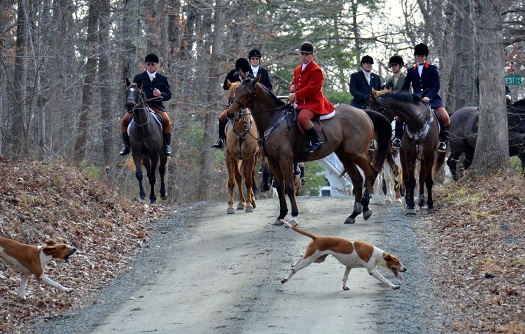
Cubhunting is in full swing and it’s time to be publishing hunt reports once again. Here’s one from an honorary whipper-in to the Old Dominion Hounds (VA) about a good hunt on a clever fox. How are your hounds doing? Click to send us your story and photos. John Stuart (left), huntsman Ross Salter (center), […]
Melvin Poe Dies at Home at Age Ninety-Four
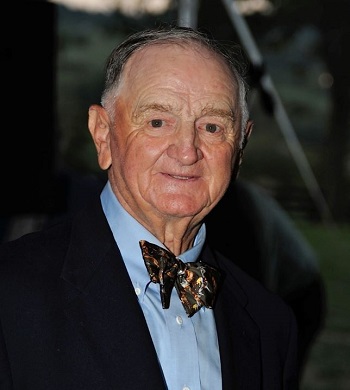
Melvin Poe at his ninetieth birthday celebration / Douglas Lees photoThe world of American foxhunting lost one of its best-loved and most highly respected personalities with the passing of huntsman Melvin Poe, age ninety-four, on Saturday September 13, 2014. That’s the sad news. The good news is that Melvin was able to ride his horse and hunt his hounds to the very last year of his life.
In foxhunting circles he was referred to simply as Melvin. Everyone knew who you were talking about. He’s been a fixture in North American foxhunting for more than sixty years and a celebrated legend for most of that time. He’s immortalized in a dramatic oil painting by Wally Nall; he made the cover of UK’s Horse and Hound in 1991; he starred in Tom Davenport’s 1979 foxhunting video documentary, Thoughts on Foxhunting, narrated by Alexander Mackay-Smith; he was the subject for Peter Winant’s wonderful book, Foxhunting with Melvin Poe, The Derrydale Press, 2002; and in 2011 Melvin was inducted, along with his brother Albert, into the Huntsmen’s Room at the Museum of Hounds and Hunting in Leesburg, Virginia.
Melvin grew up in the Virginia countryside. He was the boy to whom his friends turned to identify trees, birds, and animal tracks. His father, uncles, and brothers were all enthusiastic hound breeders and hunters. Melvin and his contemporaries represent a vanishing breed of countryman who knew the woodlands intimately and all that grew and thrived therein. And baseball! Melvin and his brothers loved baseball and participated in organized league play into their adult years.
Melvin Poe Dies at Home at Age Ninety-Four
Remembrance
Melvin Poe Dies at Home at Age Ninety-Four
Norman Fine
Melvin Poe at his ninetieth birthday celebration / Douglas Lees photoThe world of American foxhunting lost one of its best-loved and most highly respected personalities with the passing of huntsman Melvin Poe, age ninety-four, on Saturday September 13, 2014. That’s the sad news. The good news is that Melvin was able to ride his horse and hunt his hounds to the very last year of his life.
In foxhunting circles he was referred to simply as Melvin. Everyone knew who you were talking about. He’s been a fixture in North American foxhunting for more than sixty years and a celebrated legend for most of that time. He’s immortalized in a dramatic oil painting by Wally Nall; he made the cover of UK’s Horse and Hound in 1991; he starred in Tom Davenport’s 1979 foxhunting video documentary, Thoughts on Foxhunting, narrated by Alexander Mackay-Smith; he was the subject for Peter Winant’s wonderful book, Foxhunting with Melvin Poe, The Derrydale Press, 2002; and in 2011 Melvin was inducted, along with his brother Albert, into the Huntsmen’s Room at the Museum of Hounds and Hunting in Leesburg, Virginia.
Melvin grew up in the Virginia countryside. He was the boy to whom his friends turned to identify trees, birds, and animal tracks. His father, uncles, and brothers were all enthusiastic hound breeders and hunters. Melvin and his contemporaries represent a vanishing breed of countryman who knew the woodlands intimately and all that grew and thrived therein. And baseball! Melvin and his brothers loved baseball and participated in organized league play into their adult years.
The Red Rock Hounds and Their Country
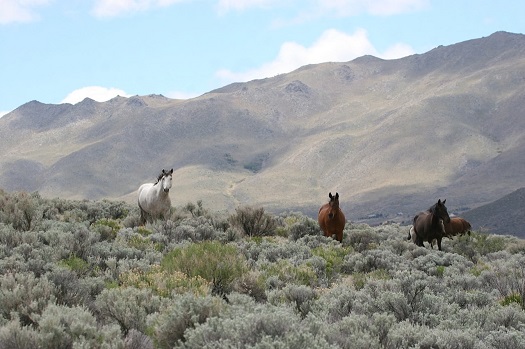
Wild horses in Nevada’s high desert / Nancy Stevens-Brown photo
I want to tell you about Lynn Lloyd’s Red Rock Hounds and the country they hunt as a short introduction to our feature story, “How Old Hounds Pay Their Keep at Red Rock.” In that story you’ll read how Lynn ingeniously transformed her elderly hounds from a burden to an asset! The old hounds pay their way by increasing membership and caps, and they throw off side benefits by helping to train young hounds and staff. And I have to believe that many hunts could do something similar to their own benefit.
The Red Rock foxhounds hunt the coyote over the high desert of Nevada, near Reno, where cowboys in dusty western hats, vests, and chaps lope after hounds in their Western saddles stirrup-to-stirrup with properly attired foxhunters posting to the trot in their English saddles.
How Old Hounds Pay Their Keep at Red Rock
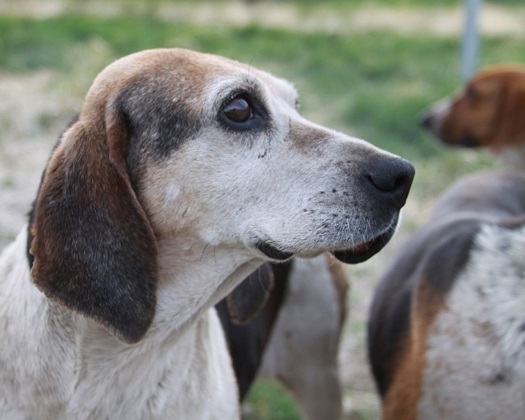
What to do with the old hounds? / Nancy Stevens-Brown photo
Most hunts are beset by similar problems: what to do with old hounds, how to attract more members, how to pay the bills, how to train staff, how to train young hounds. Lynn Lloyd, MFH and huntsman of the Red Rock Hounds (NV), found that the solution to one problem provided the key to solving several others.
What to Do with Old Hounds
The average hunting life of a hound is perhaps six or seven years. That means it is retired from the pack at age seven or eight. Beyond that age, most hounds start falling behind the pack, lacking the foot and endurance to maintain the pace over a full hunting day.
But with several years of life still remaining for the retired hounds, most hunts are hard-put to expend their limited financial resources to keep and maintain them. And here’s where Lynn Lloyd found a way to turn a burden into an asset.
How Old Hounds Pay Their Keep at Red Rock
What to do with the old hounds? / Nancy Stevens-Brown photo
Most hunts are beset by similar problems: what to do with old hounds, how to attract more members, how to pay the bills, how to train staff, how to train young hounds. Lynn Lloyd, MFH and huntsman of the Red Rock Hounds (NV), found that the solution to one problem provided the key to solving several others.
What to Do with Old Hounds
The average hunting life of a hound is perhaps six or seven years. That means it is retired from the pack at age seven or eight. Beyond that age, most hounds start falling behind the pack, lacking the foot and endurance to maintain the pace over a full hunting day.
But with several years of life still remaining for the retired hounds, most hunts are hard-put to expend their limited financial resources to keep and maintain them. And here’s where Lynn Lloyd found a way to turn a burden into an asset.
The Stable Yard Is Silent
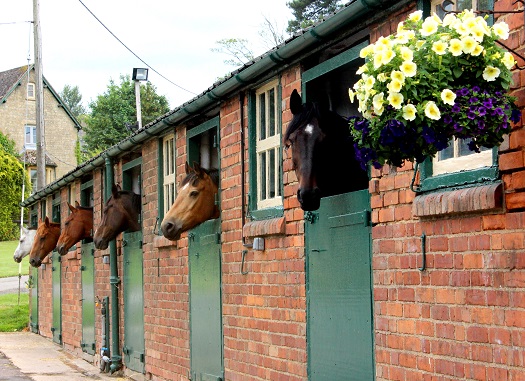
The hundredth anniversary this summer of the First World War has reminded all of us of that terrible conflict. In England, James Barclay, ex-MFH, tossed and turned through the early morning hours one night this month. Thoughts of the war, the carnage that took its toll on his family members and many horses, and what those years meant to a way of life that was so much a part of the Barclay family ran through his head. He got out of bed, sat down, and wrote this poem. At 6:30 am he finished writing. Twenty minutes later the South Wold Foxhounds came up his drive on summer exercise, making his world right once again.
The stable yard is silent, no equine friends, no ears twitching over the doors.
Where have they gone? They have gone to Europe to fight a war.
Will they be back to graze the summer pastures green?
Will they be back to see the autumn mist and hear hounds running?
Will they be back to enjoy the fifty minutes across the grass?
They and their Masters have gone to defend our freedoms.
In mud and wire they toil, no end in sight,
But the thought of hounds running and their cry deep in their veins,
Make our horse and human friends dream, dream of
A cold winter’s night, hacking homewards with the moon up high.
The Stable Yard Is Silent
The anniversary of the start of the First World War will be upon us July 28th. Four years ago, in England, on the hundredth anniversary of that terrible conflict, James Barcaly, ex-MFH, tossed and turned through the early morning hours. Thoughts of the war, the carnage that took its toll on James’s family members, eighteen million people, eight million horses, and what those years meant to a way of life that was so much a part of the Barclay family ran through his head. He got out of bed, sat down, and wrote this poem. At 6:30 am he finished writing. Twenty minutes later the South Wold Foxhounds came up his drive on summer exercise, making his world right once again.
The stable yard is silent, no equine friends, no ears twitching over the doors.
Where have they gone? They have gone to Europe to fight a war.
Will they be back to graze the summer pastures green?
Will they be back to see the autumn mist and hear hounds running?
Will they be back to enjoy the fifty minutes across the grass?
They and their Masters have gone to defend our freedoms.
In mud and wire they toil, no end in sight,
But the thought of hounds running and their cry deep in their veins,
Make our horse and human friends dream, dream of
A cold winter’s night, hacking homewards with the moon up high.
The Foxes of England
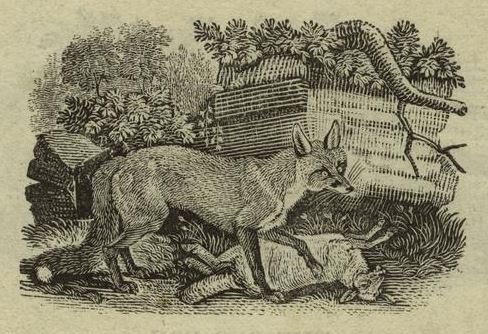
Greyhound Fox / Courtesy New York Public LibraryFoxhunting Life reader Janet Clarke asks, “I was told a long time ago that there are different types of foxes in the UK. Is this true?”
We consulted Nigel Peel, MFH and huntsman of the North Cotswold Foxhounds, and Martin Scott, ex-MFH of the Vale of the White Horse. Both men are highly regarded foxhound breeders and judges of foxhounds in England and serve as members of FHL’s Panel of Experts. Their answers were not only surprising, but it appears that the story may be yet unfolding.