Huntsman John Harrrison Returns to Toronto and North York
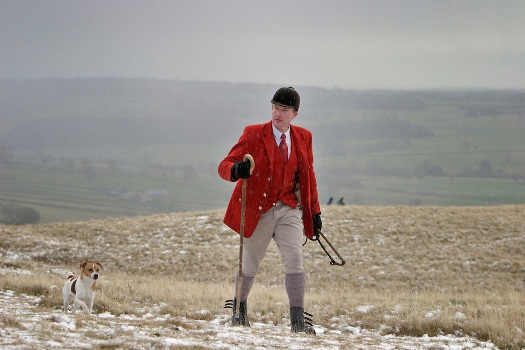
Former Toronto and North York huntsman John Harrison has been hunting the Ullswater Foxhounds in the Cumbrian fells for the past eighteen years.
John Harrison will return next season to the Toronto and North York Hunt (ON) to carry the horn once again—a post he had previously filled from 1991 to 1996. During those years, Harrison bred a number of outstanding hounds and won many championships at the Virginia Foxhound Shows.
Harrison was born and raised in the Cumbrian Lake District of England, where hunting is in the genes and the country is so rough, horses cannot be used. The literature of foxhunting is replete with accounts of grueling days with the famous foot packs of the area, climbing and descending the scree-strewn crags and struggling to snow-filled borrans.
Congress Bans Horse Slaughter…Again
The Congress passed, and the President signed the new budget, effectively banning horse slaughter once again by cutting funding for USDA inspections at horse slaughter facilities. Congress did this very same thing in 2006, an action which effectively closed all horse processing plants in the country. Much has happened between then and now. In 2011, […]
Bobby Joe Pillion Loved to Hunt
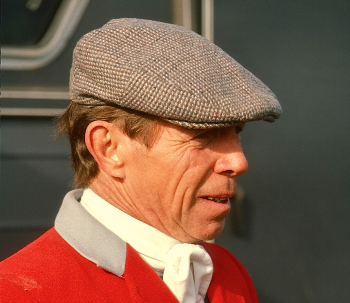
Bobby Joe Pillion, 1989, after judging the first Piedmont-Midland Foxhound Match / Douglas Lees photoRobert Joseph “Bobby Joe” Pillion died at home in Millwood, Virginia on January 12, 2014. He was seventy-nine.
“I just love to hunt,” he often said.
That’s how he concluded just about every foxhunting conversation we had. I can see him saying it, with a shake of his head and a thoughtful smile.
Bobby Joe was one of the most beautiful horsemen I have ever seen crossing the country. He whipped-in to the Blue Ridge Hunt for more than thirty years, riding nimble and athletic Thoroughbreds of such a uniform type that people trying to describe any new horse of that sort would simply say, “That’s a Bobby Joe horse.” In fact, you never knew which horse he was riding because they all went the same for him.
Bobby Joe was chosen to be a judge for both the 1989 and the 1991 highly publicized foxhound matches between the Piedmont and the Midland packs, both held in the Piedmont country. The matches were fashioned as a modern replay of the Great English-American Foxhound Match of 1905 and held in the same country. Sporting journalists came from England as well as the U.S. to cover the matches.
Bobby Joe Pillion Loved to Hunt
Bobby Joe Pillion, 1989, after judging the first Piedmont-Midland Foxhound Match / Douglas Lees photoRobert Joseph “Bobby Joe” Pillion died at home in Millwood, Virginia on January 12, 2014. He was seventy-nine.
“I just love to hunt,” he often said.
That’s how he concluded just about every foxhunting conversation we had. I can see him saying it, with a shake of his head and a thoughtful smile.
Bobby Joe was one of the most beautiful horsemen I have ever seen crossing the country. He whipped-in to the Blue Ridge Hunt for more than thirty years, riding nimble and athletic Thoroughbreds of such a uniform type that people trying to describe any new horse of that sort would simply say, “That’s a Bobby Joe horse.” In fact, you never knew which horse he was riding because they all went the same for him.
Bobby Joe was chosen to be a judge for both the 1989 and the 1991 highly publicized foxhound matches between the Piedmont and the Midland packs, both held in the Piedmont country. The matches were fashioned as a modern replay of the Great English-American Foxhound Match of 1905 and held in the same country. Sporting journalists came from England as well as the U.S. to cover the matches.
The Legitimate Sport of Drag Hunting
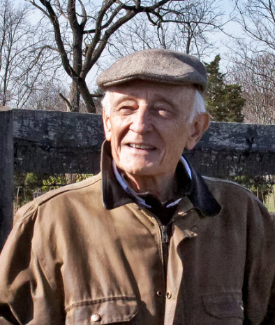
Karen L. Myers photoThe sport of drag hunting started as a competitive race in early seventeenth century England, developed into a fast dash over intimidating fences in early twentieth century North America, and evolved in more recent years into an artistic attempt to simulate live hunting.
Since foxhound packs that run a drag scent—either exclusively or periodically—account for about seventeen percent of all MFHA-Registered hunts in North America, we’re devoting much of this issue to a comprehensive view of the sport and its history, with observations, comments, and recommendations from some of today’s best practitioners.
Drag Hunting Today
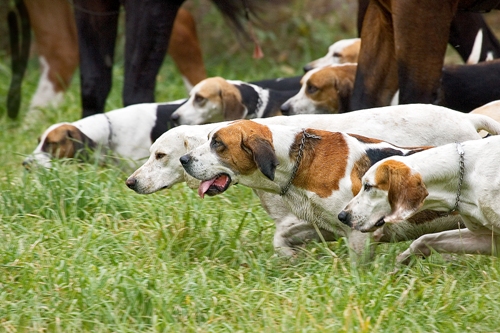
Wayne-DuPage drag hounds head to covert. / Chris Carney photo
Drag hunting, according to conventional wisdom, is what a hunt does when its country is constricted by suburban development. Sometimes that’s true, but, more often, hunts follow a dragged line of man-laid scent because the Masters want to. And a few hunts have been doing it for more than a century.
Each type of hunting—live or drag—has its pluses and minuses, depending on the needs and priorities of the participants. Drag hunting offers a controlled hunting experience to the benefit of hounds, riders and landowners. With a judicious laying of the drag, hounds are safer because roads and other hazards can be avoided; farmer’s crops are protected from horse’s hooves; homeowners’ lawns and yards are not trampled; and small pets are safe from the attention of hounds (all assuming that hounds don’t riot).
For riders who seek a gallop over fences, drag hunting offers a more efficient use of time, with no standing on a windy hillside while hounds search a covert for a fox (which may or may not be found). Thus the drag-hunting day typically lasts about two to three hours, with guaranteed galloping and jumping, better suiting those with a busy schedule, rather than the three- to five-hour day usually consumed by the ebb and flow of live hunting.
Drag Hunting: From Racing to Simulating the Hunt
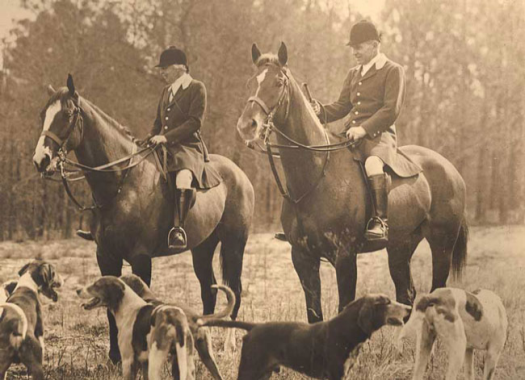
Mrs. Louise Eustis Hitchcock, MFH and huntsman of the Aiken Drag Hunt and Mr. Thomas Hitchcock / Courtesy Hitchcock Woods Foundation
Drag hunting was once a gloriously competitive sport, the roots of which go back to seventeenth-century England. During the reign of King James I (1603–1625), it began as a sport known as running a train scent. A “drag was laid, hounds were put on the line, and ran it at a racing pace. The horse in the lead at the end of the drag was declared the winner,” wrote the late Alexander Mackay-Smith in his Foxhunting in North America.
Later in the same century, during the reign of King Charles II (1649–1685) , a gentleman could enter his hound or hounds to compete for the Woodstock Plate, a race for hounds following a four-mile drag as a test of both the hound’s speed and its ability to follow a scent. When houndsmen and spectators discovered that the best and, not incidentally, the most enjoyable way to follow the hound race was on horseback, the sport of drag hunting was born according to John Philip Hore in his History of Newmarket.
Even Hugo Meynell, the father of modern foxhunting, played his part in drag-hunting history when, in 1763, he participated in a celebrated hound match in the form of a drag hunt between his Quorn Foxhounds and those of Mr. Barry’s Cheshire Foxhounds. By the nineteenth century, the notion of a guaranteed, sustained gallop over jumps appealed to many sportsmen, especially those who mainly hunted to ride.
NYC Mayor Vows to Banish Horse Carriages
Two days before New York Mayor-Elect Bill de Blasio was to be sworn into office he vowed to eliminate the horse carriages that have for so long played a romantic role in Central Park. “It’s over,” he said. “We are going to quickly and aggressively move to make horse carriages no longer a part of […]
Horse Slaughter: State Judge Trumps Federal Appeals Court
A district judge in New Mexico has delayed for ten days the planned operations of the nation’s first horse slaughter plant in seven years. On January 13, 2014, State District Judge Matthew Wilson will listen to testimony in a lawsuit brought by state Attorney General Gary King. King filed the lawsuit last month after a […]
Goshen Hounds Take a New Year’s Swim
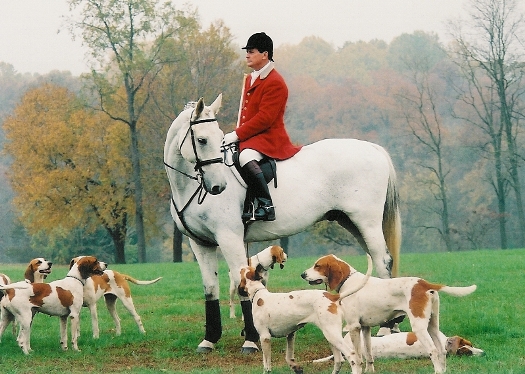
Robert Taylor, MFH and huntsman of the Goshen Hounds, had a memorable hunt with hounds on New Year’s Day.
Some days you simply wonder what the gods are thinking. Today, New Year’s Day, was a day that I simply could not hunt because of social obligations unrelated to the hunting world. No amount of explaining and squirming would have been adequate to allow me to meet with the Goshen Hounds (MD) today. Consequently, it was with some delight when I was finally able to quietly announce at about 2:00 pm that I thought I would “visit the kennels” for a short while.
When I arrived it was apparent the hounds were still in the field, so I drove to the usual draw down Middleton Lane and was greeted with the distant view of a whipper-in and the cheering of huntsman and Joint-Master Robert Taylor. I knew exactly where they were, but getting to them in my trusty Tahoe was a different matter. Undaunted, I proceeded on (in four wheel drive), but still could not quite make contact.
Several riders were coming in with tales of, “Wow! What a run! My horse is cooked!” In desperation, I gave up and headed to the kennels. Soon I was greeted with the sight of Robert and hounds coming in, and, oh, what tales they had to tell.