Blue Ridge Fall Races Supporting Injured Jockeys Fund
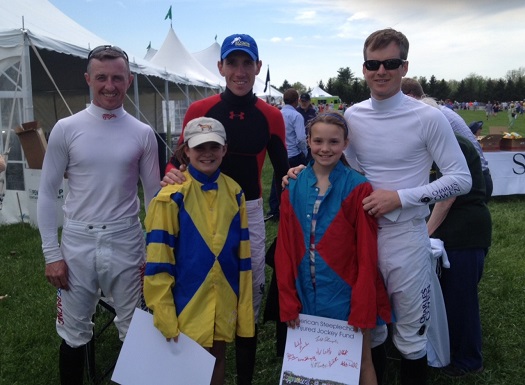
(l-r) Jockeys Robbie Walsh, Willie McCarthy, and Jeff Murphy greet a couple of young racegoers in support of the Injured Jockeys Fund. / Kathy Rubin photo
At the Calcutta party the night before the Blue Ridge Fall Races this year, racegoers will bid on the jockeys instead of the horses. A number of jockeys—among them Robbie Walsh, Willie McCarthy, Jeff Murphy, Kieran Norris, and Zoe Valvo—will attend the affair to mingle with the crowd and help promote their very own cause, the American Steeplechase Injured Jockeys Fund.
The Calcutta will take place on Friday night, September 19, 2014, and the races will go off on Saturday, September 20. The Blue Ridge Fall Races traditionally support local charities, but this year a portion of the race revenues will be donated to the Injured Jockeys Fund, a relatively recent endeavor that is gaining momentum under enthusiastic leadership.
For every jump jockey who rides races it’s not a question of if; it’s a question of how often he or she will fall and whether or not there will be injuries. With thousand pound Thoroughbred racehorses all galloping to the same fences at thirty-five miles an hour, falls and injuries are part and parcel of the game. And some injuries turn out to be life-changers for the jockey.
EIA in Aiken; First Case in More than a Decade
A mule in Aiken, South Carolina has tested positive for Equine Infectious Anemia. This is the first case of EIA in Aiken since the 1990s. In fact, South Carolina is the only Southeastern state in which no positive cases of EIA were recorded in the last ten years. The mule, which has been euthanized and […]
A Visit to Scarteen
The Red Rock Hounds and Their Country
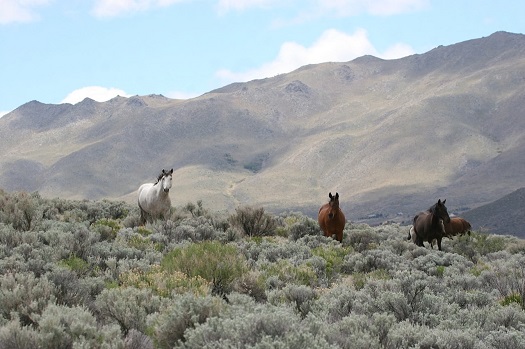
Wild horses in Nevada’s high desert / Nancy Stevens-Brown photo
I want to tell you about Lynn Lloyd’s Red Rock Hounds and the country they hunt as a short introduction to our feature story, “How Old Hounds Pay Their Keep at Red Rock.” In that story you’ll read how Lynn ingeniously transformed her elderly hounds from a burden to an asset! The old hounds pay their way by increasing membership and caps, and they throw off side benefits by helping to train young hounds and staff. And I have to believe that many hunts could do something similar to their own benefit.
The Red Rock foxhounds hunt the coyote over the high desert of Nevada, near Reno, where cowboys in dusty western hats, vests, and chaps lope after hounds in their Western saddles stirrup-to-stirrup with properly attired foxhunters posting to the trot in their English saddles.
How Old Hounds Pay Their Keep at Red Rock
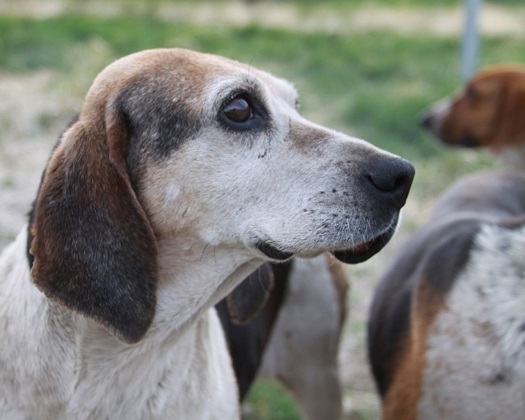
What to do with the old hounds? / Nancy Stevens-Brown photo
Most hunts are beset by similar problems: what to do with old hounds, how to attract more members, how to pay the bills, how to train staff, how to train young hounds. Lynn Lloyd, MFH and huntsman of the Red Rock Hounds (NV), found that the solution to one problem provided the key to solving several others.
What to Do with Old Hounds
The average hunting life of a hound is perhaps six or seven years. That means it is retired from the pack at age seven or eight. Beyond that age, most hounds start falling behind the pack, lacking the foot and endurance to maintain the pace over a full hunting day.
But with several years of life still remaining for the retired hounds, most hunts are hard-put to expend their limited financial resources to keep and maintain them. And here’s where Lynn Lloyd found a way to turn a burden into an asset.
How Old Hounds Pay Their Keep at Red Rock
What to do with the old hounds? / Nancy Stevens-Brown photo
Most hunts are beset by similar problems: what to do with old hounds, how to attract more members, how to pay the bills, how to train staff, how to train young hounds. Lynn Lloyd, MFH and huntsman of the Red Rock Hounds (NV), found that the solution to one problem provided the key to solving several others.
What to Do with Old Hounds
The average hunting life of a hound is perhaps six or seven years. That means it is retired from the pack at age seven or eight. Beyond that age, most hounds start falling behind the pack, lacking the foot and endurance to maintain the pace over a full hunting day.
But with several years of life still remaining for the retired hounds, most hunts are hard-put to expend their limited financial resources to keep and maintain them. And here’s where Lynn Lloyd found a way to turn a burden into an asset.
The Lathom Remount Depot of World War I

The horror of the First World War is much on the minds of our English sporting friends this summer as the world marks the hundredth anniversary of that conflict. Foxhunters there are especially moved in remembering the terrible toll taken on the world’s equine population in numbers unequaled before or since. Ron Black in Cumbria, […]
Lecture, Book Signing on Grisone’s Sixteenth Century Riding Manual
Elizabeth M. Tobey will present a lecture and book signing at the Middleburg Public Library on September 18 at 7:30 p.m. Tobey will discuss her (and Dr. Federica Deigan’s) translation of Federico Grisone’s The Rules of Riding (Gli ordini di cavalcare). Tobey began the translation project seven years ago while a John H. Daniels Fellow […]
Edward Troye, Harry Worcester Smith, and Alexander Mackay-Smith: Archival Research Connects the Dots
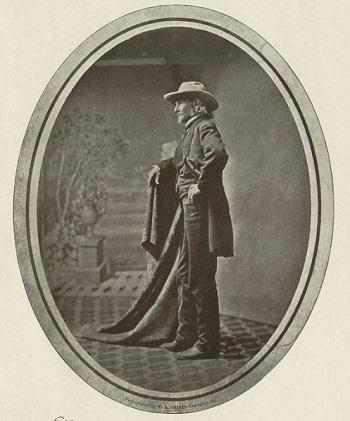
Edward Troye gained artisitic renown painting America’s greatest bloodstock of the mid-twentieth century. / 1872 photographic print, National Sporting Library and Museum Archives, Harry Worcester Smith papersFoxhunting Life is proud to publish this preview of the stories behind one of the most important exhibition of the works of Edward Troye ever mounted.
It is said that “traces of the soul can be found in boxes in the archives.” Where letters, scrapbooks, newspaper clippings, jotted notes-to-self and snippets of individuals’ lives are kept, distractions lurk and surprises are inevitable. And patience is rewarded with a story.
The archives of the National Sporting Library and Museum in Middleburg, Virginia contain the story of three men whose lives spanned two centuries, whose interests overlapped, and whose souls were kindred: Artist Edward Troye (1808-1874), the indomitable sportsman Harry Worcester Smith (1864-1945), and the scholar, chronicler, and author Alexander Mackay-Smith (1903-1998).
The Stable Yard Is Silent
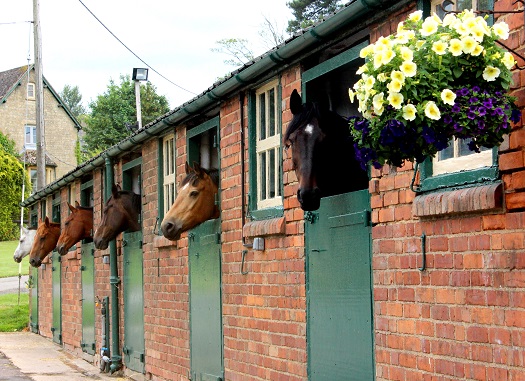
The hundredth anniversary this summer of the First World War has reminded all of us of that terrible conflict. In England, James Barclay, ex-MFH, tossed and turned through the early morning hours one night this month. Thoughts of the war, the carnage that took its toll on his family members and many horses, and what those years meant to a way of life that was so much a part of the Barclay family ran through his head. He got out of bed, sat down, and wrote this poem. At 6:30 am he finished writing. Twenty minutes later the South Wold Foxhounds came up his drive on summer exercise, making his world right once again.
The stable yard is silent, no equine friends, no ears twitching over the doors.
Where have they gone? They have gone to Europe to fight a war.
Will they be back to graze the summer pastures green?
Will they be back to see the autumn mist and hear hounds running?
Will they be back to enjoy the fifty minutes across the grass?
They and their Masters have gone to defend our freedoms.
In mud and wire they toil, no end in sight,
But the thought of hounds running and their cry deep in their veins,
Make our horse and human friends dream, dream of
A cold winter’s night, hacking homewards with the moon up high.