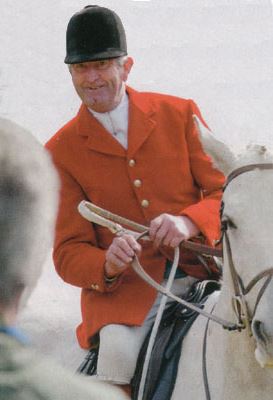
 Sidney Bailey retired in 2005 after serving as professional huntsman for the Vale of the White Horse (UK) for forty-three seasons.Foxhunting Life readers demonstrate enormous interest in our articles covering the migration of huntsmen each year at about this time. (See “Huntsmen on the Move,” published last month.) Nancy Mitchell, who has hunted hounds at the Bijou Springs Hunt (CO) over a period of sixteen years, wants to know the why of it.
“I’m curious to know what motivates this ‘spring dance of the huntsmen,’” Nancy wrote. “What circumstances create this phenomenon? Money? Prestige? Politics? Age?”
We thought it was an interesting subject for our Panel of Experts, so we asked Jerry Miller, MFH, C. Martin Scott, ex-MFH, and Hugh Robards, ex-MFH, to weigh in on Nancy’s question.
 Jerry Miller, MFH and amateur huntsmanJerry Miller, MFH and huntsman, Iroquois Hunt (KY)
The person asking this question is making an astute observation. It is a question Masters should be concerned about. Masters of Foxhounds are just that, in charge of the hounds. Instability in the Master-Hunt Staff relationship hurts the hounds. A carefully constructed breeding program that takes years to develop is often disrupted. In North America, when huntsmen move from one hunt to another, they often encounter hound types of differing temperaments—English, Crossbred, American, and Penn-Marydel. Some breeds do not respond well to training methods used successfully with other types; consequently a lot of hounds find themselves unwanted and discarded.
Consider also quarry and hunting country here compared to those abroad. In North America we hunt numerous quarry—fox, coyote, bobcat, and pig—over wildly varying terrains—the frozen North, the nearly tropical South, and the arid West. A whipper-in here, hoping to become a huntsman, moving from one hunt to another, is likely to be faced with different quarry, different hound types, and different hunting country to deal with. He surely faces more variables in preparing for his hoped-for job as huntsman than does the English huntsman who, no matter where he goes on his island, will be hunting the fox…with English hounds…in a temperate and reasonably uniform climate.
There are also fundamental differences in the Master-Hunt Staff relationship as practiced in the UK compared to North America. The structured and time-tested apprentice system for hunt staff in the UK, in which professionals move patiently, step-by-step, from kennel work, to whipping-in, to huntsman status, is one aspect that makes for more stable employment. Staff personnel know at the start what they’re aiming for, and they understand exactly what is expected of them every step of the way.
Another aspect of the British system that makes for more stability in the hunting establishments is the level of knowledge passed on through generations of Masters, often handed down through the same families. That cultural heritage exists here in only very few hunts. Lacking that wealth of knowledge and experience, too many Masters in North America today are not as well-prepared to hire, supervise, and maintain long-lasting relationships with their huntsmen, let alone work closely with them on their hound breeding programs.
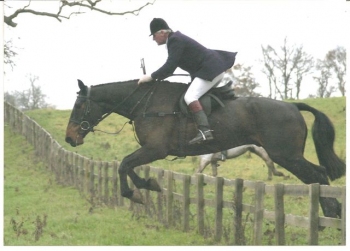 C. Martin Scott, ex-MFH and amateur huntsmanC. Martin Scott, ex-MFH and huntsman, Vale of the White Horse (UK)
Changeover of huntsmen only happens in the spring, as May 1st is the traditional changeover day for all Masters and, therefore, for all hunt staff. All hunts and change of appointments should be fixed and be in place by February 1st at the latest. This is an unwritten rule that is sadly broken in this modern day and age far too often. When changes are made after February 1st it makes it difficult for everyone to find the right person to fill the vacancy, and it also makes it difficult for families to make the necessary arrangements as well.
That said, why or what motivates such moves? When a huntsman retires there comes a vacancy. His replacement will leave a gap that needs to be replaced and so on. The younger huntsmen will want to gain experience and then move up the ladder and into what they may think is a better position. The grass is not always greener and sometimes the move is not as good as expected, and so another move occurs. A move away from one pack to another can be for a multitude of reasons but in England it is not for the money.
A move upwards, above all else, is for better hunting or more hunting days a week, as our huntsmen do the job for the love of it, certainly not for the money. The more hunting and the better hunting they can have would be the real motivation for our best huntsmen.
On the other hand, those huntsmen who are good enough to hunt hounds, who care for the pack in the best possible way, who are good enough riders to cross the country, and who have the tact and charm to get on with all walks of life, will last in one position for a long time. They earn the respect of all foxhunters, as their longevity in one place is invaluable and beneficial to the hounds and the hunt in question. This is why we treasure these men in England—one such man being Sidney Bailey who hunted the Vale of the White Horse hounds for forty-three seasons.
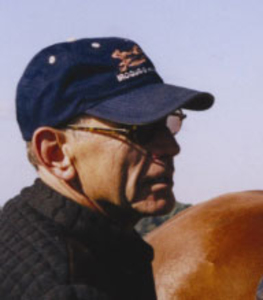
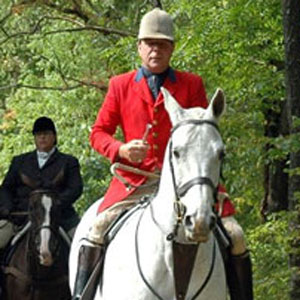 Professional huntsman Hugh Robards, ex-MFHHugh Robards, ex-MFH, professional huntsman, Middleburg Hunt (VA)
The first thing to remember, is that all negotiations between Masters and hunt staff for a new season should take place before February 1st. May 1st is the date when hunt staff move to their new appointments.
There are several reasons why huntsmen seek new positions. To my mind, money is not an issue. Hunt Service is a way of life, demanding long hours and working in rather nasty conditions—such as the winter we are experiencing this year!
Prestige may be a factor. Most huntsmen wish to better themselves and display their skills at hunting hounds in what may still be called fashionable hunting country, such as those in Virginia, Pennsylvania, and Maryland, where the “hooroosh”and jumping fences is very much part of the chase.
Politics sadly creeps into the equation, and every season we hear of some talented huntsman who has had to move on through no fault of his or her own.
Naturally age does enter into a change in regime. For example, it is sad to see a huntsman such as Larry Pitts step down from what seems a lifetime with the Potomac Hunt, leaving behind a beautiful pack of foxhounds, yet creating a tremendous opportunity for another young huntsman.
The hunt staff member, like any employee, must also consider job security. Many have families, and many work without a contract; therefore it is imperative for them to consider all their options.
Posted March 11, 2015