
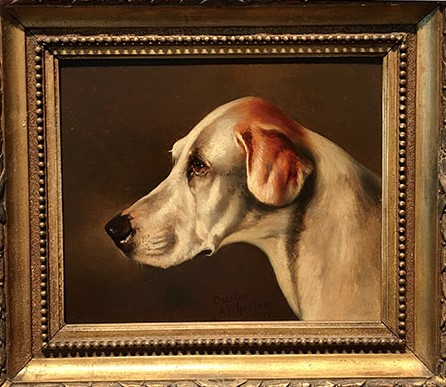
 Duster by Alfred Wheeler, 1910, oil on board, 8 x 9-1/2 inches, framed 11-1/2 x 13 inches, $4,500.
Here’s a small, nicely-framed painting of a foxhound by a respected English artist born in the mid-nineteenth century. It is priced at $4,500 by an equally respected art gallery in New York. If I were starting my own collection of sporting art and still had wall space in my home (and my other bills were paid), I would buy it.
The painting is a head-and-neck portrait of an Old (traditionally-bred) English foxhound, clearly from the days when English hunt staff cropped the ears―happily no longer practiced. It’s not terribly creative. Rather formulaic when compared to another painting by the same artist―this other hound being one in a set of five small paintings of four hounds and a pair of hunters from the Duke of Beaufort’s establishment. The two are similar in anatomy, view, and shading technique but different in the ear and eye details.
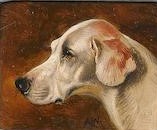 Another head and neck portrait by Wheeler, this from the kennels of the Duke of Beaufort.
Wheeler’s Duster is a pleasing and well-executed painting that I know I would enjoy looking at over the passage of time and feel secure in its value. I especially like the use of light in this painting as it illuminates the smooth coat of head and face and a wide-open, honest eye.
Alfred Wheeler (1852−1932) specialized in painting horses but did paint hounds as well. He was born in Bath, near Somerset. His father, John Alfred Wheeler (1821−1877), was a respected artist as well, and it’s believed that Alfred studied under his father and worked closely with him.
Alfred married Catherine Muspratt in 1874, and the couple moved next door to Alfred’s father’s house. They followed the father when he moved to Hanwell. The works of both father and son were similar stylistically, and adding to the confusion, there are paintings by both men that are signed, A. Wheeler and J.A. Wheeler. Each painted some of the same racehorses and executed commissions for some of the same clients, Baron Rothschild and the Prince of Wales, for example. Though Alfred may have been less prolific than his father, he is known to have contributed to many of his father’s paintings late in that man’s career.
Alfred and Catherine had six children, two of whom became artists, Walter Herbert and John Frederick.
Though this or similar Wheeler Family portraits may never have found their way into the collections of Paul Mellon who sought the ultimate examples of British sporting art, that doesn’t preclude such works from the enjoyment and satisfaction of modest collectors.
Posted August 27, 2021