
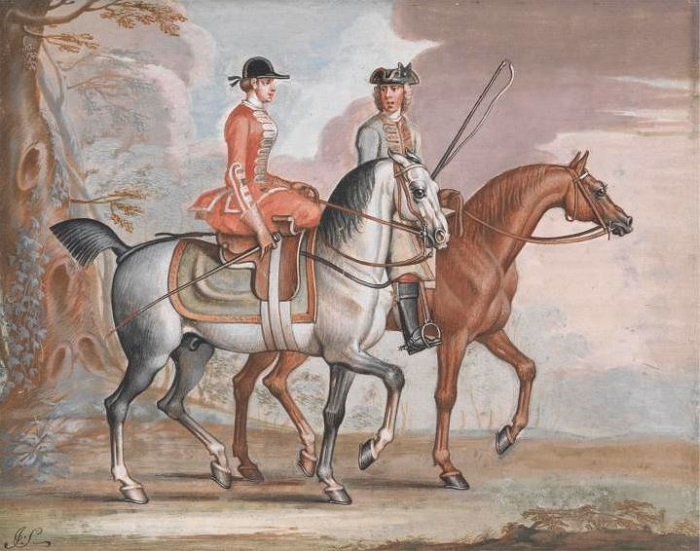
 James Seymour (British, 1702 – 1752), A Lady and a Gentleman Riding Out, c. 1740, gouache on paper, 5 5/8 x 7 1/8 inches, Yale Center for British Art, Paul Mellon Collection
In the seventeenth and eighteenth centuries, the men of England were assaulted by a new and uncomfortable sight: women in masculine clothing! Even worse, these were upper class ladies, and they had donned cavalry-inspired costume to invade the male-dominated pastimes of riding and foxhunting. These daring women were often called ‘Amazons’ and were sometimes ridiculed for their riding habits. In 1666 Samuel Pepys lamented that, if not for their long skirts, these ladies wouldn’t be recognized as women at all! About fifty years later, Richard Steele satirically suggested that Amazons should “complete their triumph over us, by wearing breeches.”
Riding habits first emerged in the sixteenth and seventeenth centuries as women’s clothing became increasingly restrictive. They needed specific garments—riding habits—in order to sit a horse comfortably and safely. In the 18th century, skilled horsemanship was the domain of the cavalry, and upper class-women adopted the waistcoat, cutaway coat, and simple trims for equestrian pursuit. Ladies were able to wear lightly boned stays which allowed greater range of motion for riding sidesaddle, and durable wool took the place of flowing silk.
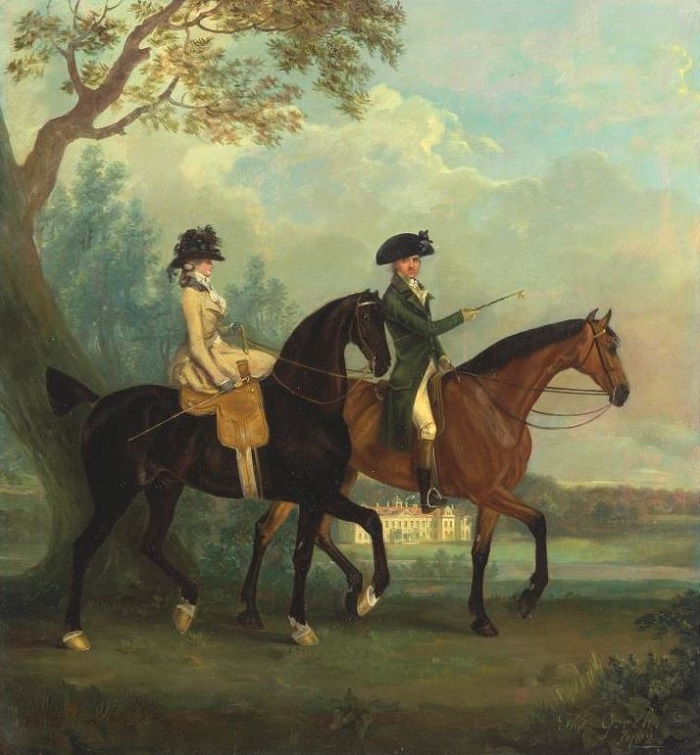 Thomas Gooch (British, 1750 – 1802), Marcia Pitt and Her Brother George Pitt, Later second Baron Rivers, Riding in the Park at Stratfield Saye House, Hampshire, 1782, oil on canvas, 27 1/8 x 25 1/8 inches, Yale Center for British Art, Paul Mellon Collection
Despite the lamentations of their male contemporaries, riding habits grew to be popular attire throughout the 1700s. In fact, Ladies began wearing their habits and other equestrian-inspired fashion as informal gowns, no longer restricted to the hunt field. Ladies made this masculine fashion distinctly feminine, expanding the feminine sphere to include historically unwomanly interests.
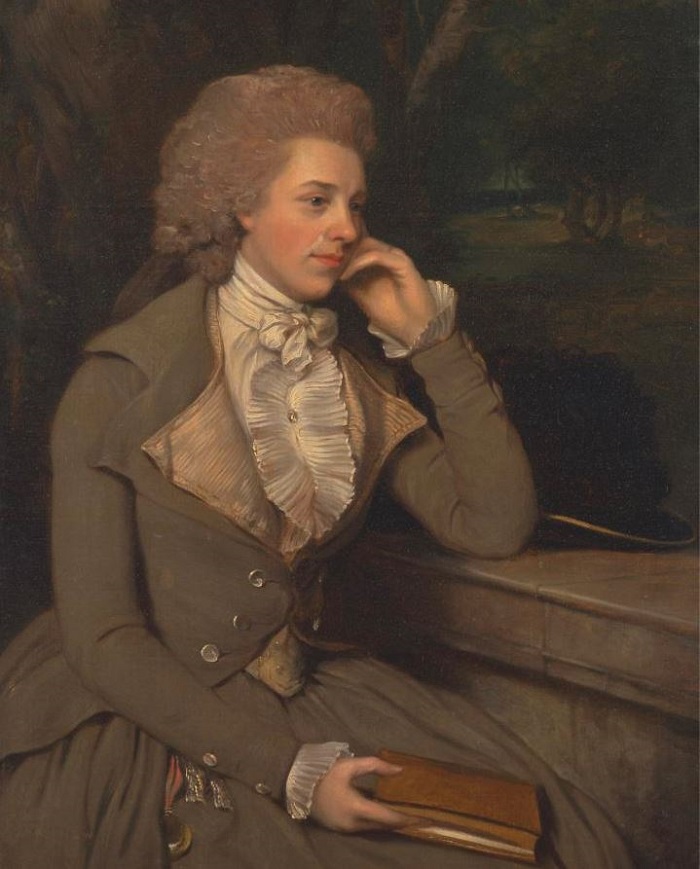 Francis Wheatley (British 1747–1801), Mrs. Stevens, c. 1795, oil on canvas, 26 x 18 ½ inches. Yale Center for British Art, Paul Mellon Collection
For example, in the image above, Mrs. Stevens wears a simply cut cavalry coat in fashionable dove gray. We can see that it is tailored to fit tightly, and it is not worn over a masculine style waistcoat. Instead it is pinned to a stomacher, or decorative panel worn over the front of the stays (18th century corset). Likewise, she is sitting serenely in a grove of trees, complete with a stag running in the background. This portrait takes the typical salon portrait of young women day dreaming on padded chairs and wrapped in billowing ruffles and frills, and completely turns it on its head. Here is a new kind of woman, feminine but unafraid of the world around her.
Women in western history have broken rules and changed norms for centuries, and sidesaddle riding and fashion are just one example of that social evolution.
Posted September 28, 2018
Republished with the kind permission of Anne Marie Barnes and the National Sporting Library & Museum, Middleburg, Virginia. First published in the NSL&M’s blog, Drawing Covert.