
Martyn Blackmore was destined to work with foxhounds. Born in Somerset in the southwest of England, both his grandfather and his great-grandfather worked as harbourers* with the Devon and Somerset staghounds. These are true countrymen who help maintain a robust wild deer population by selecting the stag to be separated from the herd by the tufters** for the pack to hunt.
The harbourers don’t have to ride. Nor was Martyn eager to be a horseman. “They bite at one end, kick at the other, and they’re uncomfortable in the middle,” was his impression. Eventually, however, he met a girl who changed his mind…even about horses.
Martyn: “I have followed hounds, mostly the Devon and Somerset staghounds from infancy. I loved the days as a kid watching hounds, deer, and all the wildlife, but I was never comfortable around horses. As I got older and had my own transport—first a motorcycle then a car—I could travel more and experience other packs and forms of hunting. Sunday mornings in the late 1970s I would help walk out the Chilmark beagles, then kenneled close to Glastonbury tor.
“In 1980, my work as a highways superintendent took me from my beloved Somerset to Hampshire, where I spent more time than I should have with the Vine and Craven hounds and staff. Hunting days would find me with the terrier man. I would either take a day as holiday or skive off my real job. The area of highways I was responsible for included much of the Hampshire hunt country, where, conveniently, I would have a project close enough to the meet and the day’s sport.”
I’ve witnessed Martyn’s love of the sport. I can’t begin to recall how many times I’ve been out hunting during Martyn’s time in Virginia, when, on one of his own pack’s non-hunting days, he would appear at Blue Ridge to follow hounds by truck and by foot. And opening or closing gates just to be helpful. And one year when Blue Ridge had kennel cough, Martyn brought the Loudoun West hounds to our country to give us a day’s sport.
Martyn: “Although into hounds, terriers, and wildlife, I was still shy of horses and gave them a wide berth…until I became involved with a young lady who had been a groom all her working life. She not only helped me conquer my mistrust of the noble beast but actually got me to ride one. A member of the hunt had a riding stable on the outskirts of Newberry and told the hunt staff I could have discounted lessons if I went at quiet times. So after much coercion from the girl and the staff I did it, and the rest, as they say, is history. I hunted a horse called Cadet one time before the end of the season, and that was it. I was hooked.
“The next thing I knew, I had the whipper-in’s position with the Essex hunt in 1983. I stayed there six seasons working under two different huntsmen. I then moved as whipper-in back to Hampshire with the Hursley Hambledon for two seasons. From there I went as kennel huntsman to the East Sussex and Romney Marsh for a season, then kennel huntsman to the Tiverton Staghounds for a season. Next I whipped-in part time for the Dulverton East while working self-employed doing just about anything for anyone who would pay me. The best part was being with hounds and back on Exmoor.
“For a season I worked for Janet Ackner, secretary for the Devon and Somerset, who had a livery yard and her own horses that hunted and evented. My fear of horses, definitely gone forever.
“In 1997, a young lady who had been our groom at East Sussex with whom I had remained friends had also moved to the west country and was working for the Masters of the Devon and Somerset. One day we happened to be at the same birthday party, and Sue and I have been together ever since. That year was memorable for many reasons, some good, two not so good.
“The Hunting Act was looming, and I did the protest walk from Penzance to Hyde park for the Countryside Rally, a fabulous but at times painful (blisters!) experience. During the walk I was offered the huntsman’s position for Mr. Jeffords hounds in Wyoming, which I accepted. My father passed away a few weeks later on August 16th. Sue and I packed about everything we owned and could not part with and our two dogs and landed in the USA on September 23rd. Just a few weeks later on October 28th my mother passed.
“We stayed in Wyoming for four years before going even further west to California to be huntsman for the Santa Ynez Valley Hounds where we enjoyed five seasons. It was then eastward to Virginia for seven great seasons with the Loudoun West Hunt and a season with the Loudoun Hunt.”
When Loudoun West merged with the Fairfax Hunt, both huntsmen lost their jobs in an attempt by the Masters to avoid conflict between members of the conjoining hunts. Soon after, Martyn packed his horn, eleven couple of foxhounds and their progeny that he had brought from England, and, with his wife Sue (who also whipped-in to him), moved south to the Lowcountry Hunt near Charleston, South Carolina.
Lowcountry
Founded in 2006, Lowcountry Masters are co-founders Dr. Mark Shambley, Melinda Shambley, and Nina Burke. The hunt’s colors of indigo and gold were chosen to reflect the two vital and historic crops of the region: indigo and Carolina Gold rice. Christina Bates joined the Mastership in 2013.
With kennels in Jacksonboro, Colleton County, the Lowcountry pack hunts on historic plantations in four counties. “We hunt on plantations ranging in size from fifteen hundred to twenty-six thousand acres,” said Nina Burke, MFH.
The hunt and hunting country are located within the 350,000-acre ACE Basin, where the Ashepoo, Combahee and South Edisto rivers combine into the larger St. Helena Sound and drain a significant portion of the Lowcountry region. The area is renowned for its extensive natural beauty and commitment to preserve marshes, wetlands, hardwood forests, and riverine systems and the various fauna that thrive there.
“The one thing you don’t want to do is look over your shoulder and have to micro-manage the kennels,” said Melinda Shambley, MFH. “[With Martyn,] we don’t have to worry about those hounds.”
Martyn’s hiring provided stability to the kennels, which, immediately before his arrival, had been directed by two different huntsmen, each of whom stayed just a year, Shambley said.
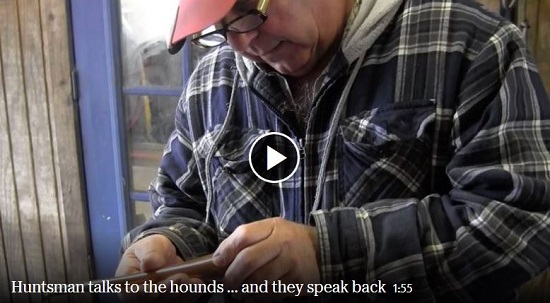
“Our breeding program is so much better under Martyn,” Shambley told a local journalist recently. The article was accompanied by a video of Martyn demonstrating how he communicates with hounds during the course of a hunt.
Martyn: “Sue and I are now coming to the end of our third season in the land of snakes and ’gators and real southern hospitality hunting the Lowcountry hounds. This is by far the toughest country to hunt; hounds can get away from you across a swamp and often it is a long way around to the exit point. If they check in a swamp or a pine forest, you have no chance of helping them.”
Hunt Week
Lowcountry’s annual Plantation Hunt Week in mid-January is well supported, with many hopefuls turned away for lack of stabling space for horses. Visitors are enveloped into the iconic imagery of the old south and its fabled hospitality. The long weekend generally includes three hunts, an introductory trail ride, and parties galore. Hunting is enjoyed on two of the oldest and most beautiful plantations in South Carolina’s magnificent Lowcountry. From the salt marshes to the groves of ancient live oaks dripping with Spanish Moss, the landscapes are dramatic and stirring.
Lori Brunnen, an earlier Hunt Week visitor and regular contributor to Foxhunting Life, described one opening party this way: “The oysters were piled on a long table with gloved hands shucking as fast as they could. I think they were cooked ever so slightly—maybe to make them easier to open. Maybe so you could not hear them scream. Strictly standing room only.
“Our whole group was present for this party, and the guest of honor was Pork! Fall off the bone pork. The whole pig. Side dishes abounded but the stars of the buffet were white chocolate lemon balls, each set on a little tiny crystal chair! And the baked brie. And the Boudin sausage which even had vegetarian Kathy eating meat. I gestured with my hands and someone’s plate went airborne. It was all I could to keep myself from picking them up, brushing them off and eating those, too.
“Can now say from experience that fried pickles really are delish, and that there is a lot more to hush puppies than I could ever have imagined.”
Martyn and Sue Blackmore have found a home!
Posted February 14, 2017
* A countryman employed by the staghound pack to monitor the herd of wild deer and select which stag is to be separated from the herd by the tufters for the staghounds to hunt.
** A small number (two or three couple) of older, steady hounds used at the beginning of the stag hunt to get the harboured stag separated from the herd before the entire pack is laid on.