
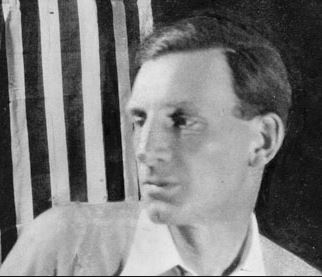
 Sassoon was excited to be hunting in the Ringwell country this season. On his very first hunt as a youngster with the local pack, he had spied, admired, and envied another young boy, Denis Milden, who had appeared to be so experienced. That boy was now the new Master and huntsman of the Ringwell. It was an overnight trip to that country for Sassoon, and he had been invited to stay at the kennels with his old acquaintance, the Master, as often as he wished. What follows is extracted and condensed from Memoirs of a Foxhunting Man, Part Seven, Chapter III. Click for our earlier sampling from Part Seven, Chapter II.
Staying at the Kennels was the most significant occasion my little world could offer me, and in order that he might share my sublunary advancement I took Cockbird with me. In reply to my reserved little note I received a cheery letter from Denis: he would be delighted to see me and gave detailed instructions about my bag being called for and taken out to the Kennels from Downfield.
I remember nothing of that day’s hunting; but the usual terse entry in my diary perpetuates the fact that the meet was at “The Barley Mow.” “Found in Pilton Shaw and Crumpton Osiers, but did little with either as scent was rotten. Weather very wet in the afternoon; had quite a good hunt of nearly two hours from Trodger’s Wood; hounds were stopped in Basset Wood at 4.25.” The concluding words, “Stayed at the kennels,” now seem a very bleak condensation of the event. But it did not occur to me that my sporting experiences would ever be called upon to provide material for a book, and I should have been much astonished if I could have foreseen my present efforts to put the clock back (or rather the calendar) from 1928 to 1911.
Yet I find it easy enough to recover a few minutes of that grey south-westerly morning, with its horsemen hustling along in scattered groups, the December air alive with the excitement of the chase, and the dull green landscape seeming to respond to the rousing cheer of the huntsman’s voice when the hounds hit off the line again after a brief check. Away they stream, throwing up little splashes of water as they race across a half-flooded meadow. Cockbird flies a fence with a watery ditch on the takeoff side. “How topping,” I think, “to be alive and well up in the hunt;” and I spurt along the sound turf of a green park and past the front door of a square pink Queen Anne house with blank windows and smokeless chimneys, and a formal garden with lawns and clipped yew hedges sloping to a sunk fence. A stone statue stares at me, and I wonder who lived there when the house was first built. “I am riding past the past,” I think, never dreaming that I shall one day write that moment down on paper; never dreaming that I shall be clarifying and condensing that chronicle of simple things through which I blundered so diffidently.
But the day’s hunting is ended, and I must watch myself jogging back to the Kennels, soaked to the skin but quietly satisfied in my temporary embodiment with the Hunt establishment; beneath a clean-swept sky, too, for the rain clouds have gone on with the wind behind them. Soon we are passing the village green; a quarter of a mile from the Kennels, Denis Milden blows a long wavering blast to warn the kennelman and the head-groom that we are almost home. When we turn in at a gate under some trees there are men waiting with swinging stable-lanterns, which flicker on their red jerseys, outside the long range of portable loose boxes which Denis has put up. He and his whips are quickly off their horses and into the kennel-yard among the jostling hounds. He has told me to find my way indoors and get my tea and a bath. Cockbird is led into a loose box under the superior eye of Meeston, the head-groom, a gruff uncommunicative man in a long, dirty white kennel-coat. Cockbird gives his head a shake, glad to be rid of his bridle. Then he lowers it and I pull his ears for a while—an operation which most horses enjoy when they are tired. The place is pervaded by a smell of oatmeal and boiled horse-flesh, and the vociferations of the hounds accompany me as I tread stiffly through the darkness to the wicket-gate, and so to the front door of the old wood-built huntsman’s house—“the wooden hutch,” as we used to call it.
Posted July 31, 2016
Life for Siegfried Sassoon started as a blithe sail through a sea of privileged ease—foxhunting and playing cricket—until he found himself in the unimaginable horror of World War I, one of history’s deadliest. He lost many close friends during the course of the war. Indeed, virtually everyone in Britain lost one or more family members. Sassoon was in combat at the Battle of the Somme just a hundred years ago—so a good time to remember him. Ten years after surviving the war, he wrote Memoirs of a Foxhunting Man, then Memoirs of an Infantry Officer, and Sherston’s War, his well-known trilogy. I’m always moved emotionally, while reading, knowing that these pleasures and recollections which he describes in this first book were written after being tempered and aged by the experience of war and personal loss. One can almost feel him reaching back to recapture the simplicity of a time that, for him and his generation, had passed forever. –Ed.