Bill Getchell, a whipper-in for the Nantucket-Treweryn Beagles, a foot pack in Virginia, attended the MFHA-sponsored seminar for whippers-in held on Saturday, May 23, 2015 at Morven Park, the day before the Virginia Foxhound Show, and filed this report.
MFHA Executive Director Dennis Foster opened the day’s program, introducing Moderator Andrew Barclay and Panelists John Gray, Richard Roberts, Stephen “Reg” Spreadborough, and Charles Montgomery.
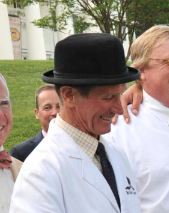 Lauren Giannini photoHuntsman John Gray, Hillsboro Hounds (TN)
A good whipper-in, said huntsman John Gray, must like hounds, know the hounds in his/her pack, and trust them.
He/she must be a good rider who understands how and when to save his horse over the many miles to be covered during the course of the day, so there will be reserves if needed at day’s end.
A good whipper-in knows his country and the landowners, and knows where he can and where he must not go.
Gray wants his whipper-in to tell him concisely, precisely, and simply what he saw, not what he thinks. The good whipper-in stays ahead of hounds in position to stop riots before they start.
Huntsman Richard Roberts, Deep Run Hunt (VA)
Huntsman Richard Roberts identifies the whip and the voice as the tools of the whipper-in. The whip is used actively for discipline—for example to end disruption or fighting within the pack—and passively to guide hounds—to move them forward, move them over to the side of a busy road or closer to the huntsman, to hold them up and maintain position for their safety.
When the whip is used actively, a light tap does no good; the hound must know that the whipper-in means to make a correction. And don’t hesitate, Roberts adds; the hound must know what transgression it is being rated for.
When using the whipper-in’s other tool, the voice, less is more. If used too often, the voice becomes just noise, and the hound will tune it out. The whipper-in’s voice can also be a distraction and a disturbance to the hound. Allow the hound a chance to sort things out for itself first. Be heard as little as possible.
Hounds respond to the pitch of the voice. For discipline, make it lower, strong, sharp, and direct. For praise and encouragement, make it higher, gentle, and seductive—a happy tone. Use the voice in such a way as to make the hound(s) react.
As a final note, the whipper-in does not have to be the “bad-guy.” He can be as much the “good-guy” as the huntsman.
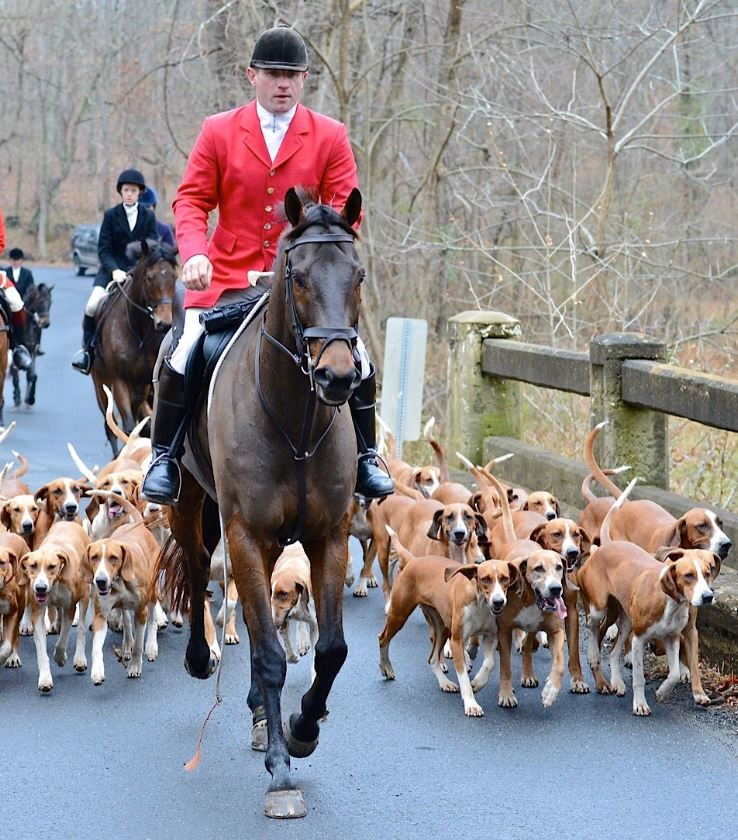 Douglas Lees photoHuntsman Reg Spreadborough, Orange County Hounds (VA)
Cracking the whip is more of a last resort, Spreadborough advises. And give young puppies more latitude. He puts orange collars on the puppies early on, so staff will easily distinguish them from the entered hounds.
Use standardized terminology when giving verbal orders. It’s obviously much easier to train hounds when every staff member issues the same commands.
Get “head to hounds.” Don’t shout at them from behind. And, finally, have fun and never lose your temper with hounds.
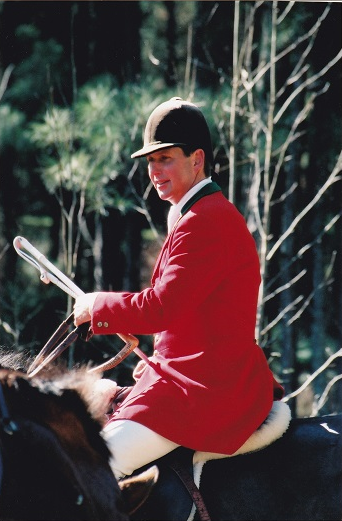 Jake Carle photoHuntsman Charles Montgomery, Bull Run Hunt (VA)
The whipper-in has always to be reading the situation—which changes constantly—and respond appropriately. He needs to do what the huntsman wants. According to Montgomery, a good relationship with the huntsman is based largely on the whipper-in’s demonstrated proficiency in the field.
Become proficient at counting hounds. With more than seventeen to eighteen couple this becomes more problematic. Counting hounds takes practice.
If hounds get strung out running the line, a good first whipper-in will hold up the lead hounds and let the others catch up. A good second whipper-in will push tail hounds forward. All whippers-in should be certain that hounds are on the proper quarry.
A whipper-in with a view should stay calm and stay put. He should tell the huntsman where he last (not initially) saw the quarry.
Question/Answer Period
Some worthwhile points made during questions and answers:
• Corrections of the whipper-in by the huntsman should be made privately.
• Use the off-season to learn the names of the hounds and what the huntsman wants.
• Don’t halloa when hounds are running.
• After a view and hounds find the line, the whipper-in should position himself to protect against hounds running heel. Hounds are more apt to run heel on difficult scenting days.
Posted June 2, 2015