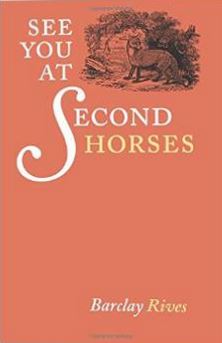
 See You at Second Horses, Barclay Rives, Aterlerix Press, New York, 2014, Paperback, illustrated, 184 pages, $13.50, available at retail outlets including Horse Country Saddlery, Warrenton, VirginiaThe foxes! Oh, the foxes! When Barclay Rives undertook a marathon of foxhunting in 1999, when he went out with nine English hunts in ten days, it seemed like there was a fox popping out of every covert.
Rives, an honorary whipper-in for the Keswick and Bull Run Hunts (VA), writes about his English sporting adventure in See You at Second Horses, a delightful read that puts us galloping behind some great packs in the glory days before the infamous Hunting Act of 2004 banned hunting with hounds in the traditional manner in England and Wales.
Rives is an avid hunter who once hunted one hundred days a season, sometimes going out with Keswick in the morning and Bull Run in the afternoon. Saying he was gung-ho is an understatement. He jumped at the chance to join his friends Grosvenor and Rosie Merle-Smith to hunt with packs dating back to the 1700s: the Quorn (twice), the Cottesmore, the Fernie, and others, including a foot pack—the High Peak Harriers—after rabbits.
Rives took good notes, especially about the differences in hunting in the U.S. and England. Large fields of eighty riders were not uncommon, and some hunts are followed by a truck and crew for fence repairs. Before the hunting ban, visitors entitled to wear scarlet were encouraged to do so. Today, not so much. The red coats are targets for the antis.
Most of the hunts were long and hard. Rives’ title refers to the custom of switching to a second horse on the days when hounds are expected to be out longer. These are called two-horse days, and the riders trade their tired horses for a fresh second one. The time and location for the switch is listed on the fixture card. When Rives asked another rider if anyone ever skipped the first part of the hunt, he received an icy response: “It isn’t correct.”
Rives, used to trotting his fences in the U.S., describes the English hunt horses and how to manage the different types of obstacles in England. Before he left Virginia, the author asked an accomplished horseman, Felix Nuesch of Charlottesville, how to jump at speed: “I asked him for a quick riding lesson … ‘You put your hands up here.’ [Felix] crouched down and held his arms and hands straight in front of his face. ‘And smell the pot roast.’ He sniffed at an imaginary sweaty mane. ‘Leave ‘em alone. If you’ve got a good horse, he’ll clock it.’”
All but one of the Rives’ mounts “clocked it” over all types of obstacles, including ditches and bullfinches, also called “bellyticklers” because the horses usually brush through top, which is untrimmed hedge. By the end of this book, the reader also has had a jumping lesson, while marveling at the stamina of Rives and his comrades.
More than once, the name of the legendary Ben Hardaway and his crossbred Midland Fox Hounds came up during the author’s conversations with fellow foxhunters at breakfasts and teas. The Cottesmore pack included some Midland hounds, which Rives noted were more slender in build than the English hounds. “Ben Hardaway’s name was more familiar to English foxhunters than any other American’s. Hardaway has been a passionate ambassador for foxhunting and a dedicated promoter of his foxhound breeding lines.”
The final chapters of See You at Second Horses cover hunting in Ireland, where wire—barbed, electric, or woven sheep wire—has become a problem. Hunt staffs spend a great deal of time making openings over the territory to be hunted and then going back to close them up again.
Rives has it right when he notes that any work of art is a result of toil for the beauty of the thing, including the art of venery. Hunting requires the labor of hard-working hunt staff, dedicated Masters, and skilled horse trainers to create the sport we all know and love, and aren’t we lucky! Rives has given us a lovely appreciation of traditional foxhunting in England, slightly bittersweet in the aftermath of the hunting ban.
Posted November 19, 2014