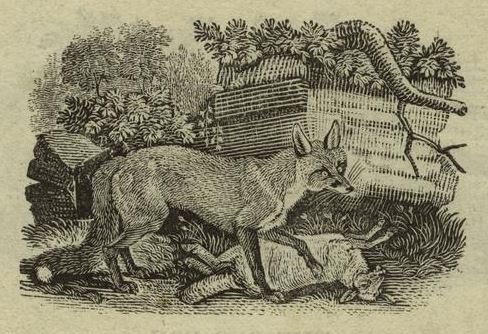
 Greyhound Fox / Courtesy New York Public LibraryFoxhunting Life reader Janet Clarke asks, “I was told a long time ago that there are different types of foxes in the UK. Is this true?”
We consulted Nigel Peel, MFH and huntsman of the North Cotswold Foxhounds, and Martin Scott, ex-MFH of the Vale of the White Horse. Both men are highly regarded foxhound breeders and judges of foxhounds in England and serve as members of FHL’s Panel of Experts. Their answers were not only surprising, but it appears that the story may be yet unfolding.
 Janet Clarke on a train near the Himalays from which she spied the very distinctive Tibetan fox.The Greyhound Fox
The simple answer is that England has only the red fox. However, Peel and Scott do report that the hill foxes of Wales, Northumberland, and Scotland northward do tend to be bigger specimens. Peel tells us that some used to be referred to as greyhound foxes.
Janet did some digging on her own, and found fascinating original material about these greyhound foxes at Lakeland Hunting Memories, the website of Ron Black who is also a frequent contributor to Foxhunting Life. Here’s an extract from Ron’s website:
“In the late nineteenth century the rangy native foxes were described as being ‘big, long on the leg, lean, greyer in colour and very fit.’ They were christened ‘greyhound’ foxes and often weighed in excess of 20 lbs and could measure up to 5 feet from tip of nose to tip of tail. Many a dog fox tipped the scale at 19 lbs in the 1800s and early 1900s. Ordinarily an average red dog fox weighs about 15 lbs and slightly less for vixens. Even today Lakeland foxes can be bigger than the average low ground fox. Records are patchy but these fine specimens were found high up on the fells and said to more resemble a small wolf. An excerpt taken from a very old newspaper dated November 1, 1844 describes a hunt:
“‘On Wednesday week a fine greyhound fox was started from his hiding place on the mountain Dodd, near Keswick, and after a gallant run of about one hour, by the hounds belonging to Mr. Crozier, of Riddings, the wily animal fell a prey to his pursuers in Skiddaw Forest, where he had in vain sought shelter from his implacable enemies.’”
Ron suggests that more information on the greyhound fox may be forthcoming as the result of his ongoing research in cooperation with Warwick University, one of England’s finest. We will certainly update our readers when that information becomes available.
The Urban Fox
Martin Scott suggests that another type of smaller red fox may be developing through natural selection as an unintended consequence of the Hunting Act of 2004. He writes, “The urban foxes which now have increased in the towns are much smaller. Some ignorant people who started to feed the foxes in the towns now regret their actions as the fox population in many towns and cities have become a real menace. They are increasing in numbers, are susceptible to disease, and have also lost their fear of man. A number of so-called animal lovers and organisations have wrongly taken a number of these urban foxes and unceremoniously dumped them in the countryside, where they have been unable to cope and have also spread urban diseases such as mange to the rural fox.”
Scott points out that before the ban, foxhunters managed to keep the rural red fox clean and clear of disease, survival of the fittest being the aim. The Hunting Act, unfortunately, was a game-changer.
Posted August 20, 2014