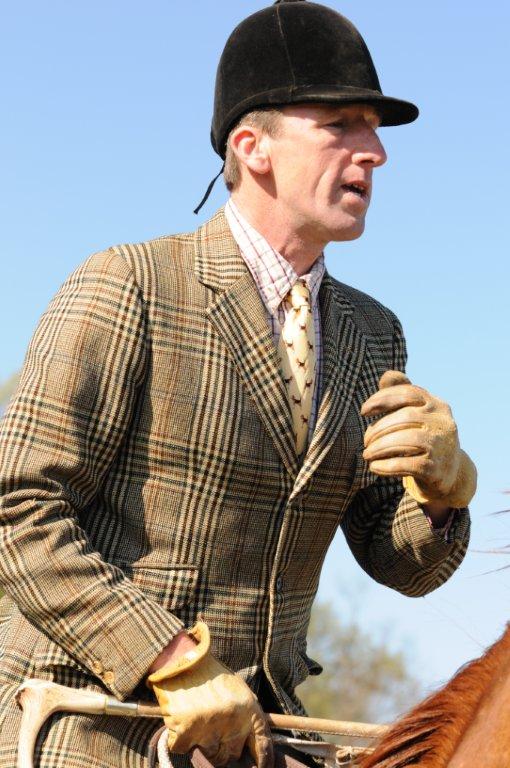
 Keswick huntsman Tony Gammell / Liz Callar photoHuntsman Tony Gammell at the Keswick Hunt (VA) has developed a pack of American foxhounds that hunts the red fox and only the red fox. No gray fox, coyote, deer, or any other woodland creature.
Why wouldn’t he want to hunt gray fox? I wondered. Yes, they run short and tight with more jinks and double-backs, but they make hounds work for every inch of sport. It can be fun to watch. And even assuming he has good reason for not hunting gray fox, how does he teach hounds to ignore the line? I collared him at the recent MFHA Staff Seminar and asked, and I got more hound wisdom than I bargained for.
The Why of It
One day Gammell watched as hounds hunted a gray fox inside the covert. The field kept running small circles around the covert and eventually made a mess of the country.
“Do we really want to cut up the landowner’s land like this?” Gammell asked the Keswick Masters.
The decision was made to no longer hunt the gray fox. As for the coyote, Gammell says they don’t really have the country to hunt the fast running, far-ranging coyote effectively. So the decision was made to consider the coyote off limits as well.
“I have sent hounds into covert and seen them come right out and not want to go back in. That’s how I know there’s coyote in there.
All well and good, I thought, but how are those lofty goals achieved?
The How of It
The three ingredients of Gammell’s success are exposure, correction, and drafting. It was harder at first, he explained, but it became easier as time went on simply through evolution. As the more difficult hounds were drafted, those bloodlines were no longer bred back into the pack, and the pack became more biddable.
Does a gray fox really smell that differently to a hound than a red fox? I asked.
“Oh, yes,” Gammell responded. “The Keswick hounds haven’t spoken on a gray fox in years. Not long ago I watched the pack hunt by a fallen tree with a gray fox sitting on top. They never gave it a look.”
“Early on, when hounds started on gray fox, we stopped them,” explained Gammell. “We’d pull up and growl at the ones that continued hunting, and they started getting it!”
Gammell starts the training early—while walking out with the unentered puppies. He wants the pack to stay together. The bold, boisterous, over-confident puppies that think they know it all are likely to get drafted if they can’t be turned into upstanding members of the pack. Yes, drafted even before hunting starts.
Gammell will set them up to make mistakes. Walking out to the pond, he’ll stop just before reaching it. The older, steady hounds will stop as well. Those puppies that run on ahead to the water are rated with a growl by the whippers-in who are waiting for them by the pond. “Oh, crap,” the puppies say to themselves when they turn and see the older hounds back with Gammell. The biddable pups run back to the pack. Those that don’t learn the lessons are drafted.
Gammell has a three-strike rule, whether the problem is gray fox, coyote, or deer. If a hound needs to be corrected a third time, his career at Keswick is over.
“We’ll walk out early in the morning while the dew is still on the grass and the deer are just getting up,” Gammell said. “We know we’ll find them. As soon as a puppy moves toward a deer, it’s ‘Snap, No.’ That hound learns a lesson, and the rest of the pack has learned by watching. The three-strike rule applies, whether the hound has yet to be entered or not. During the hunting season, the same rules and procedures apply: quick discipline, three strikes and out!
Gammell is not loath to show off now and then. Last season, with a visiting Master in the field, he watched hounds follow the line through the woods to the trail along which the field was traveling. Hounds feathered down the trail a short way then suddenly turned off with a roar just as two deer erupted from their hiding place at the very spot.
And here’s where confidence in one’s hounds can make the difference between a hunt and another false start. Many huntsmen, preferring to be safe than sorry, would stop hounds in this situation. Instead, Gammell put the horn to his lips—which he admits was totally unnecessary since they were running on anyway!—and cheered them on. Soon the deer veered off, and hounds continued on their fox. As he knew they would.
Gammell has found books on training military working dogs—from the Viet Nam to the Iraq eras—to be especially useful and worthwhile reading.
“At the end of the day, a hound is still a dog,” he says. “They figure out when you’re not happy with them.”
Clearly, not every dog cares whether his master is happy with him or not. However, you won’t find those dogs in the Keswick pack.
Posted April 25, 2012
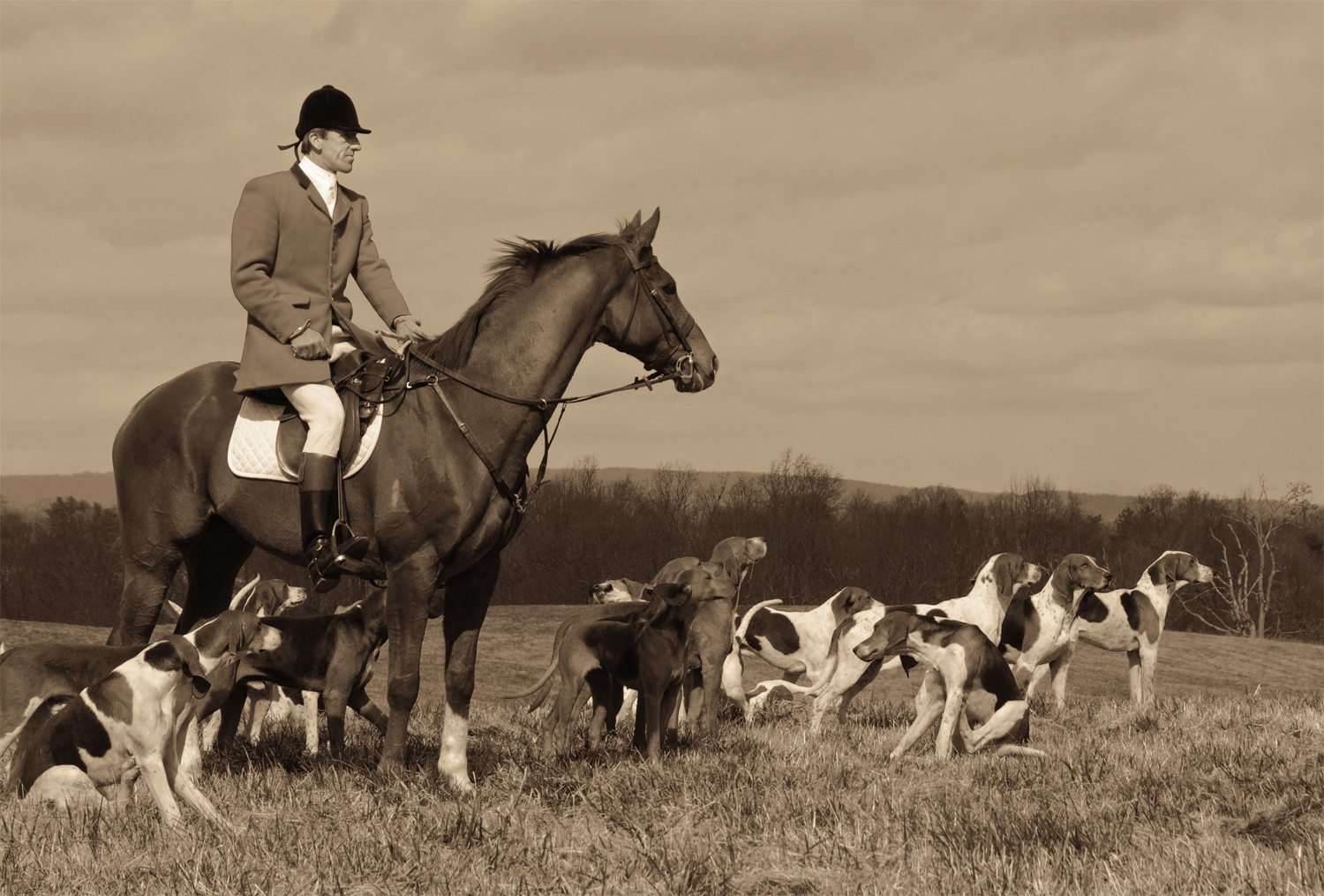 Liz Callar photo